
A Guided AI Mission Should Remove the Blank Page, Not the Decision
Good guidance should organise the task, context and standard—then leave one consequential choice for the learner to make and justify.
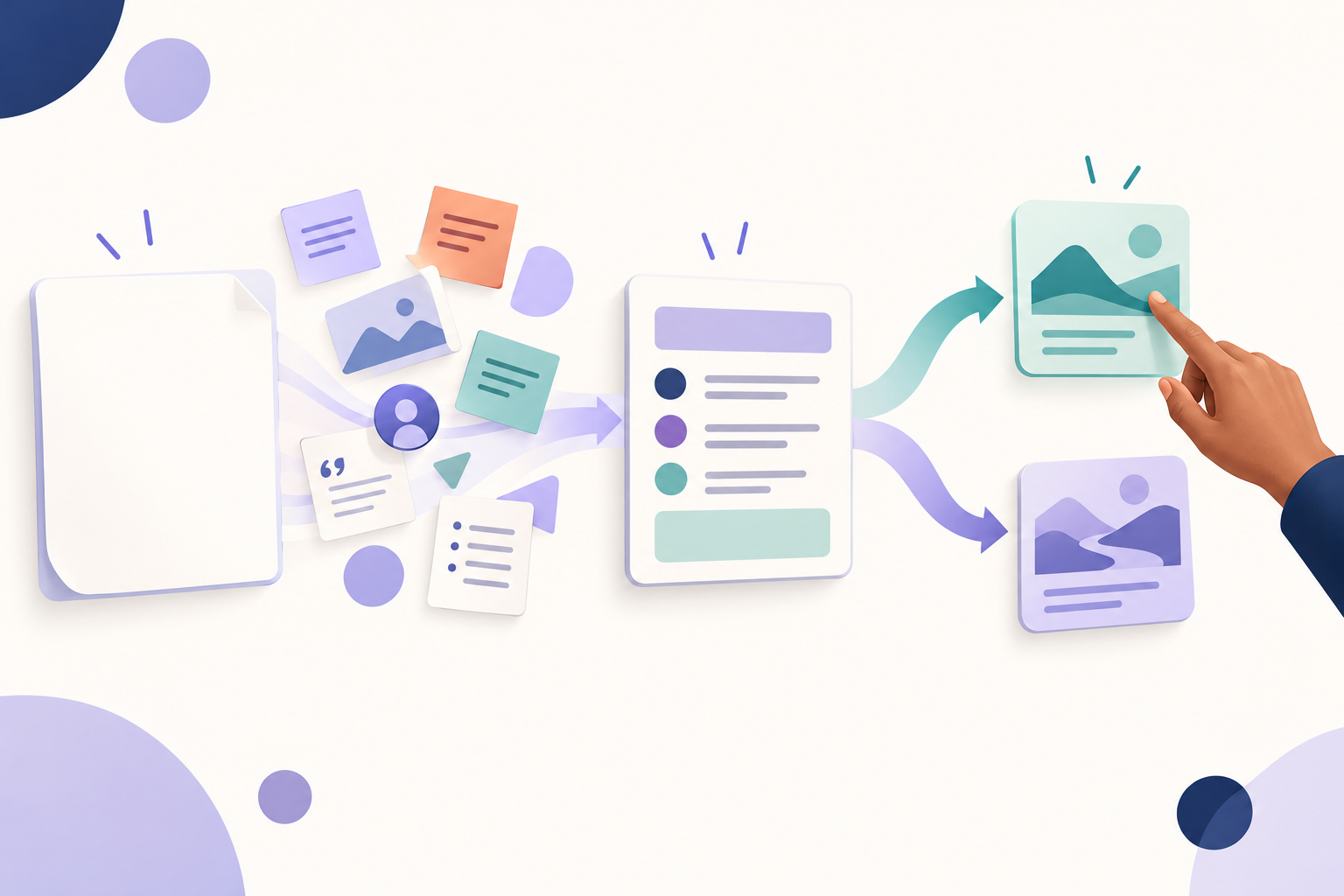
A blank chat box is not a neutral starting point. For a beginner, it hides several decisions at once: what the task is, which context is safe to use, what a good result looks like and when to stop. A guided AI mission should remove that setup friction. It should not remove the judgement that makes the skill useful.
That distinction matters for HR and L&D teams designing short practice. If guidance supplies too little, the learner spends the exercise inventing a brief. If it supplies the answer, the learner completes the mission without practising the decision. The useful middle is a prepared runway followed by a real fork.
Good guidance removes setup work, not thinking work
Bokili describes its missions as bite-sized, scenario-based lessons for real work, adapted to role, level and preferred AI tools. The European Commission’s AI-literacy guidance takes the same contextual view at a broader level: organisations should consider people’s knowledge and experience, the AI system involved and the context in which it is used. Context is therefore part of the learning design, not an optional extra.
The US Office of Personnel Management advises training designers to identify the performance gap, clarify the critical behaviour and name how it will be observed. Applied to AI practice, this means a mission should pre-build the conditions around the behaviour while leaving the behaviour itself visible. A learner may be given a fictional source pack, an audience and a required format. They should still have to decide what to include, which claim needs checking and whether the draft is safe to use.
Blank-page exercise
- Invent the scenario
- Guess which inputs are allowed
- Guess what success means
- Spend most of the time writing a prompt
Guided decision practice
- Receive a clear work scenario
- Use an approved fictional source pack
- See the acceptance criteria
- Spend the time choosing, checking and revising
The prepared-runway model
Prepare four things; preserve one
Task
Give the learner a specific work result to produce for a named audience.
Context
Supply the relevant fictional facts, constraints and safe source material.
Standard
State the format, review criteria and point at which the work must stop or escalate.
Tool
Name the AI tool or allow a defined choice when tool selection is part of the skill.
Decision
Leave one consequential choice to the learner and require evidence for it.
The preserved decision is the centre of the mission. It might be whether a supplier risk is material, which evidence belongs in an executive summary, whether a customer reply needs escalation, or which of two drafts meets the acceptance criteria. The AI can propose. The learner must choose, check and explain.
Worked example: a supplier update
Reading is a start. Practice makes it stick.
Start learningImagine a procurement learner is asked to turn three fictional supplier notes into a two-paragraph update for an operations director. The mission provides the notes, the audience, the length, an approved-tool boundary and three acceptance criteria: distinguish fact from assumption, identify the one issue that may interrupt delivery, and name the decision owner.
The exercise does not tell the learner which issue is material. One note describes a minor price change; another records an unconfirmed delay; the third confirms that a required certificate expires before the next shipment. The learner may ask the AI to organise the evidence, but must decide which issue leads the update and show the source sentence that supports that choice.
This is not a prompt-writing contest. A polished prompt that selects the wrong risk should not pass. A short prompt followed by a careful source check and a justified correction may demonstrate the target skill. The mission design makes that difference observable.
Design a guided mission in five passes
- 1
Name the work result
Write the artefact, audience and realistic use in one sentence.
- 2
Choose the behaviour
State the decision, check or correction the learner must perform.
- 3
Pre-build the runway
Supply safe inputs, boundaries, format and success criteria.
- 4
Protect the fork
Remove any hint that gives away the central decision.
- 5
Collect evidence
Ask for the result plus the source, check or rule behind the choice.
Three ways guidance accidentally gives away the skill
First, the worked example can be too close to the assessed task. Learners then copy the structure and surface wording rather than transfer a method. Second, the checklist can name the right answer instead of the criterion for finding it. Third, coach feedback can repair the work before the learner makes a second attempt. In each case, completion rises while the decision disappears.
A better sequence gives a different example, states the general criterion and holds the correction until the learner commits. That creates room for useful feedback and a second attempt. It also complements Bokili Learn guidance on teaching one decision rather than one feature, leaving a reusable work artefact, recording a three-line decision receipt and using feedback to prompt a second attempt.
- Circle everything the mission gives the learner before they open the AI tool.
- Label each item task, context, standard or tool.
- Write the one decision the learner must still make.
- Delete any hint that reveals that decision.
- Add one source, check or short explanation the learner must submit with the output.
- Ask a colleague whether two plausible choices still remain at the decision point.
A short mission can still contain real judgement
Ten minutes is enough when the mission spends those minutes on the skill rather than on setup. Guidance should make the scenario legible, the inputs safe and the standard clear. Then it should step back. The learner still needs to decide what matters, test the AI’s contribution and own the result.
That is the practical promise behind Bokili’s guided, role-adapted missions: less blank-page friction, more visible practice. Try the audit on one existing exercise. If the learner can finish without making a consequential choice, the mission is not ready yet.
Sources
- Features — AI training for teams — Bokili
- AI training for HR & L&D leaders — Bokili
- AI Literacy — Questions & Answers — European Commission
- Planning & Evaluating — Training Needs Assessment — U.S. Office of Personnel Management
Reading is a start. Practice makes it stick.
Bokili turns skills like this into ten-minute missions for your whole team, with instant feedback and progress you can see.
Start learningKeep reading
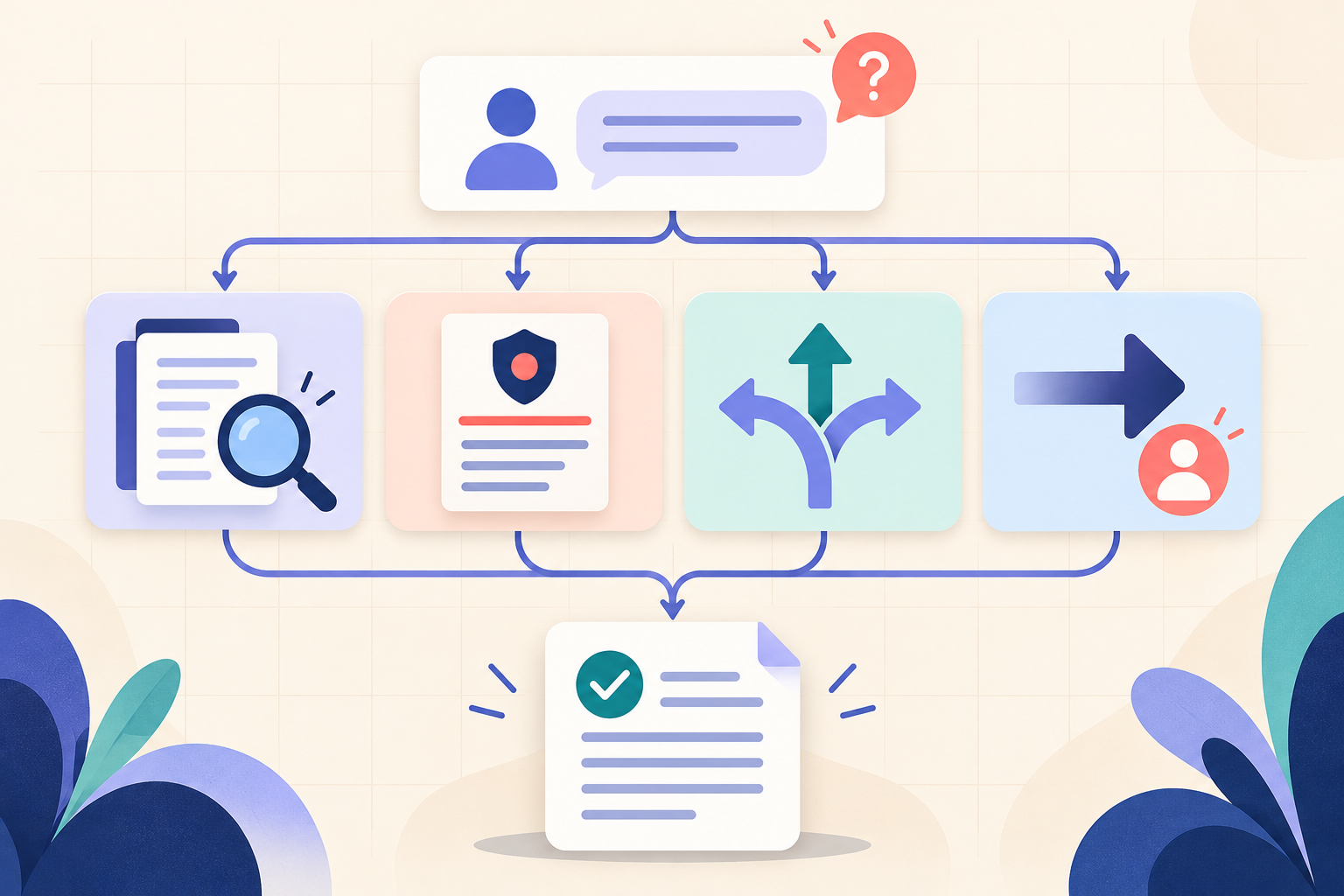
AI Training for HR: Build a Four-Part Policy Answer
Teach HR teams to separate the source, written rule, human discretion and next step before turning an AI draft into employee guidance.
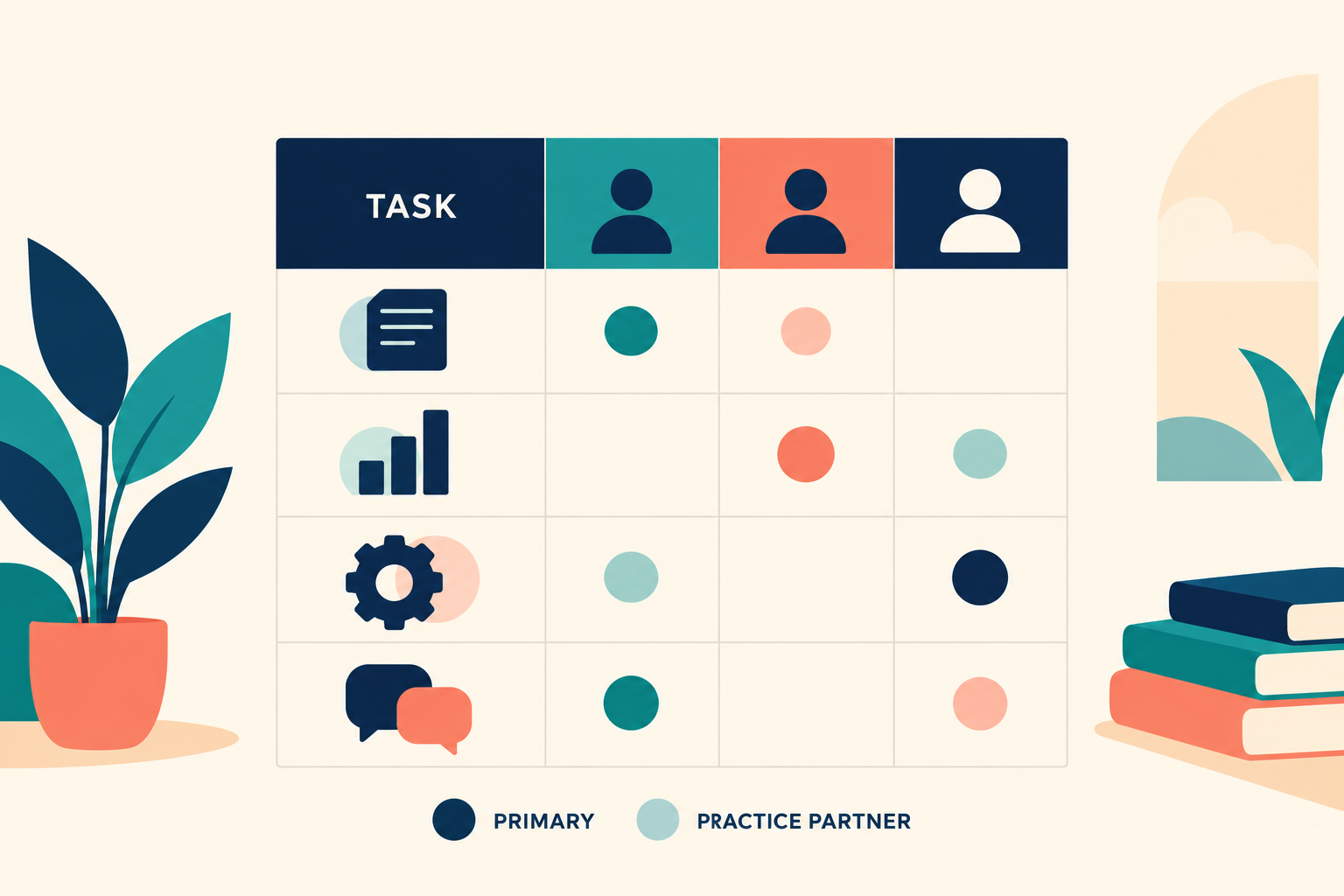
AI Upskilling for Teams: Build Two-Person Skill Coverage
AI upskilling for teams becomes resilient when every priority work task has a primary practitioner, a practice partner and shared evidence.
AI Meeting Notes Need a Commitment Check
AI-generated action items are drafts. Use four commitment states to stop suggestions, assignments and dates becoming promises nobody made.