The Best AI Practice Feedback Ends With a Second Attempt
Useful AI practice feedback names one observable gap, explains why it matters and opens a corrected second attempt while the work is still fresh.
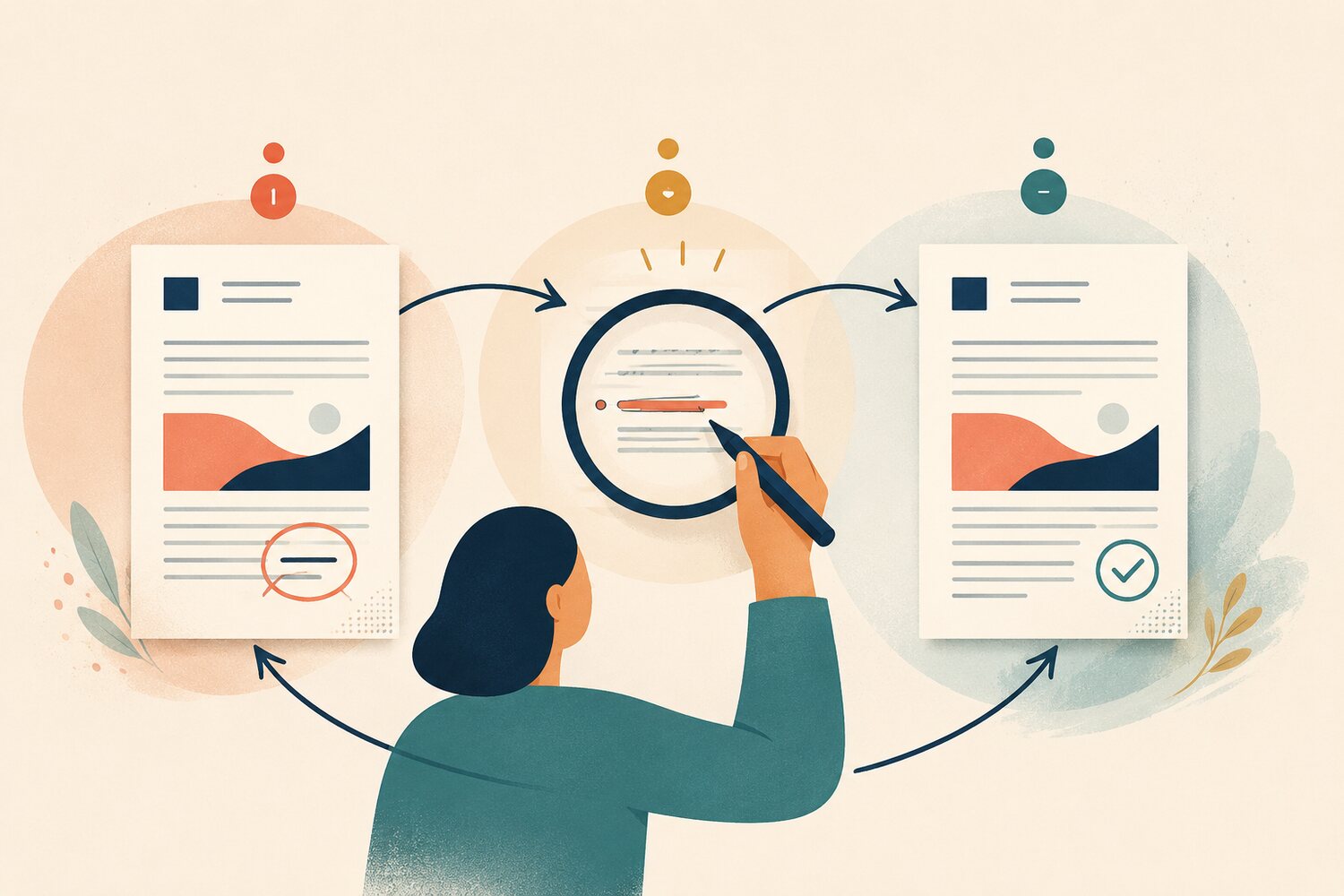
Feedback becomes useful when it changes the next attempt. A score, a green tick or “good job” may close an exercise, but it does not tell an employee which behaviour to repeat, which risk to correct or how to try again. At the other extreme, a long audit can bury the one change that matters.
For short AI practice, the strongest feedback is narrow and actionable: point to one observable choice in the submitted work, explain its consequence and reopen the task for a corrected second attempt. The learner should leave with evidence of improvement, not merely a verdict.
Feedback is a bridge, not a finish line
If the learner cannot act on the feedback in the next few minutes, it is probably too vague, too broad or too detached from the work.
Why a second attempt matters
Microsoft’s human–AI interaction guidelines include supporting efficient correction: people should be able to edit, refine or recover when an AI system is wrong. That is a product-design principle, not a complete learning theory, but it points to an important practice habit. Employees need to recover from weak AI-supported work, not simply recognise that it is weak.
The National Academies’ review of learning research also warns that practical applications depend on context. It supports active retrieval and structured practice, but it does not prescribe one workplace feedback formula. The design claim here is deliberately modest: an immediate revision makes the feedback testable. The learner can see whether the requested change improved the work.
The SEE–FIX–RETRY loop
SEE one behaviour
Name the exact choice visible in the work. Quote or point to the relevant line; do not label the learner.
FIX one high-value gap
Explain the smallest change that improves safety, clarity or usefulness, and why that change matters.
RETRY while the context is fresh
Reopen the task, apply the change and compare the two attempts against the same acceptance check.
Worked example: meeting notes become unsafe actions
Imagine a learner uses AI to turn fictional meeting notes into an action list. The notes name Priya as the owner of the budget check, but they do not assign the supplier call. The AI output confidently assigns both tasks to Priya. A generic message such as “check accuracy” is correct but weak. It does not show what failed or how to recover.
Reading is a start. Practice makes it stick.
Start learningTurn these meeting notes into an action list with task, named owner, deadline and source line. Use only owners and deadlines stated in the notes. Write “unassigned” or “not stated” when the notes do not provide them. Do not infer responsibility.
Budget check — Priya — Friday — source: line 4. Supplier call — unassigned — deadline not stated — source: line 7.
Focused feedback: the first output invented an owner. Add a source-bound rule, mark missing fields explicitly, then run the task again.
The second attempt does not need a longer lecture on hallucinations. It needs one clear constraint and a chance to apply it. After the correction works on the meeting notes, a later mission can test the same behaviour on a different artefact, such as a project brief or supplier summary. Immediate retry shows correction; a fresh task later tests transfer.
Keep feedback close to the work
Useful feedback describes the output, not the person. “This action has no named source owner” is observable. “You lack judgement” is an unsupported character claim. It also separates an important error from a stylistic preference. A missing source boundary can change a decision; a different heading style usually cannot.
Good feedback should also make disagreement possible. The reviewer or system may miss context. Show the evidence, state the acceptance check and let the learner explain or revise. A practice loop should build judgement, not train people to obey an opaque score.
- Choose one completed AI exercise and its current feedback.
- Underline the single sentence that names an observable behaviour.
- Write the consequence of that behaviour in plain language.
- Replace broad advice with one specific correction.
- Create a second-attempt instruction that can be completed immediately.
- Add one later task that tests the same behaviour in a new context.
How Bokili uses the loop
Bokili’s public product flow combines short workplace missions with immediate feedback and a recommended next mission. The practical standard should be simple: feedback earns its place when it helps someone produce a better second attempt. The FIND–FIX–PROVE recovery method helps learners recover from plausible errors, while the prompt experiment template shows how to change one variable at a time. The evidence-to-next loop then uses demonstrated work to choose what comes next.
The goal is not more feedback. It is a visible correction, a better attempt and a next challenge that builds on what the work actually showed.
Sources
- Bokili — AI fluency training for companies and teams — Bokili
- Guidelines for Human-AI Interaction — Microsoft Research
- How People Learn II: Learners, Contexts, and Cultures — National Academies of Sciences, Engineering, and Medicine
Reading is a start. Practice makes it stick.
Bokili turns skills like this into ten-minute missions for your whole team, with instant feedback and progress you can see.
Start learningKeep reading
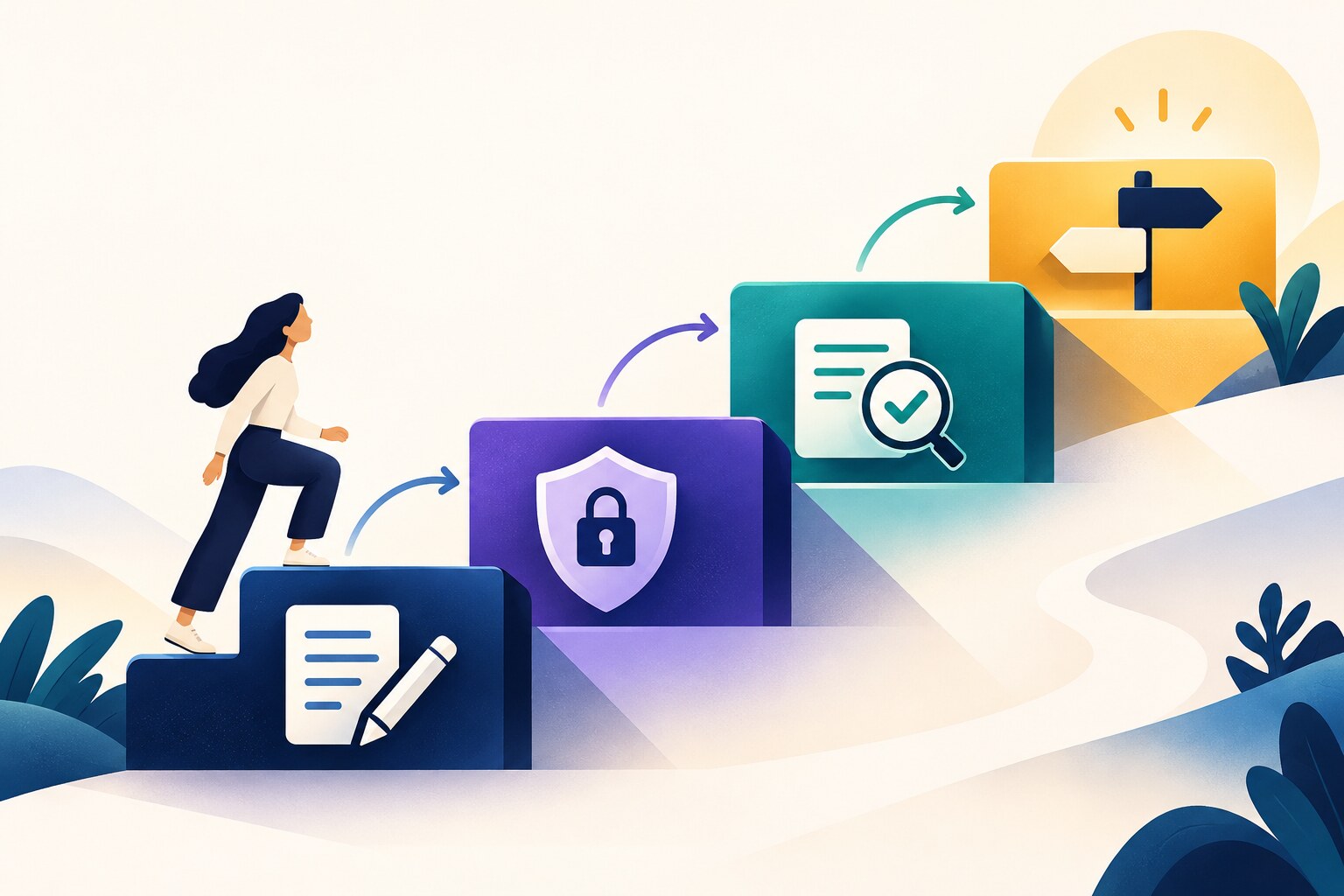
AI Skills for Employees: Build a Prerequisite Ladder
Build AI skills for employees in the right order: frame the task, set boundaries, check the result and decide what happens next.
Use AI to Draft Marketing Claims Without Losing the Evidence
Create an evidence-bound claim sheet so AI-generated marketing copy keeps every promise tied to proof, scope and approval.
AI Training for HR: Test Interview Questions Against the Job
AI training for HR should teach a five-part test that links every interview question to the job, observable evidence and a consistent scoring rule.