
A Good AI Mission Teaches One Decision, Not One Feature
Short AI lessons often teach the interface and miss the judgement. Design each mission around one decision, the evidence that should change it and a clear stop rule.
Design for the decision
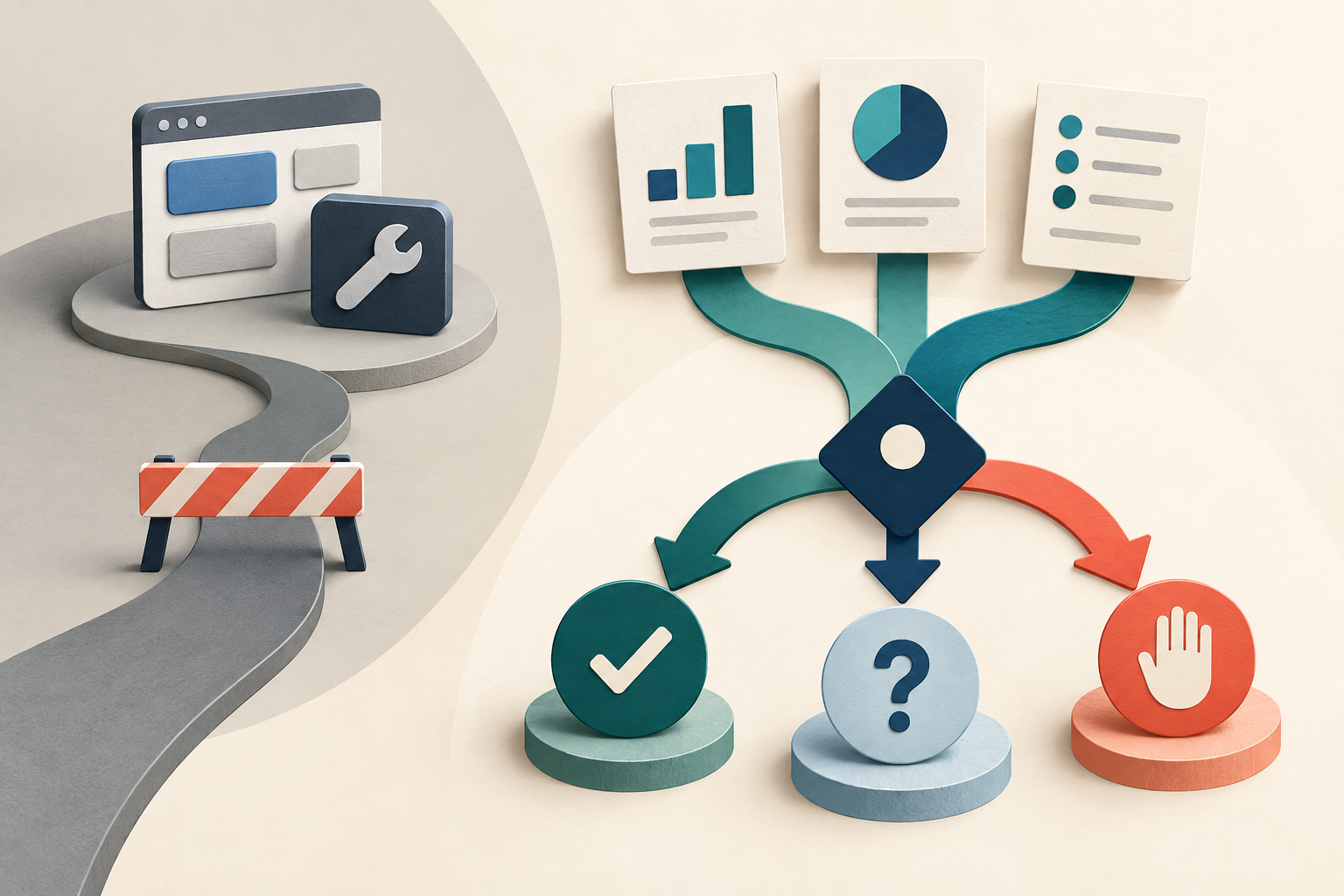
A learner has not mastered a skill because they can find a button. They have mastered it when they can make a better work decision, explain the evidence and stop when the evidence is not enough.
A ten-minute AI mission can be perfectly accurate and still teach very little. The learner opens a feature, follows the clicks and produces an answer. Yet the real workplace question remains untouched: should this output be used, revised, checked against another source or handed to someone else?
That gap matters because people use AI to achieve human goals, not to demonstrate interface memory. NIST’s AI Use Taxonomy puts the task and the human outcome at the centre. Current UK guidance on workplace AI upskilling makes a similar point: practical training links to real tasks and real decisions, shows when AI should and should not be used, and combines tool use with judgement.
The smallest useful learning unit is one decision
Start with a decision a person genuinely owns. It might be whether a source is strong enough to support a claim, whether a draft needs revision, whether customer data is safe to enter, or whether a case should be escalated. The tool is part of the route, not the destination.
| Feature-centred mission | Decision-centred mission | |
|---|---|---|
| Starting point | A button, mode or prompt pattern | A real work decision |
| Learner action | Repeat a sequence | Inspect evidence and choose |
| Success | An output appears | The choice is justified |
| Safety | Warning added at the end | Stop rule built into the task |
| Transfer | Depends on the same interface | Survives a tool change |
This does not make tool instruction unimportant. Learners still need enough guidance to complete the task. But the mission should use the interface to rehearse a judgement that transfers. Bokili’s public feature pages describe guided, role-adapted, scenario-based missions that fit into roughly ten minutes. A decision-centred design makes that short format do more useful work.
Use a four-part decision card
The mission design card
Work outcome
Name what must be true when the task is finished. Avoid a vague goal such as “use AI better”.
Decision
Write one choice the learner must make. Use options that can be observed: use, revise, ask, escalate or stop.
Evidence
Provide the facts that should affect the choice, including one detail that could be missing, conflicting or unreliable.
Stop rule
State when the learner must pause, seek another source or hand the work to a named role.
Worked example: compare two suppliers
Reading is a start. Practice makes it stick.
Start learningImagine a learner receives a fictional supplier table and an AI-generated recommendation. Supplier North is cheaper and promises the earliest delivery. Supplier East costs more but has complete service evidence. The AI recommends North. One delivery date in the table is only an estimate, and North’s required certification is missing.
A feature-centred lesson might ask the learner to upload the table and request a summary. A decision-centred mission asks: “Is the evidence sufficient to recommend a supplier, or must you ask for more information?” The learner must identify the estimate, notice the missing certificate, and choose to pause the recommendation. The useful outcome is not a smoother summary. It is a justified hand-off.
Build the mission in five moves
- 1
Write the decision first
Phrase one choice that belongs to the learner’s role.
- 2
Create a safe scenario
Use fictional or approved data with enough realism to make the judgement meaningful.
- 3
Plant a consequential detail
Include one conflict, uncertainty or missing fact that should change the choice.
- 4
Ask for evidence, not confidence
Require the learner to point to the exact fact behind the decision.
- 5
Close with the stop rule
Make the safe boundary part of the assessed task, not an optional footnote.
Score the choice, not the prose
A polished explanation can hide a weak decision. Score the mission against observable evidence: did the learner choose the right action, cite the relevant fact, identify uncertainty and follow the hand-off rule? This aligns training with performance requirements rather than completion alone. OPM’s training-needs guidance begins with the performance requirements and capabilities needed to achieve the work outcome.
Quality check before launch
- The mission names one reader and one work situation.
- The learner makes one visible decision.
- At least one evidence detail can change that decision.
- The correct response is not obvious from wording alone.
- The task uses fictional, approved or safely transformed data.
- A stop or hand-off rule is explicit.
- The scoring checks judgement as well as tool use.
- The skill would still matter if the interface changed.
Connect the decision to a reusable result
The decision should leave a trace: a marked source, a short rationale, a review note or a hand-off card. That makes later feedback possible and helps the learner reuse the skill. The related Bokili guide A Ten-Minute AI Mission Should Leave a Reusable Work Artefact explains how to choose that output.
For the next step, use Enterprise AI Training That Survives Tool Changes to separate durable judgement from replaceable interface instructions, then add the retry loop from The Best AI Practice Feedback Ends With a Second Attempt. Bokili’s features page shows how guided missions, feedback and role-adapted content fit together.
- Choose a current lesson that begins with a tool feature.
- Write the workplace decision the feature should support.
- Add one piece of evidence that should change the learner’s answer.
- Define the exact condition for revise, ask, escalate or stop.
- Replace the completion question with: What did you decide, and which evidence changed your choice?
One mission, one judgement
Keep the unit small. If a lesson asks learners to make three unrelated decisions, split it. Ten focused minutes can build a reflex; ten crowded minutes usually build recall.
Sources
- Features — AI training for teams — Bokili
- AI Use Taxonomy: A Human-Centered Approach — NIST
- Employer guide: What works for AI upskilling in the UK — UK Government
- Training Needs Assessment — Planning & Evaluating — U.S. Office of Personnel Management
Reading is a start. Practice makes it stick.
Bokili turns skills like this into ten-minute missions for your whole team, with instant feedback and progress you can see.
Start learningKeep reading

AI Upskilling for Teams: Run a Weekly Calibration Clinic
AI upskilling for teams needs a shared quality threshold, not just shared course access. A weekly calibration clinic turns one work sample into one practical team rule.
Learn AI by Mapping the Work You Already Do
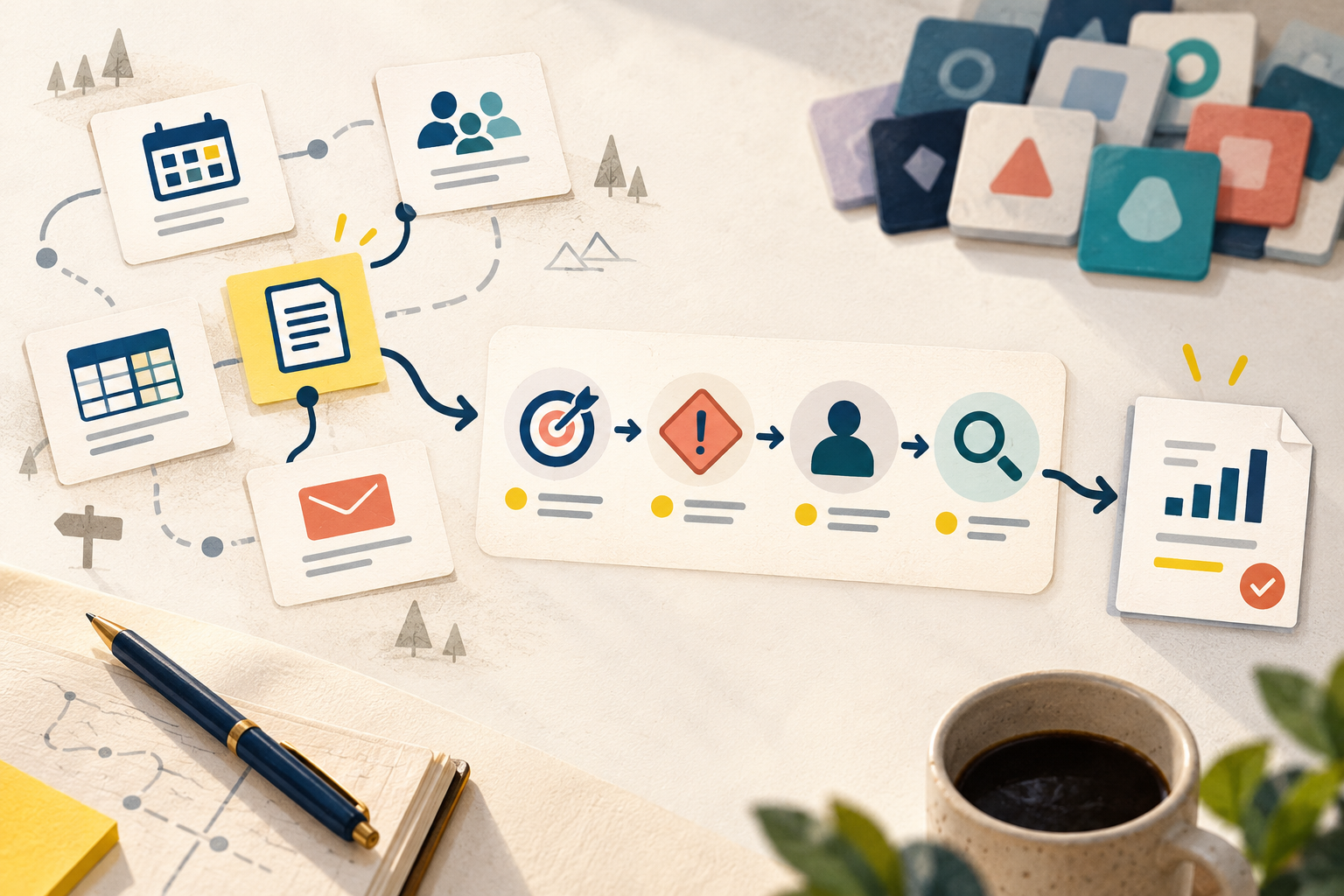
Learn AI by mapping one recurring work task, its useful outcome, stakes and human review before choosing a tool or course.
Redact Before You Prompt: Run a Reidentification Check
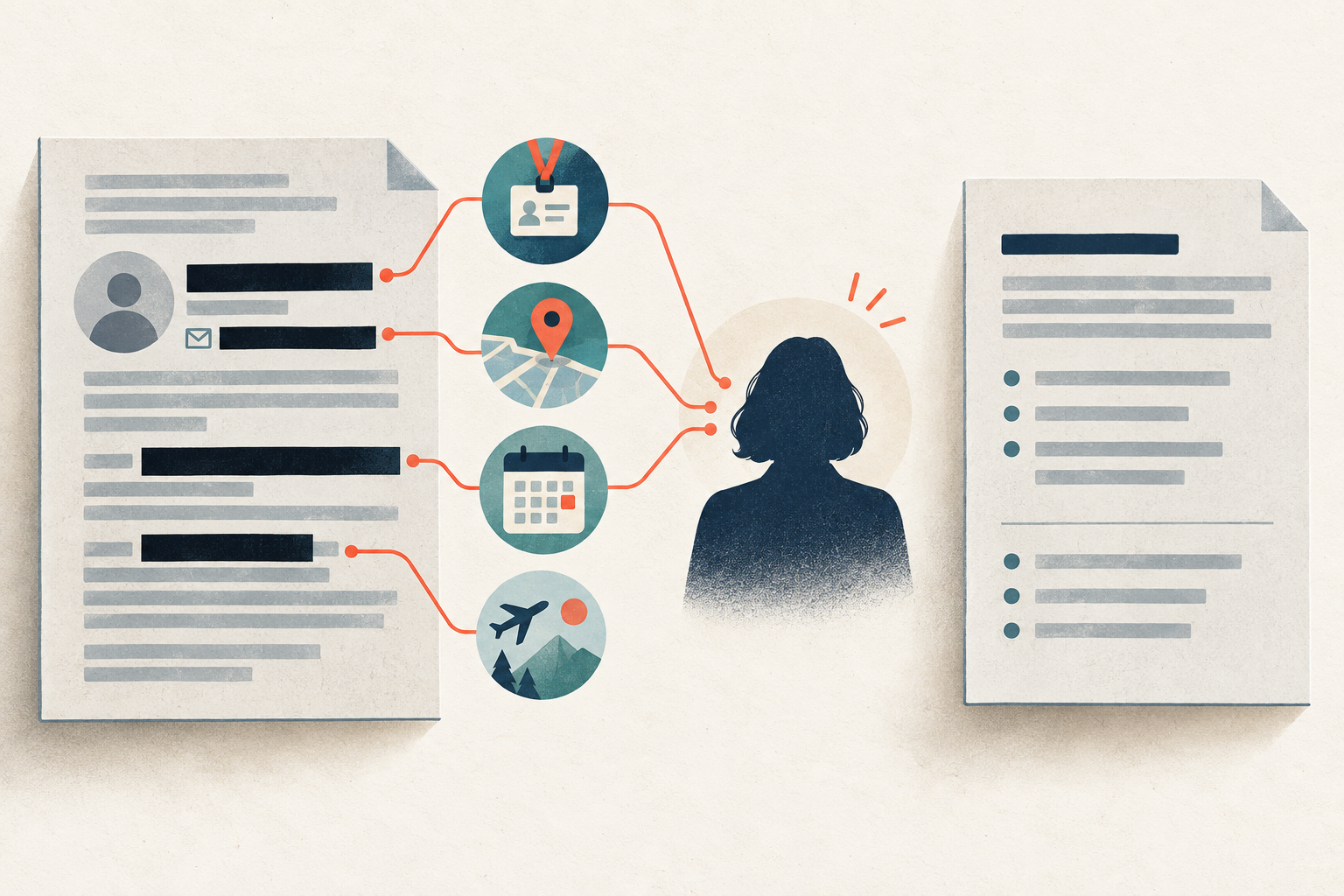
Removing names is not enough. Use a four-pass reidentification check before approved AI tools receive workplace text.