
AI Literacy Training for Business Must Reach AI Buyers
AI literacy training for business should reach procurement before a tool is chosen. Use the BUYER brief to define use, people, data, authority and evidence.
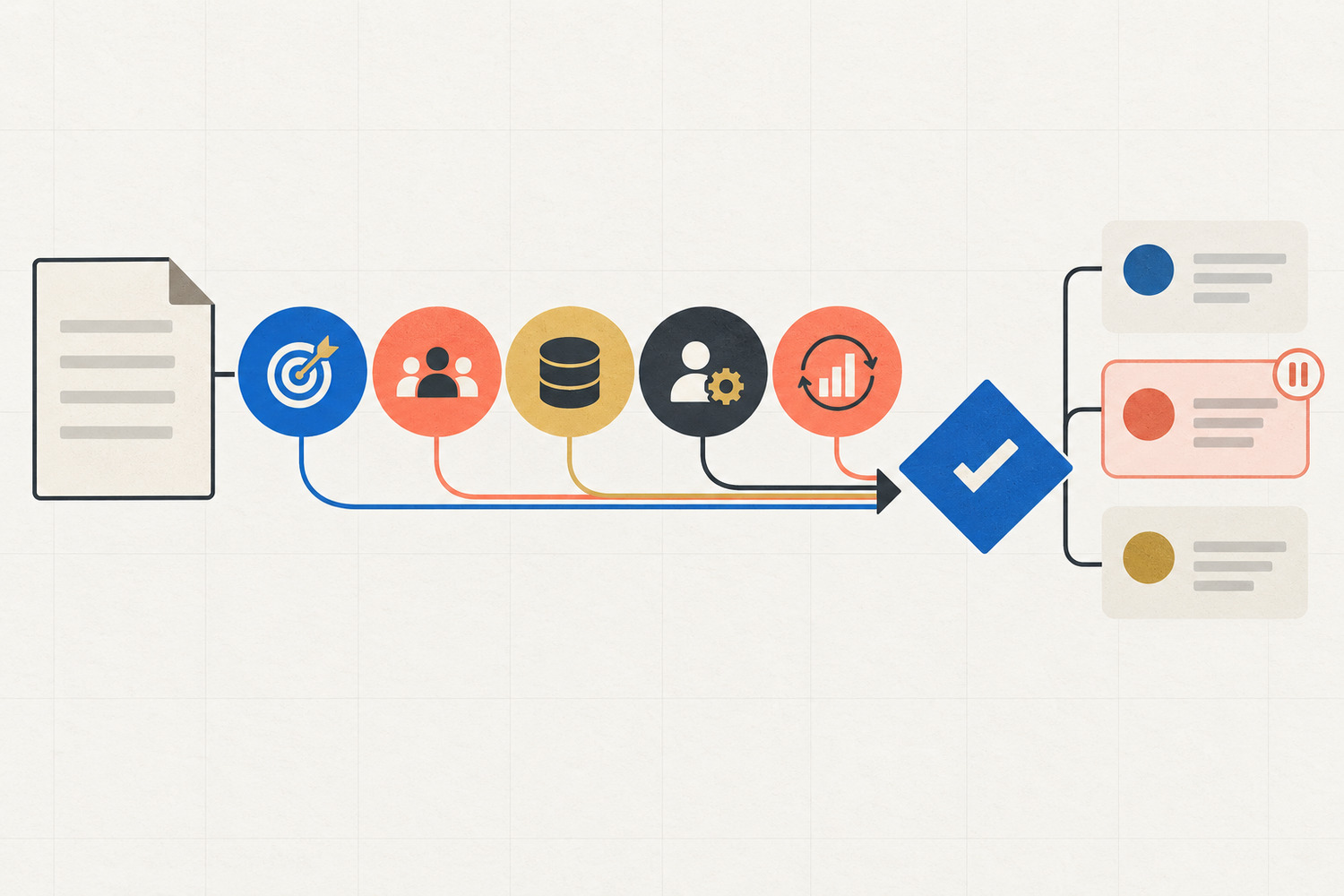
AI literacy training for business often starts after a tool has been bought. That is too late for the people who shape the requirement, compare suppliers and write the contract. If buyers cannot describe the intended use, affected people, data path, human authority and evidence needed after launch, a polished vendor response can hide an undefined operating decision.
Procurement teams do not need to become model engineers. They need enough practical AI literacy to ask what the system will do in this organisation, what remains a human responsibility, what information crosses the supplier boundary and how performance or harm will be detected over time. Train those questions before market engagement, not during the first incident.
Why AI literacy training for business must begin before purchase
The European Commission’s current AI-literacy guidance is context-specific. It asks providers and deployers to consider the systems involved, their risks, the people’s knowledge and the setting of use. That logic includes people who decide which systems enter the organisation, even when they will not operate the product every day.
NIST’s AI Risk Management Framework playbook treats third-party systems, data and supply chains as governance work. It suggests policies for transparency, testing, usage instructions, auditability and failure handling. The UK government’s AI procurement guidance likewise starts with the problem, user needs, data assessment, multidisciplinary input and lifecycle management. Its legal context is public procurement, but its questions are useful prompts for any buyer; organisations still need advice suited to their own sector and jurisdiction.
The BUYER brief: five things to define first
B — Benefit and boundary
Name the work outcome, the problem to solve and what the system must not decide. Stay open to a non-AI solution.
U — Users and affected people
Identify operators, reviewers, decision owners and people affected by outputs. Include contractors and service teams where relevant.
Y — Your data path
Map what enters the service, where it is processed or retained, who can access it and what must never be supplied.
E — Escalation and authority
State who approves important outputs, which cases require review and how people report errors or contest a result.
R — Review evidence
Define the test before launch, the records available after launch and the trigger to change, pause or exit the service.
Compare evidence, not AI vocabulary
| Weak buying question | Evidence-focused question | |
|---|---|---|
| Capability | Does it use advanced AI? | Which defined task does it improve, and against what baseline? |
| People | Is there human in the loop? | Who reviews which output, with what authority and time? |
| Data | Is it secure? | What data enters, leaves, persists or trains another system? |
| Quality | What is the accuracy rate? | How was performance tested on representative cases and failure conditions? |
| Lifecycle | Will the vendor support us? | What changes are reported, what can be audited and what triggers a pause? |
Reading is a start. Practice makes it stick.
Start learningThese questions do not guarantee a safe purchase. They prevent a basic failure: comparing solutions before the organisation has defined the work and evidence. A supplier can then respond to the same use case and acceptance criteria, rather than choosing the demo that makes its product look strongest.
Worked example: buying an AI meeting assistant
A sales organisation wants a tool that records online meetings, drafts notes and creates CRM actions. The first requirement says only: “reduce administration and improve follow-up.” The BUYER brief makes it testable. The benefit is a checked action list within thirty minutes. The boundary excludes scoring employee performance or inferring customer sentiment. Users include sellers, managers and meeting participants.
The data path identifies recordings, transcripts, CRM fields, retention periods and any supplier reuse. A seller approves every external follow-up; a manager handles disputed or sensitive records. The pilot uses fictional and consented test meetings. Review evidence includes missing commitments, invented actions, speaker attribution errors, deletion checks and the time needed for human correction.
Turn the brief into a fair supplier test
- 1
Give every supplier the same case
Use one representative, safe meeting and the same required output.
- 2
Test the difficult edges
Include an unclear owner, a withdrawn commitment and a sensitive detail that should not enter the CRM.
- 3
Observe the full workflow
Measure setup, review, correction, approval, deletion and escalation—not only note quality.
- 4
Record assumptions
Separate what the product demonstrated from what the buyer or supplier merely expects.
- 5
Decide the next gate
Set criteria for a limited pilot, a hold for more evidence or a stop.
Connect buyer literacy to the wider learning system
Use the corporate AI training buyer scorecard when the purchase itself is a learning programme. Build different learning depth with risk-based AI literacy training. Include external workers with the guide to corporate AI training for contractors and service providers. After a pilot, require a scale, hold or stop decision. Bokili’s leader path helps teams practise the decisions behind responsible adoption.
- Write the business problem without naming a product.
- Name one required outcome and one prohibited decision.
- List operators, reviewers, decision owners and affected people.
- Sketch the data path and mark information that must stay out.
- Write one escalation trigger and one person with stop authority.
- Choose three observations that would support a pilot decision.
Buying an AI-enabled service is already part of using AI. Treat procurement as an AI-literacy moment: define the work, people, data, authority and evidence before comparing features. Better questions at the start create a clearer test, a more useful contract and fewer surprises after launch.
Sources
- AI Literacy — Questions & Answers — European Commission
- Govern — AI RMF Playbook — NIST
- Guidelines for AI procurement — UK Government
- Bokili for Leaders — Bokili
Reading is a start. Practice makes it stick.
Bokili turns skills like this into ten-minute missions for your whole team, with instant feedback and progress you can see.
Start learningKeep reading
AI Training Platform for Companies: Run an Accessibility Rehearsal
Before choosing an AI training platform for companies, test one complete learning journey with keyboard, zoom, screen reader and error recovery.
Personalised AI Missions Need a Fixed Evidence Bar
Adapt the role, tool and starting support—but keep one visible evidence standard so personalised AI practice still proves the same skill.
ChatGPT Training for Employees: Treat Imported Text as Data
Teach employees to keep a stable task when an email, document or webpage contains instructions that the AI should analyse—not follow.