Corporate AI Training: A 12-Point Buyer Scorecard
Use this corporate AI training scorecard to compare programmes on role relevance, hands-on practice, feedback, safety and evidence of real skill.
Choosing corporate AI training is difficult because most offers look convincing in a demo. They may contain polished videos, broad tool lists and impressive course counts. Those features say little about whether an employee will handle a real document safely, choose the right AI workflow, check the result and improve after feedback.
This buyer scorecard turns one broad purchase into twelve observable checks. It is designed for HR, L&D, transformation and IT leaders with a commercial-investigation intent: compare how programmes build practical AI capability, not how much content they display.
What good corporate AI training must prove
The European Commission’s current AI literacy guidance says organisations should consider people’s existing knowledge, the AI systems they use, the context and the risks. NIST’s Generative AI Profile frames risk management across the design, development, use and evaluation of generative AI systems. For a buyer, the shared lesson is that training should connect a person, a task, a tool, a consequence and evidence.
Four dimensions, twelve checks
1. Work fit
Role relevance, real task relevance and coverage of the AI tools employees actually use.
2. Learning loop
Hands-on practice, useful feedback and progression from current level to harder work.
3. Safe judgment
Input boundaries, output verification and clear human decisions or escalation.
4. Rollout evidence
Low-friction access, meaningful skill evidence and reporting that supports action.
Score each criterion from 0 to 2
Use 0 when the capability is absent. Use 1 when the vendor describes it but cannot show it in a learner flow or evidence record. Use 2 when you can see it working with a realistic task. The maximum is 24. More importantly, apply three hard gates: reject a solution that offers no hands-on practice, no feedback on the learner’s work or no safe-use behaviour.
The 12-point corporate AI training scorecard
- Role relevance: examples and missions change for finance, HR, sales or other real roles.
- Task relevance: learners work on decisions and artefacts they recognise.
- Tool specificity: training covers the features and workflows employees are licensed to use.
- Hands-on practice: learners produce something instead of only watching or reading.
- Actionable feedback: the programme explains what worked and what to improve.
- Progression: difficulty adapts or advances as capability grows.
- Input safety: employees practise what may and may not enter an AI system.
- Output verification: learners trace claims, check evidence and test assumptions.
- Human judgment: scenarios show when to decide, escalate or stop.
- Rollout friction: access, invitations and ongoing administration are realistic for your team.
- Skill evidence: the system records demonstrated behaviour, not only attendance.
- Management insight: reporting helps leaders target the next learning action.
Reading is a start. Practice makes it stick.
Start learningWorked comparison: three fictional options
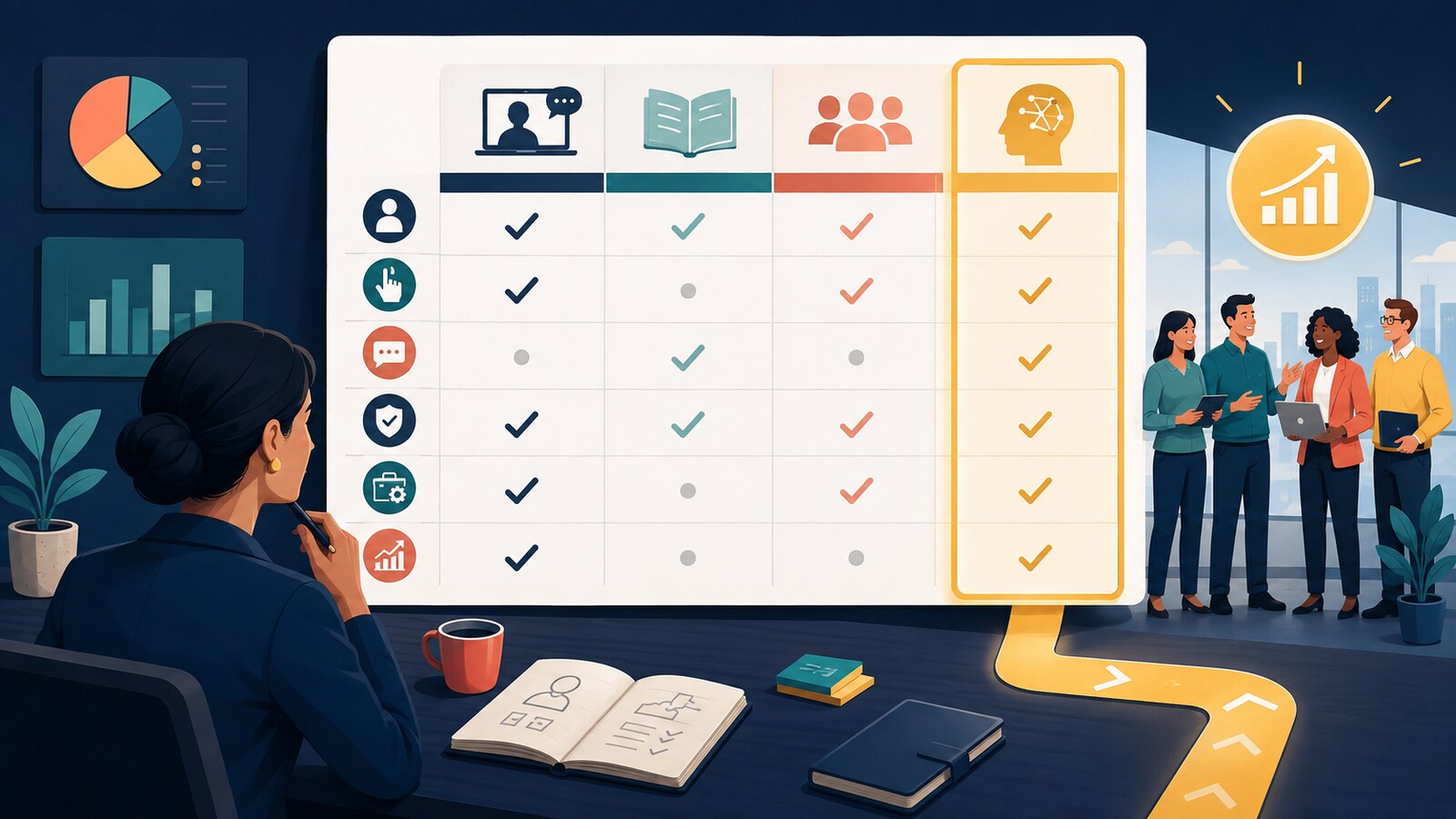
| Video library | One-off workshop | Practice platform | |
|---|---|---|---|
| Role and tool fit | Broad catalogue | Can be tailored once | Can adapt by role and tool |
| Practice | Occasional quiz | Strong during session | Repeated workplace tasks |
| Feedback | Usually answer-level | Facilitator during event | Feedback on each attempt |
| Safety | Policy module | Scenario discussion | Safe-use behaviour in tasks |
| Evidence | Completion | Attendance and notes | Progress and demonstrated skills |
| Continuity | Self-directed | Ends after event | Ongoing learning loop |
Do not treat the final score as objective truth. Weight the criteria around your problem. A regulated team may double the safe-judgment dimension. A small company with strong internal experts may accept lighter content if practice and reporting integrate well. A global rollout may need language support and simple administration as hard gates.
Run a ten-minute proof before procurement
- Choose one ordinary task, such as checking an AI-written supplier summary.
- Give the provider a fictional, safe source document and one learner role.
- Ask the learner to complete the task in the tool they really use.
- Observe the guidance before the attempt and feedback after it.
- Ask what evidence a manager receives.
- Score the twelve criteria using only what you observed.
This short proof prevents a feature checklist from becoming the decision. It also exposes the gap between content availability and skill formation. A provider may cover seven tools yet offer no practice in any of them. Another may have fewer modules but a clear loop from attempt to feedback to progression.
Build a shortlist around the capability gap
Before inviting vendors, define the skills employees need. A role-based AI skills matrix helps name them. A risk-based AI literacy plan sets different depth by context. A measurement ladder clarifies the evidence you expect. If ChatGPT is the immediate priority, use the four-week employee curriculum as a concrete test case.
Bokili is built around short, role-adapted missions on the AI tools employees use, with feedback and progress evidence. You can compare that approach with other options using the same scorecard. The right corporate AI training platform is the one that closes your specific practice gap—and can show how.
Sources
Reading is a start. Practice makes it stick.
Bokili turns skills like this into ten-minute missions for your whole team, with instant feedback and progress you can see.
Start learningKeep reading
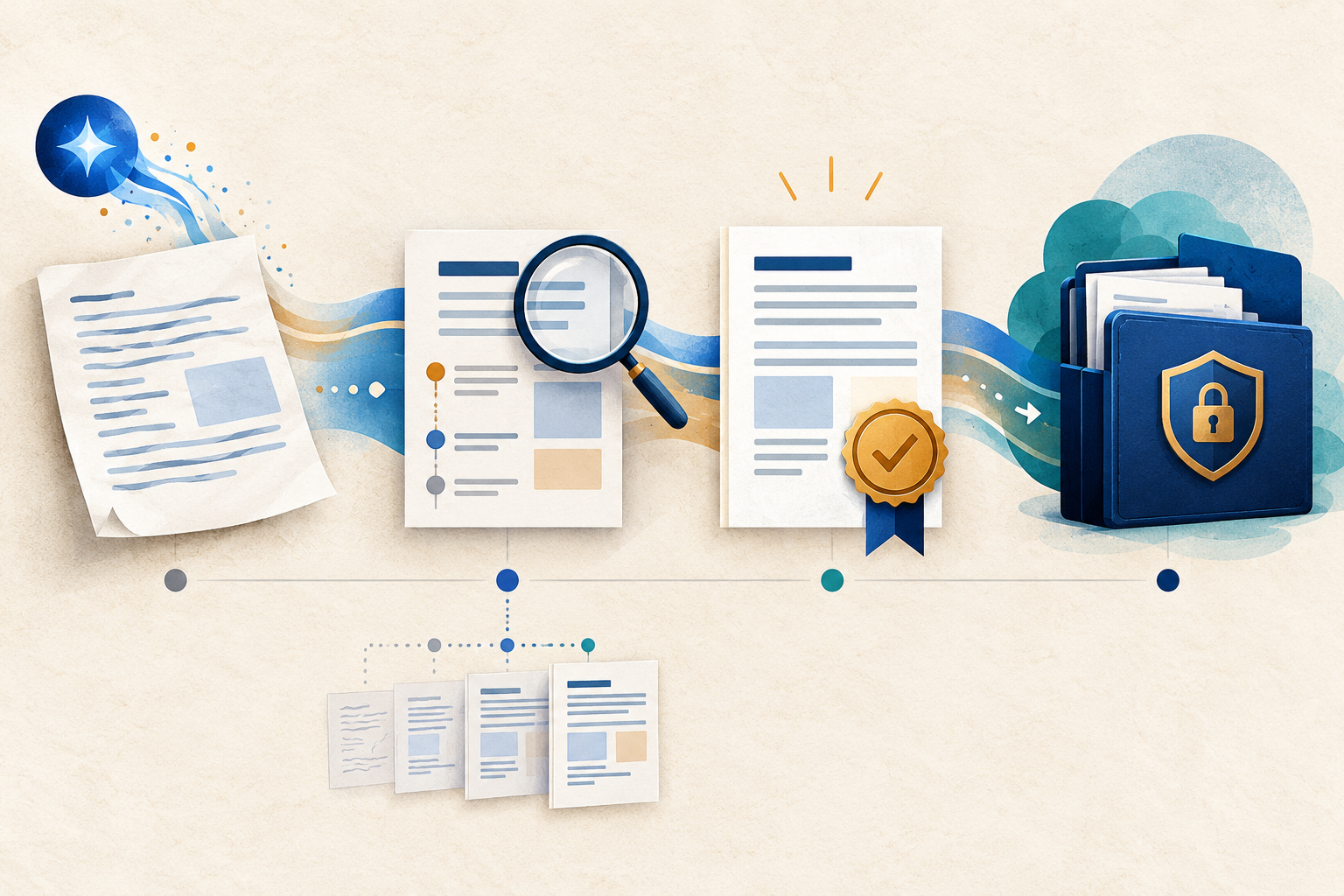
AI Training for Employees: Separate Drafts From Records
Teach a four-state path—Draft, Checked, Approved, Recorded—so polished AI output never becomes organisational fact by accident.
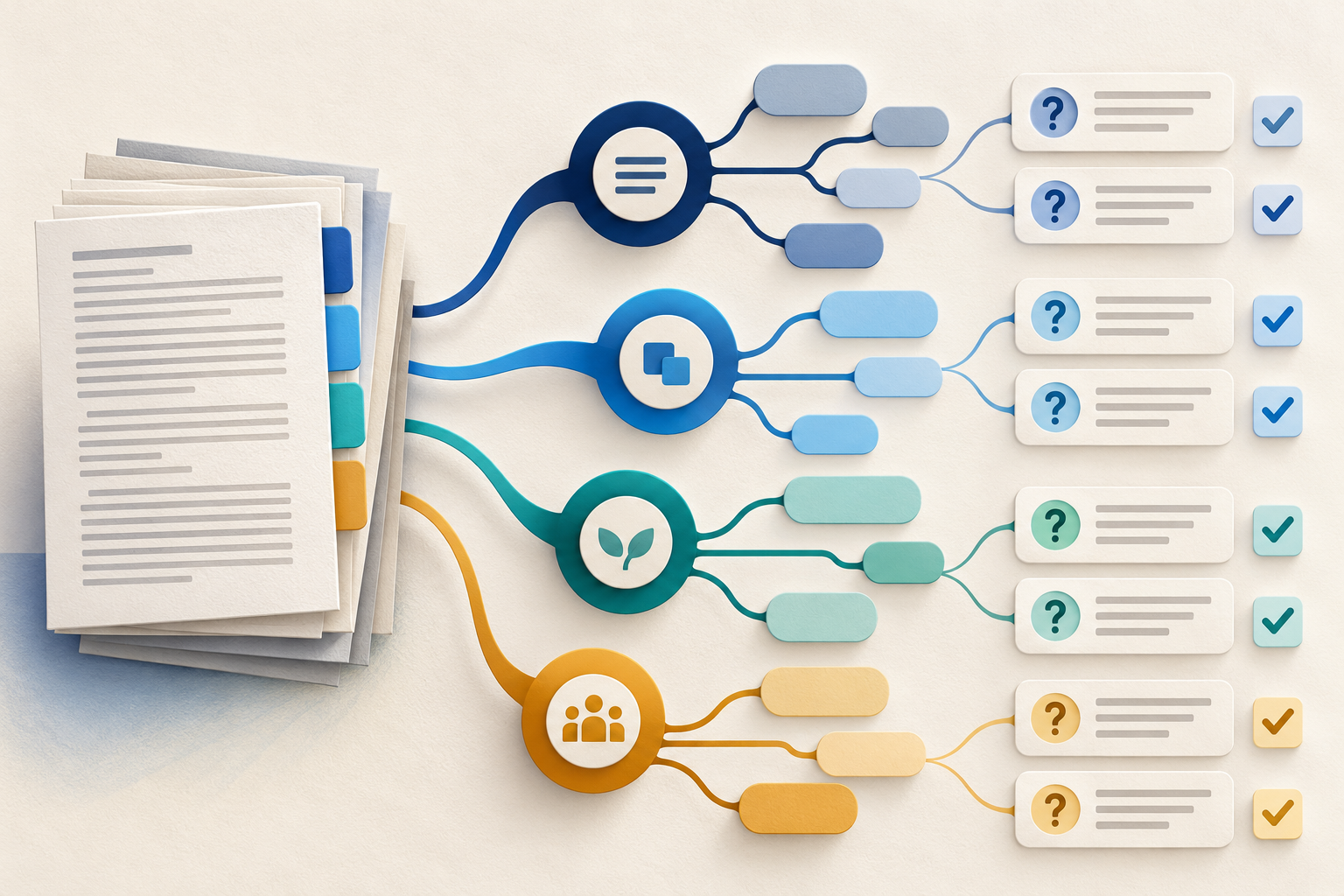
Use Gemini Notebook Mind Maps to Turn Policy Into Questions
Use a Gemini Notebook mind map as a question index for a long policy—then open the cited source before you trust any answer.
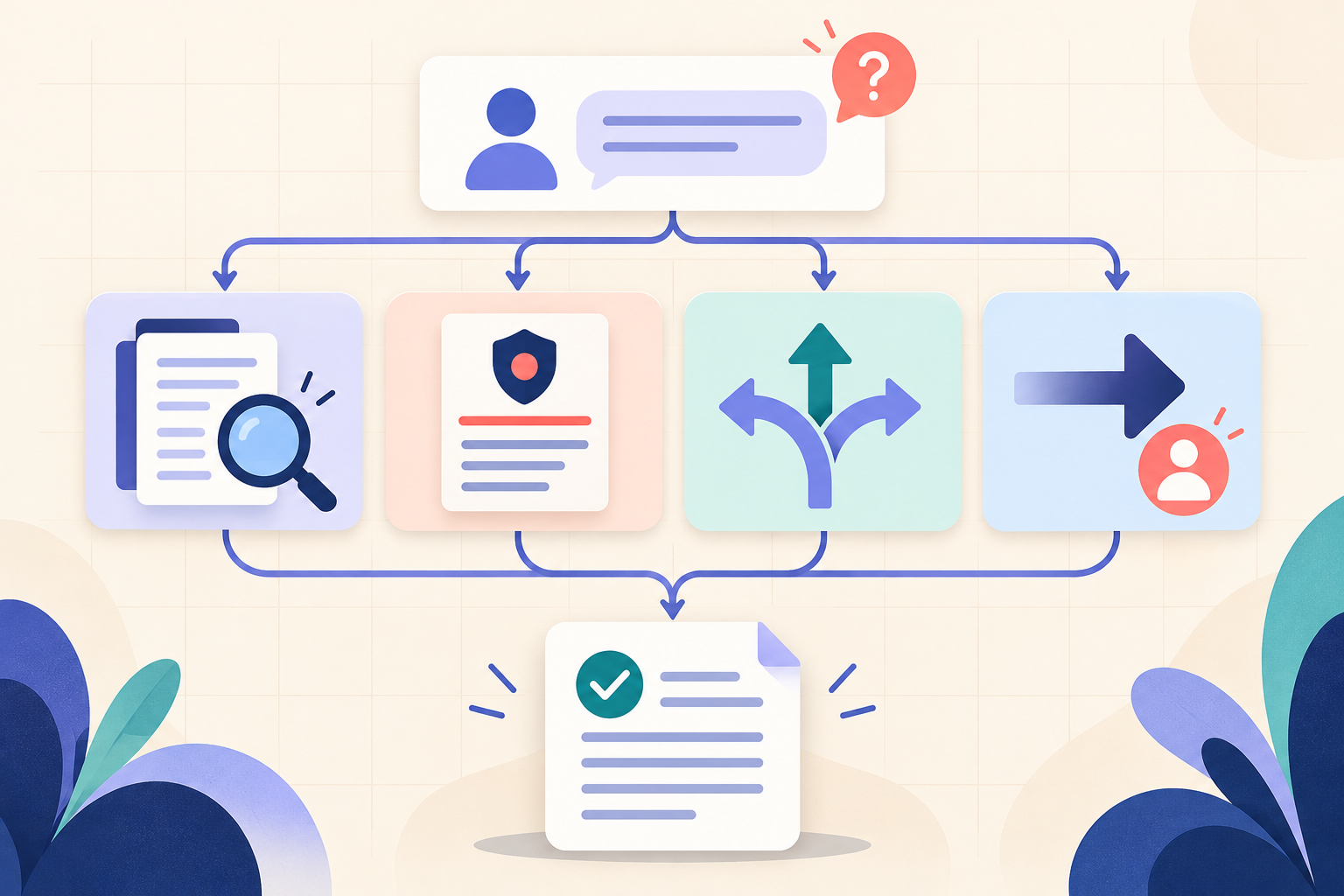
AI Training for HR: Build a Four-Part Policy Answer
Teach HR teams to separate the source, written rule, human discretion and next step before turning an AI draft into employee guidance.