
How to Build Risk-Based AI Literacy Training
Use the SCOPE method to match AI literacy to each role, system and consequence—without turning every employee into an AI specialist.

Many organisations start AI literacy with one course for everyone. That is easy to administer and hard to defend. A colleague using a writing assistant, a recruiter reviewing an AI-ranked shortlist and an operations lead approving an automated decision do not face the same failure modes—or owe the same level of judgement.
Risk-based AI literacy begins with the work, not the syllabus. Its purpose is to give each person enough understanding and practice to use the systems in their context, recognise when consequences rise and know where human authority begins.
The obligation is contextual, not identical
Article 4 of the EU AI Act says providers and deployers must take measures to ensure a sufficient level of AI literacy among staff and other people operating AI systems on their behalf. It explicitly points to their technical knowledge, experience, education and training, the context in which systems are used, and the people or groups affected. The European Commission’s current Q&A says the obligation has applied since 2 February 2025 and does not prescribe one mandatory training format or certificate.
Important distinction
This playbook supports training design; it is not legal advice. Confirm the scope, evidence and enforcement expectations with your qualified legal or compliance owner.
| One-size-fits-all course | Risk-based literacy system | |
|---|---|---|
| Starting point | Generic AI features | Real roles, systems and decisions |
| Depth | Same for everyone | Higher where consequences or duties rise |
| Practice | Recall questions | Work samples, boundary cases and escalation |
| Evidence | Attendance or completion | Observed decisions and documented follow-up |
| Maintenance | Annual event | Updated when systems, roles or risks change |
Use SCOPE to design the learning path
SCOPE: five questions before you build content
S — Systems
Which AI systems can this group access, and which approved workflows do they actually perform? Include embedded AI, not only standalone chatbots.
C — Consequences
What happens if the output is wrong, biased, disclosed or over-trusted? Consider impacts on individuals, customers, rights, money and operations.
O — Oversight
Which decisions must remain with a human? Name the reviewer, stop condition and escalation route instead of saying only “use judgement.”
P — People
Who operates the system and who is affected? Adjust examples for existing knowledge, language, accessibility and power differences.
E — Evidence
What would show sufficient capability in the role: a verified output, a correct refusal, a documented review or a timely escalation?
Build three tiers around decisions
| Foundation | Applied | Assurance | |
|---|---|---|---|
| Who | Everyone with approved AI access | People using AI in a defined workflow | Owners, reviewers and high-consequence operators |
| Learn | Capabilities, limits, privacy, verification | Workflow-specific prompting, checking and records | Risk controls, monitoring, incidents and accountability |
| Prove | Classify safe and unsafe scenarios | Complete a representative task with review | Handle an edge case and explain the control trail |
Reading is a start. Practice makes it stick.
Start learningThe tiers are not job grades. A senior executive using a summariser may need foundation practice; a junior employee reviewing sensitive customer outcomes may need applied or assurance practice. Assign depth by the decision and consequence, then add role-specific knowledge.
Worked example: one company, three AI contexts
Map the training to the work
- 1
1. Internal writing assistant
Teach approved data boundaries, source checking and disclosure. Evidence: the learner spots confidential input and verifies a material claim.
- 2
2. Recruitment ranking tool
Teach the tool’s intended use, limits, protected decision points, bias signals and candidate impact. Evidence: the recruiter challenges a suspicious ranking and follows the escalation path.
- 3
3. High-impact operational workflow
Teach control ownership, monitoring, override, incident logging and when to stop use. Evidence: the owner resolves a simulated threshold breach without bypassing the record.
NIST’s Generative AI Profile reinforces the need to connect learning to risk management across design, deployment, use and evaluation. That does not make every employee a risk specialist. It means the learning architecture should mirror the controls people are expected to perform.
Turn training into evidence
Minimum evidence pack
- The inventory names the system, workflow, owner and affected groups.
- Each learner group has an assigned tier and a written rationale.
- Examples use approved tools and realistic data boundaries.
- Practice includes a failure, uncertainty or escalation—not only a happy path.
- The assessment tests behaviour the role must perform.
- Completion and observed capability are recorded separately.
- System or policy changes trigger a review of the learning path.
- Legal, compliance, security and worker-representation inputs are documented where relevant.
- Choose one role that already uses an AI-enabled system.
- Name the exact task and the decision the output informs.
- Write the most credible harmful failure in one sentence.
- Identify the person or group affected.
- Mark the required human check, stop condition and escalation owner.
- Select Foundation, Applied or Assurance depth.
- Draft one realistic practice task that proves the behaviour.
Sufficient AI literacy is not a library of facts employees once heard. It is a maintained capability: people can explain what the system is doing in their workflow, perform the expected checks and stop or escalate when the situation exceeds their authority.
Bokili turns those behaviours into short, role-specific practice missions. Use it after SCOPE has identified the decisions worth rehearsing, so learning time follows actual risk instead of spreading evenly across every feature.
Sources
Reading is a start. Practice makes it stick.
Bokili turns skills like this into ten-minute missions for your whole team, with instant feedback and progress you can see.
Start learningKeep reading
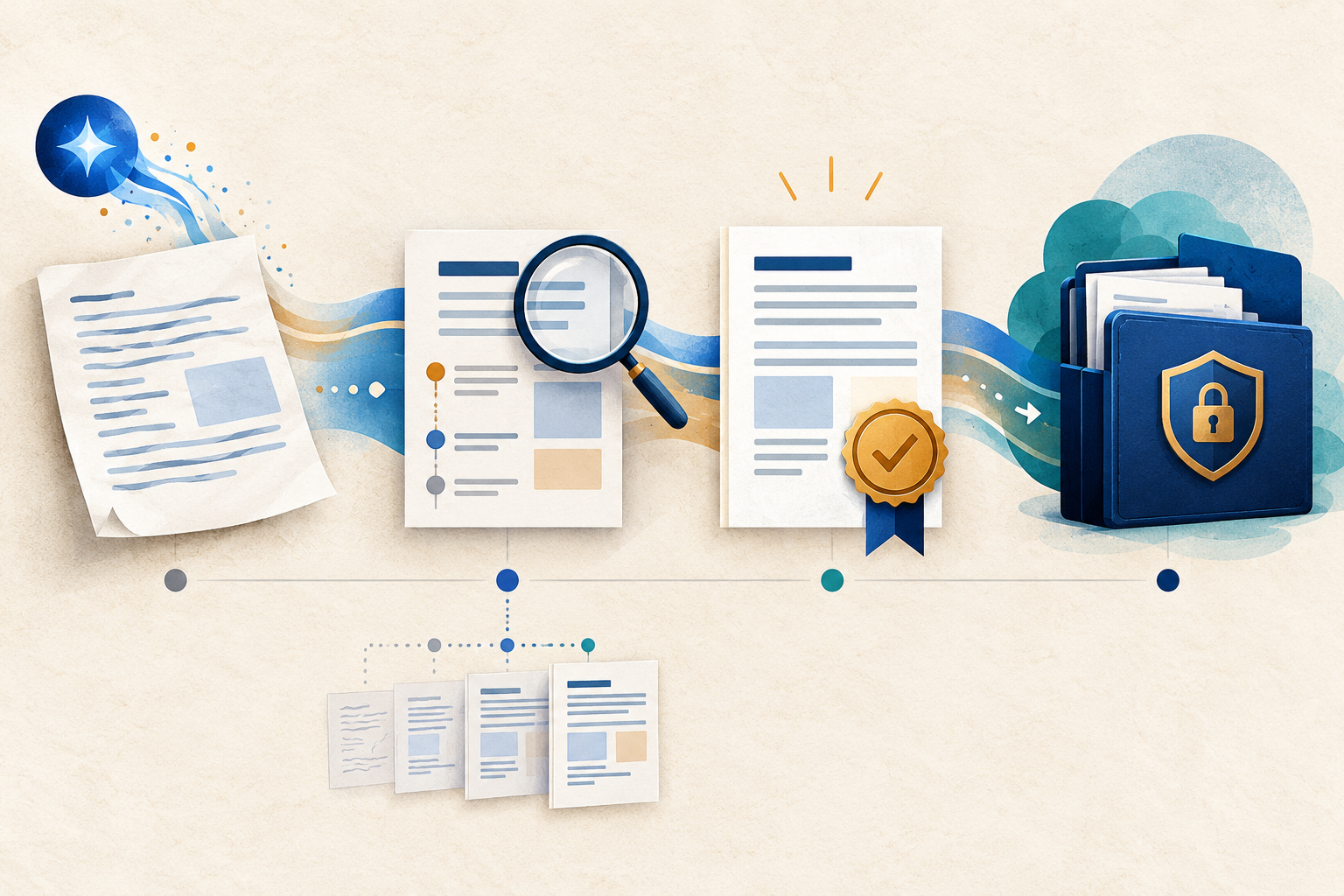
AI Training for Employees: Separate Drafts From Records
Teach a four-state path—Draft, Checked, Approved, Recorded—so polished AI output never becomes organisational fact by accident.
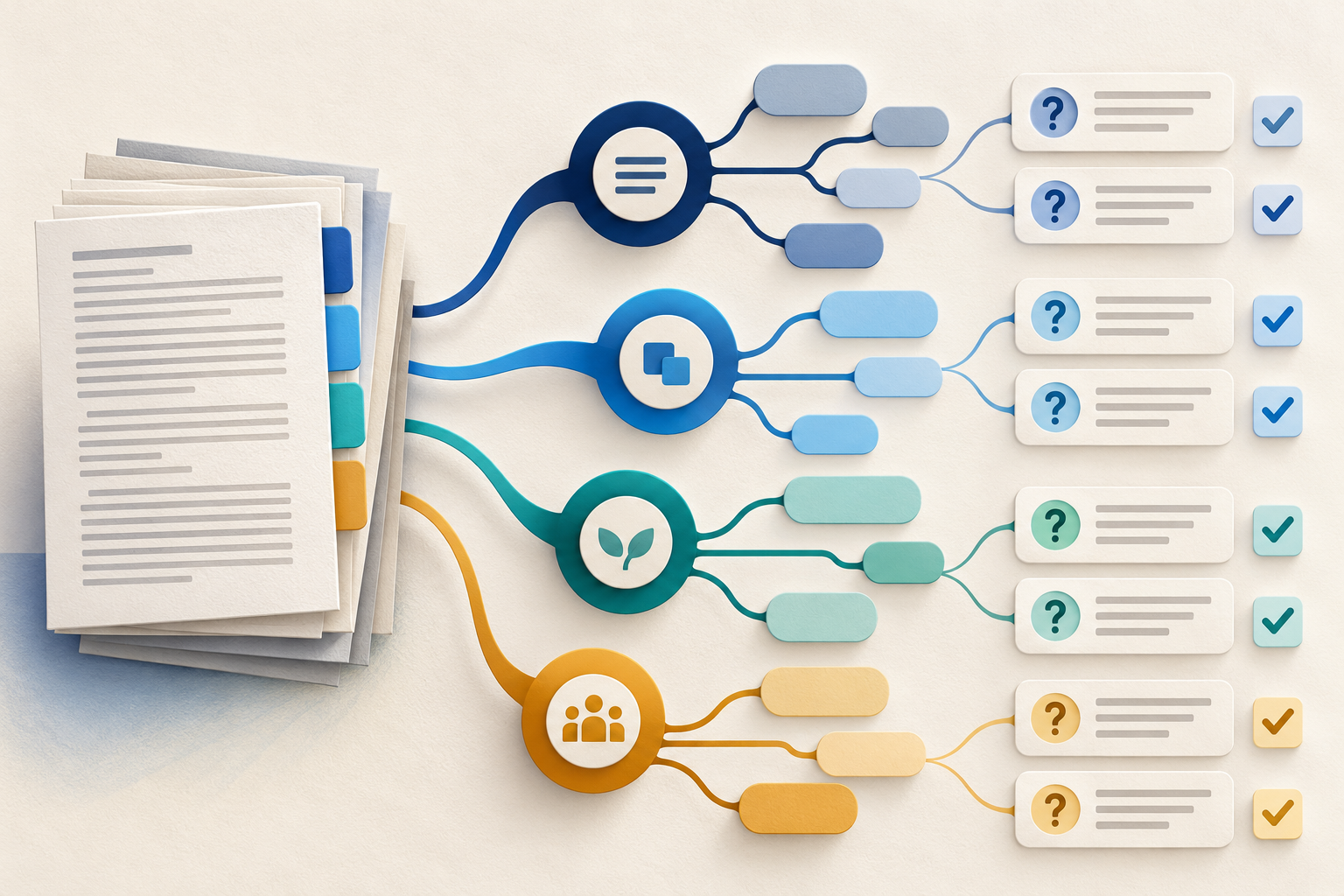
Use Gemini Notebook Mind Maps to Turn Policy Into Questions
Use a Gemini Notebook mind map as a question index for a long policy—then open the cited source before you trust any answer.
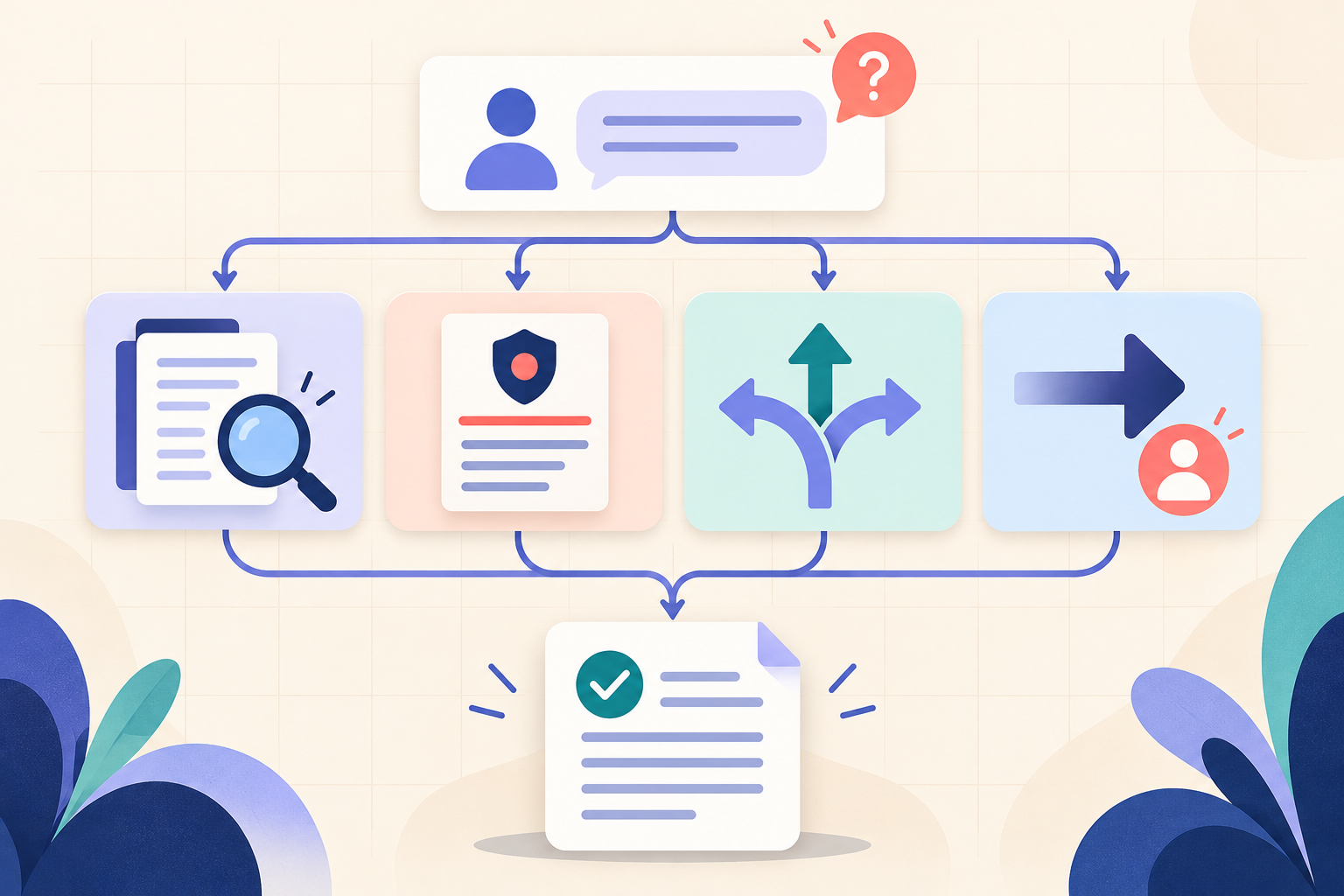
AI Training for HR: Build a Four-Part Policy Answer
Teach HR teams to separate the source, written rule, human discretion and next step before turning an AI draft into employee guidance.