AI Course for Beginners: Start With a Reversible Work Task
An AI course for beginners should start with a useful task that is small, safe to review and easy to undo. Use the SAFE filter to choose it.
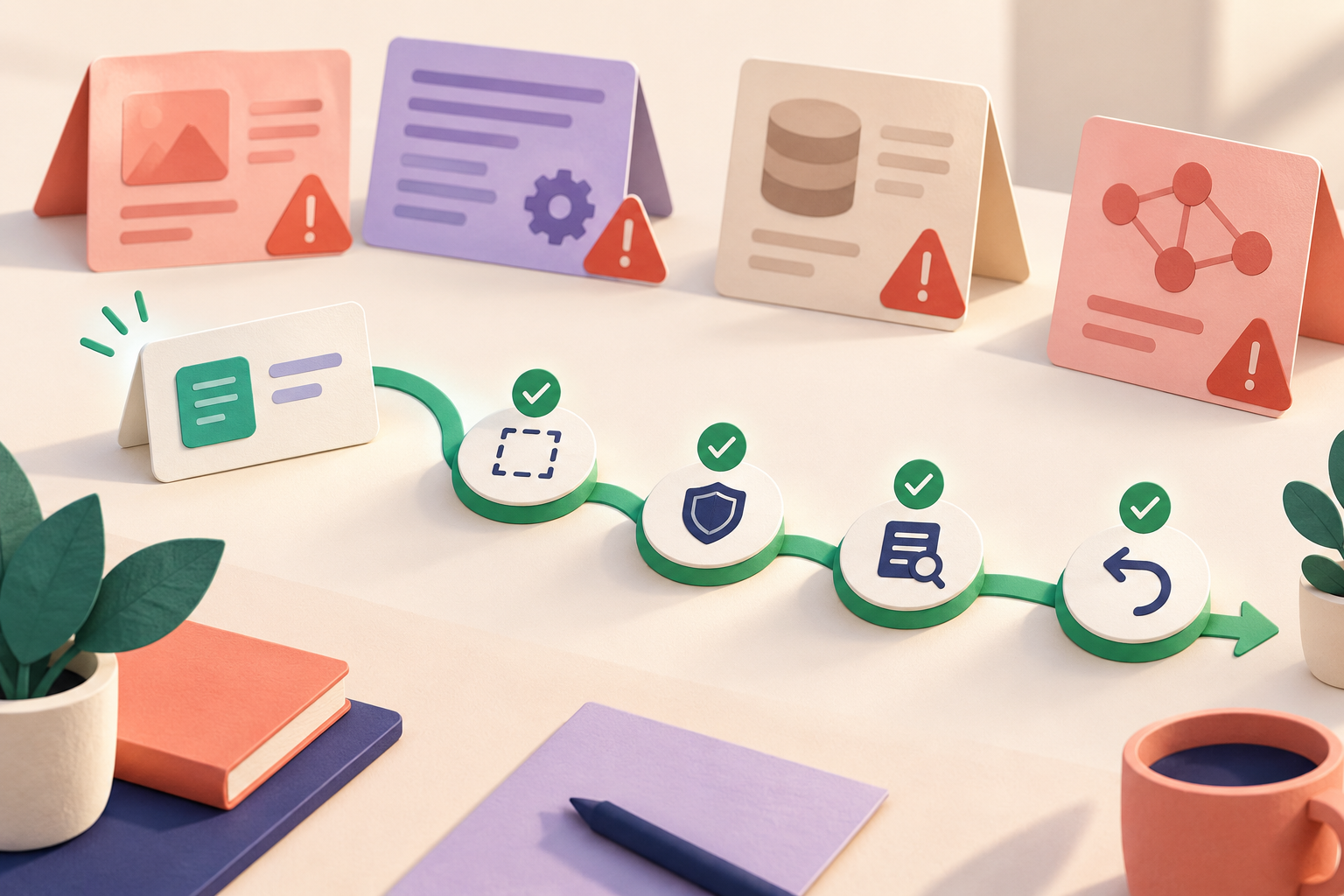
An AI course for beginners should not begin with the most impressive prompt. It should begin with a work task that is useful, bounded, safe to practise and easy to undo. That first choice determines whether a learner builds sound judgement or simply learns to generate plausible output.
A reversible task lets the learner compare the AI-assisted version with the original, review every change and discard the result without harming a customer, colleague, payment, record or decision. It creates room to experiment while preserving human control.
The first task should be easy to inspect and easy to reverse
If a beginner cannot see what changed, verify the output or restore the original, the exercise is too complex for a first practice loop.
Why beginner courses often choose the wrong first task
Course examples are often selected because they look exciting: write a strategy, analyse a large dataset, answer a customer complaint or produce a hiring recommendation. These tasks hide several skills inside one exercise. The learner must frame the problem, handle data correctly, judge accuracy, manage tone and understand the consequences of error.
Current guidance points toward a more deliberate start. NIST’s AI Use Taxonomy treats tasks as combinations of human–AI activities tied to goals and outcomes. The UK Government AI Playbook says use cases should be led by user needs, fit the tool’s capabilities and avoid high-risk or irreversible actions without review. European Commission guidance likewise says AI-literacy measures should reflect people’s experience, the use context and the risks involved.
Use the SAFE filter for an AI course for beginners
The SAFE first-task filter
Small
The task has one clear outcome and can be completed in a short practice session.
Approved inputs
The learner can use public, synthetic or explicitly permitted material.
Fast to review
A source, rule or known example makes errors and omissions visible.
Easy to reverse
The learner can discard the result and restore the original without operational harm.
A task should pass all four checks. “Rewrite this public paragraph for a different audience” may qualify. “Send a response to an angry customer” does not: the input may contain personal data, the tone needs contextual judgement and the action becomes external once sent.
Reading is a start. Practice makes it stick.
Start learning| Good first practice task | Poor first practice task | |
|---|---|---|
| Scope | One bounded transformation | Several decisions at once |
| Inputs | Public, synthetic or approved | Personal, confidential or unclear |
| Review | Source and criteria are visible | Quality depends on hidden context |
| Reversal | Discard or restore in seconds | Changes a live record or reaches a person |
Worked example: turn notes into a draft agenda
Suppose a learner has five synthetic meeting notes and needs a 30-minute agenda. The task is small: group the topics, order them and assign rough timings. Inputs contain no sensitive data. The learner can compare the agenda with the notes and check whether every decision point is represented. Nothing is sent automatically, so the draft can be discarded.
The learner should record three observations: what the AI omitted, what it added without support and what instruction improved the second attempt. That turns a simple output into evidence of learning. The goal is not a perfect agenda; it is a complete loop of request, review, correction and decision.
Raise the stakes one dimension at a time
After the learner completes one SAFE task, increase only one source of difficulty. Add a longer input, a stricter format, a second source or a real recipient—but not all at once. If the result will affect another person or a live system, keep a clear approval step before action.
This progression complements a task map for learning AI, a one-mistake correction loop, a safe ChatGPT practice pack and an AI learning path that pairs creation with verification. Together they move a beginner from choosing a task to using AI with evidence and control.
- List three work tasks you repeat each week.
- Remove any task involving sensitive data, live decisions or external sending.
- Choose the smallest remaining task with a visible source or correct answer.
- Write how you will review the output before using it.
- Write how you will discard the result and restore the original.
- Run one attempt, note one error and change one instruction.
- Keep the final output only if it passes your review.
The best beginner task is not trivial. It is controlled. It creates a useful result while making the learner’s judgement visible. Bokili’s short, role-adapted missions use this principle to help people practise real AI skills without turning the first exercise into an avoidable risk.
Sources
- AI Use Taxonomy: A Human-Centered Approach — NIST
- Artificial Intelligence Playbook for the UK Government — UK Government
- AI Literacy — Questions & Answers — European Commission
- Bokili Features — Bokili
Reading is a start. Practice makes it stick.
Bokili turns skills like this into ten-minute missions for your whole team, with instant feedback and progress you can see.
Start learningKeep reading
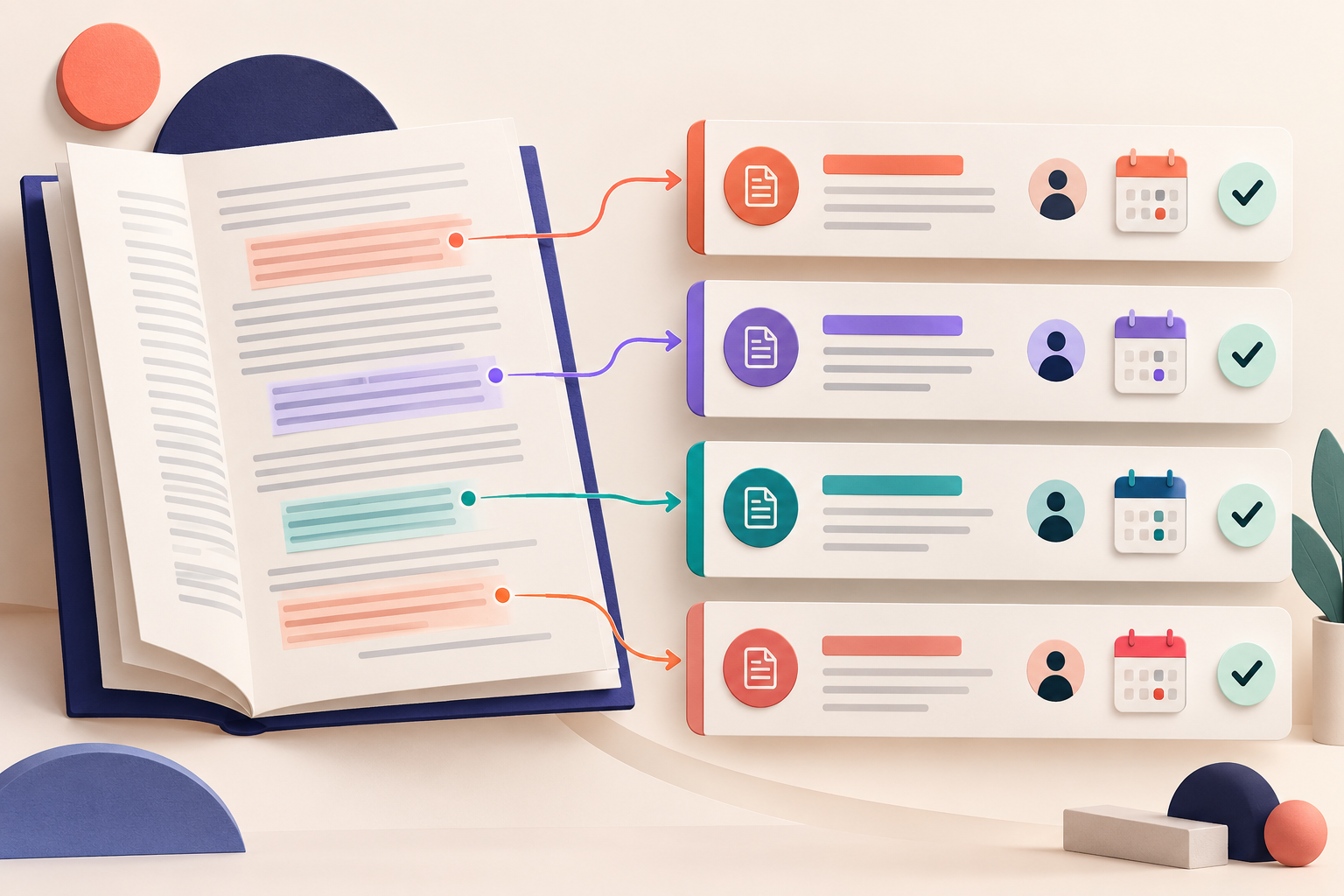
Turn a Contract Into an Evidence-Tagged Obligation Register With AI
A procurement workflow for extracting contract duties into traceable rows with owners, triggers, deadlines and proof—without treating AI as the source of truth.

AI Training for Employees: Teach the Escalation Sentence
AI training for employees should teach what to say when an output is uncertain: one short hand-off with the task, gap, evidence checked and decision needed.
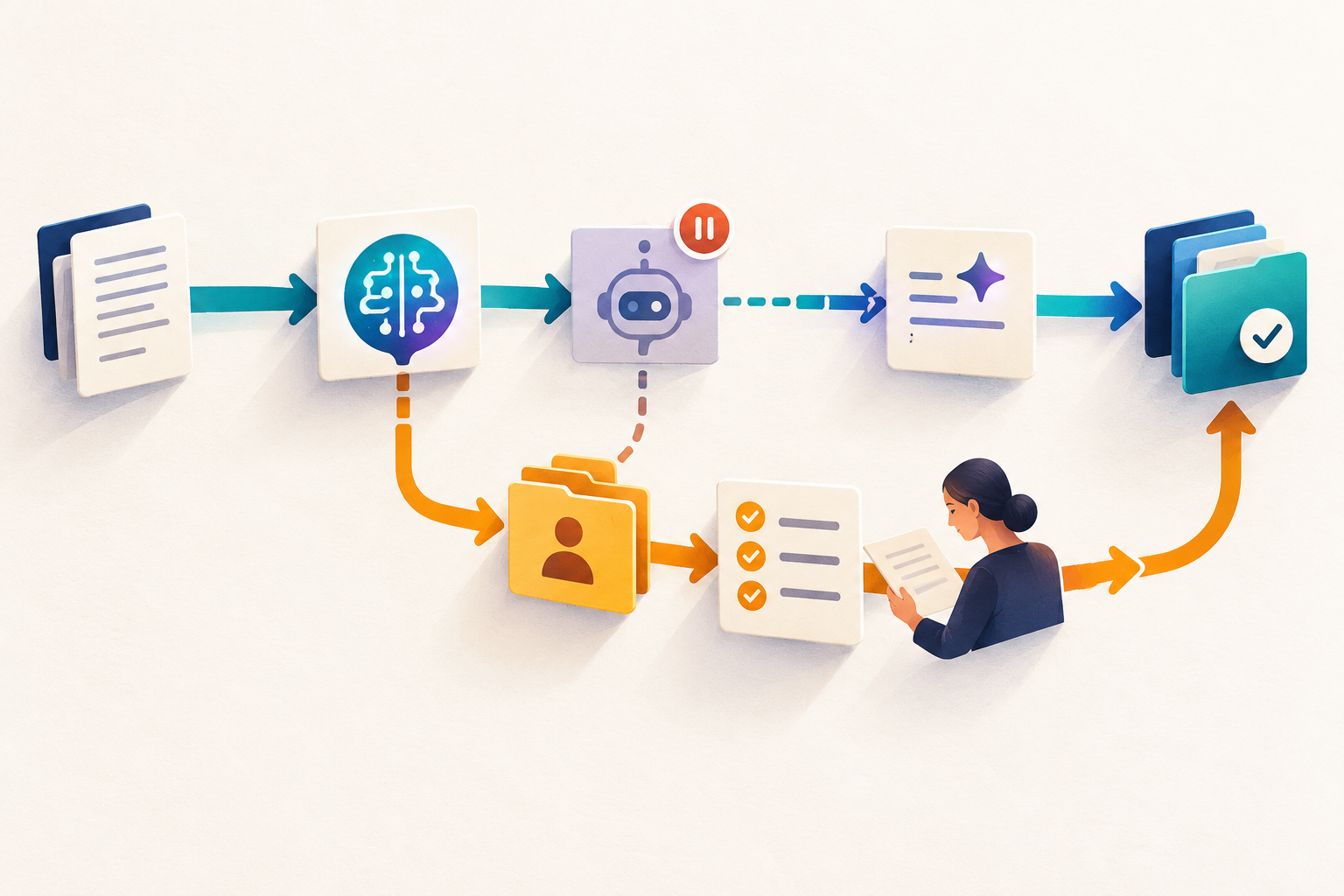
Design the Manual Fallback Before AI Becomes Normal
An AI workflow is not resilient because someone could take over. Build and rehearse a five-part manual fallback before the old route disappears.