Google AI Training: Choose the Right Route for Work
Compare current Google AI training routes by the work outcome, practice level and transfer evidence your learner actually needs.

Searching for Google AI training can lead to very different offers: a short no-charge introduction, a beginner certificate, a broader professional programme, small-business workshops and technical labs. They share a provider, but they do not solve the same learner problem. The useful question is not “Which Google course is best?” It is “What should this person be able to produce at work after learning?”
This guide maps current Google routes by intended outcome. It does not claim that one route suits every employee, and it does not treat a badge as proof of workplace skill. Course availability, language, access and pricing can vary, so confirm the current terms on the official page before enrolment.
Four Google AI training routes, four outcomes
| Route | Best fit | What it builds | Watch for | |
|---|---|---|---|---|
| Introduction to Generative AI | A new learner who needs vocabulary first | A short foundation in generative AI and how it differs from traditional machine learning | It is no charge and awards a badge, but it is not a complete workplace practice programme | |
| Google AI Essentials | A beginner who wants guided, general work use | Five modules covering AI basics, productivity, prompting, responsible use and staying current | It awards a certificate; the official page lists a subscription price in the US and Canada, so check local terms | |
| Google AI Professional Certificate | A learner ready for broader applied practice | Seven courses and hands-on work across research, writing, content, data analysis and app building | It is wider than Essentials; confirm that the scenarios match the learner’s real role | |
| Google Skills and Cloud labs | A technical learner or product team | Product-specific courses, labs, skill badges and technical learning paths | General employees can be overwhelmed if they do not need cloud or development skills |
Google also offers audience-specific options, including no-charge workshops for some small-business, educator and student audiences, plus instructor-led organisational training. These may be the right route when the audience or delivery format matters more than a general certificate. The catalogue itself says some resources are paid and some are available at no charge; the “no charge” tag is the reliable signal on the learning hub.
Choose by the next work output
OUTPUT: a route-choice test
Outcome
Name one useful artefact the learner should produce: a checked summary, a research brief, a revised email or a small analysis.
User level
Decide whether the learner needs vocabulary, everyday practice, broad professional fluency or technical product skill.
Practice
Check whether the route includes hands-on work that resembles the target task, not only videos and quizzes.
Limits
Confirm time, language, accessibility, cost, account and product requirements on the current official page.
Transfer
Schedule a safe workplace task after the course and define the human review that proves the skill transferred.
Reading is a start. Practice makes it stick.
Start learningA worked route-choice example
Consider a customer-success coordinator who has never used generative AI at work. The next output is a de-identified weekly theme summary from five fictional support notes. They do not need to build a model or earn a cloud certification. A short introduction may provide vocabulary, while AI Essentials may provide a broader beginner structure. The Professional Certificate becomes relevant only if the role needs several applied scenarios and has time for a larger programme. A technical lab is a poor match to this outcome.
Design a 20-minute practice task for a beginner who has completed [course name].

Target work output: a one-page theme summary from five fictional support notes.
Constraints: use no personal or confidential data; separate observations from recommendations; require a source trace for every theme; a manager makes the final decision.

Return:
1. the learner brief;
2. success criteria;
3. a verification checklist;
4. one harder follow-up task.
A small, observable practice task that can show whether the course changed work behaviour.
Use fictional or approved data and adapt the task to your organisation’s tools and policy.
For teams, compare more than the syllabus
Training route buyer check
- The route matches a named role and a real work output.
- The learner prerequisites are explicit.
- Hands-on practice resembles the target workflow.
- Responsible-use guidance matches company policy.
- Language, accessibility, account and product requirements are workable.
- Current price and availability have been verified in the learner’s region.
- A post-course transfer task and human reviewer are assigned.
- Completion data will not be confused with demonstrated workplace skill.
Free is a route condition, not a quality score
A no-charge introduction can be excellent for orientation. A paid certificate can still be a poor choice if its scenarios do not match the role. Compare fit, practice and transfer before price or badge prestige.
- Write the learner’s role and one work output needed in the next 30 days.
- Mark the required level: vocabulary, everyday use, broad professional practice or technical build.
- Open the current Google AI learning hub and shortlist no more than two routes.
- Check charge, time, language, access and product requirements on each official page.
- Choose one route and write a 20-minute transfer task for the week after completion.
- Name the human reviewer and the evidence that will count as successful transfer.
This page complements Bokili’s broader comparison of free AI course routes, the 30-day beginner path to learn AI at work, the role-based AI skills matrix and the prompt experiment template. Use the Google catalogue to select a route. Use a safe work task to prove that the learning travelled.
Sources
- Learn essential AI skills — Google AI
- AI Training to Grow Your Career — Grow with Google
- Learn the Fundamentals of AI and Basics of Prompting — Grow with Google
- Bokili for HR and L&D — Bokili
Reading is a start. Practice makes it stick.
Bokili turns skills like this into ten-minute missions for your whole team, with instant feedback and progress you can see.
Start learningKeep reading
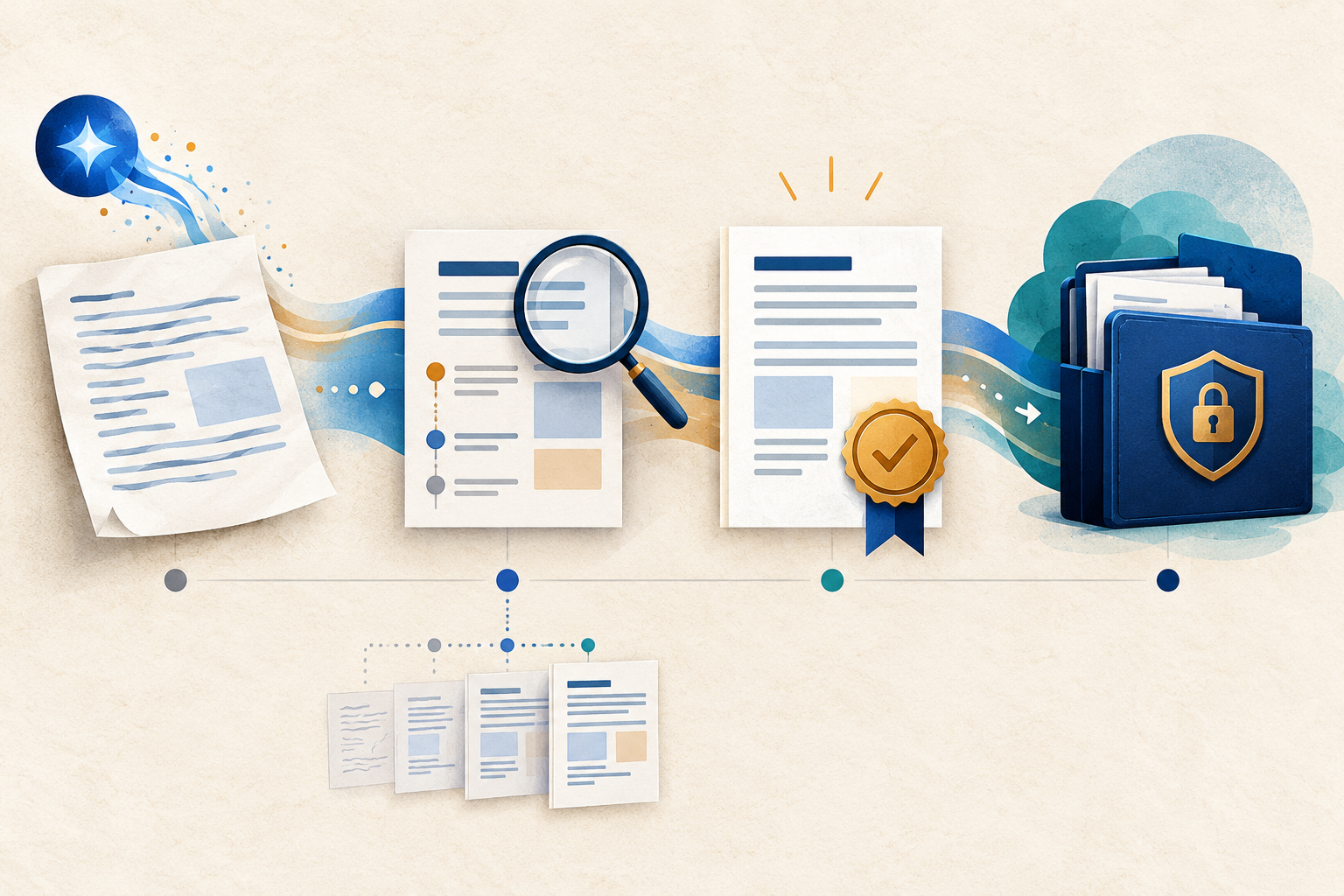
AI Training for Employees: Separate Drafts From Records
Teach a four-state path—Draft, Checked, Approved, Recorded—so polished AI output never becomes organisational fact by accident.
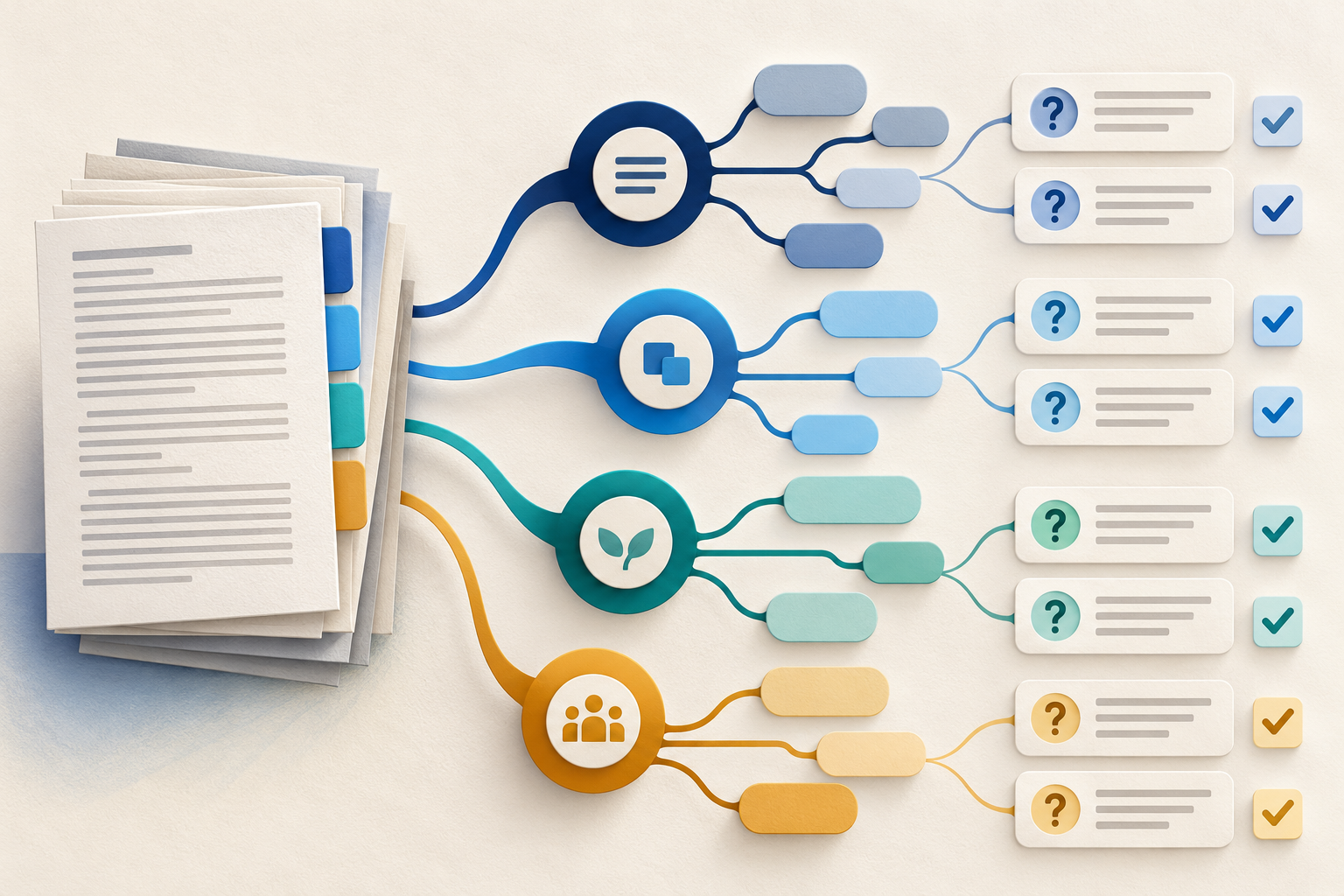
Use Gemini Notebook Mind Maps to Turn Policy Into Questions
Use a Gemini Notebook mind map as a question index for a long policy—then open the cited source before you trust any answer.
AI Training for HR: Build a Four-Part Policy Answer
Teach HR teams to separate the source, written rule, human discretion and next step before turning an AI draft into employee guidance.