Free AI Course: Three Routes and the Work Skill Each Builds
Compare two free AI learning routes with Google AI Essentials, then choose by the work artefact you want to produce—not the size of the syllabus.
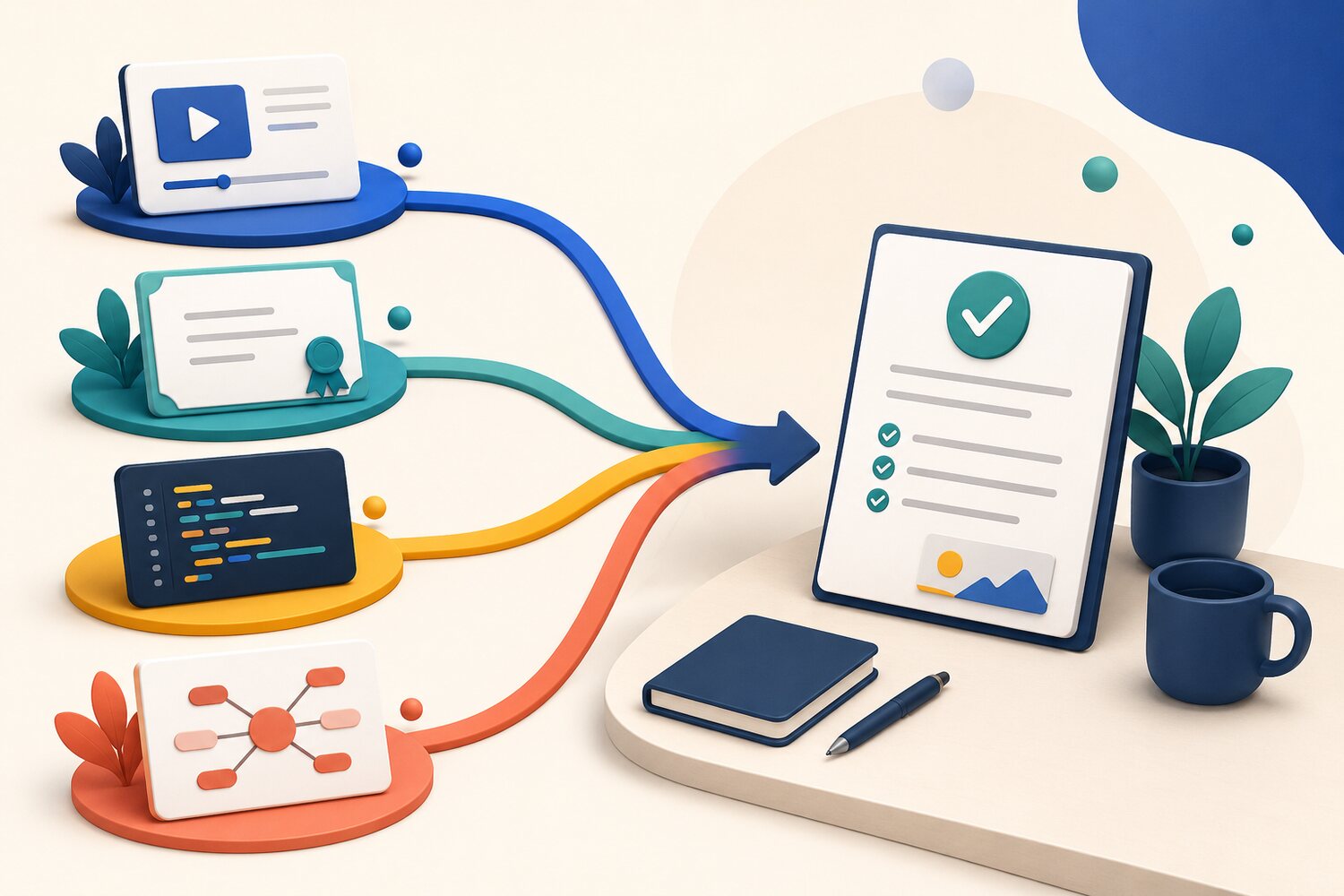
Searching for a free AI course produces choices that look similar but teach very different things. One route explains concepts. Another gives structured workplace practice. A third teaches you to build applications with code. The right starting point is not the course with the longest syllabus. It is the one that helps you produce the next piece of work you actually need.
This comparison uses current official course pages checked on 20 August 2026. It also corrects a common assumption: Google AI Essentials is not generally a free AI course. Google lists a paid monthly subscription in the US and Canada after a seven-day trial, with local prices varying elsewhere.
Choose the proof, then the course
Decide what you want to be able to show after learning: an explained concept, a safer workplace workflow or a small working AI application.
Free AI course options are not interchangeable
| Best fit | What you get | Important limit | |
|---|---|---|---|
| IBM SkillsBuild AI catalogue | Zero-budget foundations and digital credentials | Free AI courses and learning plans, including AI Fundamentals | Catalogue breadth means you still need to choose and apply one path |
| Microsoft Generative AI for Beginners | Learners who want to build AI applications | A public 21-lesson course with concepts plus Python and TypeScript examples | Basic coding knowledge is helpful; some exercises require a model service or local setup |
| Google AI Essentials | Non-technical beginners who want short, guided workplace practice | Five self-paced modules, hands-on activities and a certificate in under five hours | It is paid in many markets; check local Coursera or Google Career Skills pricing |
This is not a ranking. IBM and Microsoft make strong material available without a course fee, but they solve different problems. Google’s paid course is included because people often search for “Google free AI course” and deserve a clear answer before enrolling. A free catalogue can be the better choice when cost is the hard constraint. A paid short course can be the better choice when structure and workplace examples are worth the fee. A developer course can be the wrong choice for an office worker even when every lesson is free.
Use a work-first test before you enrol
The OUTPUT test
Outcome
Name one thing you want to do after the course: explain AI, improve a repeated task or build an application.
Use context
Choose the role, approved tool and kind of information involved. A course cannot be relevant in the abstract.
Proof
Define the artefact that will demonstrate learning: a checked draft, a comparison, a small app or a clear explanation.
Transfer
Plan a ten-minute use on safe, familiar work within 24 hours of a lesson.
Review
Decide who or what will check the artefact for accuracy, safety and usefulness.
Worked example: choosing a course for weekly updates
Consider a fictional operations coordinator who wants to turn rough project notes into a concise weekly update without inventing dates or owners. The desired proof is not “understand generative AI”. It is a 150-word update whose claims match the notes and whose gaps are visible.
Reading is a start. Practice makes it stick.
Start learningMatch that outcome to the route
- 1
Reject the wrong problem
A 21-lesson application-building course is valuable, but it is more technical than this work goal requires.
- 2
Choose the learning route
Use a workplace-focused beginner course or a suitable IBM foundation path to learn the basics, prompting and responsible use.
- 3
Run the transfer task
Use invented or non-sensitive notes in an approved AI tool. Ask for three headings, a word limit and explicit markers for missing owners.
- 4
Check the proof
Compare every date, name and status with the source notes. Record one mistake and one instruction that improved the result.
The example exposes a useful distinction. A course teaches content. Skill appears when the learner can transfer that content to a bounded task, inspect the result and explain the limit. A certificate can signal completion; it cannot by itself show that this hand-off happened.
What to check before starting a free AI course
Six questions for a useful choice
- Does the course match my actual goal: concepts, work use or application building?
- Are the lessons and any required model tools genuinely free in my region?
- Do I need coding, an account, cloud credits or a paid certificate?
- Can I practise with an approved tool and safe information?
- Will I create an artefact I can inspect, not only watch lessons or answer quizzes?
- Is the content maintained, and can I see when tools or setup instructions changed?
Current details matter. Microsoft’s course notes that GitHub Models retired at the end of July 2026 and points learners to Microsoft Foundry Models instead. Google says AI Essentials is updated as technology changes and directs learners to local enrolment pages for exact pricing. Recheck provider pages before committing time or money.
Turn one lesson into a ten-minute work practice
- Write one sentence describing the behaviour the lesson taught.
- Choose a low-risk task you already understand.
- Use invented or approved non-sensitive information.
- Produce one small artefact with an approved AI tool.
- Check it against the source and mark every unsupported claim.
- Save one useful instruction and one stop condition for the next attempt.
Continue with a work-first learning path
Use Bokili’s 30-day beginner path to sequence one safe task, clearer instructions, output checks and a repeatable workflow. The guides on verifying AI output, building a safe practice sandbox and teaching one behaviour in ten minutes help turn course knowledge into practice.
Bokili supports that transfer with short missions adapted to role, level and available tools. Start with the course that fits your outcome. Then make the learning visible in one checked piece of work.
Sources
- Google AI Essentials — Google
- IBM SkillsBuild AI learning catalogue — IBM SkillsBuild
- Generative AI for Beginners — Microsoft
- Bokili – AI fluency training for companies and teams — Bokili
Reading is a start. Practice makes it stick.
Bokili turns skills like this into ten-minute missions for your whole team, with instant feedback and progress you can see.
Start learningKeep reading
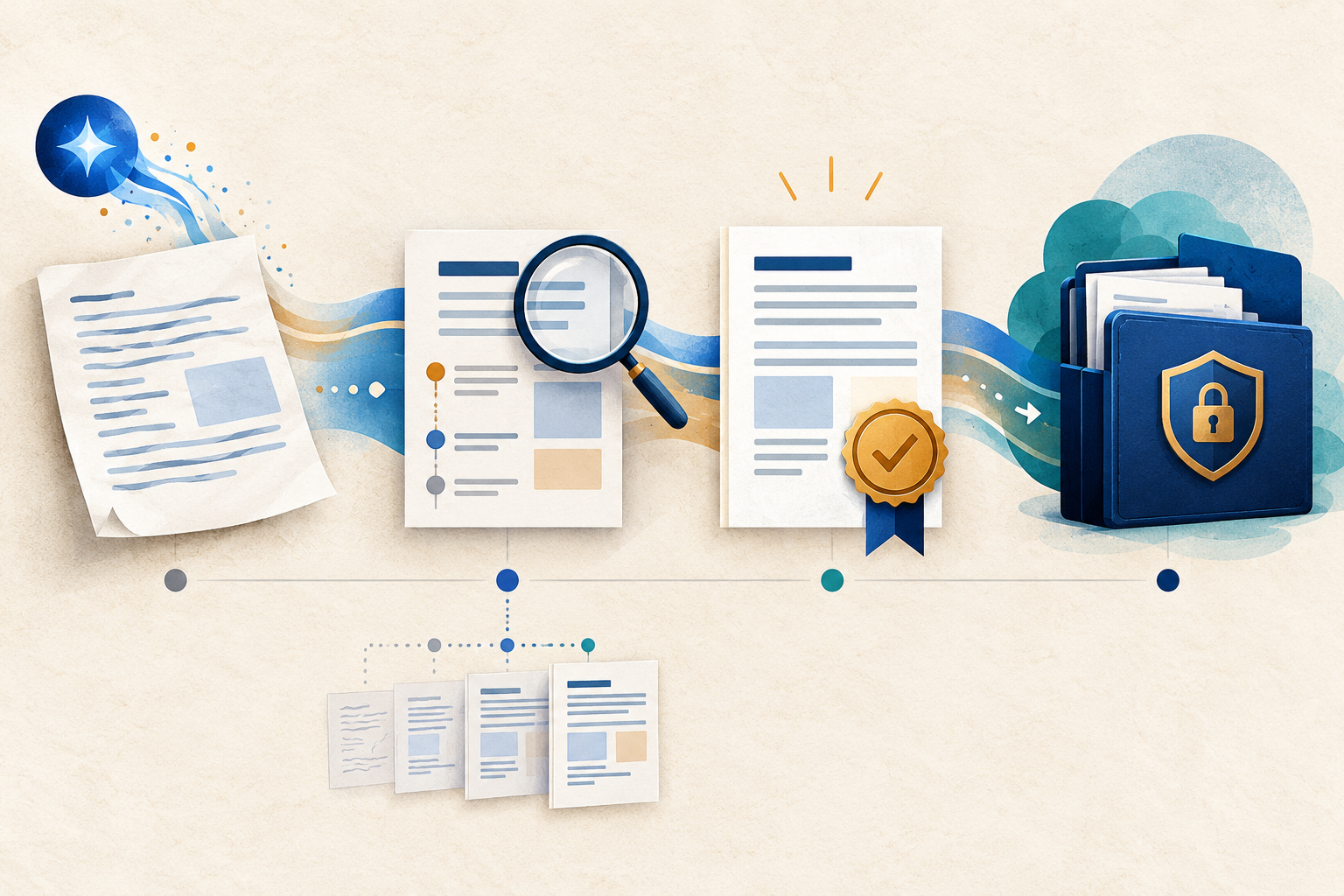
AI Training for Employees: Separate Drafts From Records
Teach a four-state path—Draft, Checked, Approved, Recorded—so polished AI output never becomes organisational fact by accident.
Use Gemini Notebook Mind Maps to Turn Policy Into Questions
Use a Gemini Notebook mind map as a question index for a long policy—then open the cited source before you trust any answer.
AI Training for HR: Build a Four-Part Policy Answer
Teach HR teams to separate the source, written rule, human discretion and next step before turning an AI draft into employee guidance.