
Ten Minutes Is Enough—If You Teach One AI Behaviour
Short AI training works when one mission targets one observable behaviour, uses realistic practice and gives feedback. Here is a practical design test.

Ten minutes sounds too short to teach a meaningful AI skill. It is—if the lesson tries to explain prompting, verification, privacy, tool choice and workflow design at once. But ten minutes can be enough to change one observable behaviour: add constraints to a request, challenge one unsupported claim, or turn a useful exchange into a reusable instruction.
The useful question is not “Can people learn AI in ten minutes?” They cannot. The useful question is: “What should someone be able to do differently ten minutes from now?” Short learning works when the answer is precise.
Ten minutes is a constraint, not a learning theory
A short video can still be overloaded. A five-question quiz can still reward guessing. A concise summary can create familiarity without changing performance. Duration tells you how long an activity takes; it does not tell you whether the learner practised, received feedback or can repeat the behaviour in real work.
| Broad AI lesson | Focused AI mission | |
|---|---|---|
| Objective | Understand responsible AI | Verify the two claims that carry a recommendation |
| Content | Many principles and examples | Only the concepts needed for one behaviour |
| Learner action | Watch, read or recognise | Produce, judge, revise or decide |
| Feedback | A score at the end | Specific feedback on the attempted behaviour |
| Transfer | Hope the lesson becomes useful later | Name the next work situation where the behaviour applies |
The second column is smaller, but it is not superficial. It removes breadth so there is room for action. The learner spends less time being told what good practice looks like and more time trying it.
Make one behaviour the unit of learning
The ONE test for a short AI mission
O — Observable
The learner must produce an output or make a decision that another person could inspect. “Understand prompting” is invisible; “rewrite a vague request with audience, constraints and format” is observable.
N — Narrow
Change one important variable at a time. A mission may teach source checking or output formatting, but it should not quietly test five other skills.
E — Embedded in work
Place the behaviour inside a recognisable task, with realistic context and consequences. Transfer starts when practice resembles a decision the learner may actually face.
A useful design question
If you cannot describe the target behaviour in one sentence beginning with a verb, the mission is probably too broad for ten minutes.
A worked example: teach claim checking, not “verification”
Imagine an employee receives an AI-generated supplier recommendation. A broad lesson might explain hallucinations, source quality, automation bias, primary evidence and escalation. All of those ideas matter, but combining them produces a tour of the subject rather than practice.
Minute 1
Show a short supplier recommendation containing one load-bearing factual claim.
Minutes 2–3
Explain how to identify the claim whose failure would change the decision.
Minutes 4–6
Ask the learner to choose the evidence needed and the strongest source to consult.
Minutes 7–9
Give targeted feedback, then let the learner revise the verification plan.
Minute 10
Present a different work example and ask where the same behaviour applies.
Reading is a start. Practice makes it stick.
Start learningThis does not make the learner an expert in verification. It does something more honest: it improves one component of verification and makes the next practice need visible.
Why retrieval and feedback matter more than exposure
Learning research offers a useful warning about passive repetition. In a 2008 Science study using foreign-language vocabulary, Karpicke and Roediger found that repeated retrieval produced much stronger delayed recall than additional study once material had already been recalled. This was not an AI-training experiment, so it does not prove that any particular mission format works. It does support a practical design principle: asking a learner to retrieve and use something can contribute more than showing it again.
The National Academies’ 2018 synthesis reaches a similarly practical conclusion at a broader level. Effective strategies depend on the learner’s prior knowledge, the material and the goal; learners benefit from targeted feedback, appropriately matched challenges and support in directing their own learning. Short missions should therefore adapt the task—not merely compress the same explanation for everyone.
How to evaluate a ten-minute AI mission
A short mission earns its place when…
- The target behaviour is visible and can be assessed.
- The task contains enough context to resemble real work.
- The learner must generate, judge, revise or decide—not only recognise an answer.
- Feedback points to the behaviour, not just a final score.
- The challenge fits the learner’s current level.
- The final step asks the learner to retrieve or transfer the method.
- The mission leaves one clear next capability to practise.
Notice what is absent from the checklist: entertainment value, slide count and the promise to cover an entire topic. Those may influence engagement, but they are not substitutes for a well-designed act of practice.
Shrink one lesson before you shorten it
- Take one existing AI lesson and underline every verb in its learning objectives.
- Choose the single behaviour that would create the most value at work.
- Write one realistic task in which the learner must demonstrate that behaviour.
- Remove any concept that is not needed to complete the task.
- Add one piece of targeted feedback and one second attempt.
- End with a new situation where the learner must name or apply the same method.
If the redesigned activity still needs thirty minutes, that may be the right duration. The goal is not to worship brevity. It is to stop measuring learning by how much content fits into a session.
Bokili is built around short, focused missions because AI fluency grows behaviour by behaviour. Ten minutes is not the promise that learning is effortless. It is the discipline of choosing one useful thing, practising it properly and making the next step obvious.
Sources
- The Critical Importance of Retrieval for Learning — Science
- How People Learn II: Learners, Contexts, and Cultures — National Academies of Sciences, Engineering, and Medicine
Reading is a start. Practice makes it stick.
Bokili turns skills like this into ten-minute missions for your whole team, with instant feedback and progress you can see.
Start learningKeep reading
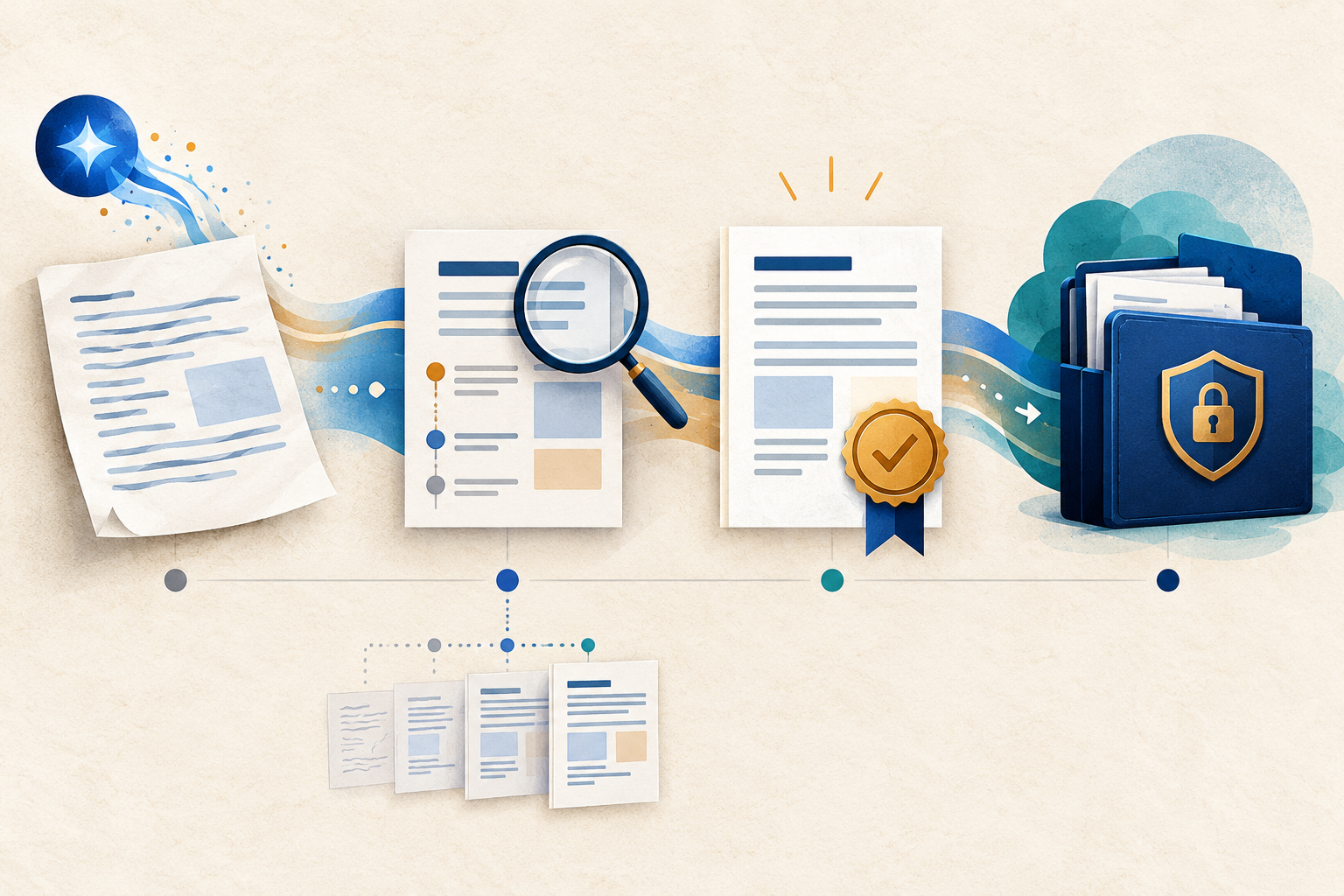
AI Training for Employees: Separate Drafts From Records
Teach a four-state path—Draft, Checked, Approved, Recorded—so polished AI output never becomes organisational fact by accident.
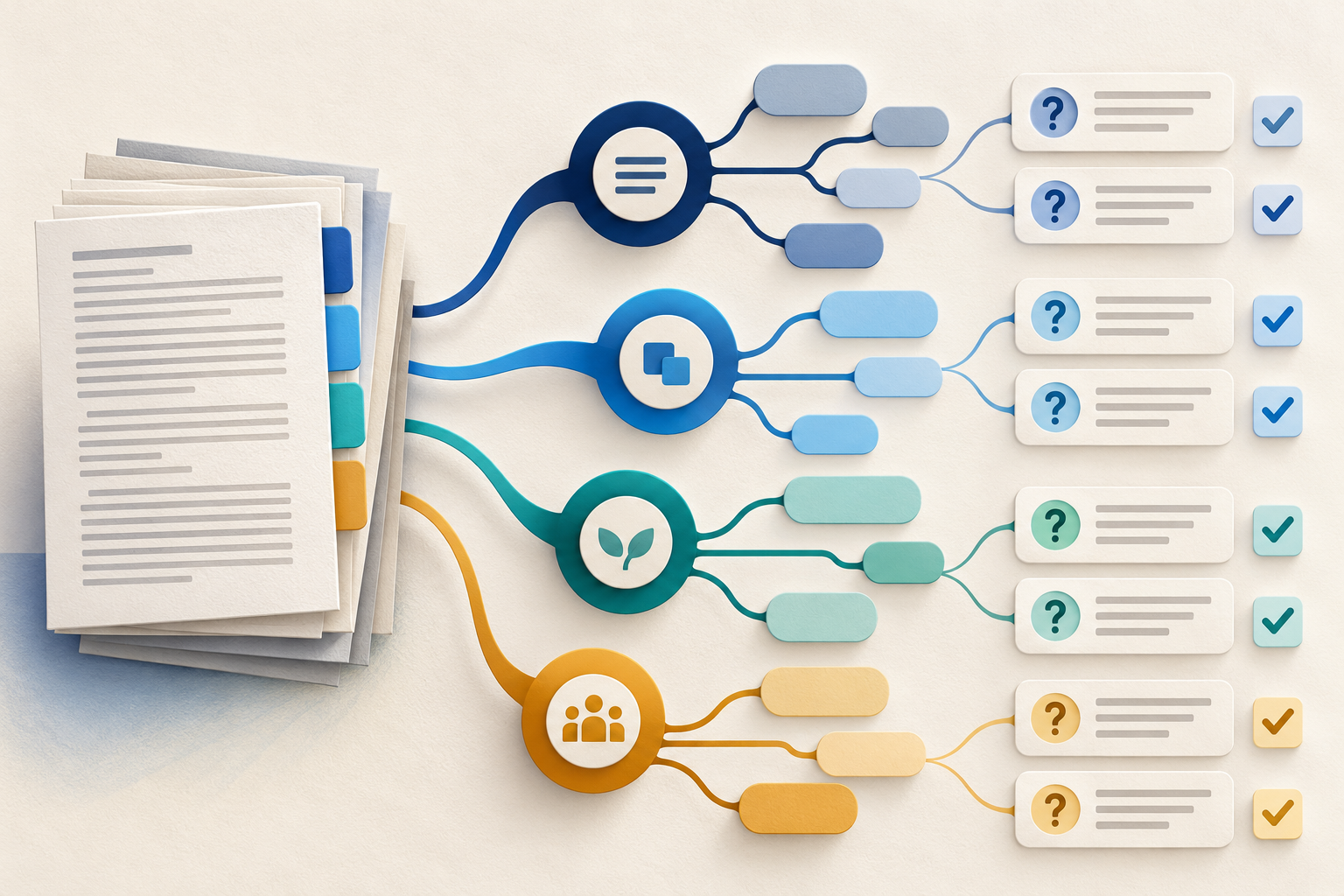
Use Gemini Notebook Mind Maps to Turn Policy Into Questions
Use a Gemini Notebook mind map as a question index for a long policy—then open the cited source before you trust any answer.
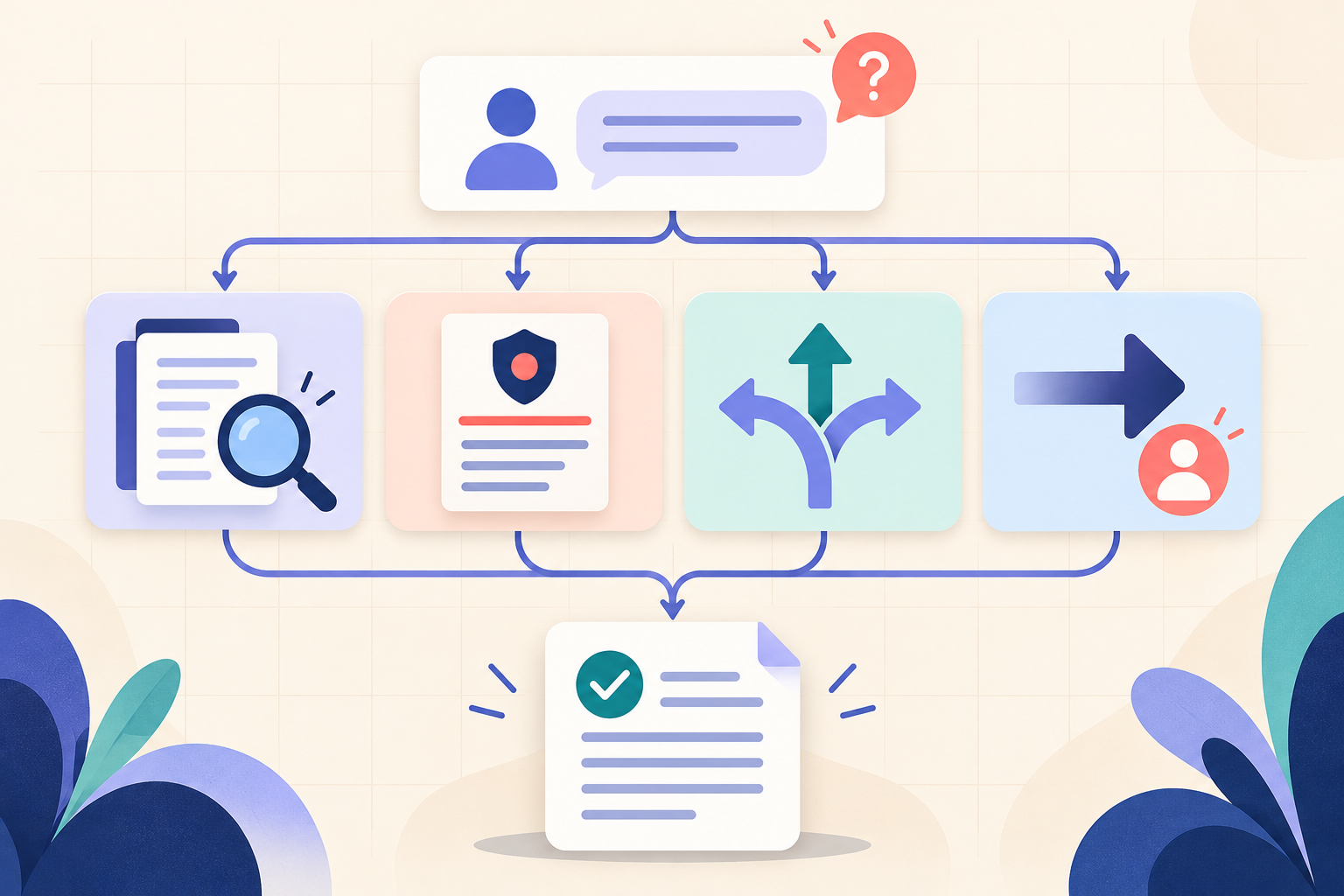
AI Training for HR: Build a Four-Part Policy Answer
Teach HR teams to separate the source, written rule, human discretion and next step before turning an AI draft into employee guidance.