How to Verify an AI Answer Before You Use It at Work
A practical five-step method for checking AI-generated claims, sources and context—without wasting time verifying every sentence in the same way.

An AI answer can be wrong in the most inconvenient way: smoothly. The grammar is clean, the reasoning looks orderly and the source list appears reassuring. That surface quality can make us lower our guard at exactly the moment we should raise it.
At work, verification does not mean treating every sentence as guilty. It means asking what would happen if the answer were wrong. A low-stakes brainstorm needs a light review. A supplier recommendation, legal summary, financial forecast or policy statement needs much more. The skill is not universal suspicion. It is calibrated judgment.
NIST calls confidently stated but erroneous content “confabulation” and warns that automation bias can lead people to over-rely on generated answers. Its Generative AI Profile recommends reviewing and verifying sources and citations. The European Commission’s AI literacy guidance says training should reflect both context and risk, and specifically identifies hallucination as something employees using everyday tools should understand. The UK Government’s AI Playbook similarly advises users not to trust generative AI outputs uncritically.
Verification is not a second prompt
Asking the model “Are you sure?” may trigger a correction. It does not independently establish that the revised answer is true. The system can repeat the same mistake with new confidence, replace it with a different mistake or produce a citation that looks convincing until you open it.
| Confidence check | Evidence check | |
|---|---|---|
| Question | Ask the model to double-check itself | Extract the important claims and test them independently |
| Citation | Confirm that a citation is present | Open the original source and check identity, date, scope and wording |
| Reasoning | Accept a plausible explanation | Recalculate key figures and challenge assumptions |
| Context | Check whether the prose sounds relevant | Check whether the conclusion fits the actual audience, constraints and decision |
| Human review | Someone clicks approve | A named reviewer understands the evidence and the consequence of error |
AI can help organise verification. It can extract claims, propose questions and identify missing information. It should not be the only judge of its own answer.
Use the TRACE method
TRACE: five moves from plausible to usable
1. Triage the consequence
Decide what happens if the output is wrong. The higher the financial, legal, safety, reputational or human impact, the stronger the review.
2. Reveal the claims
Separate facts, calculations, interpretations, predictions and hidden assumptions. Verify the claims that carry the conclusion—not every harmless sentence.
3. Anchor in evidence
Open the best available primary source. Check that it exists, is current, covers the same scope and actually supports the claim.
4. Check the context
Test whether the answer respects your real data, audience, geography, policy, time period and constraints. A true fact can still support a bad decision.
5. Escalate when necessary
Bring in a domain expert or accountable decision-maker when the stakes exceed your expertise. Record uncertainty instead of smoothing it away.
TRACE is not a guarantee of truth. It is a repeatable way to make uncertainty visible and stop a polished answer from passing directly into real work.
A worked example: the confident supplier recommendation
Imagine a procurement manager asks an AI assistant to compare two suppliers using uploaded documents and public information. The answer recommends Supplier B because it is “18% cheaper”, complies with a regulation taking effect next quarter and serves every required market. These figures are hypothetical, but the verification pattern is real.
First, triage the consequence. The recommendation affects spend and compliance, so it deserves a high level of review. Next, reveal the load-bearing claims: the 18% saving, the regulatory deadline and the geographic coverage. Then anchor each claim. Recalculate cost from comparable quotes and volumes; use the regulator’s own publication for the deadline; use contractual or official supplier information for coverage.
Reading is a start. Practice makes it stick.
Start learningNow check context. Does the saving include freight, duties, minimum quantities, payment terms and currency? Does the regulation apply to this product and market? Does “coverage” mean a legal entity, a warehouse or reliable delivery capacity? Finally, escalate the legal interpretation and the commercial decision to the people accountable for them. The AI answer is still useful—it accelerated the analysis—but it did not replace the analysis.
You drafted the recommendation below. Extract every statement that would matter if false. Return a table with: claim; claim type (fact, calculation, interpretation or prediction); evidence needed; best primary source; and consequence if wrong. List assumptions separately. Do not decide whether any claim is true.

[PASTE THE AI OUTPUT]
Illustrative row: “Supplier B is 18% cheaper” | Calculation | Comparable quotes, volumes, freight, currency and payment terms | Signed commercial documents | Budget and sourcing error
Use this to organise your review. Open and assess the evidence yourself.
Match the review to the stakes
- Low stakes — brainstorming, outlines or tone alternatives: check fit, privacy and obvious errors before using the material.
- Medium stakes — client copy, research summaries or internal recommendations: verify names, dates, figures, quotations, citations and the claims driving the conclusion.
- High stakes — work affecting money, rights, safety, employment, compliance or security: use authoritative sources, independent calculation and qualified expert review. Do not rely on generated output alone.
The higher the stakes, the more independent the verification should be. A new chat with the same model is not an independent source. A second model may be a useful cross-check, but agreement between two systems is still not evidence.
Three traps that make review look stronger than it is
- Citation theatre: a long source list creates confidence, but nobody opens the sources or checks whether they support the exact claims.
- Polished completeness: a well-structured answer hides missing constraints, inconvenient counter-evidence or uncertainty.
- Rubber-stamp oversight: a human is technically in the loop but lacks the time, expertise or authority to challenge the output.
Good verification is visible in behaviour: the reviewer knows which claims matter, uses evidence proportionate to risk and can explain why the result is ready—or why it must stop.
Try TRACE on one real answer
- Choose one AI-generated answer you might genuinely use at work.
- Write down the consequence if its central conclusion is wrong.
- Mark every factual claim, figure, quotation and assumption that carries that conclusion.
- Open the strongest primary source for the two most important claims and check date, scope and support.
- Identify one piece of context the answer may have missed.
- Decide explicitly: use, revise, verify further or escalate.
The habit to build is simple: trust should be earned after generation, not assumed at the point of generation. Once employees can calibrate verification to consequence, AI becomes more useful—not less—because they know what can move quickly and what must slow down.
Bokili turns behaviours such as claim checking, source verification and risk judgment into short practice missions. The goal is not to make people afraid of AI. It is to help them use it with enough confidence to act—and enough judgment to pause.
Sources
- Artificial Intelligence Risk Management Framework: Generative Artificial Intelligence Profile — National Institute of Standards and Technology (NIST)
- AI Literacy – Questions & Answers — European Commission
- Artificial Intelligence Playbook for the UK Government — UK Government
Reading is a start. Practice makes it stick.
Bokili turns skills like this into ten-minute missions for your whole team, with instant feedback and progress you can see.
Start learningKeep reading
AI Training for Employees: Separate Drafts From Records
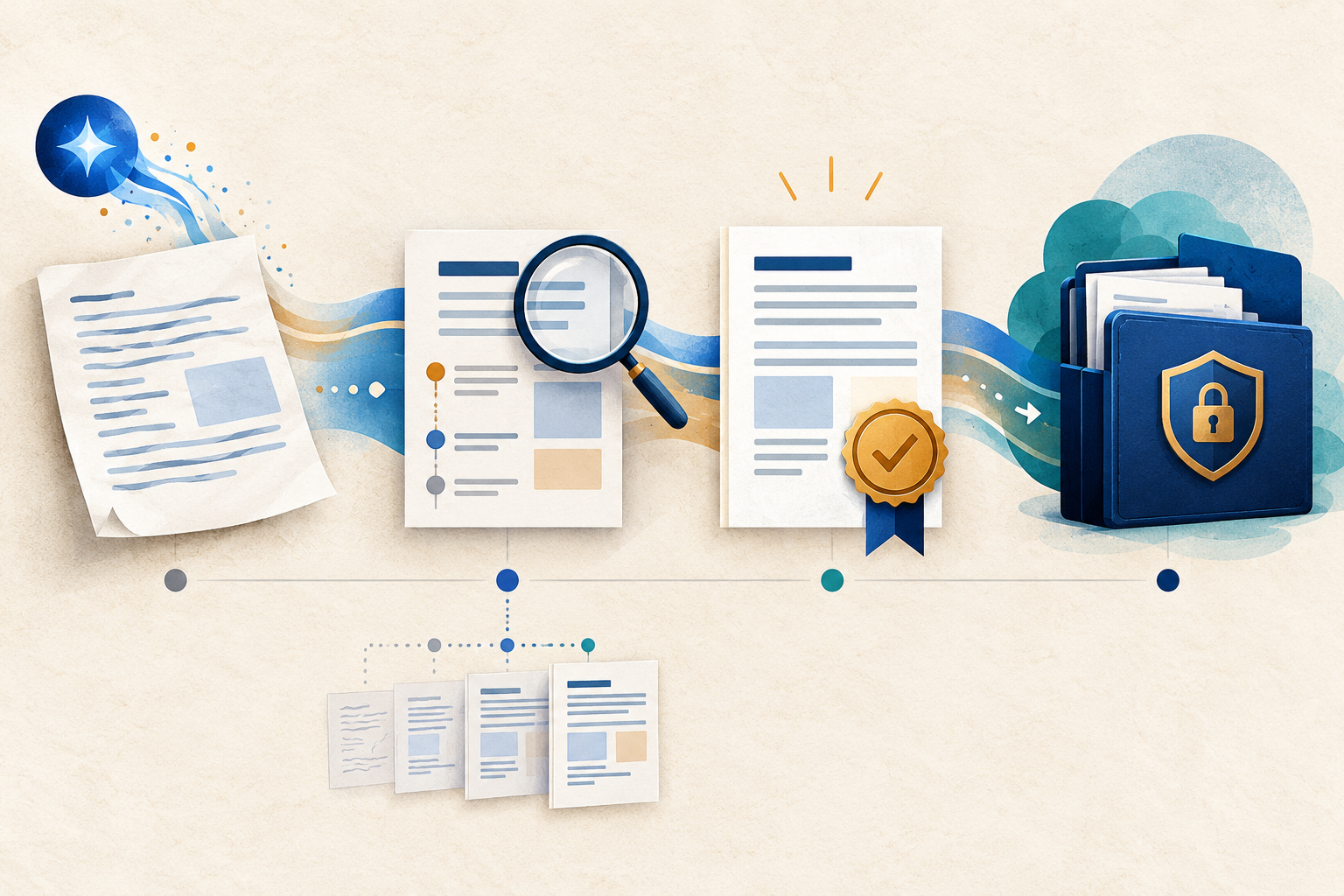
Teach a four-state path—Draft, Checked, Approved, Recorded—so polished AI output never becomes organisational fact by accident.
Use Gemini Notebook Mind Maps to Turn Policy Into Questions
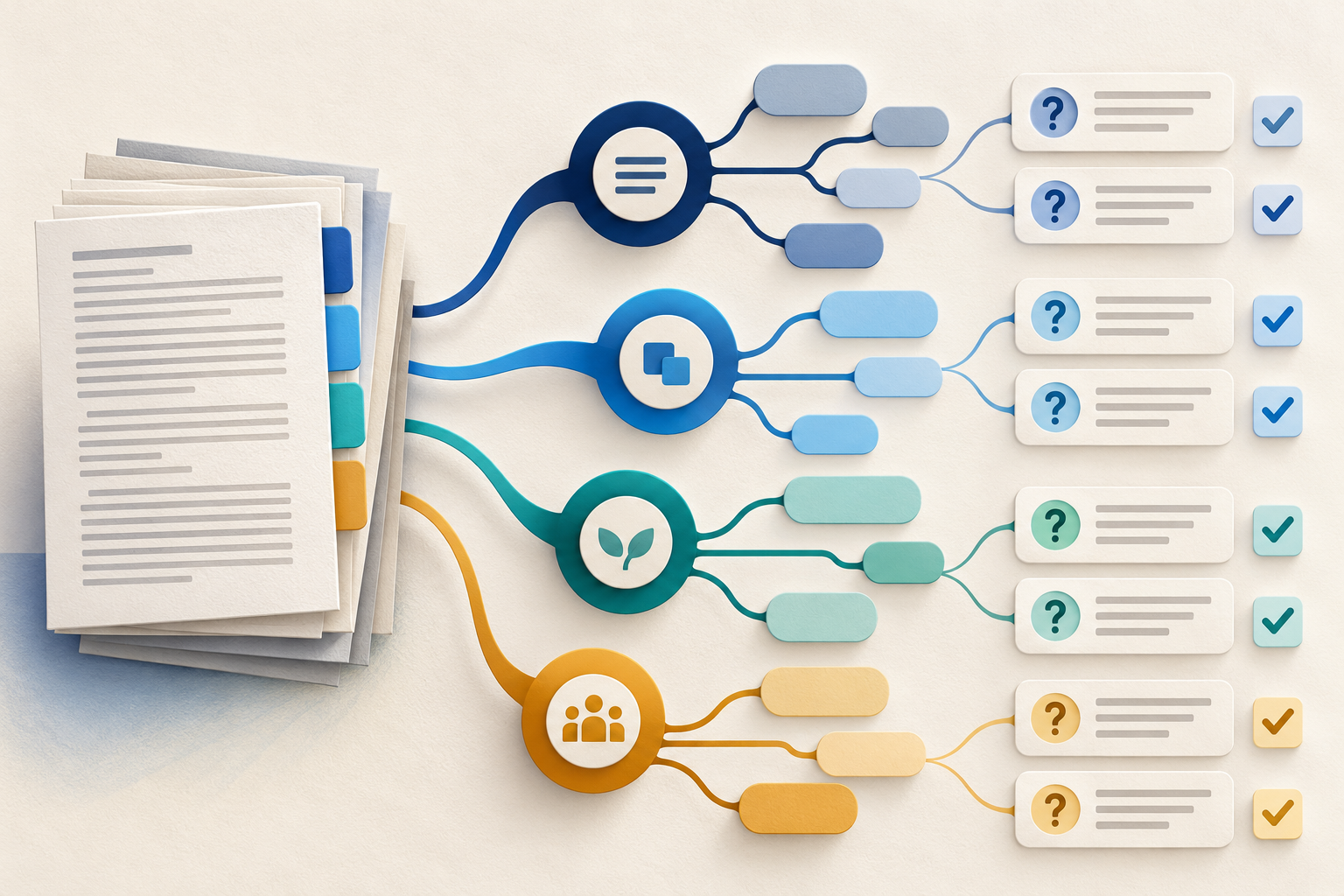
Use a Gemini Notebook mind map as a question index for a long policy—then open the cited source before you trust any answer.
AI Training for HR: Build a Four-Part Policy Answer
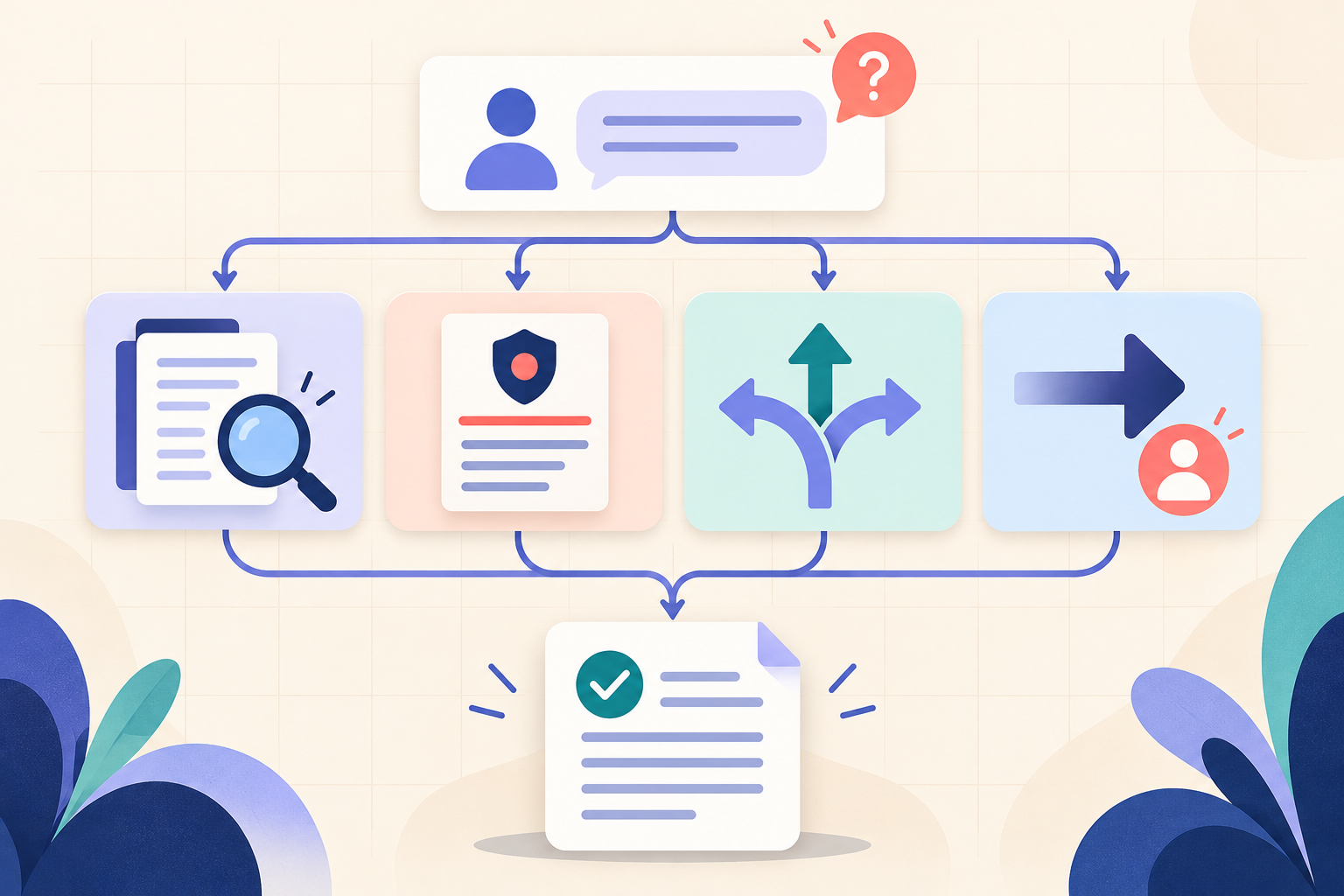
Teach HR teams to separate the source, written rule, human discretion and next step before turning an AI draft into employee guidance.