
Turn Expert Know-How Into a Testable Work Instruction With AI
Use AI to structure expert know-how, then test the draft against exceptions before a colleague relies on the work instruction.

A critical process often lives in one experienced colleague’s head. They know the normal sequence, the shortcuts that are safe, the exceptions that require a stop, and the small signs that something is wrong. Asking them to write all of that from a blank page is slow. Asking AI to invent the procedure is fast—and unsafe.
For an operations manager or process owner, the useful middle path is to treat AI as a structure editor. Capture a real demonstration, ask the tool to organise only what was observed, and then try to break the draft with exceptions. The output is not approved because it reads well. It is approved only after another person can use it and knows when to stop.
Why a fluent draft is not yet a work instruction
The UK Health and Safety Executive says procedures should be informed by task analysis, including walking and talking through the task with users, and should fit the user, task and consequences of failure. OSHA likewise stresses worker participation in analysing tasks and defining safe work practices. Those principles matter even for ordinary office processes: the person doing the work holds context that a generic model does not.
NIST’s Generative AI Profile provides a cross-sector framework for incorporating trustworthiness into the design, use and evaluation of generative AI. The practical implication here is simple: keep the source, human checks and approval visible. AI can compress and organise evidence; it cannot certify that a process is complete.
DRAFT: from demonstration to approved instruction
D — Demonstrate
Record one real run of the task using approved, non-sensitive material. Ask the expert to say what they notice and why they choose each step.
R — Record
Separate observed actions, required inputs, decision points, exceptions and stop rules. Mark anything that is only a habit or an assumption.
A — Ask AI to structure
Give an approved AI tool the checked notes and a fixed template. Instruct it not to add steps, facts or controls that are absent from the source.
F — Find failure paths
Walk through late inputs, missing data, conflicting approvals and other realistic exceptions. Add the route, owner or stop rule for each gap.
T — Test and approve
A colleague follows the draft on a safe case while the expert observes. The process owner resolves defects, versions the document and names the review date.
A practical workflow for an operations team
Build the first draft without losing the exceptions
- 1
1. Set the boundary
Choose one repeatable task with a clear start and finish. Exclude safety-critical, regulated or high-consequence work unless the proper specialists and controls are part of the review.
- 2
2. Capture a normal run
Let the expert perform the task and narrate inputs, checks, decisions and outputs. Use a redacted or fictional case when the live material is sensitive.
- 3
3. Build a source table
Create five columns: step, evidence used, decision, exception and owner. If a cell is empty, keep it empty rather than guessing.
- 4
4. Generate a structured draft
Ask the approved AI tool to convert the table into purpose, prerequisites, numbered steps, decision points, exceptions, stop rules and escalation.
- 5
5. Run an exception review
The expert chooses three cases that do not follow the happy path. A second operator uses the draft and marks every hesitation, missing input and ambiguous owner.
- 6
6. Release with ownership
Resolve defects, record the approver and version, link the governing sources, and set the event or date that will trigger a review.
Worked example: an invoice exception handover
Reading is a start. Practice makes it stick.
Start learningMaya handles supplier invoices that fail an automated match. Her normal route is simple: compare the purchase order, receipt and invoice; identify the mismatch; then send the case to the correct owner. The difficult knowledge sits in exceptions. A quantity mismatch goes to operations, a tax discrepancy goes to finance, and a changed bank detail stops the process for an independent check.
The team records Maya working through a fictional case. AI turns the checked source table into a neat instruction. During the exception test, another operator notices that the draft says “contact finance” but does not name the queue, required evidence or response needed before work resumes. The team adds those details from the approved process owner. The test has done its job: it exposed a polished gap before the document became policy.
| AI-first shortcut | Evidence-first method | |
|---|---|---|
| Source | A broad request to write the process | A real demonstration and checked source table |
| Exceptions | Added if the model happens to infer them | Chosen and tested by people who know the work |
| Approval | Fluent wording looks finished | A second operator completes a safe case |
| Maintenance | Static document | Named owner, version and review trigger |
What the reviewer must check
Work-instruction release gate
- The purpose, start condition and finished output are unambiguous.
- Every required input has an approved source and owner.
- Decision points explain the evidence used, not just the action.
- Common exceptions have a route, escalation or stop rule.
- No invented control, policy, system field or approval appears.
- The language and level of detail fit the person doing the task.
- A second operator has followed the instruction on a safe case.
- The document has an approver, version and review trigger.
Keep the draft connected to practice
A work instruction preserves knowledge only when people can use it, challenge it and improve it. ISO 10013:2021 frames documented information as support for operating processes and preserving organisational knowledge. That is a better goal than producing more pages: create the minimum instruction that helps a colleague act correctly and recognise the edge of the process.
For related practice, use Bokili’s guides to define done before delegating work to AI, give the workflow a stop rule and verify AI output before use.
- Choose a small, reversible process you know well.
- Write the normal steps from a real example.
- Add one decision point and three exceptions.
- Ask an approved AI tool to structure only those notes.
- Circle every sentence that lacks a source, owner or stop rule.
- Give the draft to a colleague and record the first hesitation.
Bokili builds practical AI skill through short missions that make the work, checks and judgement visible. Start with one instruction. The useful proof is not that AI wrote it quickly; it is that another person can follow it safely, find the exceptions and know who decides.
Sources
- Procedures: key principles in procedure design — UK Health and Safety Executive
- Safety Management — Worker Participation — Occupational Safety and Health Administration
- Artificial Intelligence Risk Management Framework: Generative Artificial Intelligence Profile — NIST
- ISO 10013:2021 — Guidance for documented information — International Organization for Standardization
- Bokili — AI fluency training for companies and teams — Bokili
Reading is a start. Practice makes it stick.
Bokili turns skills like this into ten-minute missions for your whole team, with instant feedback and progress you can see.
Start learningKeep reading
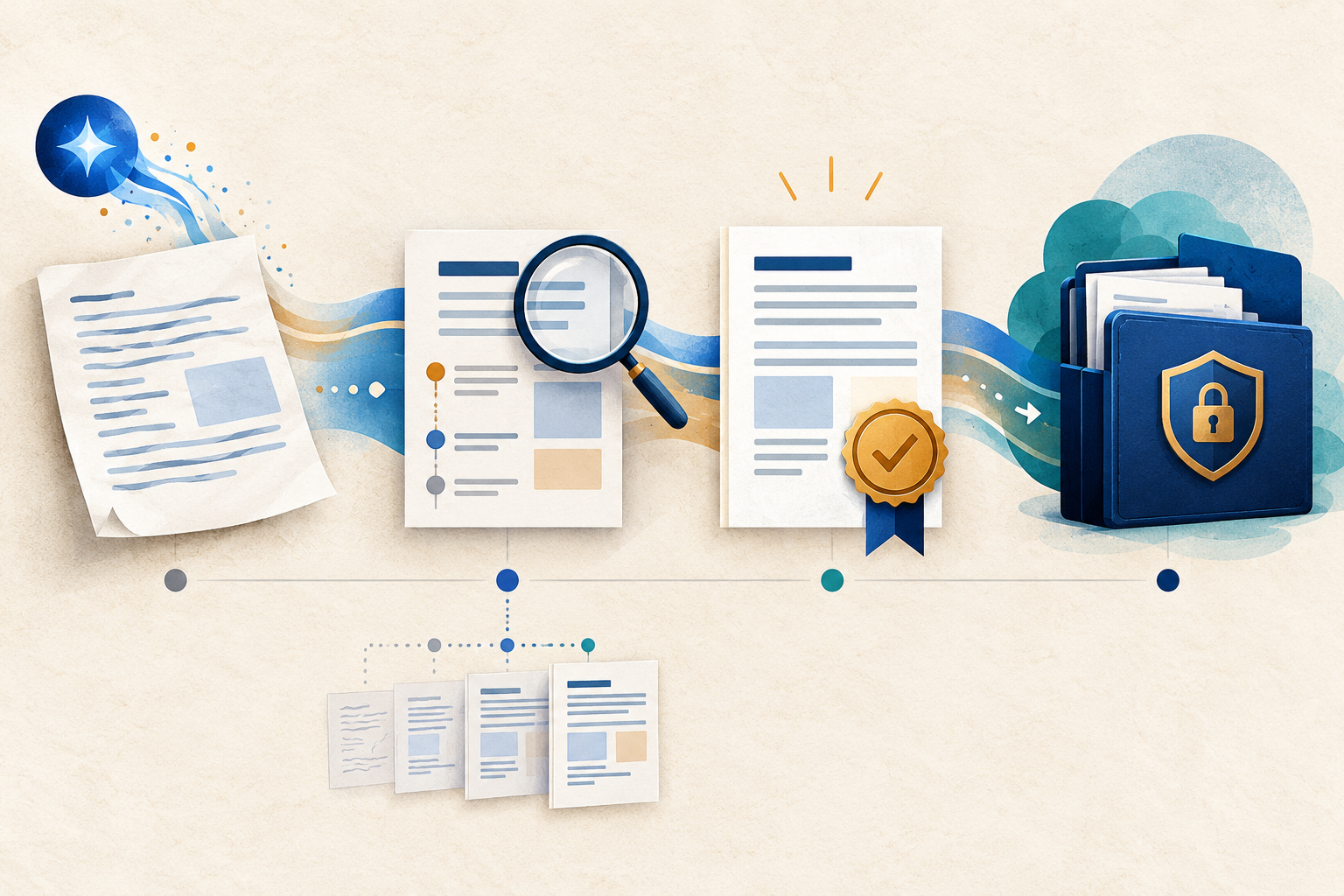
AI Training for Employees: Separate Drafts From Records
Teach a four-state path—Draft, Checked, Approved, Recorded—so polished AI output never becomes organisational fact by accident.
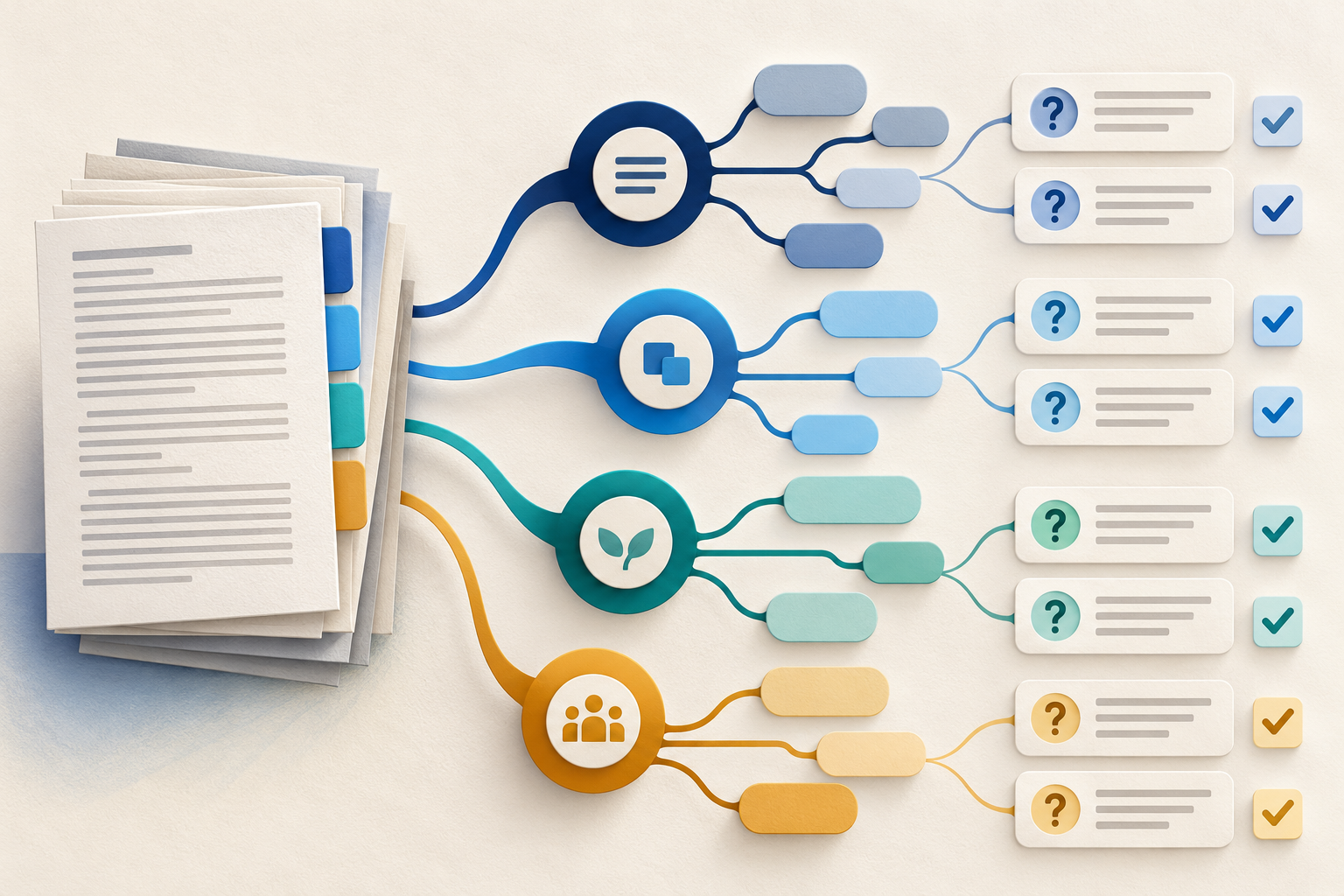
Use Gemini Notebook Mind Maps to Turn Policy Into Questions
Use a Gemini Notebook mind map as a question index for a long policy—then open the cited source before you trust any answer.
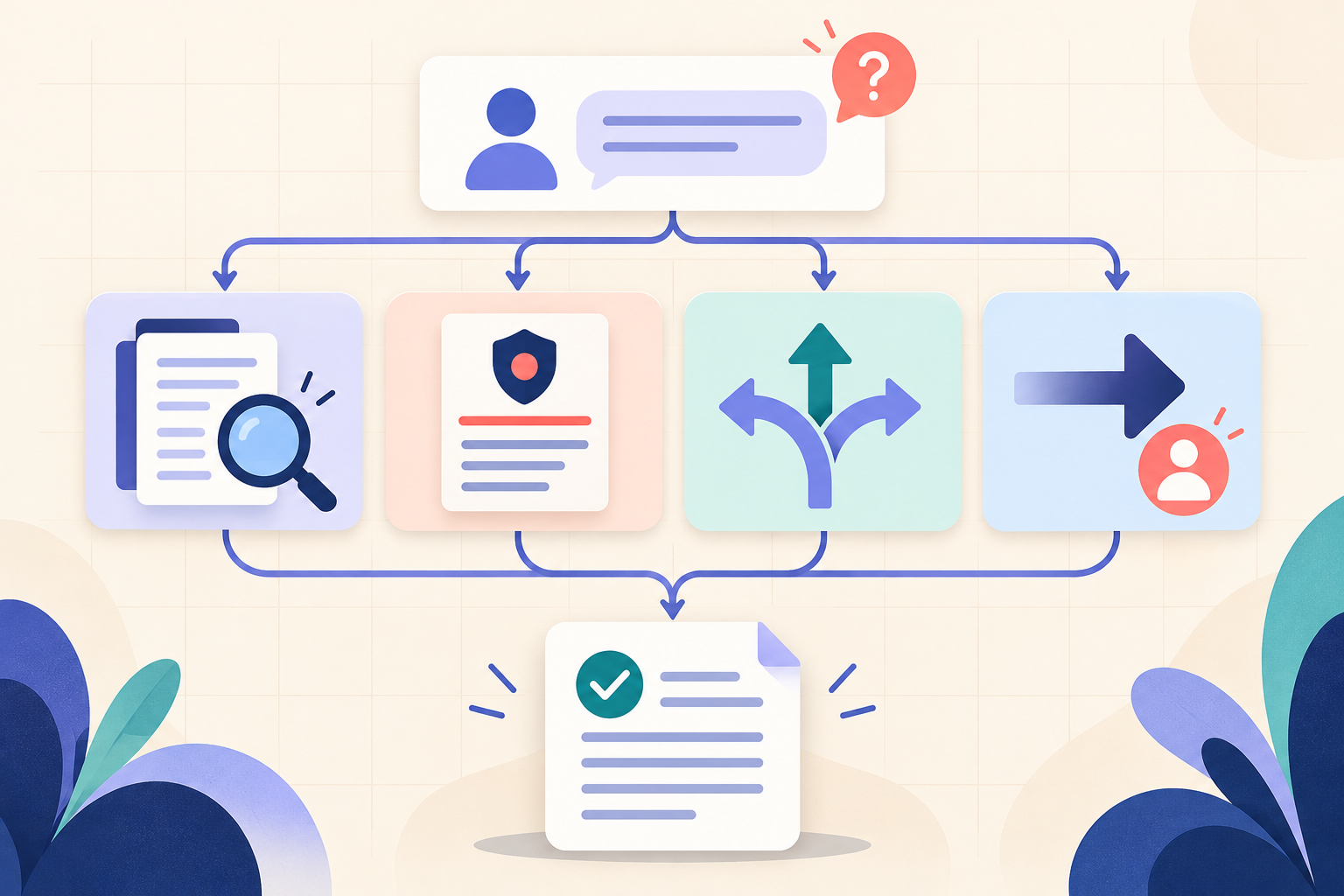
AI Training for HR: Build a Four-Part Policy Answer
Teach HR teams to separate the source, written rule, human discretion and next step before turning an AI draft into employee guidance.