
Define Done Before You Delegate Work to AI
Give AI work a five-line definition of done—purpose, evidence, boundaries, format and decision owner—before you write the prompt.

Many weak AI outputs begin as weak assignments. A manager asks for a “good briefing”, but never defines what the briefing must enable, which evidence it may use or who must approve it. The model fills those gaps with plausible choices. The fix is not a longer prompt. Define done before the task starts.
Quality belongs in the brief
Microsoft’s human-AI interaction research recommends making clear what an AI system can do and how well it can do it, and planning for the moments when it is wrong. NIST’s generative-AI risk profile likewise treats evaluation and risk management as organisational work. For everyday tasks, that principle can become a five-line contract between requester, user and reviewer.
The five-line definition of done
Purpose
Name the decision or action this output must support.
Evidence
List the sources it may use and what claims must be traceable.
Boundaries
State what data, claims, actions and topics are out of scope.
Format
Specify length, structure, tone and the fields a reviewer needs.
Decision owner
Name the human role that checks the result and decides whether it can be used.
Worked example: a supplier briefing
“Summarise these supplier proposals” sounds efficient but leaves every important choice open. A definition of done makes the assignment reviewable: the brief supports a shortlist meeting; claims must cite the submitted proposals; legal compliance is out of scope for the model; the output is a one-page comparison with unknowns; procurement owns the final recommendation.
Prompt without a definition of done
- Make a persuasive summary of these proposals.
- Choose the best supplier.
- Keep it concise.
Brief with acceptance criteria
- Support a shortlist decision, not a final award.
- Use only the proposals and cite each material claim.
- Separate facts, assumptions and missing evidence.
- Procurement reviews and owns the decision.
Turn the definition into a prompt
- 1
Write the five lines first
Do this outside the chat so the standard does not drift with the output.
- 2
Add the task context
Explain the audience, deadline and supplied materials without changing the acceptance criteria.
- 3
Ask for a self-check
Require a final table showing how the output meets each line and where evidence is missing.
- 4
Review against the contract
Judge the work against the five lines, not fluency or confidence.
- 5
Record one failure pattern
Use it to improve the next practice task, template or guardrail.
Reading is a start. Practice makes it stick.
Start learning| Looks good | Is done | |
|---|---|---|
| Purpose | Reads smoothly | Enables the named decision |
| Evidence | Includes details | Material claims are traceable |
| Boundaries | Sounds complete | Marks exclusions and unknowns |
| Ownership | AI recommends | A named human role decides |
Manager’s pre-delegation check
- Can I name the decision this output supports?
- Have I listed allowed evidence?
- Have I set data and action boundaries?
- Could two reviewers agree on the required format?
- Is one human role accountable for acceptance?
Put the standard where work begins
A definition of done works best when it is visible before anyone opens an AI tool. Add the five lines to the request form, task card or team template that already starts the work. Keep examples beside the criteria, but do not let an example replace them. If reviewers repeatedly disagree, the criterion is probably too vague. Rewrite it so a colleague can point to observable evidence. This makes the standard portable across models and tools: the technology may change, while the decision, evidence boundary and accountable owner remain stable.
Practise on a reversible task
- Choose a low-risk task you already understand.
- Write the purpose in one sentence.
- List the evidence and one important boundary.
- Specify a review-friendly format.
- Name the decision owner, then ask a colleague whether the five lines are unambiguous.
Acceptance criteria do not make every task suitable for AI
If the work involves prohibited data, rights-sensitive decisions, regulated judgment or an action outside the approved tool boundary, stop and follow the relevant policy.
The central habit is to move judgment to the start. A definition of done gives the AI less room to guess and gives the reviewer something better than instinct. Bokili helps teams practise this habit on realistic, bounded work until clear delegation and verification become part of normal management.
Sources
- Guidelines for Human-AI Interaction — Microsoft Research
- How to build effective human-AI interaction — Microsoft Research
- Artificial Intelligence Risk Management Framework: Generative Artificial Intelligence Profile — NIST
Reading is a start. Practice makes it stick.
Bokili turns skills like this into ten-minute missions for your whole team, with instant feedback and progress you can see.
Start learningKeep reading
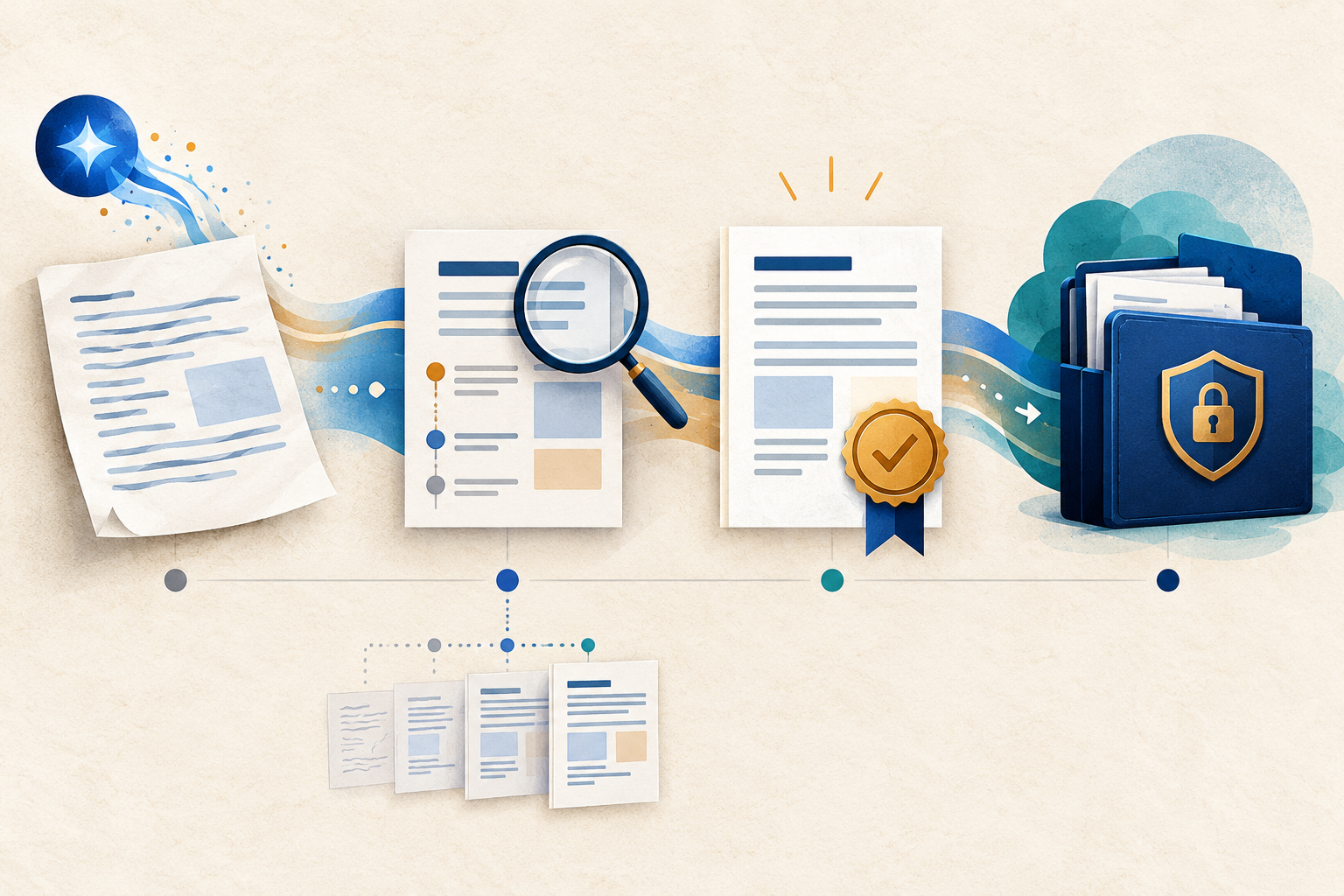
AI Training for Employees: Separate Drafts From Records
Teach a four-state path—Draft, Checked, Approved, Recorded—so polished AI output never becomes organisational fact by accident.
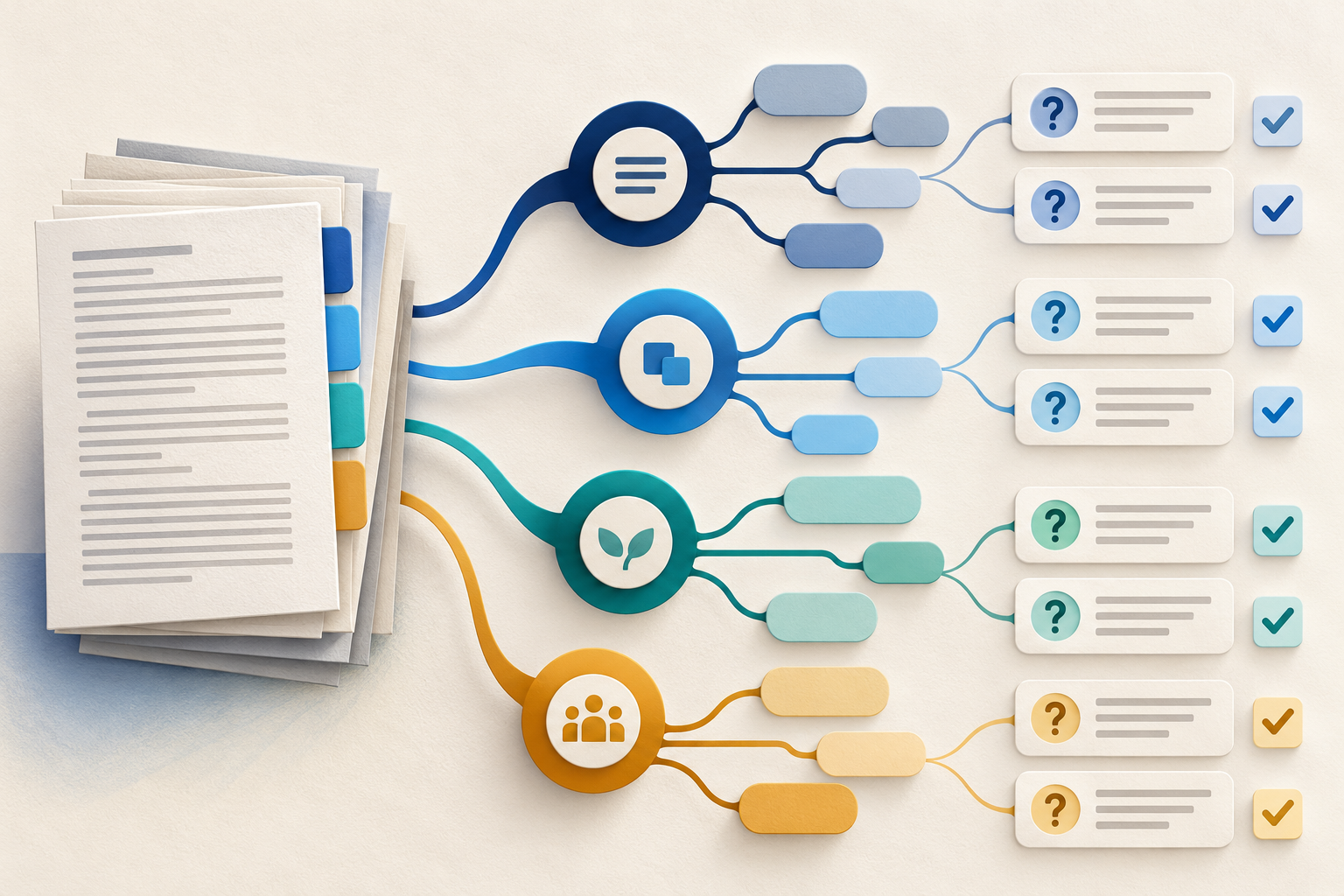
Use Gemini Notebook Mind Maps to Turn Policy Into Questions
Use a Gemini Notebook mind map as a question index for a long policy—then open the cited source before you trust any answer.
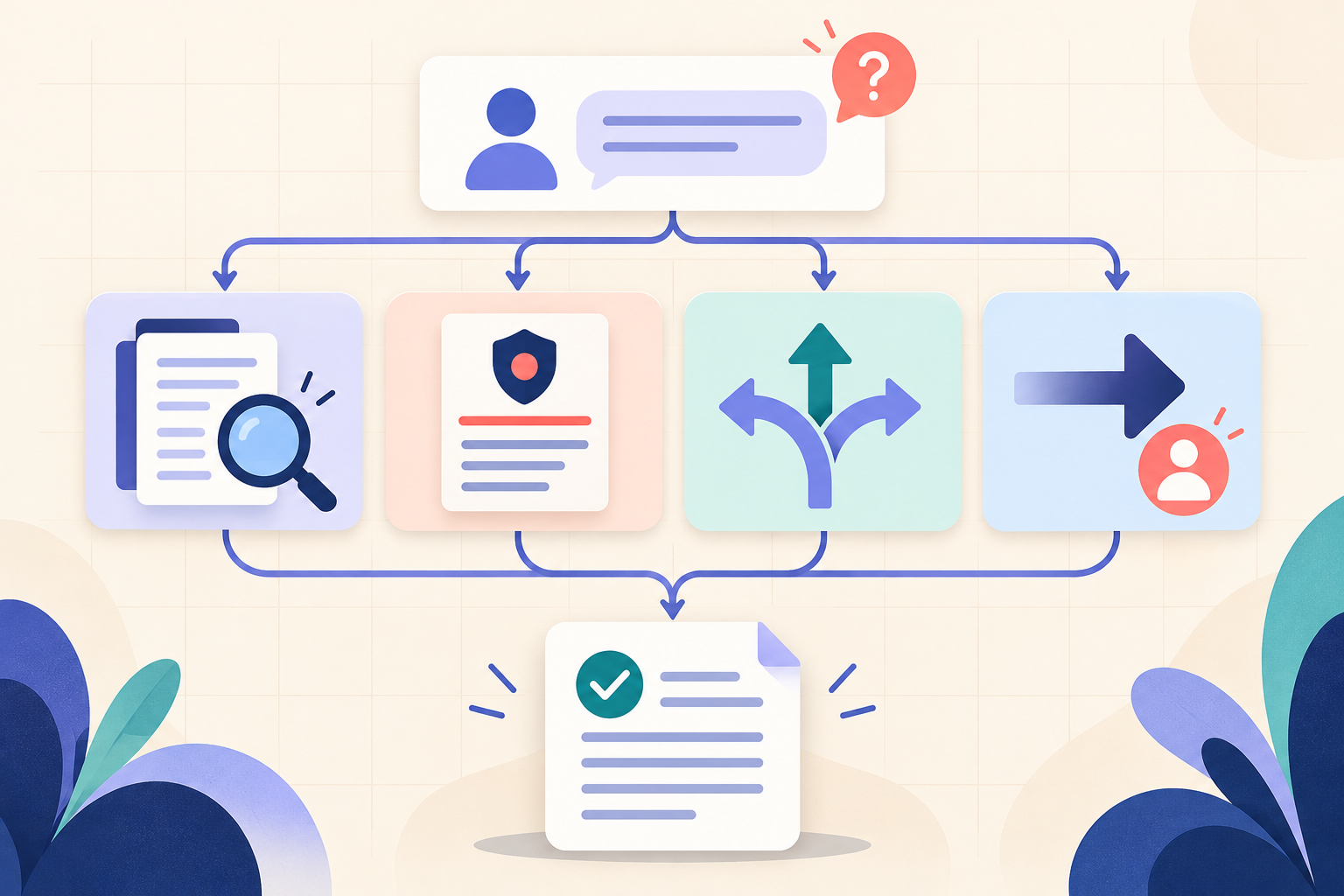
AI Training for HR: Build a Four-Part Policy Answer
Teach HR teams to separate the source, written rule, human discretion and next step before turning an AI draft into employee guidance.