If AI Does the Junior Work, Protect the Learning Work
Automating entry-level tasks can save time while removing the practice that builds future expertise. Preserve the attempt, feedback and reflection deliberately.

AI can remove exactly the work through which beginners become experts. First drafts, basic research, routine reconciliation and initial analysis are attractive automation targets because they are repetitive and slow. They are also where a new employee first sees patterns, makes small mistakes, receives feedback and learns what experienced colleagues notice.
The question is therefore not whether AI should handle junior work. It is which parts may be automated without breaking the learning path that produces future senior judgement. A company can save hours today and still create a capability shortage tomorrow if entry-level employees stop encountering the evidence, exceptions and corrections behind a finished result.
Task removal is not capability growth
When AI produces the first usable answer, the organisation must deliberately preserve the attempt, feedback and reflection that the task used to provide.
Why junior work is more than cheap production
Junior tasks often look low-value when measured only by their immediate output. A first-pass market scan, a draft reconciliation or an initial policy summary may be slower and less polished than a senior colleague’s version. Yet the task exposes the learner to source material, recurring exceptions and the standards used to judge quality.
Anthropic’s January 2026 Economic Index found that Claude usage covers many relatively high-education tasks and explored whether removing those tasks could deskill occupations on average. The authors present this as a signal, not a prediction: jobs may adjust in ways the analysis cannot capture. That caution matters. Automation changes the task mix; organisations still decide whether the remaining work develops or merely consumes expertise.
Microsoft Research’s study of 125 interns found that frequent Copilot use was associated with stronger workplace integration and that common uses included information retrieval, writing and coding assistance. Interns also learned the tool through trial and error, peers and training resources. AI can therefore support learning, but access alone does not define what the learner practises or what feedback they receive.
Preserve four learning functions
The learning work hidden inside a junior task
Exposure
The learner sees the raw sources, constraints and exceptions rather than only a polished answer.
Attempt
The learner makes an initial judgement before seeing the AI-assisted or expert version.
Feedback
A reviewer explains one material difference and why it matters.
Reflection
The learner records the rule, pattern or question they will carry into the next task.
These functions can survive even when AI performs much of the production. The mistake is to leave them implicit. If the model researches, structures and drafts before the learner has inspected the source or formed an opinion, the learner may review the prose without building the judgement that produced it.
Reading is a start. Practice makes it stick.
Start learningWorked example: the first supplier-risk review
Consider a new procurement analyst reviewing a supplier pack. The old workflow asked them to read the material, identify three concerns and prepare a first summary for a manager. The efficient AI workflow might generate the summary immediately. That saves time, but it also removes the analyst’s first attempt to distinguish a missing document from a weak control or a material risk.
A learning-preserving version changes the order. The analyst first spends eight minutes marking the source passages that appear relevant and writes two candidate risks. AI then produces its own structured review. The analyst compares the two, notes one omission and one unsupported inference, and discusses the largest difference with the manager. The final report can still be AI-assisted; the judgement remains practised.
Redesign a task without deleting its learning value
- 1
Name the capability
State what a competent person should learn to notice, decide or explain through the task.
- 2
Keep a pre-AI attempt
Require a small prediction, annotation or draft before the tool supplies its answer.
- 3
Compare visibly
Show the learner where the AI, learner and reviewer differed on one important point.
- 4
Capture one reusable lesson
Turn the feedback into a rule or question for the next real task.
The UK employer guide on AI upskilling emphasises practical, contextualised learning, progression, aligned skills frameworks and peer support. Those principles suggest a simple test for automation: if the new workflow removes the moment when a learner applies a standard and receives correction, replace that moment deliberately.
Measure progression, not exposure to AI
Do not count prompts, tool minutes or completed modules as proof that junior capability is growing. Look for improving first attempts, better questions, fewer repeated errors and clearer explanations of why an output should be accepted or rejected. A learner should gradually need less scaffolding on familiar task families while still escalating unfamiliar or high-impact cases.
This connects naturally to an evidence portfolio, a second-attempt feedback loop and an AI handoff card. Each makes learning visible in work rather than treating tool use as the outcome.
- Choose one junior task that AI now completes faster.
- Write the judgement or pattern the task used to teach.
- Identify where the learner still sees raw evidence and makes a first attempt.
- Add one comparison between the learner, AI and reviewer.
- Define the single lesson that should be carried into the next task.
- Remove any step that measures activity without showing better judgement.
AI should shorten production without shortening the path to expertise. Bokili helps teams turn real work into focused practice, so employees build the judgement needed to use faster tools well.
Sources
- Anthropic Economic Index: New building blocks for understanding AI use — Anthropic
- New employee Copilot usage: Insights into productivity and socialization — Microsoft Research
- Employer guide: What works for AI upskilling in the UK — Skills England and DWP
Reading is a start. Practice makes it stick.
Bokili turns skills like this into ten-minute missions for your whole team, with instant feedback and progress you can see.
Start learningKeep reading
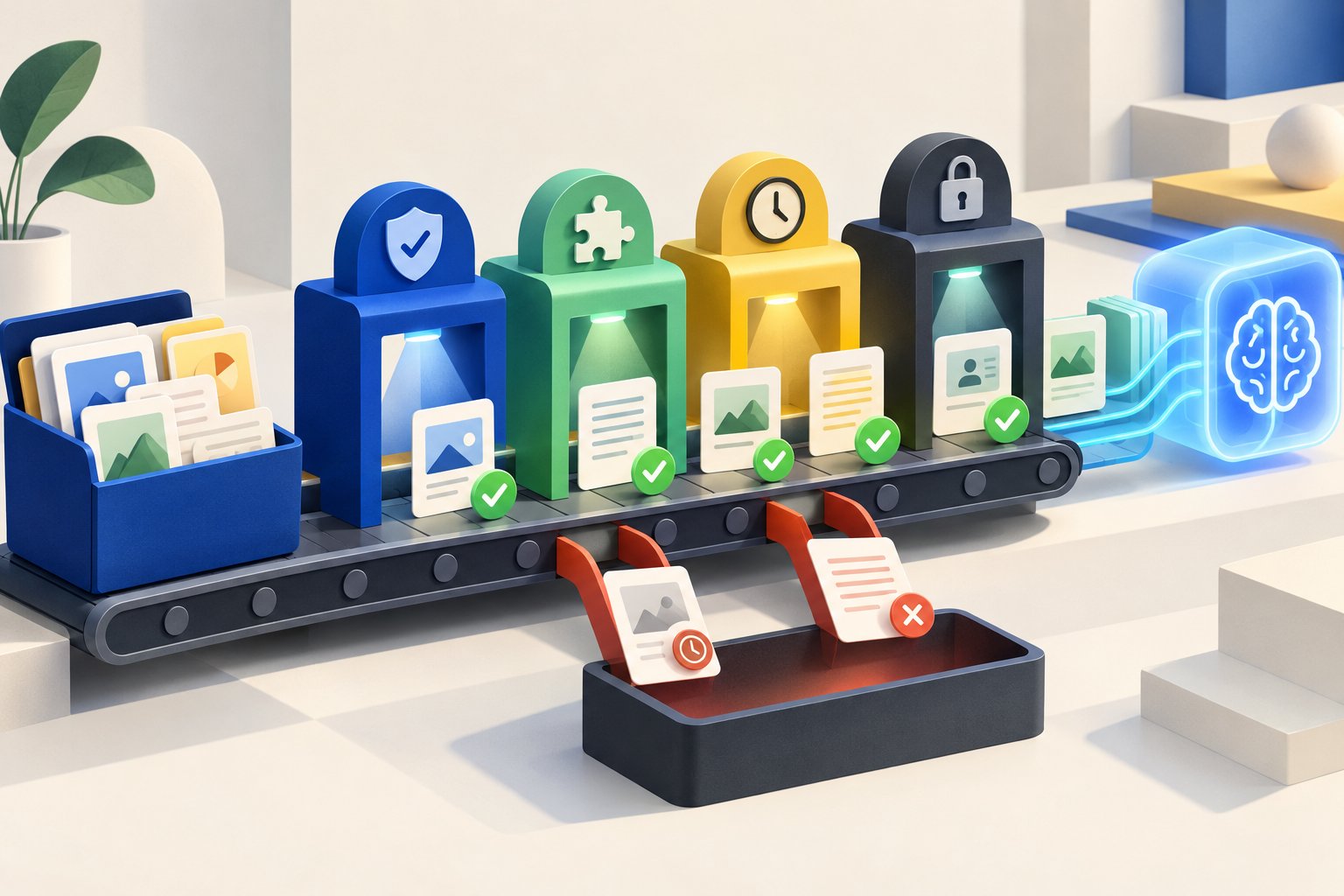
AI Skills for Employees: Audit the Input Pack First
Teach employees to test source relevance, authority, completeness, freshness and permission before an AI tool turns weak inputs into fluent output.
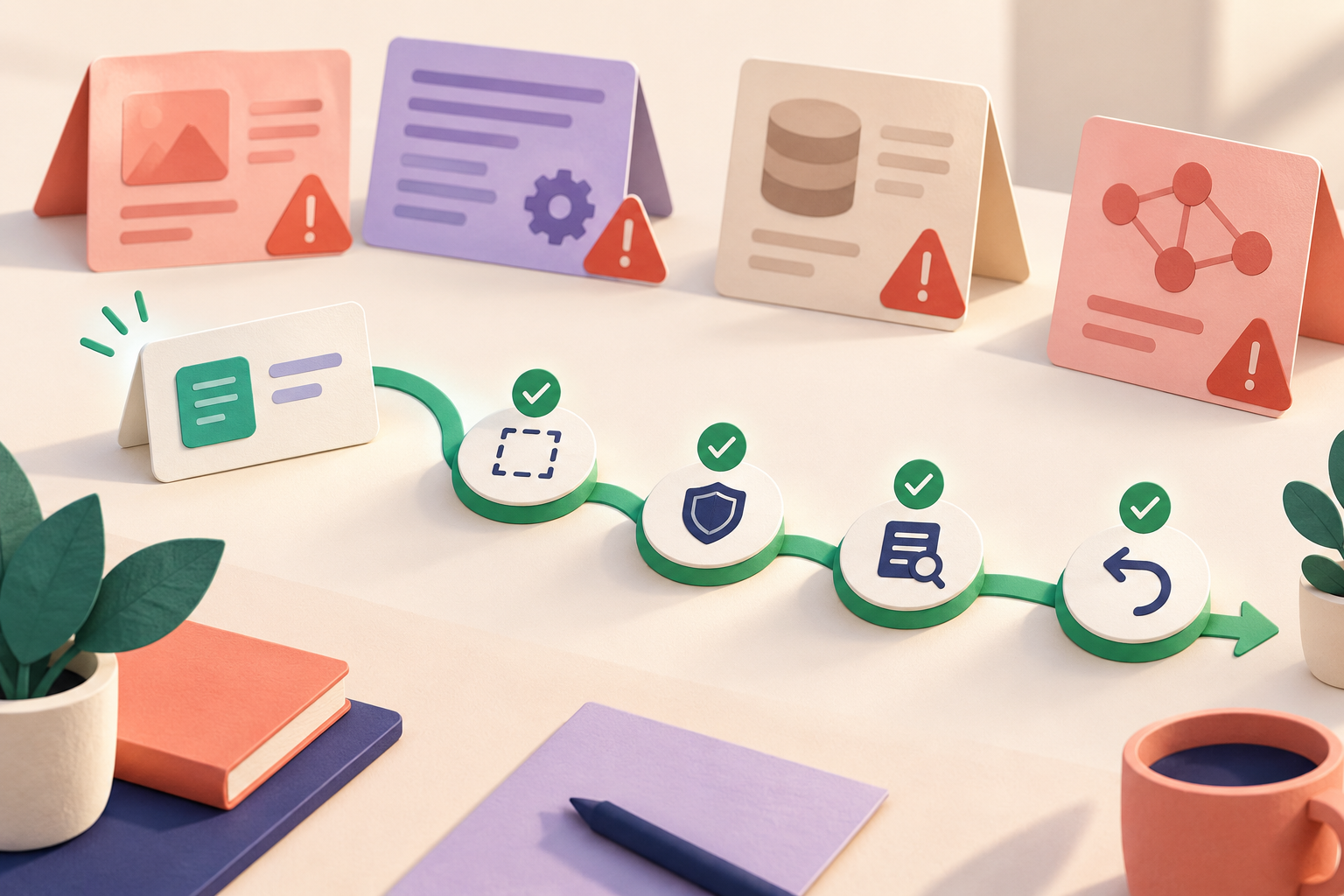
AI Course for Beginners: Start With a Reversible Work Task
An AI course for beginners should start with a useful task that is small, safe to review and easy to undo. Use the SAFE filter to choose it.
Turn a Contract Into an Evidence-Tagged Obligation Register With AI
A procurement workflow for extracting contract duties into traceable rows with owners, triggers, deadlines and proof—without treating AI as the source of truth.