
The AI Handoff Card: Carry Context Into Human Review
Use a five-field handoff card to carry sources, AI contribution, human changes and open questions into the next review.
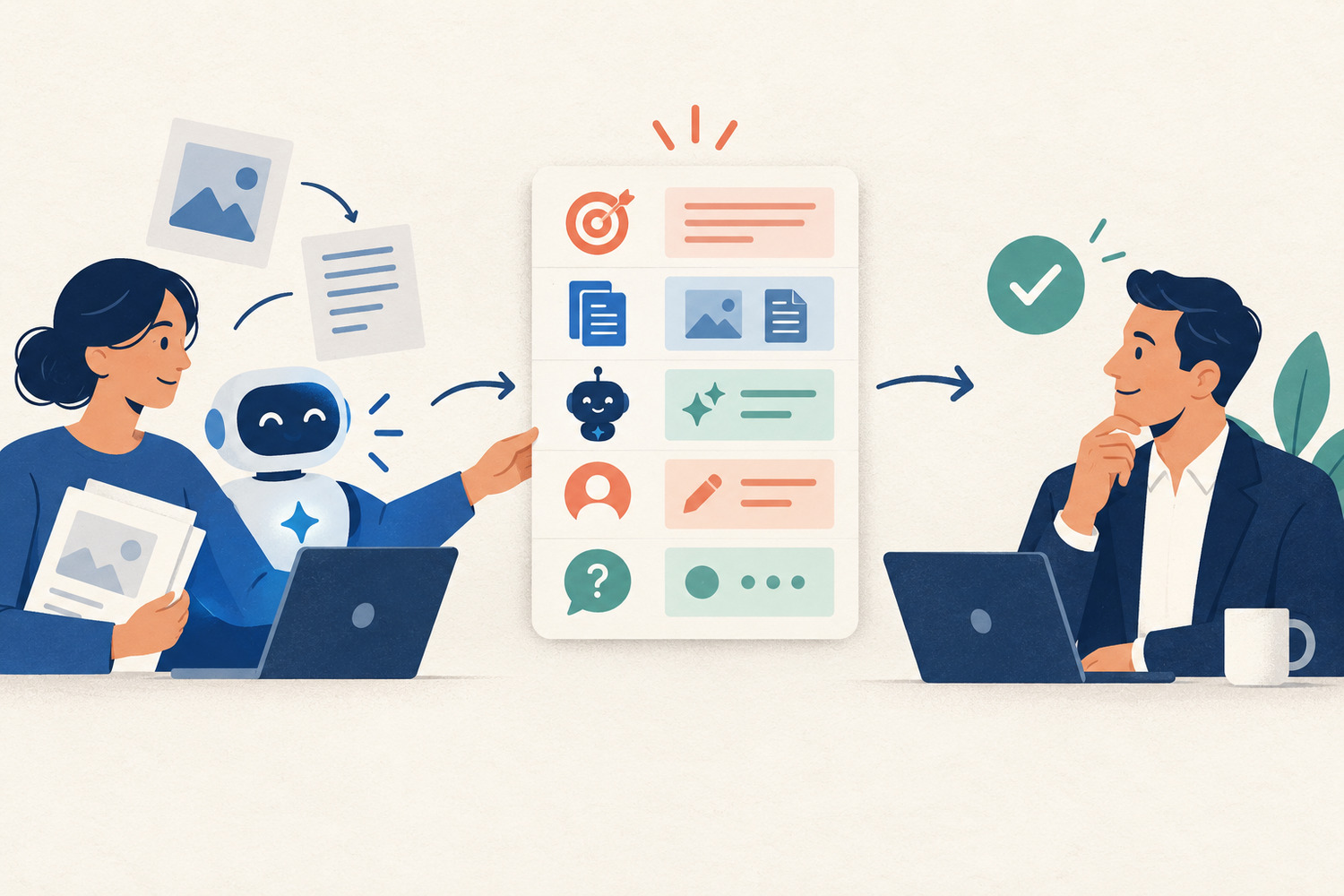
A polished AI-assisted draft can arrive at review with its history missing. The reviewer sees a recommendation, email or analysis, but not which sources shaped it, what the tool actually did, which parts a person changed or what still needs judgment. The hand-off then creates two bad choices: repeat the work or trust the surface.
Do not forward the whole chat. Add a compact handoff card beside the work. It should carry the few facts the next person needs to review efficiently and remain accountable: the purpose, references, AI contribution, human edits and unresolved questions.
A hand-off is part of the AI workflow
NIST’s AI Use Taxonomy starts with human goals and outcomes rather than the technology alone. Its AI Risk Management Framework Playbook says roles, responsibilities and lines of communication should be documented, and that organisations should clarify human involvement in AI-augmented decisions. The UK Government AI Playbook likewise calls for meaningful human control at the right stages, clear responsibilities, traceability and checks of AI outputs.
Those principles become practical at the moment work crosses from one person to another. A task-level card is not a compliance certificate, and it does not prove an output is correct. It gives the reviewer a usable starting point: what this work is for, what evidence is in scope, what changed after generation and where attention is still required.
| Weak hand-off | Reviewable hand-off | |
|---|---|---|
| Context | “Here is the AI draft” | Purpose and decision are explicit |
| Evidence | Sources stay inside a chat | References travel with the work |
| AI role | Contribution is unclear | Generation, extraction or comparison is named |
| Human work | Edits disappear | Material corrections and checks are recorded |
| Uncertainty | Reviewer must rediscover it | Open questions are visible |
Use the BRIEF handoff card
BRIEF: five fields that travel with the work
B — Business purpose
State the task, intended audience and the decision or action this output should support.
R — References
List the source documents, dates or approved inputs that matter. Note any material source that was unavailable.
I — Intelligence contribution
Describe what AI did: generated options, extracted facts, compared documents, rewrote text or organised evidence.
E — Edits and checks
Record the important human corrections, evidence checks and constraints applied after generation.
F — Follow-up
Name unresolved questions, the next reviewer, the decision required and any reason to pause or escalate.
BRIEF stays small by design. It records the state of one work item, not every keystroke. Use more detail when a mistake could affect money, rights, safety, customers or regulated work. For a low-consequence internal draft, one or two sentences per field may be enough.
Worked example: a supplier-risk note
A fictional procurement analyst prepares a one-page note before a supplier review. The approved source pack contains the supplier’s public filing, a current questionnaire and an internal contract summary. AI extracts dates and groups potential issues. The analyst then checks each claim against the source pack, corrects a currency, removes an unsupported statement and leaves one ownership question open.
Reading is a start. Practice makes it stick.
Start learningWithout a handoff card, the category manager receives a convincing note and may not know that one question remains unresolved. With BRIEF, the purpose is “decide whether legal review is needed before renewal”; the three references are named; the AI role is limited to extraction and grouping; the corrected currency and removed claim are visible; and the open ownership question is assigned to the analyst before the meeting.
Do not turn the card into a badge of safety
A completed card does not make the output correct. The reviewer must still inspect the evidence and apply the right level of judgment.
Build the card without creating paperwork
- 1
1. Write the decision first
If the next person does not know what they must decide, the rest of the context will not help.
- 2
2. Link only material references
Include the sources that support the conclusion or constrain the work. Avoid a dump of every file.
- 3
3. Name the AI action precisely
“Used AI” is not informative. Say whether it extracted, compared, drafted, classified or suggested.
- 4
4. Record consequential human changes
Capture corrected facts, rejected suggestions, added evidence and any changed conclusion.
- 5
5. End with an owner and question
Make the remaining judgment visible and assign who must resolve it.
Three failure modes to avoid
- The chat transcript hand-off: it transfers volume, not clarity, and forces the reviewer to reconstruct the task.
- The vague disclosure: “AI helped” says nothing about evidence, limits or responsibility.
- The perfect-history trap: recording every small edit makes the card too slow to maintain. Keep only facts that change review or decision quality.
The card complements, rather than replaces, other controls. Use task decomposition to create reviewable stages, a workflow change log when the reusable method itself changes, and a decision brief when several options need an explicit choice.
- Choose one AI-assisted item waiting for review.
- Write its business purpose and the exact decision required.
- List no more than three material references.
- Describe the AI contribution with one action verb.
- Record one important edit or evidence check.
- Finish with the open question, reviewer and next action.
Make context part of the deliverable
AI can make a draft travel faster than its evidence. A handoff card keeps the two together. Add BRIEF to the template used for recurring AI-assisted work, test it on one real hand-off and remove any field that does not help the next person decide or verify.
Bokili helps teams practise the small behaviours that make AI-assisted work usable: framing a task, checking evidence, correcting an output and handing it to another person. Explore the practical learning model at Bokili for HR and L&D.
Sources
Reading is a start. Practice makes it stick.
Bokili turns skills like this into ten-minute missions for your whole team, with instant feedback and progress you can see.
Start learningKeep reading
Learn to Use AI by Correcting One Mistake at a Time
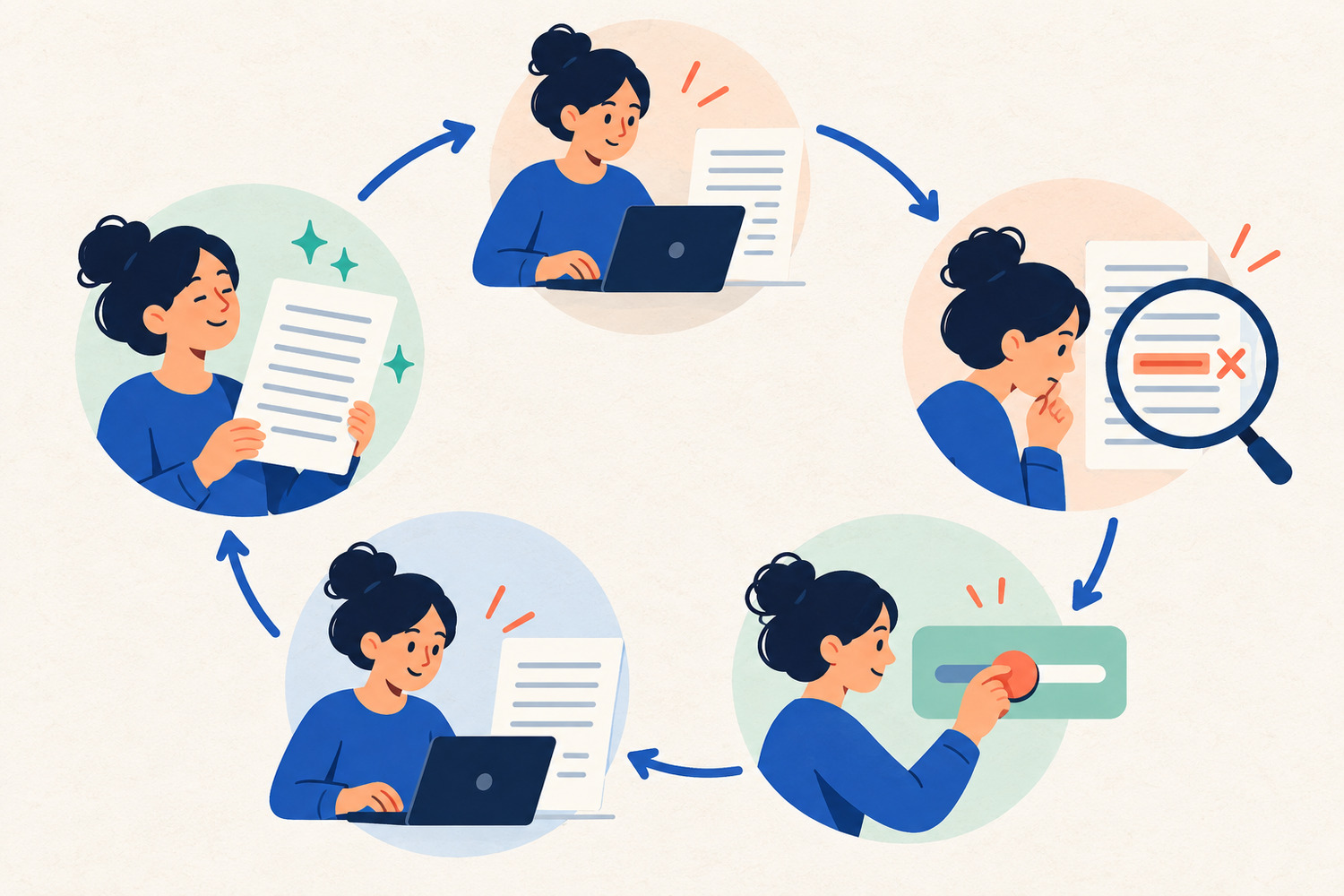
Learn to use AI at work with a four-step correction loop that turns one disappointing output into a reusable skill.
AI Training Platform for Companies: Map Learner Data Before You Buy
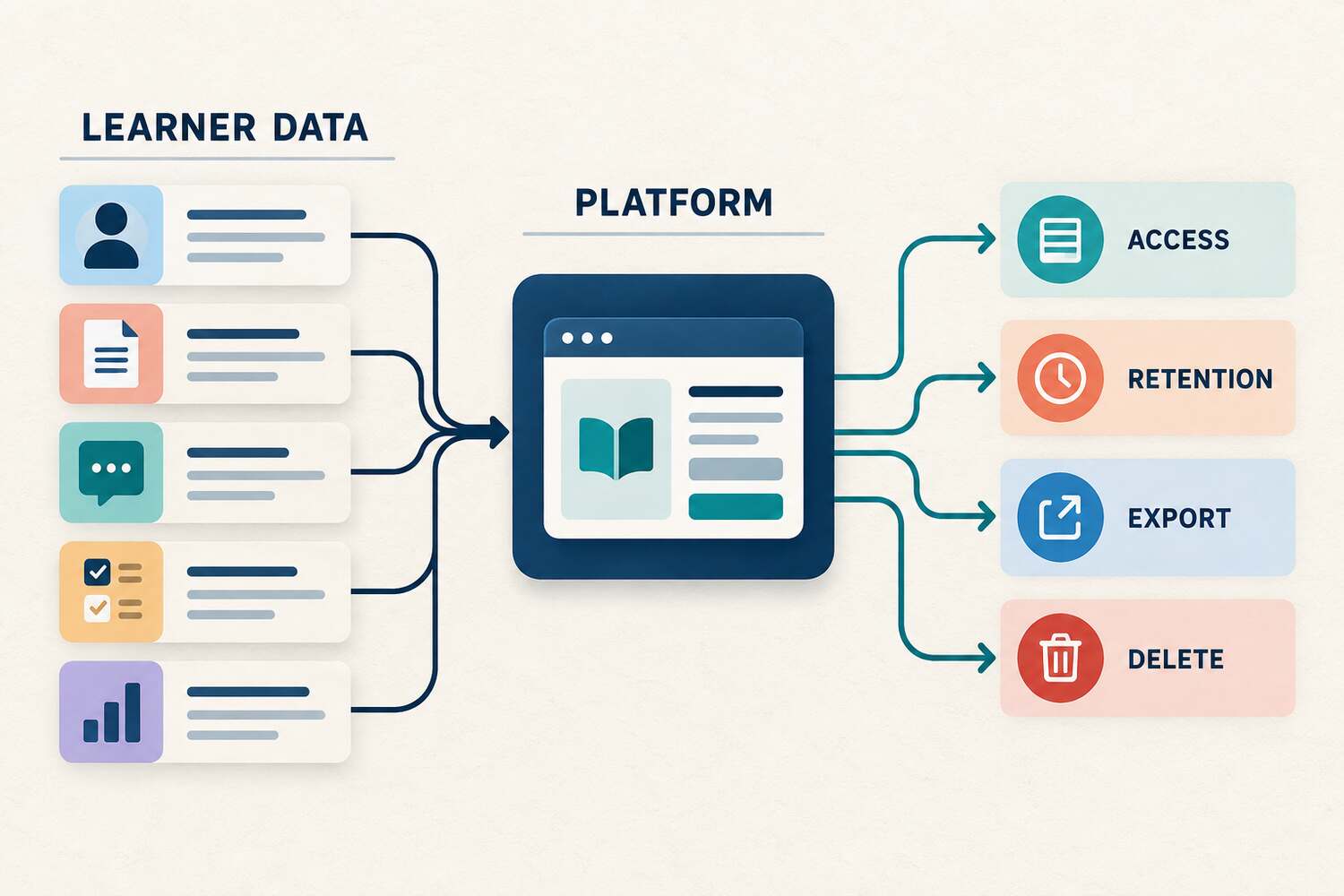
Before choosing an AI training platform for companies, map learner identity, work inputs, feedback, access, retention, export and deletion.
AI Makes Options Cheap. Your Team Still Pays to Consider Them
AI can generate options faster than a team can judge them. Set decision criteria, an option cap and a selector before asking for more.