AI Skills: Build an Evidence Portfolio, Not a Prompt Folder
Make AI skills visible through useful outputs, documented judgement, verification and transfer to a fresh workplace task.

A prompt is not proof of skill
An AI skill becomes credible when a learner can show a useful output, explain the choices behind it, verify the result and apply the method to a fresh task.
AI skills are often recorded as course completions, self-ratings or folders of favourite prompts. Those records show activity. They do not show whether a person can turn an unclear work request into a useful result, notice a weak output, protect sensitive information or improve a method after feedback.
An evidence portfolio makes progress visible without becoming a public showcase or a collection of confidential work. For each skill, it preserves a small, safe record of what the learner produced, which judgement they made, how they checked the result and whether they could repeat the method with a new case.
Build AI skills around four kinds of evidence
The European Commission’s AI-literacy guidance says staff need skills targeted to the systems they use and that learning approaches can differ by knowledge and experience. It also states that a specific certificate is not required. OPM’s training guidance starts with observable performance requirements and critical behaviours, while NIST’s AI Use Taxonomy focuses on human goals and outcomes. Together, they support a practical principle: define the work behaviour first, then keep evidence that the learner can perform it.
The WORK evidence portfolio
W — Work output
Keep the useful artefact produced from a safe or approved case: a brief, table, draft, decision aid or workflow card.
O — Options and judgement
Record one important choice the learner made, the alternative they rejected and the reason.
R — Review evidence
Show how claims, constraints, sensitive data and acceptance criteria were checked. Note any correction.
K — Knowledge transfer
Repeat the method on a fresh task or explain when it should not be used. This shows transfer rather than memory.
Why an AI skills portfolio beats a prompt folder
| Prompt folder | Evidence portfolio | |
|---|---|---|
| Shows | What someone typed | What someone achieved and checked |
| Judgement | Usually hidden | One choice and its reason are visible |
| Transfer | May fit one familiar example | Includes a fresh task or boundary |
| Review | Prompt quality is assumed | Output quality and corrections are recorded |
The portfolio is not evidence that an AI tool is always correct. It is evidence of a human behaviour in a defined context. A strong entry says what the task was, which materials were allowed, what the learner changed and who checked the result. A weak entry stores a polished output without showing how it became trustworthy.
Reading is a start. Practice makes it stick.
Start learningWorked example: turning meeting notes into a decision brief
A project coordinator practises using AI to turn fictional meeting notes into a one-page decision brief. The first draft is fluent but treats an unresolved estimate as a confirmed cost and omits the decision owner.
Create one portfolio entry
- 1
Work output
Save the corrected decision brief with the decision, two options, evidence gaps and named owner.
- 2
Options and judgement
Note why the learner changed the cost from a fact to an estimate and removed background that did not affect the decision.
- 3
Review evidence
Attach a compact check showing each material claim traced to the notes, the sensitive details removed and the acceptance criteria used.
- 4
Knowledge transfer
Give a fresh set of project notes. Ask the learner to produce the same structure without copying the earlier prompt or answer.
This entry can stay internal and use fictional or sanitised material. It does not need to contain the original confidential meeting. The evidence is the learner’s method, decisions and checks—not the volume of data stored.
Keep the portfolio small and useful
One-page portfolio entry
- Skill and work outcome
- Safe task context and approved inputs
- Final artefact or representative excerpt
- One decision and its rationale
- Verification performed and correction made
- Fresh task used to test transfer
- Reviewer and next practice step
Create the first entry in ten minutes
- Choose one low-risk AI task completed with fictional, public or approved material.
- Write the intended outcome in one sentence.
- Save the useful part of the output, not the whole conversation.
- Add one choice you made and one check that changed or confirmed the result.
- Write a new task that would test the same skill with different content.
- Remove sensitive data and name the person who can review the entry.
Use the beginner-course outcomes checklist to choose what a learner should be able to demonstrate. Pair every creation skill with a check using the AI learning-path guide. The reusable-artefact guide helps turn short practice into something the learner can use again. Bokili’s learning features support brief, applied practice and visible progress.
Do not ask an AI skills portfolio to prove everything about a person. Ask it to show one defined behaviour with enough context to inspect. A useful output, a visible judgement, a real check and transfer to a new task are stronger evidence than a long prompt list.
Sources
- AI Literacy – Questions & Answers — European Commission
- Planning & Evaluating — U.S. Office of Personnel Management
- AI Use Taxonomy: A Human-Centered Approach — NIST
- Artificial Intelligence Playbook for the UK Government — UK Government
- Bokili Features — Bokili
Reading is a start. Practice makes it stick.
Bokili turns skills like this into ten-minute missions for your whole team, with instant feedback and progress you can see.
Start learningKeep reading
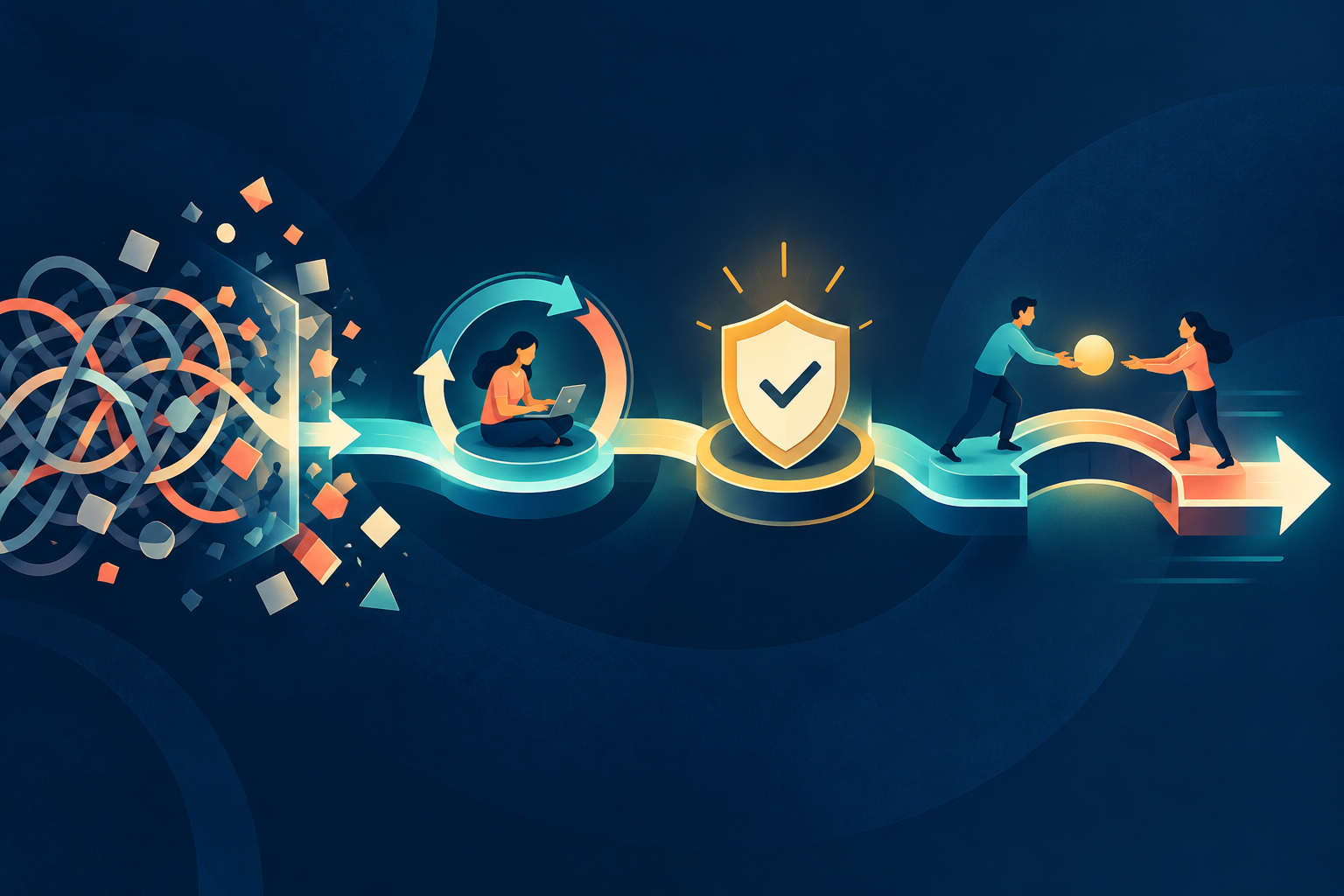
The AI Workflow Friction Test: Remove, Preserve or Strengthen?
Do not remove every step from an AI workflow. Classify friction as waste, learning, safety or coordination before changing it.
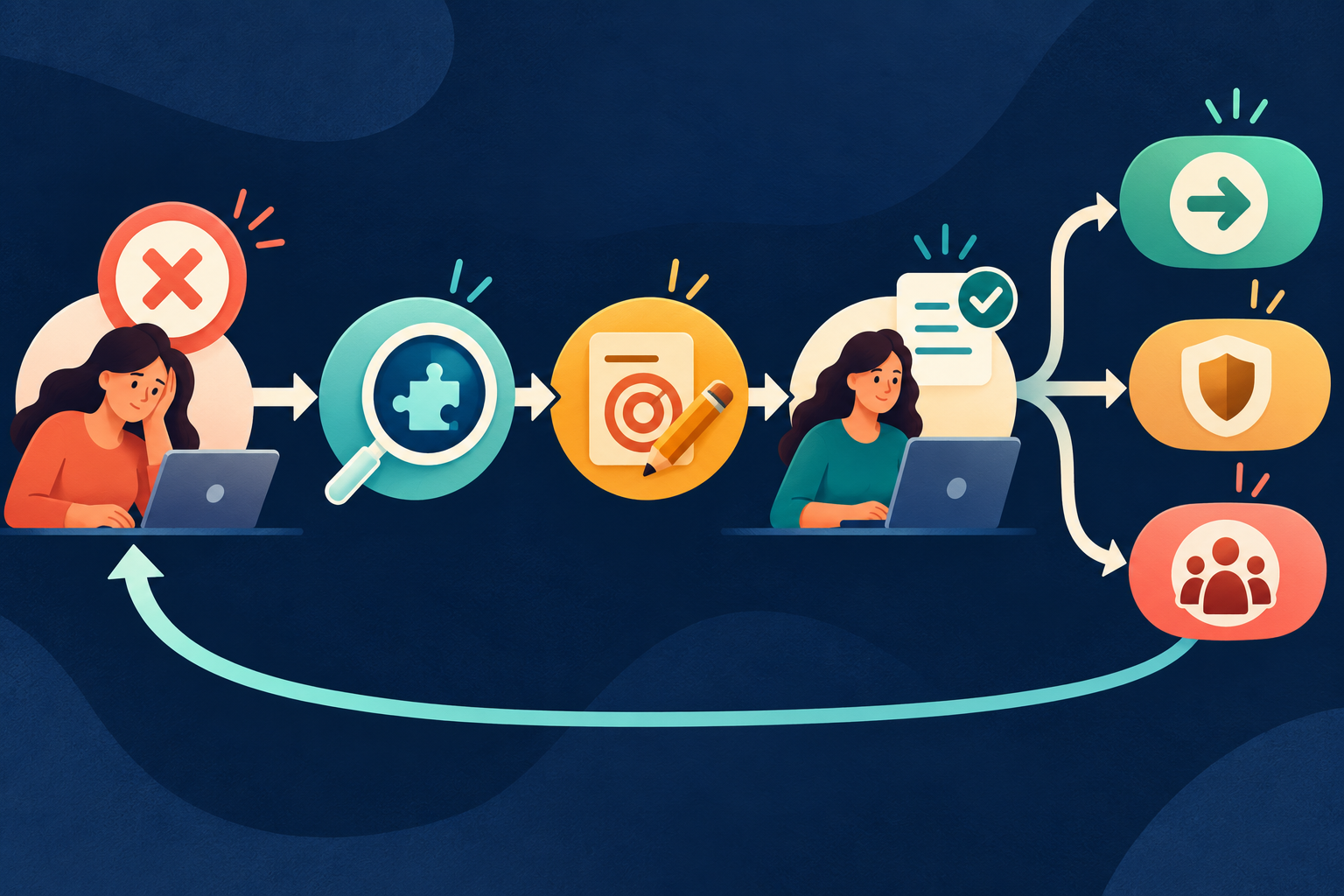
Corporate AI Training: Build a Remediation Path
When an employee fails a workplace practice check, use a targeted recovery path instead of repeating the whole course.
AI Turns More Employees Into Editors. Editing Is Not One Skill
As AI drafts more workplace content, “human review” becomes four distinct jobs: checking truth, task fit, risk and ownership.