ChatGPT Training for Employees: Run a Clean-Context Drill
Test whether a workplace ChatGPT method can travel by rerunning it with only the approved brief, then repairing the hidden assumptions.
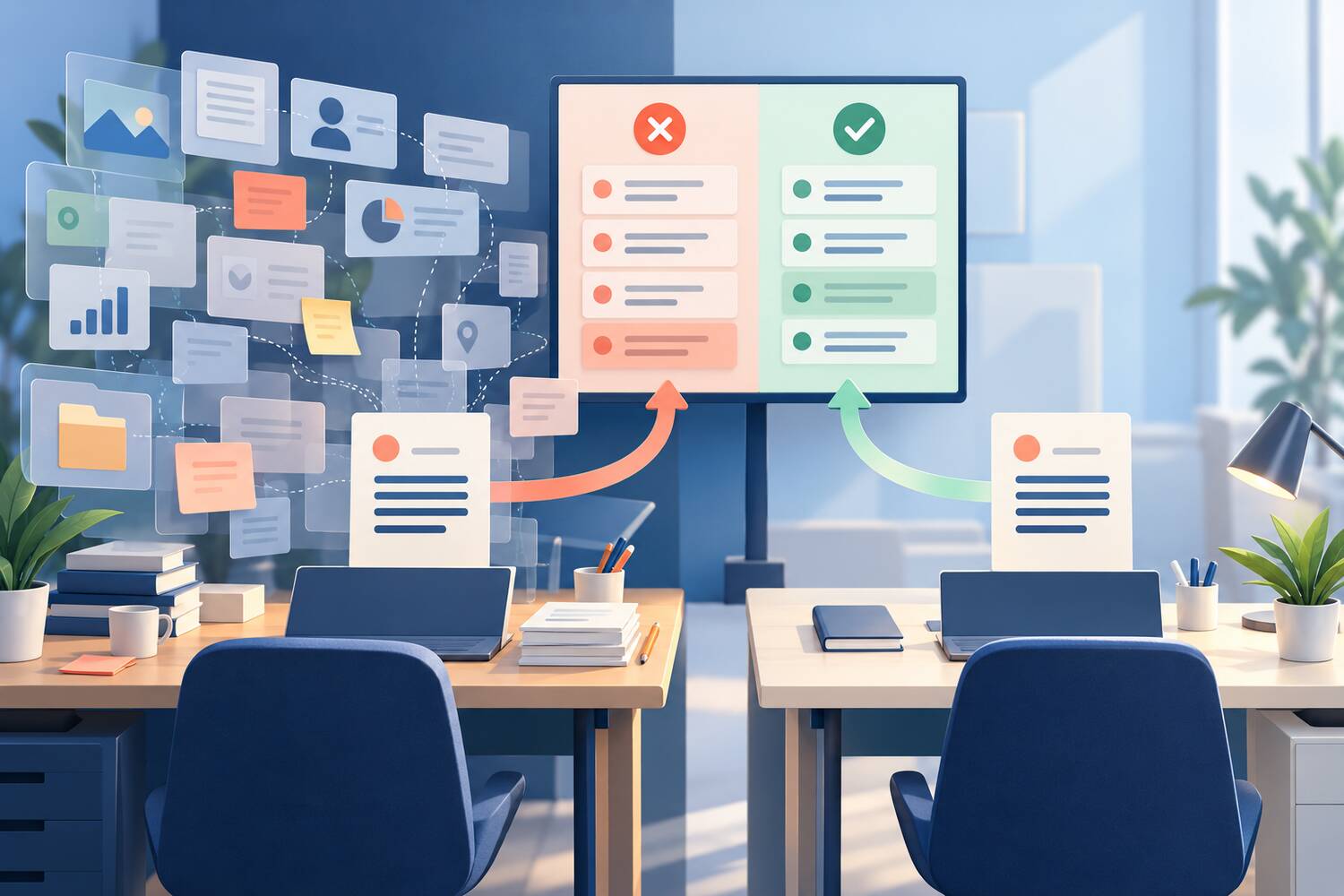
ChatGPT training for employees often teaches a prompt inside a long, familiar chat. The result looks good, so the method appears reusable. But earlier messages, saved memories, custom instructions or workspace tools may have supplied context that the employee never wrote down. A clean-context drill tests the method again with only the approved brief. It reveals which instructions can travel to another person or session—and which assumptions were quietly inherited.
This is not a privacy shortcut and it is not a claim that one mode is appropriate for every workplace. It is a training exercise. Employees should follow their organisation’s approved workspace, data rules and retention policy. The goal is to separate a reusable working method from accumulated context.
Why ChatGPT training for employees needs a clean rerun
A conversation is cumulative. Within a chat, later responses can use details from earlier turns. Depending on account and workspace settings, ChatGPT may also use saved memories, custom instructions and other connected context. That can make everyday work smoother, but it complicates assessment: did the employee write a complete brief, or did the system fill the gaps from information already available?
OpenAI’s current Temporary Chat guidance distinguishes personalised and unpersonalised sessions. An unpersonalised Temporary Chat does not use memory, custom instructions or plugins, and neither temporary mode creates or updates memories while it remains temporary. Workspace restrictions still take priority, and a copy may be retained for up to 30 days for safety. Those details matter: “Temporary” alone does not necessarily mean “clean context.” For this drill, use an approved unpersonalised option or another organisation-approved clean session.
The clean-context drill
Declare
Write down the approved input, the task, the audience, the constraints and the acceptance test before opening the clean session.
Rerun
Repeat the task in an approved unpersonalised or otherwise clean session using only that explicit brief.
Compare
Mark every useful difference: missing facts, changed assumptions, weaker structure or a check that no longer happens.
Repair
Add only the minimum instruction or source needed to make the method portable, then test once more.
A worked example: a customer-update email
Imagine an account manager asks a familiar chat to draft a customer update. The first answer correctly uses the company’s preferred tone, avoids promising a delivery date and routes refund requests to the right owner. The employee may conclude that the prompt is ready to share: “Draft a clear update about the delay.”
Now rerun the task with only that sentence and a safe, synthetic scenario. The new answer invents a delivery window, uses a casual tone and omits the escalation route. The clean session has not failed; it has exposed what the original context was doing. The employee can repair the method by adding the audience, confirmed facts, prohibited claims, tone and escalation rule to the brief.
Reading is a start. Practice makes it stick.
Start learning| Normal work context | Clean-context rerun | |
|---|---|---|
| Available information | May include earlier turns, memories, instructions or tools. | Contains only the approved brief and supplied materials. |
| What success proves | The task can work in this established setting. | The written method contains enough context to travel. |
| Main risk | Hidden dependencies look like prompt skill. | A sparse brief produces a weaker but more diagnostic result. |
| Best use | Efficient day-to-day work. | Training, handoff testing and reusable workflow design. |
Keep the drill inside workplace rules
Use synthetic or approved training data. Do not move confidential material into a different account or consumer tool just to create a blank session. For managed workspaces, administrators may control features, retention and access. OpenAI states that business data from ChatGPT Business, Enterprise and Edu is not used to train its models by default, but organisations still need their own rules for approved inputs, access and retention.
The drill also tests instruction quality, not model determinism. Two answers can differ even with the same brief. Compare whether both respect the same facts, boundaries and acceptance criteria—not whether every sentence matches. A separate acceptance test keeps that review independent from the draft.
Run the drill with one low-risk task
- 1
Choose a repeatable task
Use a safe example such as a status update, meeting summary or internal FAQ draft.
- 2
Write the portable brief
Include audience, objective, allowed sources, constraints, output format and acceptance checks.
- 3
Run the normal version
Complete the task in the approved everyday setting and save only the output needed for comparison.
- 4
Run the clean version
Use an approved unpersonalised or clean session with only the written brief and approved inputs.
- 5
Log hidden dependencies
Turn each missing assumption into an explicit instruction, source or boundary—then rerun once.
Teach the difference between context and method
A useful prompt is not merely a sentence that worked once. It is part of a method: a clear brief, approved inputs, boundaries and a check. The safe practice pack controls what learners practise with. A prompt experiment template controls what they change and observe. The clean-context drill adds a transfer test: can the method still work when hidden support is removed?
- Pick one low-risk prompt that worked well in a familiar chat.
- Write the facts, audience, constraints and acceptance test that you believe the task needs.
- Run it in an organisation-approved unpersonalised or clean session with synthetic inputs.
- Circle every assumption the new answer handled differently.
- Add the smallest missing instruction, rerun once and save the improved reusable brief.
A better proof of transfer
ChatGPT training for employees should help people work well beyond the lesson. A clean-context drill gives managers and learners a practical way to test that transfer. It does not replace policy, data controls or human review. It answers a narrower and valuable question: does this workflow succeed because the method is clear, or because the session already knew what the employee forgot to say?
Sources
- Temporary Chat FAQ — OpenAI
- Memory FAQ — OpenAI
- Data Controls FAQ — OpenAI
- Enterprise Privacy — OpenAI
- Planning & Evaluating — U.S. Office of Personnel Management
Reading is a start. Practice makes it stick.
Bokili turns skills like this into ten-minute missions for your whole team, with instant feedback and progress you can see.
Start learningKeep reading
Every AI Mission Needs a Three-Line Decision Receipt
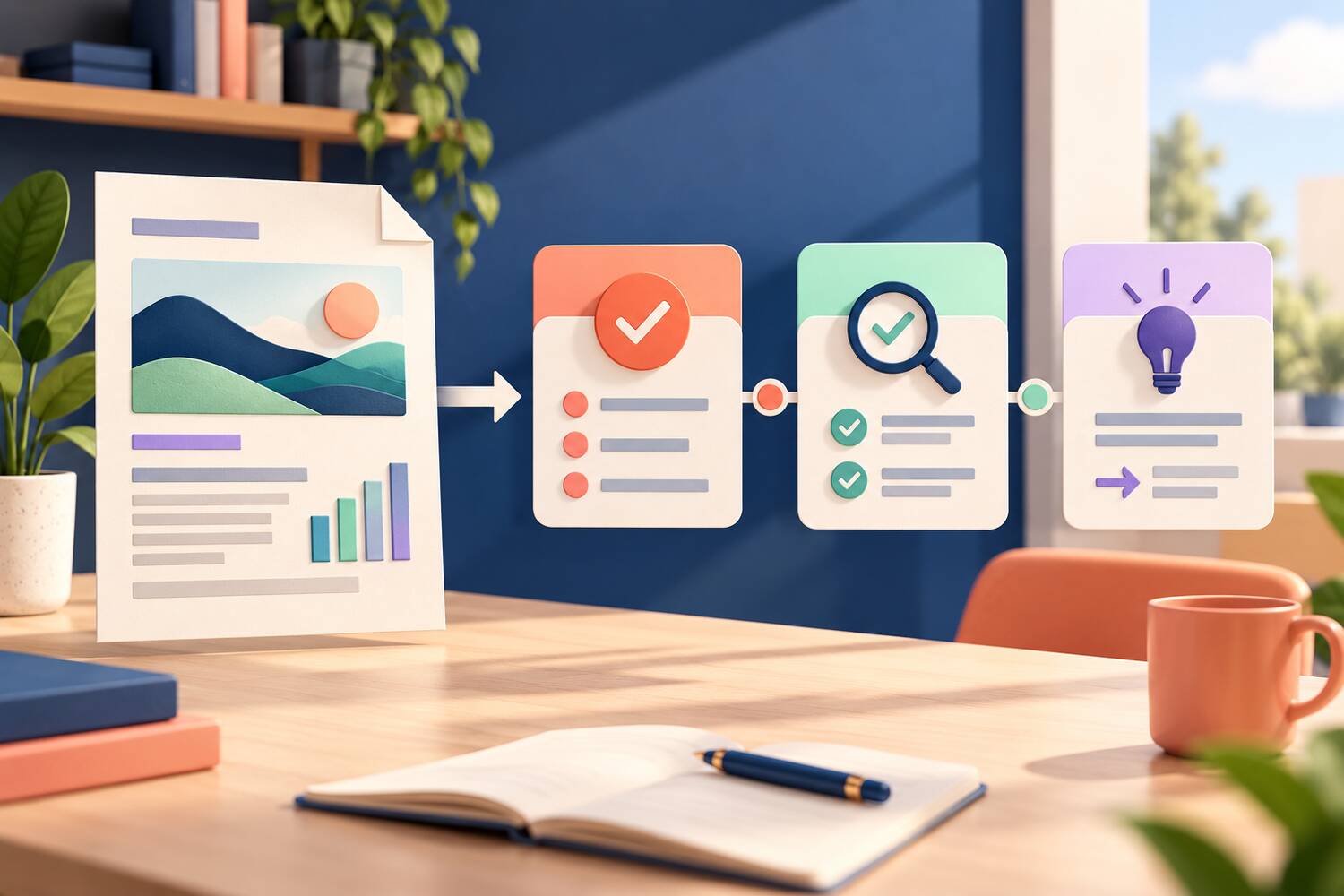
A finished artefact shows what a learner produced. A three-line decision receipt shows the choice, check and reusable rule behind it.
AI Learning and Development: Separate Coaching From Assessment
AI learning and development becomes hard to trust when the same tool coaches, rewrites and scores a task. Use three clear zones to make workplace evidence meaningful.
Before AI Merges Records, Define the Source of Truth
AI can surface likely duplicates, but it should not quietly decide which identity, field or history survives. Use a merge contract before records are combined.