
AI Learning and Development: Separate Coaching From Assessment
AI learning and development becomes hard to trust when the same tool coaches, rewrites and scores a task. Use three clear zones to make workplace evidence meaningful.

AI learning and development often mixes two jobs that need different rules. During practice, a learner should be able to ask for hints, compare examples and revise a weak answer. During assessment, those same forms of help can hide whether the learner can recognise a risky input, check an output or make the final decision independently. If the AI writes, coaches and scores in one uninterrupted session, completion looks precise while the evidence remains ambiguous.
The fix is not to remove support from learning. It is to label support honestly. Separate the journey into coaching, rehearsal and evidence zones. Each zone uses a clear task, a visible help boundary and a different purpose. This gives learners room to improve without turning assisted performance into proof of independent skill.
Why AI learning and development needs three zones
Good workplace training is tied to real tasks and decisions. The UK employer guide to AI upskilling recommends work-relevant scenarios, small applied projects with feedback, reflection and repeat practice. OPM guidance starts with the performance requirement and the gap between current and required behaviour. Both ideas matter: people need useful support while learning, and organisations need credible evidence that the target behaviour can be performed.
The three-zone design
Coach
Hints, examples, questions and immediate feedback are allowed. The goal is to expose thinking and help the learner build a method, not to produce a score.
Rehearse
The learner attempts a comparable task with fewer aids. Feedback arrives after the attempt, followed by a second try. The goal is reliable improvement.
Evidence
The brief, allowed help, criteria and time box are fixed. A human reviewer checks the artefact and the learner’s reasoning. The goal is a defensible proceed, practise or escalate decision.
Assistance is part of the evidence
Record what help was available. “Completed with unrestricted rewriting” and “completed with reference material only” are different achievements.
Worked example: triage a customer email
Imagine a learner must classify an upset customer’s email, identify the safe next action and draft a reply. In the coach zone, the AI can ask the learner to separate facts from assumptions, point out missing account details and show an example escalation. The learner revises the draft and explains what changed.
Reading is a start. Practice makes it stick.
Start learning| Coach | Rehearse | Evidence | |
|---|---|---|---|
| Task | Guided email with visible prompts | New email of similar difficulty | Fixed unseen email tied to the role standard |
| Allowed help | Hints, examples and questions | Policy reference and one clarification | Named references only; no rewriting |
| Feedback | Immediate and specific | After the first attempt | After scoring and human review |
| Decision | Continue practising | Retry or move forward | Proceed, targeted practice or escalate |
In the rehearsal zone, the learner receives a fresh email and the same decision criteria. The AI may clarify the task but does not generate the answer. Feedback is delayed until the first attempt is complete, then the learner tries again. In the evidence zone, the help boundary is fixed in advance. The reviewer looks for correct classification, appropriate escalation, factual accuracy and a clear explanation of the decision. A polished reply alone is not enough.
Build evidence that measures the intended skill
The Institute of Education Sciences recommends checking whether a performance assessment validly and reliably measures the specific knowledge and skills named in the standard. Apply that principle to AI-supported work. If the target skill is judgement, do not let an assistant silently supply the judgement. If the target skill is effective collaboration with AI, assistance may be allowed—but the assessment must specify which assistance and require the learner to explain verification and final responsibility.
Evidence-zone checklist
- The task represents a real decision in the learner’s role.
- The required behaviour and scoring criteria are visible before the attempt.
- Allowed tools, references, prompts and human help are stated.
- Inputs are safe, realistic and consistent across learners.
- The learner submits both the work artefact and a short reasoning trace.
- A named reviewer checks the result and records proceed, practise or escalate.
- A failed check routes to targeted practice and a fresh attempt.
This design should remain proportional. The European Commission’s AI-literacy guidance says measures should consider people’s knowledge, experience and training, plus the context and purpose of the AI system. It does not mandate one universal training format. A low-risk writing task may need a light evidence check; a role using sensitive data or affecting people may need stronger controls, more independent review and clearer escalation.
- Choose one existing AI learning activity and name the workplace behaviour it should build.
- Mark every hint, model answer, rewrite and human intervention currently available.
- Label the current activity Coach, Rehearse or Evidence.
- Create one adjacent zone by changing only the help boundary and feedback timing.
- Write the observable evidence needed for a proceed, practise or escalate decision.
Connect the result to the learning system
Do not leave the evidence score in a dashboard. Add the verified artefact to an AI skills evidence portfolio, use a second-attempt feedback loop, and route gaps into a remediation path. For task design, pair the activity with a checklist, rubric and example. Bokili’s HR and L&D pathway can support short practice around those real work decisions.
The shared rule is straightforward: coaching should be generous, rehearsal should make progress visible, and assessment should state its help boundary. When those purposes are separated, learners get better support and employers get evidence they can actually use.
Sources
- Planning & Evaluating — U.S. Office of Personnel Management
- Performance Assessment Quality and Validation Tool — Institute of Education Sciences
- Employer guide: What works for AI upskilling in the UK — UK Government
- AI Literacy - Questions & Answers — European Commission
- Bokili for HR and L&D — Bokili
Reading is a start. Practice makes it stick.
Bokili turns skills like this into ten-minute missions for your whole team, with instant feedback and progress you can see.
Start learningKeep reading
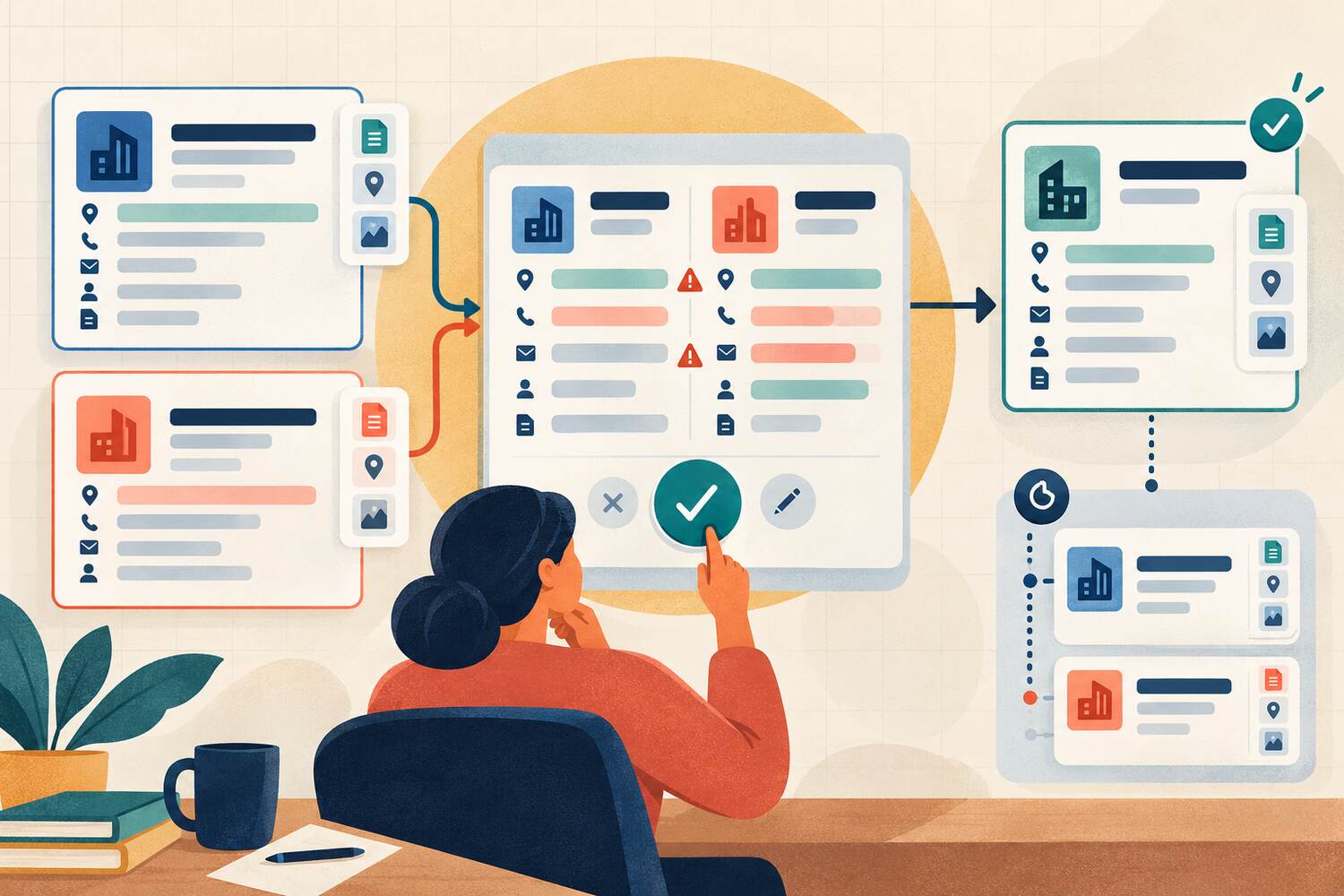
Before AI Merges Records, Define the Source of Truth
AI can surface likely duplicates, but it should not quietly decide which identity, field or history survives. Use a merge contract before records are combined.
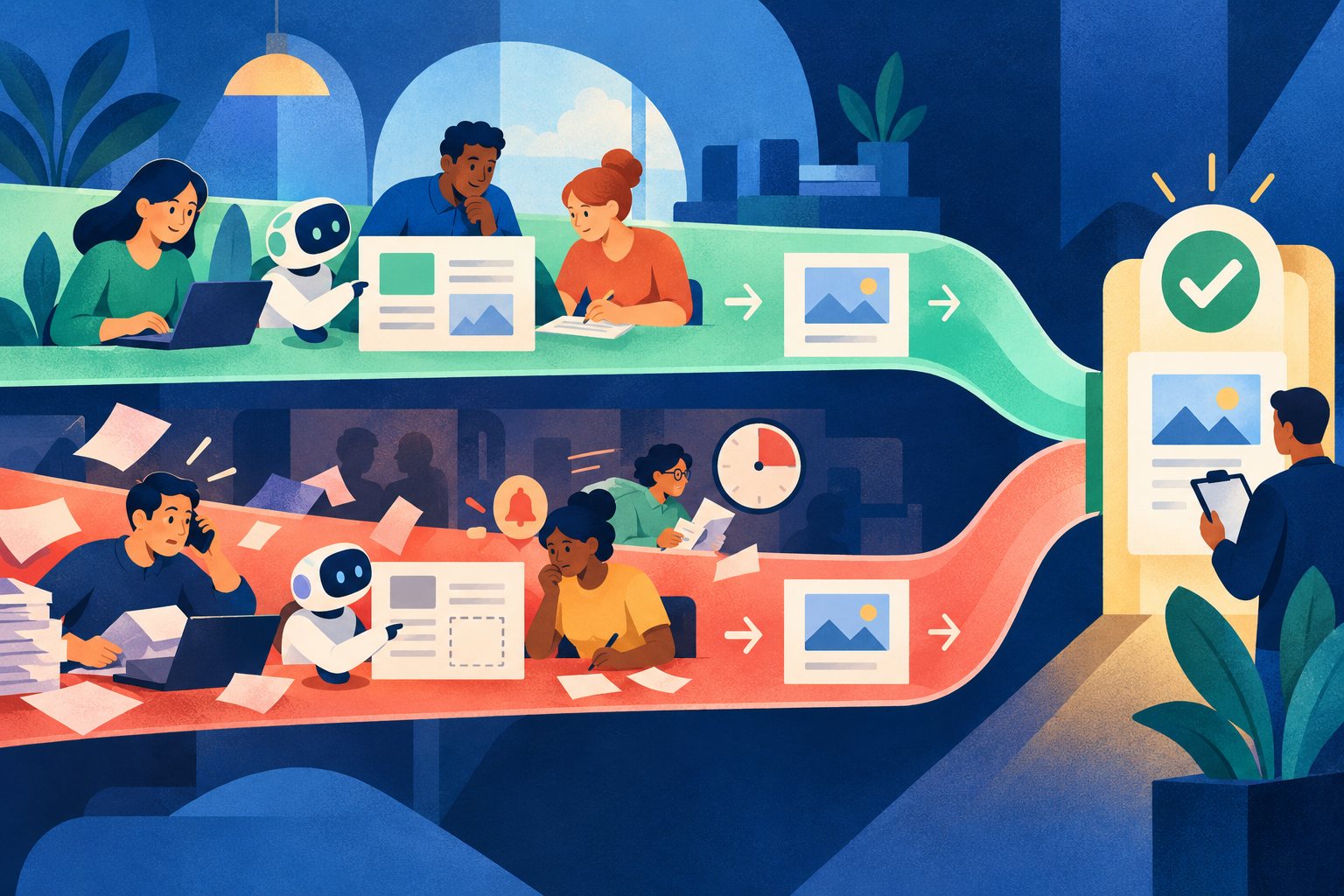
AI Upskilling for Teams: Rehearse the Busy-Day Version
AI upskilling for teams should survive ordinary work pressure. Use a two-lane rehearsal to test the same skill with time, input and interruption constraints.

Checklist, Rubric or Example? Choose the Right AI Review Tool
A checklist catches missing parts, a rubric judges quality and a reference example clarifies intent. Use each review tool for the decision it handles best.