Use ChatGPT Canvas to Revise a Policy Draft Without Losing the Brief
A four-step Canvas workflow for changing one policy section while preserving fixed requirements, version history and human approval.

A policy draft rarely fails because the first sentence was weak. It fails when later revisions quietly change the scope, remove an exception or soften a control that mattered. ChatGPT Canvas can make revision easier because you can work on a document, highlight one section and review changes in context. But the interface is not the control. The control is the brief you keep outside the draft and the size of each change you allow.
This lesson uses a fictional hybrid-work policy. The brief requires five things: staff may work remotely two days a week; managers approve exceptions; customer data stays in approved systems; accessibility adjustments remain possible; and HR owns the final decision. The aim is not to let AI write policy. It is to revise one unclear paragraph without losing those five acceptance criteria.
Use the LOCK revision loop
LOCK: bounded editing in Canvas
Lock the brief
Write the purpose, audience, non-negotiable facts, required exceptions and approval owner outside the draft. Treat them as acceptance criteria.
Open the working copy
Paste a copy into Canvas. Keep the approved source document unchanged and follow your organisation’s data rules.
Change one section
Highlight only the paragraph you want to revise. Ask for a bounded change and state what must not change.
Keep or restore
Read the result against the brief, inspect the changed wording and restore a previous version if the edit creates drift.
OpenAI’s current Canvas guidance says you can highlight a section, request inline suggestions, edit directly and restore earlier versions. Those features support a narrow review loop. They do not prove that the new text is correct, lawful or approved. The policy owner still compares the result with the authorised source, checks local requirements and decides whether the revision is acceptable.
A worked policy revision
Suppose the draft says: “Employees may work from home when their manager agrees.” It is brief, but it drops the two-day limit, says nothing about approved systems and could make accessibility adjustments look discretionary. A whole-document request such as “make this policy clearer” gives the model freedom to alter sections that were already sound. A bounded request makes the review surface smaller.
You are editing only the highlighted paragraph in this hybrid-work policy.

Goal: make the rule clear to an employee reading it for the first time.

Keep these facts unchanged:
- remote work is normally limited to two days a week;
- managers approve exceptions;
- customer data must remain in approved company systems;
- accessibility adjustments remain possible;
- HR owns the final decision.

Use plain British English and no more than 90 words. Do not add legal claims or change any other section. After the paragraph, list each acceptance criterion and show where the wording preserves it.
A revised paragraph followed by a five-point trace showing where every fixed requirement appears.
The trace is a review aid, not evidence. Check every claim in the approved policy and applicable guidance.
Reading is a start. Practice makes it stick.
Start learning| Broad rewrite | Bounded Canvas edit | |
|---|---|---|
| Scope | The whole document may move | One highlighted section changes |
| Constraints | Often implied | Written as acceptance criteria |
| Review | Large and hard to compare | Small enough for line-by-line checking |
| Recovery | Original may be hard to reconstruct | Previous versions can be restored |
Review the change, not the confidence
Read the output twice. First, compare meaning: who may act, under what conditions, with which exception and who decides. Second, compare expression: is the sentence plain, specific and usable? A polished paragraph can still be wrong. If Canvas reports that it preserved every criterion, verify the wording yourself. Do not accept a self-check as independent evidence.
Policy revision gate
- The highlighted section is the only section that changed.
- Every non-negotiable fact in the external brief still appears.
- No new legal, security or employee-rights claim has been introduced.
- Exceptions and the decision owner remain explicit.
- A human owner has compared the draft with the approved source.
- The final copy is stored and approved through the normal document process.
Use a safe working copy
Do not paste personal, confidential or restricted data into an unapproved service. Workspace settings and contractual terms matter. Even where business data is excluded from model training by default, your organisation’s access, retention and approval rules still apply.
Turn the edit into a repeatable habit
- Choose one low-risk paragraph from a fictional or approved training document.
- Write four to six acceptance criteria outside the draft.
- Open a working copy in Canvas and highlight only that paragraph.
- Run a bounded prompt that states the goal, fixed facts and forbidden changes.
- Compare the result line by line, then restore the earlier version once so you know the recovery path.
- Save only the version that passes your normal human approval process.
For the next step, connect this method to Bokili’s guides on defining done before AI delegation, running a one-variable prompt experiment and keeping sensitive data outside prompts. Canvas makes targeted revision visible. A locked brief, small edit and human decision make it dependable.
Sources
- What is the Canvas feature in ChatGPT and how do I use it? — OpenAI Help Center
- Introducing Canvas — OpenAI
- Managing data, sharing, and privacy in ChatGPT Business — OpenAI Help Center
Reading is a start. Practice makes it stick.
Bokili turns skills like this into ten-minute missions for your whole team, with instant feedback and progress you can see.
Start learningKeep reading
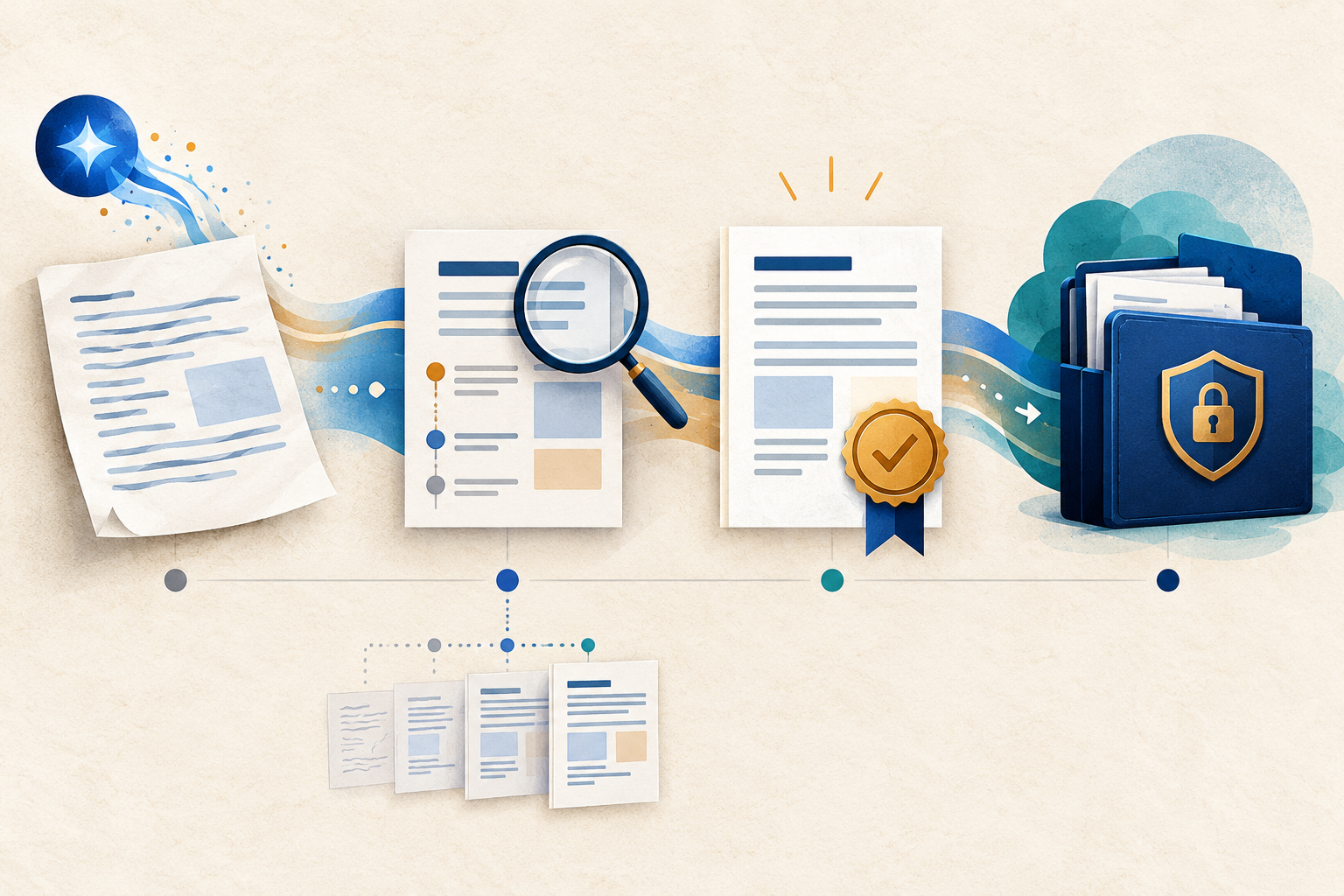
AI Training for Employees: Separate Drafts From Records
Teach a four-state path—Draft, Checked, Approved, Recorded—so polished AI output never becomes organisational fact by accident.
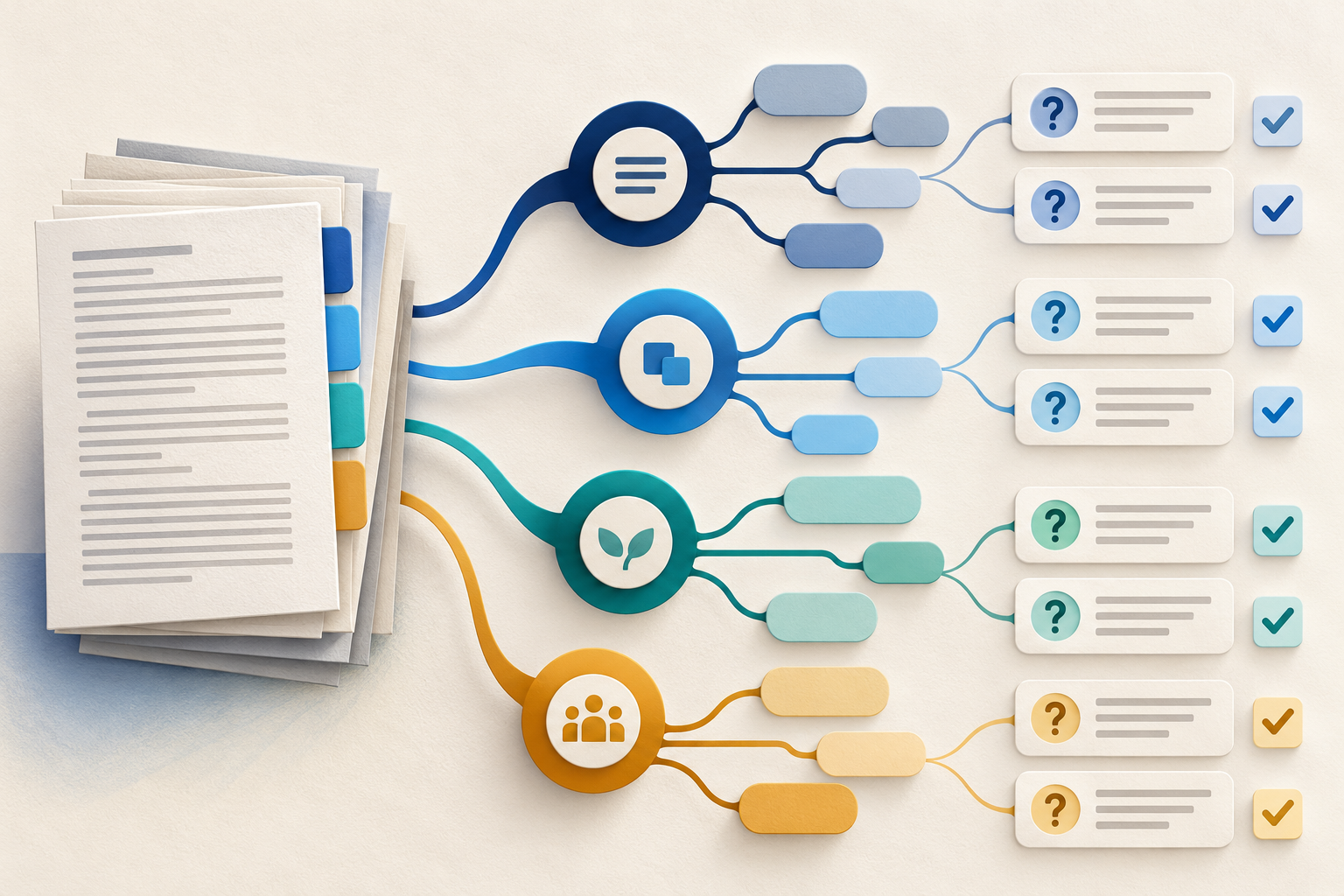
Use Gemini Notebook Mind Maps to Turn Policy Into Questions
Use a Gemini Notebook mind map as a question index for a long policy—then open the cited source before you trust any answer.
AI Training for HR: Build a Four-Part Policy Answer
Teach HR teams to separate the source, written rule, human discretion and next step before turning an AI draft into employee guidance.