An AI Training Leaderboard Should Reward Verification, Not Speed
A learning leaderboard is useful only when its points make careful practice, evidence checks, correction and peer help more visible than raw output volume.
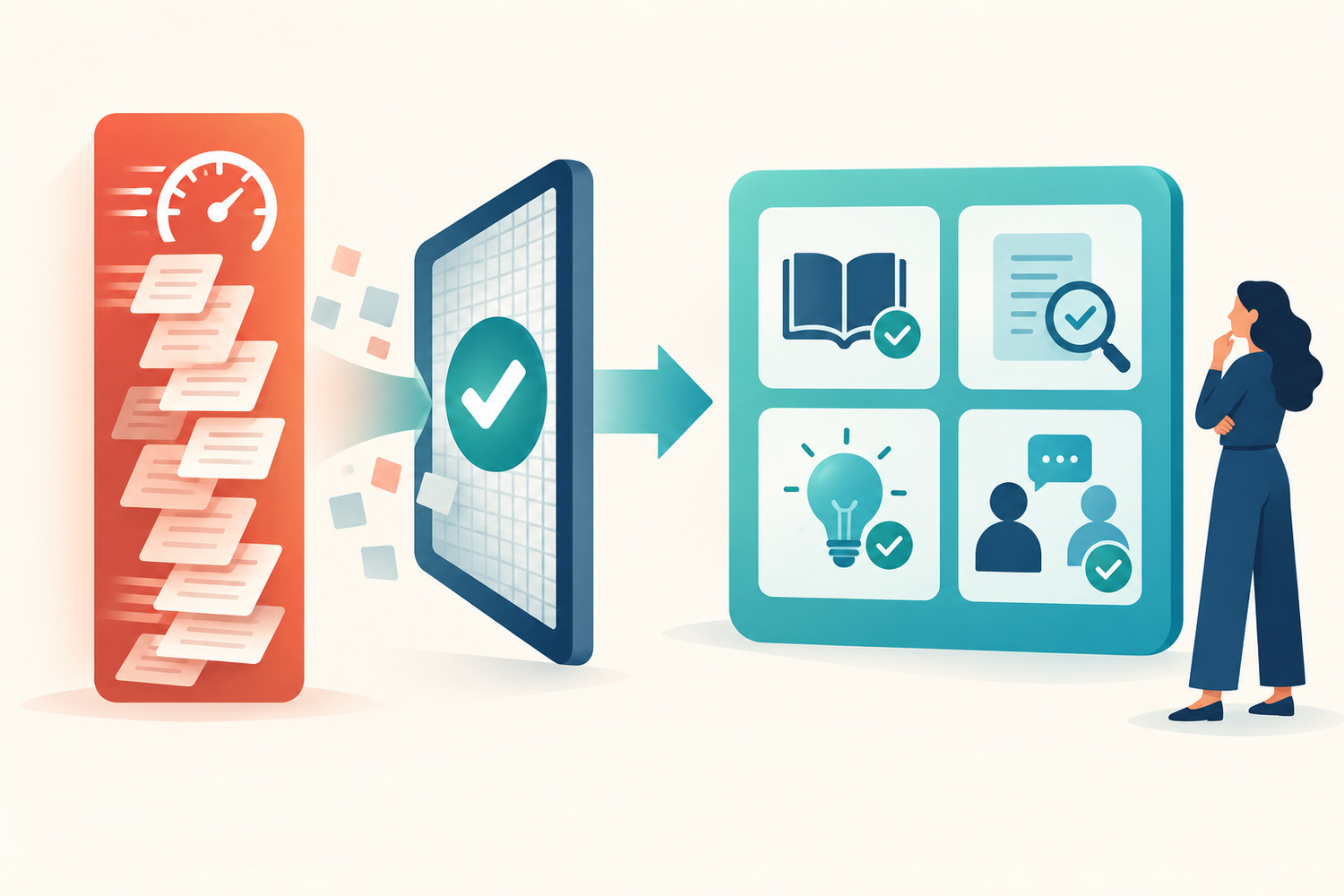
A leaderboard can make AI practice visible. It can also teach the wrong lesson. If the fastest learner or the person who generates the most outputs always rises to the top, the programme quietly rewards speed and volume—even when the work needs evidence, correction and careful human judgement.
A better AI training leaderboard rewards behaviours that people should repeat at work: completing a realistic attempt, checking material claims, correcting a weak output and helping a colleague see a risk. The aim is not to turn responsible use into a game. It is to make useful practice more visible without confusing activity with capability.
Start with the behaviour, then choose the score
Bokili’s public features include badges, leaderboards, short scenario-based missions and skills visibility. Those mechanics are most useful when they reinforce the learning outcome instead of replacing it. The US Office of Personnel Management advises training teams to describe desired outcomes, clarify the critical behaviours behind them and define how those behaviours will be monitored. That sequence is a sound design test for any learning score.
NIST’s AI Risk Management Framework Measure Playbook makes a related point for AI measurement: document the test, the metric and the process so that evaluation can be repeated and interpreted. A leaderboard does not measure an AI system, but the discipline still applies. A score should have a named purpose, a visible rule and evidence a reviewer can inspect.
| Activity-first leaderboard | Practice-first leaderboard | |
|---|---|---|
| What earns credit | Outputs, clicks or speed | Completed attempts, checks, corrections and useful peer help |
| What the learner sees | More is better | Careful work can be shown and repeated |
| What a manager can infer | Someone was active | Someone practised a defined behaviour |
| Risk | Rushing, shallow repetition and noisy competition | Gaming still needs monitoring, but the score points toward work quality |
| Use | Public rank by default | Private progress first; team display only when it supports learning |
Four things worth rewarding
First, reward a complete attempt against a clear brief. Completion here means the learner reached the review step, not merely that the tool returned text. Second, reward an evidence check: a source opened, a number traced or an unsupported claim flagged. Third, reward a correction that changes the work after feedback. Fourth, reward useful peer help when it identifies a concrete omission, boundary or next step.
Reading is a start. Practice makes it stick.
Start learningEvidence-bearing leaderboard rules
- Every point maps to one observable learning behaviour.
- A learner can explain what evidence earned the point.
- Speed and output volume do not earn credit on their own.
- Sensitive prompts, client work and production data never appear in the score.
- High-stakes decisions and employee performance are excluded.
- Peer-help credit requires a specific, useful contribution.
- A correction earns more value than an untouched first draft.
- The programme owner reviews for gaming, exclusion and unintended pressure.
Worked example: redesign the weekly board
Imagine a cohort practising how to summarise fictional project updates. The old board counts finished missions and time. One learner rushes through five exercises; another completes two, catches missing evidence and revises both. The old system ranks the faster learner first, even though the second learner demonstrated the behaviour the organisation needs.
The redesigned board gives visible credit for four events: a reviewed attempt, a material claim traced to the case pack, a correction after feedback and a peer note that catches a real omission. It does not display minutes, prompt count or output length. The board can show team progress while individual details remain private.
This is a design choice, not a universal formula. Some teams should avoid ranking entirely. If competition discourages questions, exposes weaker learners or pushes people to use live work for points, replace the leaderboard with a personal progress card. Bokili’s guide to measuring AI training beyond completion and the dashboard support-action method offer alternatives that focus on evidence and follow-up.
Use rewards to open the next practice step
A point should lead somewhere. An evidence-check badge might unlock a harder case with conflicting sources. A correction streak might trigger a fresh attempt rather than a celebration screen. A peer-help signal might invite the learner to explain the check in a short team session. The reward becomes a route into deeper practice, not proof that the skill is finished.
- Write the one work behaviour the score is meant to reinforce.
- List every action that currently earns points or rank.
- Cross out any item based only on speed, clicks or output volume.
- Add one check, one correction and one useful peer action.
- Decide whether progress should be private, team-level or public.
- Name the owner who will review unintended effects after launch.
Make careful practice the visible win
Leaderboards are optional. Verification, correction and support are not. If Bokili teams use competitive mechanics, the standard should be simple: the easiest way to gain recognition must also be a good way to learn. When the score rewards a checked attempt rather than fast output, progress becomes more credible and the next mission becomes easier to choose.
Sources
- Bokili Features — Bokili
- Planning & Evaluating Training — U.S. Office of Personnel Management
- NIST AI RMF Measure Playbook — NIST
Reading is a start. Practice makes it stick.
Bokili turns skills like this into ten-minute missions for your whole team, with instant feedback and progress you can see.
Start learningKeep reading
AI Training for Employees: Teach the Clarifying Question
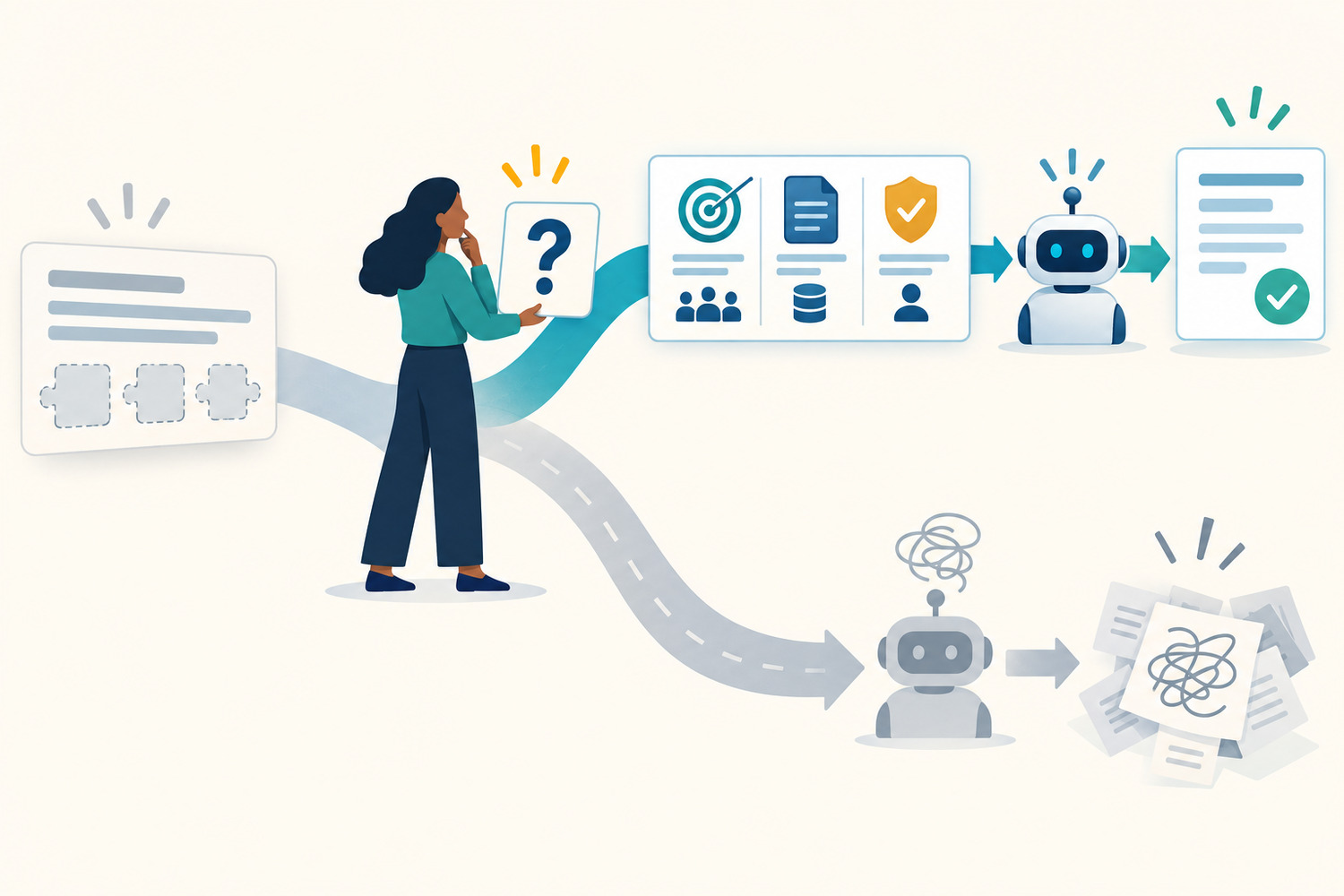
AI training for employees should teach one consequential clarifying question before prompt writing, so the task, evidence and approval boundary are clear.

AI Training for HR: Audit the Job Description Before You Publish
AI training for HR should teach teams to trace every job requirement to real work before a polished draft becomes a hiring filter.
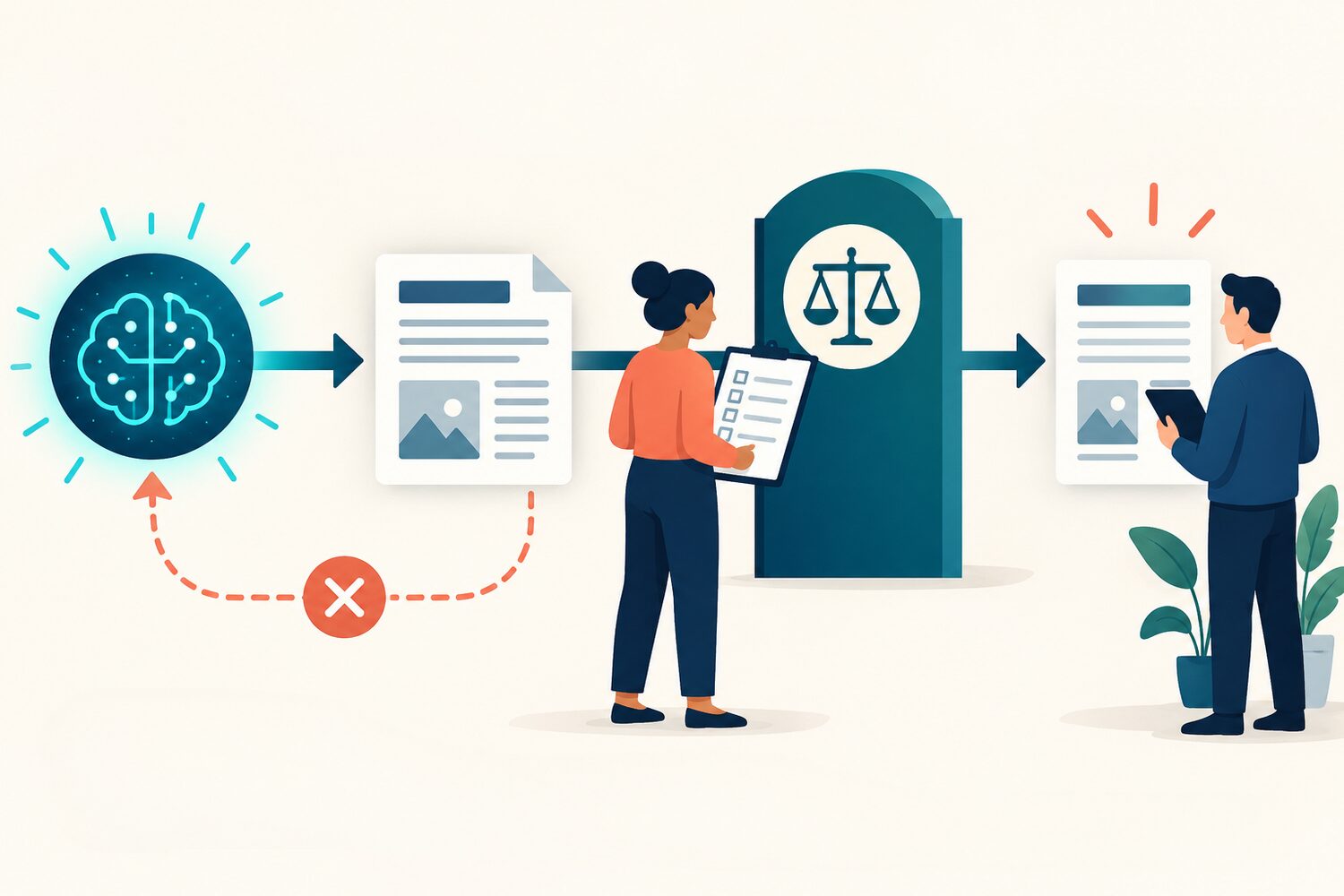
Separate the AI Draft From Its Acceptance Test
When one AI produces both the recommendation and the test used to approve it, shared blind spots survive. Fix human-owned criteria first.