
The Right AI Training Cadence Starts With the Next Work Use
Set AI training cadence around the next safe chance to use a skill at work, then adjust the interval from evidence and feedback.
AI training cadence is often treated as a calendar problem: daily nudges, a weekly lesson or a quarterly refresher. But a neat schedule can still produce weak learning. If practice arrives long before someone needs the skill, it fades. If it arrives after the task, the learner has already improvised. The useful question is simpler: when is the next safe chance to use this behaviour at work?
For L&D and team leaders, the answer will differ by workflow. A support team may use an AI-assisted response process every day. A procurement team may compare suppliers once a month. Both need repeated practice and feedback, but not the same frequency. The cadence should bring a small mission close to the next real use, then collect evidence from the attempt and decide what comes next.
Cadence is the distance between practice and use
Bokili is built around short missions adapted to role, skill level and approved tools, delivered at a cadence chosen by the company. That flexibility matters because learning does not happen in a vacuum. The National Academies’ synthesis on learning emphasises that prior knowledge, context and the learning environment shape what people can apply. Research reviews on distributed practice also find that spreading practice can strengthen retention, while the best interval depends on what is being learned and when it must be remembered.
Those findings do not produce one universal workplace timetable. They suggest a design rule: avoid massing all practice into one launch event, but do not space missions so mechanically that they lose contact with work. Use the next meaningful task as the anchor. Then place practice early enough to allow thought and feedback, but late enough for the learner to carry the behaviour into the task.
The PACE rule for work-linked practice
P — Pinpoint the next use
Name the next real or realistic task where the behaviour matters. If no suitable use is visible, use a safe simulation rather than sending an abstract reminder.
A — Assign one small mission
Practise one observable behaviour, such as separating source facts from assumptions or checking every figure against an approved document.
C — Check the attempt
Review the work product, not just completion. Give specific feedback while the learner can still change the live workflow or rehearse a safer version.
E — Extend or space
If the behaviour transfers, wait for a fresh context. If it does not, shorten the interval and assign a focused retry instead of repeating the whole lesson.
Two teams need two rhythms
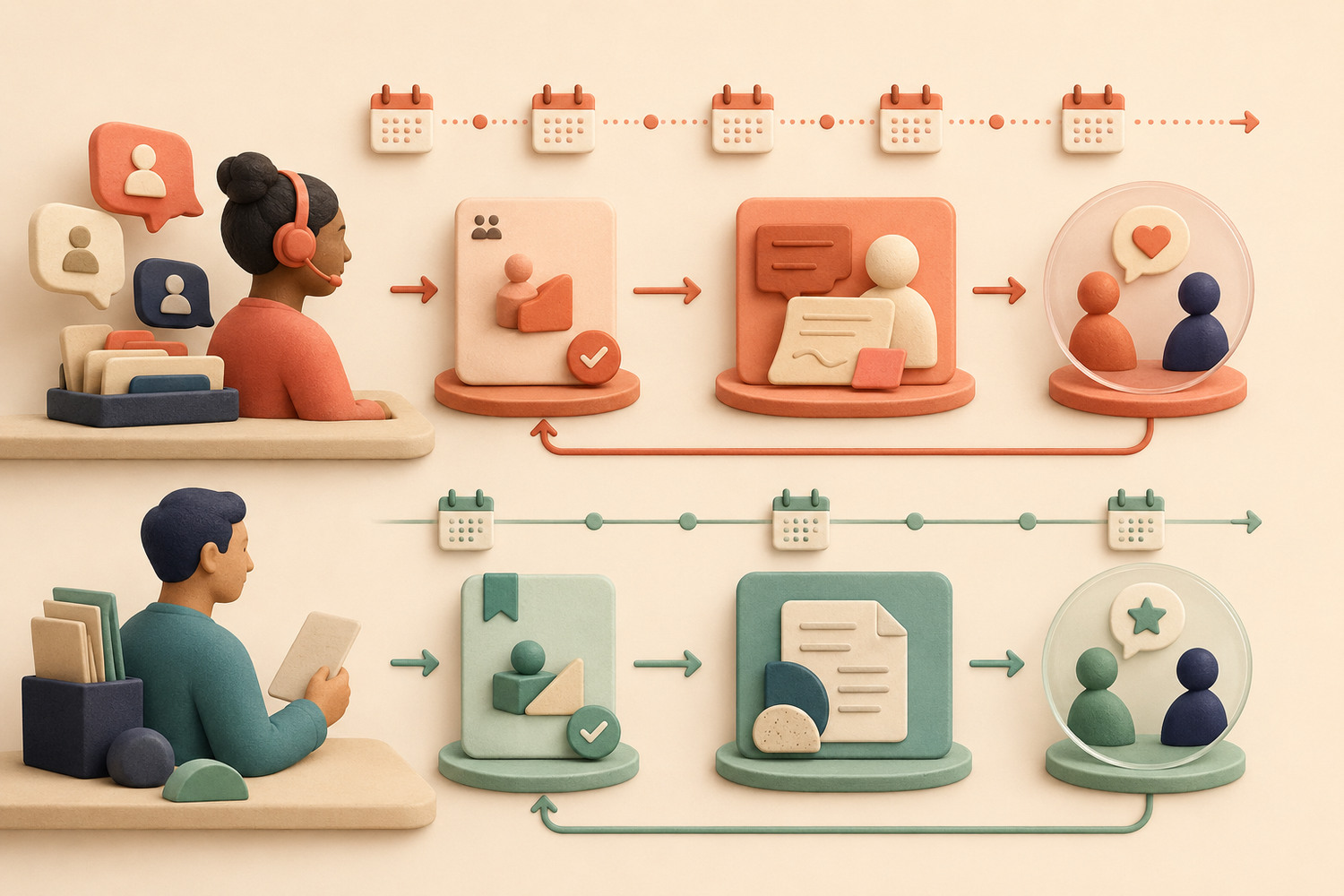
Consider a fictional company with a customer-support team and a procurement team. Support agents draft low-risk replies from an approved knowledge base every working day. Their target behaviour is to trace each factual claim back to the source and escalate policy exceptions. A ten-minute mission on Monday can be applied in the next shift. Feedback from one reviewed response can shape a second mission later that week.
Reading is a start. Practice makes it stick.
Start learningProcurement specialists prepare a supplier comparison near the end of each month. Their target behaviour is to separate quoted evidence from commercial judgement. A daily mission would create activity without repeated use. Instead, place one safe comparison exercise several days before the monthly task, review it, and use a short follow-up just before the live decision. The learner then meets the same behaviour in a new supplier context the following month.
| Fixed training calendar | Work-linked cadence | |
|---|---|---|
| Trigger | A date or streak target | The next safe chance to use the skill |
| Unit | A lesson or module | One observable behaviour |
| Evidence | Open, click or completion | A reviewed work sample or safe simulation |
| Next step | The next scheduled item | Apply, retry, extend or change the workflow |
This does not mean that every mission must sit beside a live task. Some skills need deliberate spacing and varied examples before they become reliable. The point is to keep an application path visible. A mission that cannot answer “where will this behaviour be used?” may still be interesting, but it is not yet a strong workplace learning intervention.
Choose the interval with seven questions
- When will the learner next face this task or a close variant?
- Is that use safe enough for learning, or should the mission use fictional material?
- What single behaviour should carry into the task?
- Who can review the attempt before the consequence becomes hard to reverse?
- How quickly does the tool, policy or source material change?
- Did the learner transfer the behaviour to a fresh example?
- Does the evidence call for more practice, a wider gap or a workflow fix?
Connect cadence to the rest of the learning loop
Cadence solves only one part of the system. Use one observable behaviour per mission to keep practice focused. Let the last attempt guide the next mission when evidence shows a gap. Use a skills refresh cycle when a tool, policy or recurring error changes the behaviour. And measure beyond completion so cadence decisions rest on work evidence.
- Choose one recurring AI-assisted task.
- Write the next date or situation in which it will occur.
- Name one safe, observable behaviour the learner must show.
- Place a short mission before that use and name the reviewer.
- Decide what evidence counts as transfer.
- Write the rule for a retry, a wider interval or a workflow change.
The best cadence is not the busiest one. It is the rhythm that puts useful practice near real work, leaves enough space for retrieval and variation, and changes when the evidence changes. That is how a stream of short missions becomes an operating learning loop rather than another notification schedule.
Sources
- Bokili — AI fluency training for companies and teams — Bokili
- How People Learn II: Learners, Contexts, and Cultures — National Academies of Sciences, Engineering, and Medicine
- Enhancing the Quality of Student Learning Using Distributed Practice — Cambridge University Press
Reading is a start. Practice makes it stick.
Bokili turns skills like this into ten-minute missions for your whole team, with instant feedback and progress you can see.
Start learningKeep reading
AI Training for Employees: Separate Drafts From Records
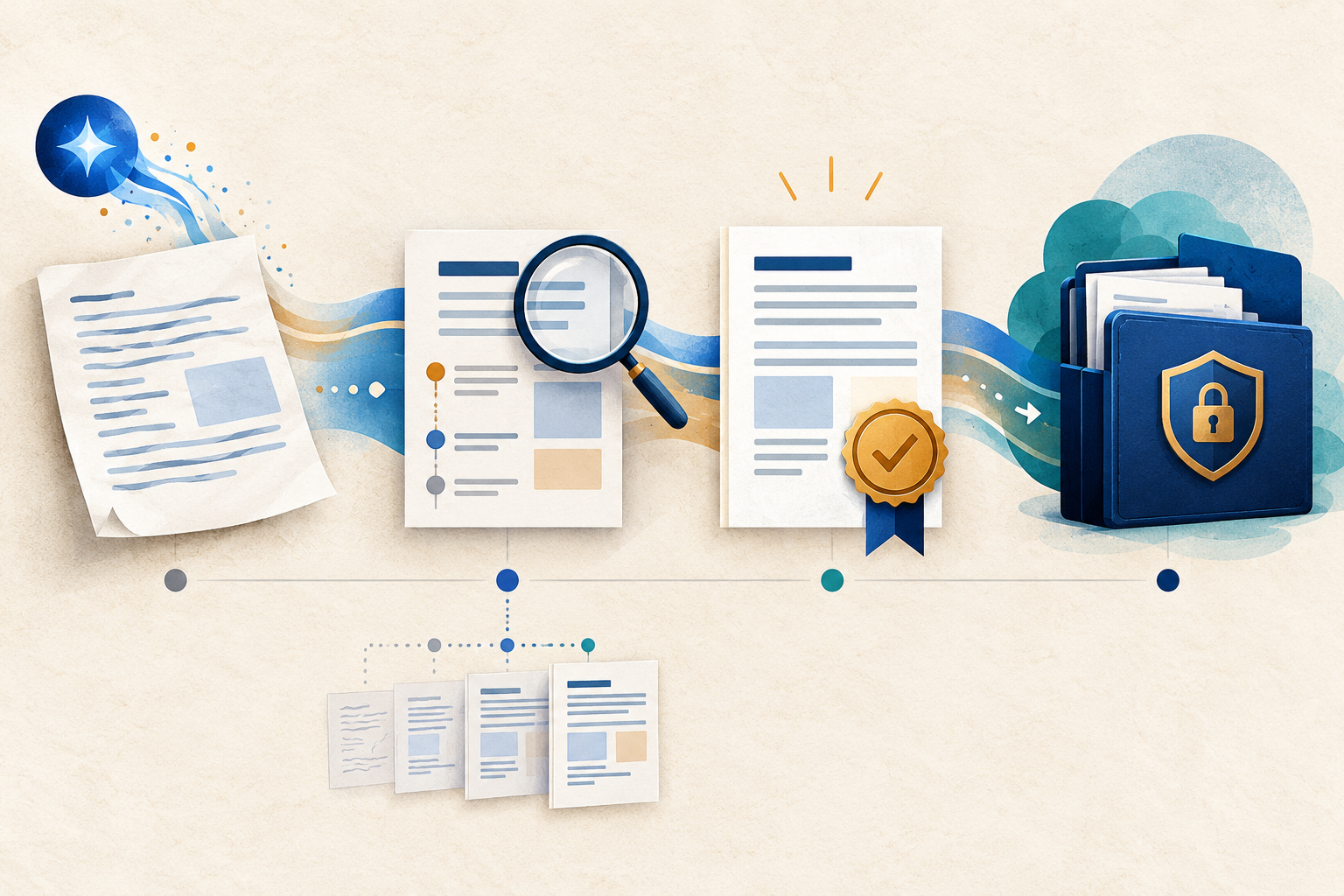
Teach a four-state path—Draft, Checked, Approved, Recorded—so polished AI output never becomes organisational fact by accident.
Use Gemini Notebook Mind Maps to Turn Policy Into Questions
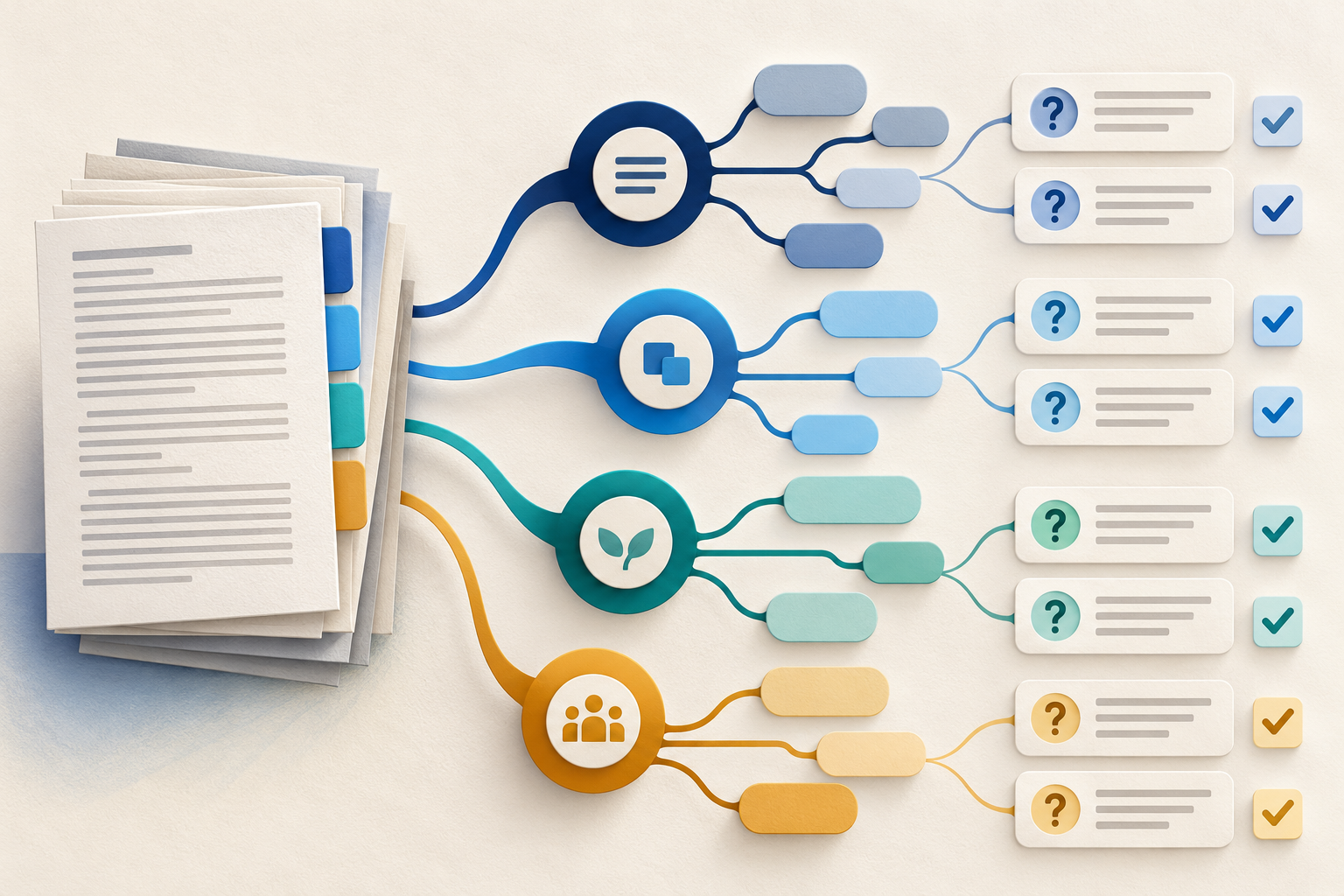
Use a Gemini Notebook mind map as a question index for a long policy—then open the cited source before you trust any answer.
AI Training for HR: Build a Four-Part Policy Answer
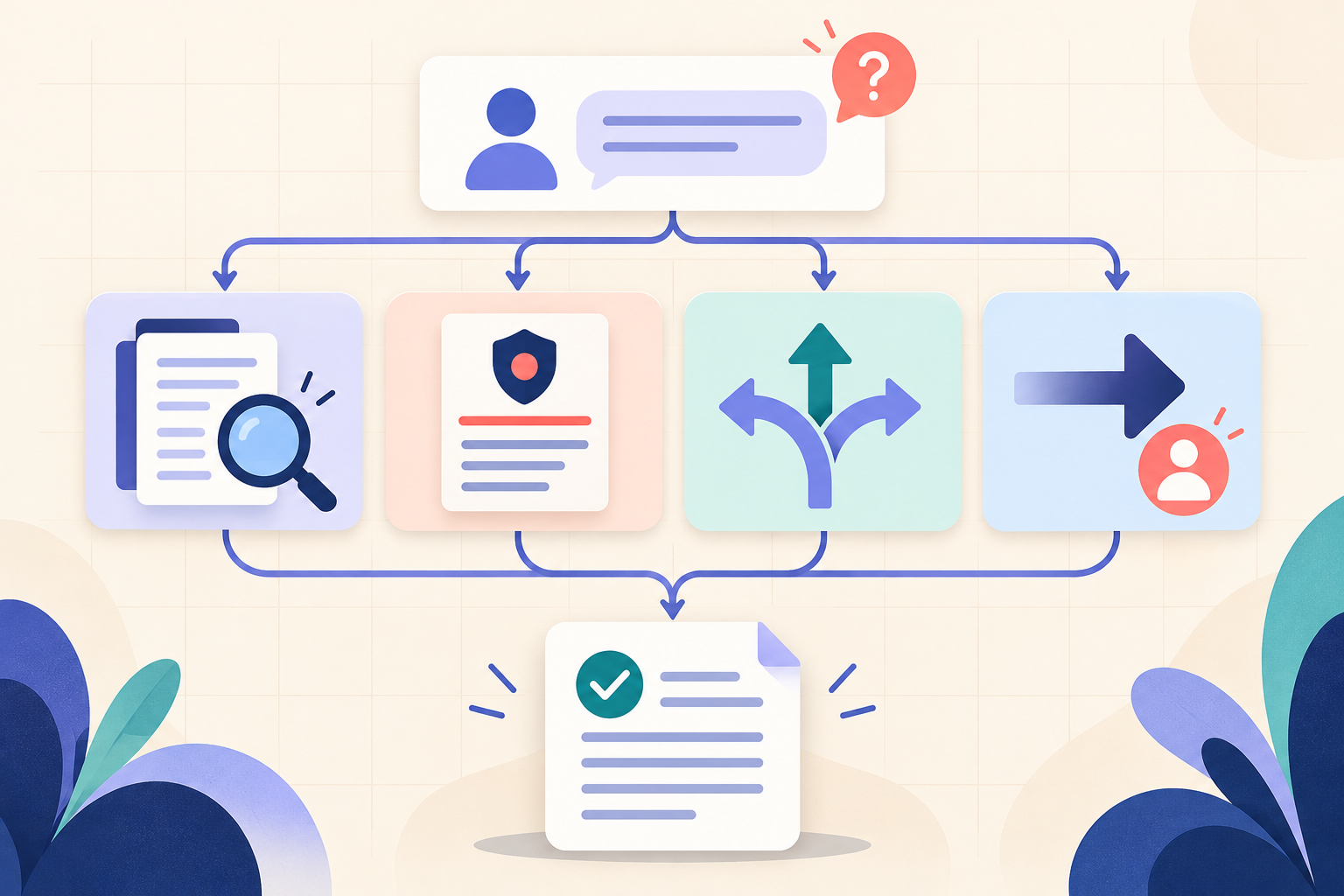
Teach HR teams to separate the source, written rule, human discretion and next step before turning an AI draft into employee guidance.