
An AI Mission Should Change One Constraint at a Time
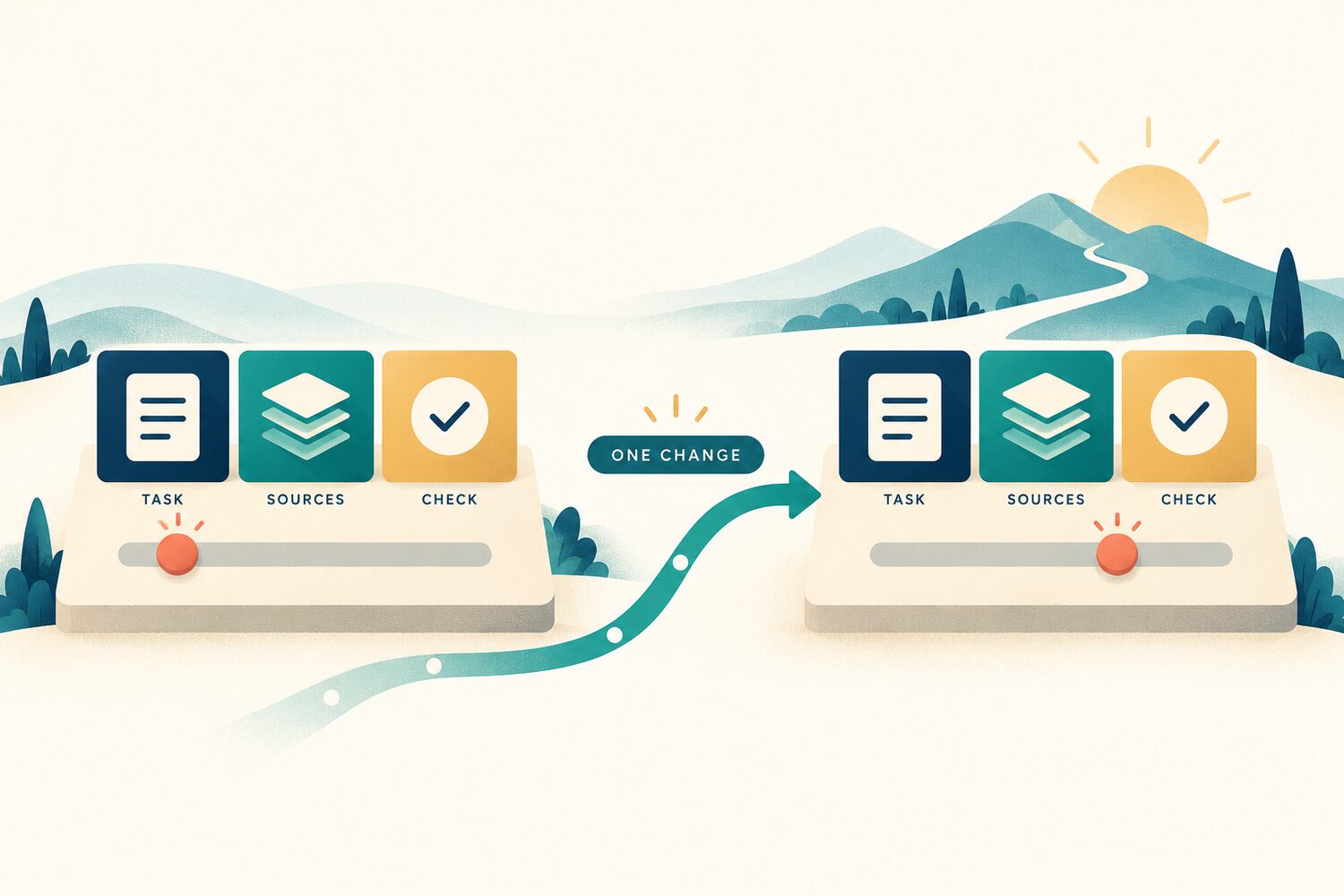
Keep the task, source pack and acceptance check stable. Change one condition so learners and coaches can see which AI skill improved.
A useful AI mission should make progress visible. Yet many practice activities change the tool, task, data, audience, deadline and risk level all at once. When the second attempt feels harder, neither the learner nor the coach can tell why. The learner may have improved at checking evidence but struggled because the audience became less familiar. The exercise records a result, but it does not diagnose a skill.
A cleaner design keeps the task, source pack and acceptance check stable, then changes one constraint. That single move turns a sequence of activities into a controlled learning progression. Feedback can point to the skill demanded by the new condition, and the learner can carry that lesson into real work.
Keep three conditions stable
The Keep Three, Move One design
Keep the task
Use the same job-to-be-done across two attempts. If the learner drafted a supplier comparison first, do not switch to a meeting summary next.
Keep the source pack
Provide the same approved or synthetic evidence. Stable inputs stop content difficulty from hiding whether the learner’s method improved.
Keep the acceptance check
Judge both attempts against the same observable standard: accurate claims, labelled uncertainty, appropriate human review and a usable next step.
Move one constraint
Change only audience, ambiguity, authority, time pressure or consequence. Name the lever before the attempt so the learner knows what new judgement is being tested.
The method is deliberately modest. It does not try to simulate an entire changing workplace in ten minutes. It creates one clean comparison. Bokili’s guided missions are designed around short, role-relevant practice and feedback; a controlled constraint makes that feedback more precise. The same principle also complements a second-attempt feedback loop: first isolate the change, then use feedback to revise the method.
Choose a constraint that changes the judgement
A constraint is useful only when it changes what good work requires. Making a prompt longer is not necessarily progression. Asking the learner to brief a different audience may be. Adding a conflicting source can test uncertainty handling. Reducing the learner’s authority can test escalation. Introducing a time limit can test whether essential checks survive pressure.
| Constraint | Weak variation | Diagnostic variation | |
|---|---|---|---|
| Audience | Write the same note in a friendlier tone. | Prepare the same evidence for a finance director who needs a decision and an operations lead who needs actions. | |
| Ambiguity | Remove a detail without saying why. | Add one conflicting supplier claim and require the learner to label what remains unresolved. | |
| Authority | Ask for a more confident answer. | Keep the recommendation, but require approval before any commitment or external message. | |
| Time | Tell the learner to work faster. | Set a short limit while keeping two non-negotiable checks visible and scored. |
Reading is a start. Practice makes it stick.
Start learningThe right lever comes from the work, not from the AI tool. The UK government’s employer guide recommends learning built around real tasks, decisions and situations in which AI should or should not be used. NIST’s measurement guidance similarly encourages testing against past incidents or near misses and documenting the conditions under which a system fails safely. Together, those ideas favour practice that names the condition being tested instead of adding theatrical difficulty.
Worked example: compare suppliers twice
A two-attempt mission for procurement
- 1
Set the baseline
Give the learner three synthetic supplier summaries. The task is to produce a one-page comparison for an internal buyer. The source pack and four acceptance checks are fixed: every claim traces to a source, uncertainty is labelled, no score is invented and the recommendation names a human decision owner.
- 2
Run attempt one
The evidence is consistent and the learner may recommend one supplier. Capture the output and feedback, but do not change the brief or scoring rubric.
- 3
Move one constraint
For attempt two, replace one clean price claim with two conflicting figures from the same source pack. Everything else stays fixed. The learner must now separate known facts from the unresolved price and route the conflict to the buyer.
- 4
Compare the method
Do not ask only which answer is better. Ask what changed in the learner’s process: Did they mark the conflict? Did they avoid averaging unsupported figures? Did they keep the recommendation conditional? That evidence shows whether ambiguity handling improved.
This is different from giving the learner a blank page and hoping difficulty will reveal competence. A guided mission should remove the blank page, not the decision. The stable elements provide the runway; the single changed constraint preserves the judgement. If the output will be reused after the exercise, the reusable artefact test helps keep the task anchored in genuine work.
Use the evidence to choose the next mission
After two attempts, resist the urge to raise every dimension. If the learner handled conflicting evidence but missed the approval boundary, keep the ambiguity level stable and move authority next. If the learner failed because the acceptance check was vague, repair the mission design before labelling a skill gap. Progression should respond to observed evidence, not a fixed staircase.
- Write one real work task in a single sentence.
- List the source pack and three acceptance checks that must stay unchanged.
- Choose one lever: audience, ambiguity, authority, time pressure or consequence.
- Rewrite only the sentence that describes that constraint.
- Add one question that compares the learner’s method across the two attempts.
A strong mission is not difficult because many things move. It is useful because the learner can see which judgement changed, the coach can explain why, and the next attempt follows from evidence. Keep three conditions stable. Move one constraint. Then let the comparison do the teaching.
Sources
- Features — Bokili
- Responsible AI in the workplace: a guide for employers — UK Government
- AI RMF Playbook: Measure — National Institute of Standards and Technology
- Artificial Intelligence Playbook for the UK Government — UK Government
Reading is a start. Practice makes it stick.
Bokili turns skills like this into ten-minute missions for your whole team, with instant feedback and progress you can see.
Start learningKeep reading
AI Learning and Development: Turn Policy Rules Into Behaviour Pairs
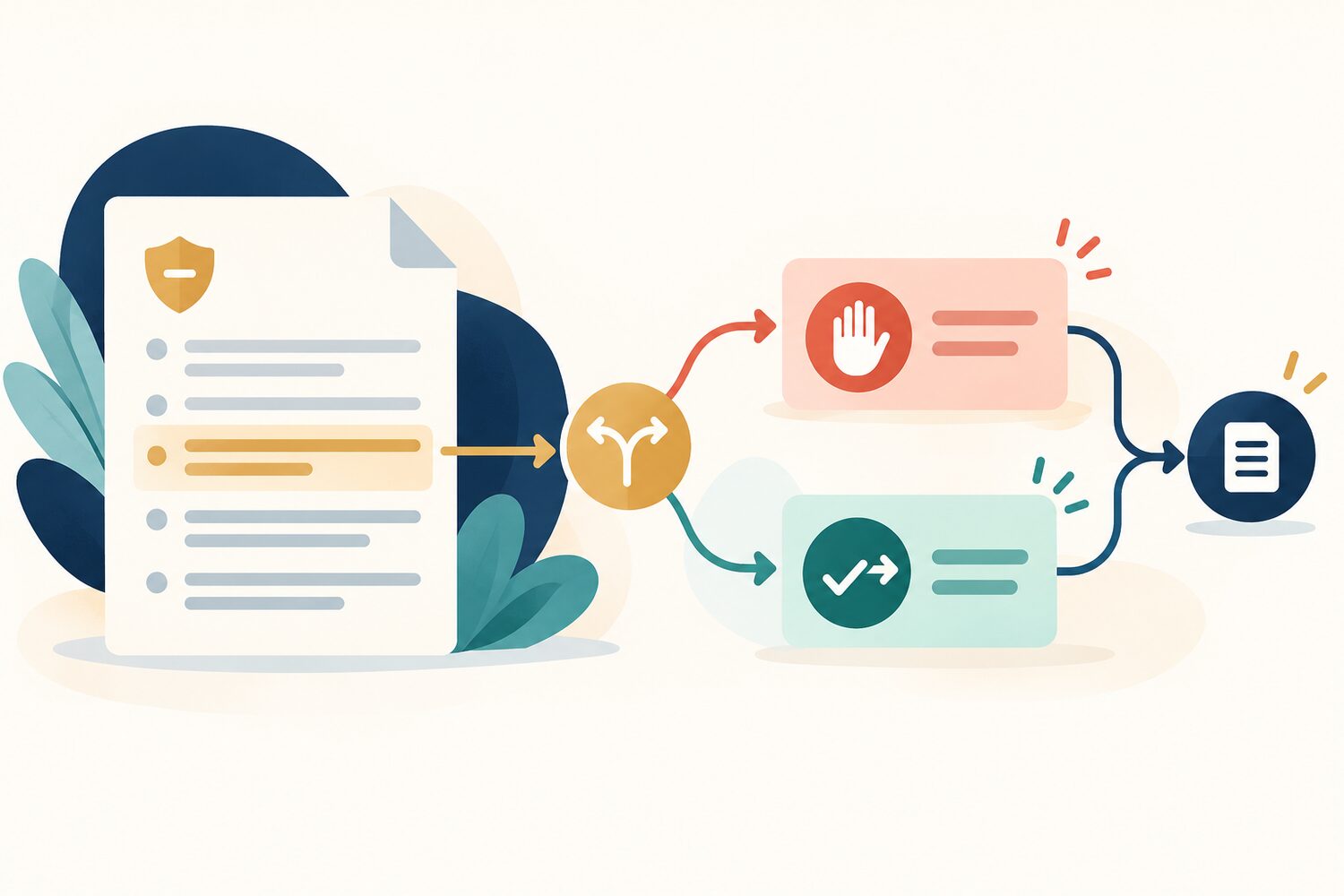
AI learning and development works better when abstract policy rules become paired actions employees can recognise, practise and use at the point of work.
AI Training for Employees: Reset Skills After a Role Change
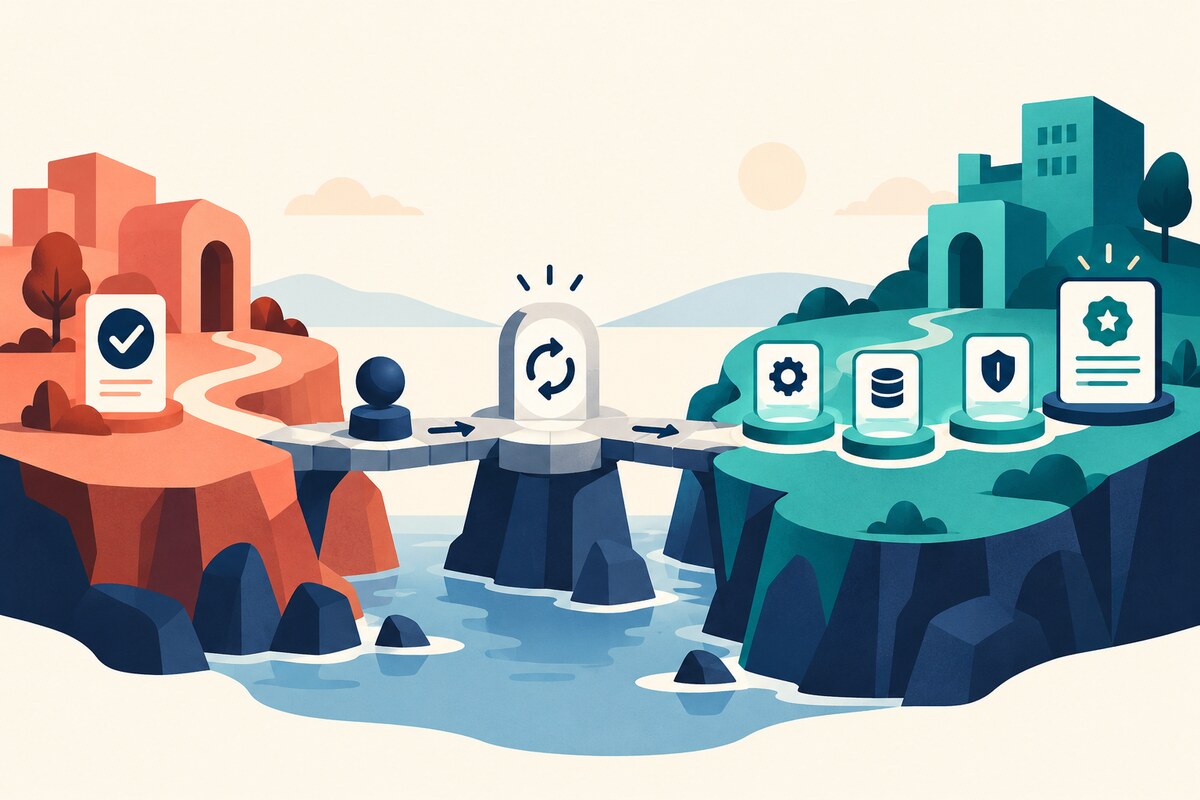
A completed course does not prove readiness for new tasks, data or authority. Use a narrow role-change reset to collect fresh evidence without restarting every course.
Report an AI Failure So Someone Else Can Reproduce It
“The AI got it wrong” is not a usable report. Capture five safe fields before changing the session so another person can reproduce, contain and learn from the failure.