
AI Learning and Development: Turn Policy Rules Into Behaviour Pairs
AI learning and development works better when abstract policy rules become paired actions employees can recognise, practise and use at the point of work.
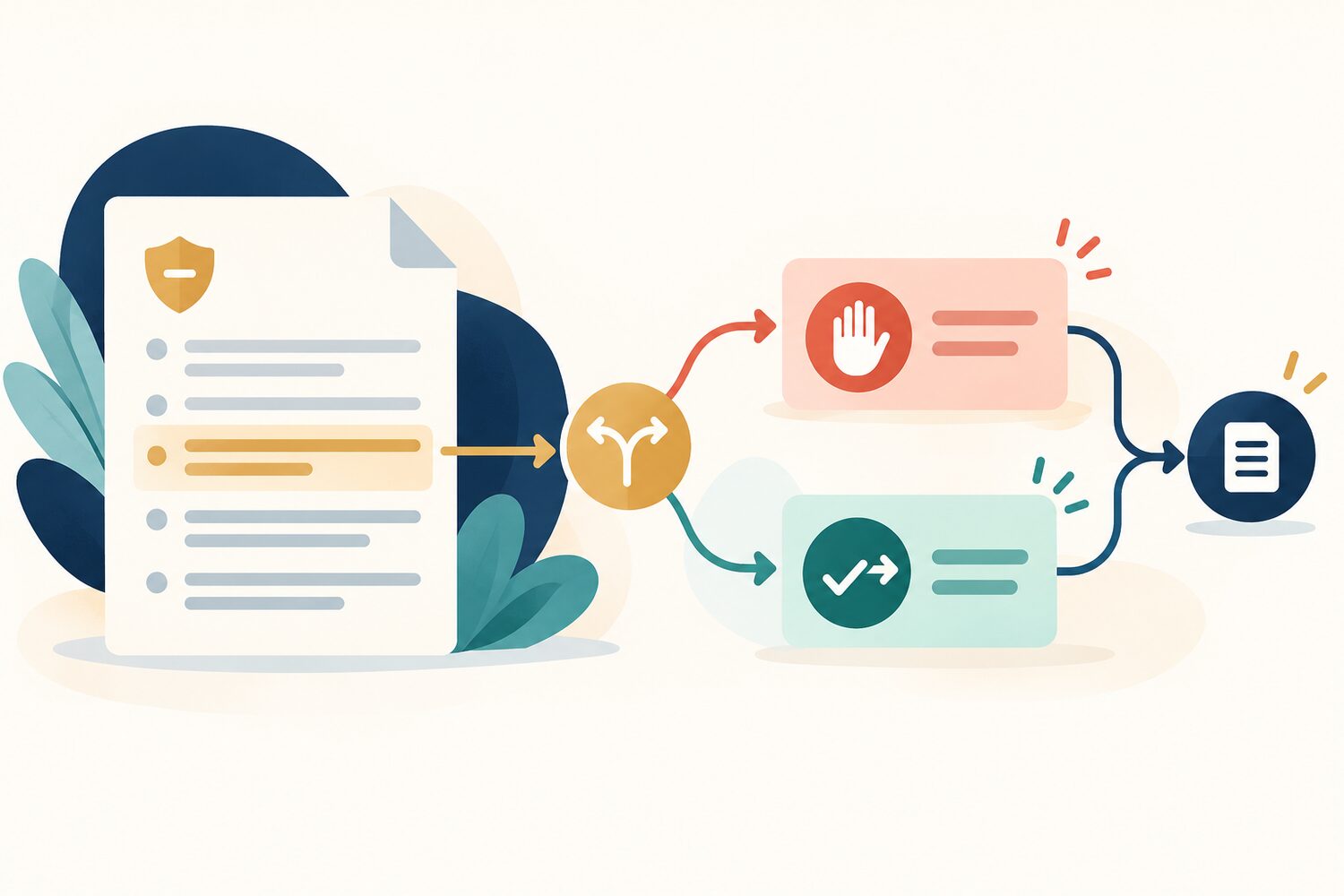
AI learning and development often starts with a policy and ends with a course. The gap is what an employee should do at the exact moment a risky situation appears. “Protect confidential data” is sound guidance, but it does not tell someone how to respond when a colleague asks them to paste live client notes into an unapproved AI tool. Abstract rules need a point-of-use behaviour.
Turn each important rule into a behaviour pair: the unsafe action to stop and the safe action to take instead. Add the trigger that makes the pair relevant, then state what must be recorded or routed. This makes the rule teachable, observable and easier to refresh when tools or workflows change.
Use PAIR to turn policy into practice
The PAIR behaviour model
Point of use
Name the moment that should trigger the rule: uploading a document, accepting an AI recommendation, sending external copy or acting on a generated summary.
Avoid
State the unsafe action in concrete terms. Replace broad warnings with a visible stop: do not upload live client notes to an unapproved tool.
Instead
Give a safe action the employee can take now: use the approved environment, redact the data, work with a synthetic case or ask the data owner.
Record or route
Say what evidence to keep or who receives the uncertainty. A useful pair ends with a receipt, review or escalation route.
PAIR is not a substitute for policy. It is the teaching layer between a formal rule and a real task. The European Commission’s AI literacy guidance stresses that measures should reflect people’s role, knowledge, context and the risks of the AI system. It also notes that simply relying on written instructions can be ineffective. A behaviour pair gives role-specific guidance something concrete to attach to.
AI learning and development needs positive alternatives
A list of prohibitions can make employees either avoid useful AI work or ignore the policy when pressure rises. The “Instead” half matters because it preserves a path to the outcome. If the unsafe action is “do not paste customer transcripts into an unapproved assistant”, the safe alternative might be “use the approved workspace” or “replace names and identifying details with synthetic equivalents before practising”.
| Policy wording | Behaviour pair at the point of work | |
|---|---|---|
| Confidential data | Protect confidential and personal data. | When asked to summarise live client notes, do not use an unapproved tool. Use the approved environment or a redacted synthetic copy; record the source and route doubts to the data owner. |
| Human oversight | Keep a human in the loop. | Before a generated supplier recommendation affects a shortlist, check each decisive claim against the source and have the named buyer approve the decision. |
| Accuracy | Verify AI output. | Before sending an external answer, identify the two claims that matter most, trace them to current evidence and remove or label anything unsupported. |
| Appropriate use | Use AI responsibly. | If the task changes a person’s access, pay, hiring outcome or legal position, stop automated action and follow the designated human review route. |
Reading is a start. Practice makes it stick.
Start learningThe UK government’s employer guide recommends practice based on real tasks and decisions, with examples of when AI should and should not be used. The UK AI Playbook likewise calls for meaningful human oversight, testing and ways for users to report issues. Behaviour pairs turn those principles into rehearsable moments without pretending that one sentence can cover every exception.
Worked example: the client-note request
Build one behaviour pair from a policy rule
- 1
Start with the rule
Policy: confidential client information must not be entered into unapproved AI services. Keep the legal and governance wording intact in the policy.
- 2
Find the point of use
The employee receives a request to summarise interview notes before a meeting. The notes contain names, contact details and commercial information.
- 3
Write Avoid and Instead
Avoid: do not paste the live notes into an unapproved tool. Instead: use the approved environment, or make a redacted synthetic practice set if the approved tool is unavailable.
- 4
Add record or route
Record which source version was used and which details were removed. If the classification or approved-tool status is unclear, route the task to the data owner before processing.
- 5
Turn it into practice
Give the learner three input options and ask which one can proceed, which needs redaction and which must be escalated. Score the action and the reasoning, not recall of the policy sentence.
This worked example complements, rather than duplicates, other literacy practices. The three levels of authority help teams decide whether AI may advise, prepare or act. The escalation sentence gives employees a concise handoff when work must stop. A four-part policy answer helps HR respond to questions. PAIR focuses earlier: it designs the observable behaviour the learning activity should rehearse.
Build a small behaviour library, not a second policy
Start with the moments that combine frequent use and meaningful consequence. Five precise pairs are more useful than fifty generic reminders. Give each pair an owner and a review trigger: a new approved tool, a changed workflow, a reported near miss or updated policy. Retire pairs that no longer match the work. The Bokili approach for HR and L&D supports short, role-relevant practice and visible evidence of applied skills; a behaviour library supplies concrete material for those exercises.
- Choose one policy sentence that employees regularly have to interpret.
- Name the exact point in a workflow where the rule becomes relevant.
- Write one observable action to avoid.
- Write one safe alternative that still moves the task forward.
- Add the evidence to record or the person or route for escalation.
- Test the pair on one realistic example and remove any vague verb.
Good AI literacy is not demonstrated by repeating a rule. It appears when a person recognises the trigger, stops the unsafe action, takes a safe alternative and leaves enough evidence for review. That is the useful unit for AI learning and development: one policy rule, one behaviour pair, one moment of work.
Sources
- AI literacy: Questions & Answers — European Commission
- Responsible AI in the workplace: a guide for employers — UK Government
- Artificial Intelligence Playbook for the UK Government — UK Government
- AI RMF Playbook: Measure — National Institute of Standards and Technology
- Bokili for HR and L&D — Bokili
Reading is a start. Practice makes it stick.
Bokili turns skills like this into ten-minute missions for your whole team, with instant feedback and progress you can see.
Start learningKeep reading
An AI Mission Should Change One Constraint at a Time
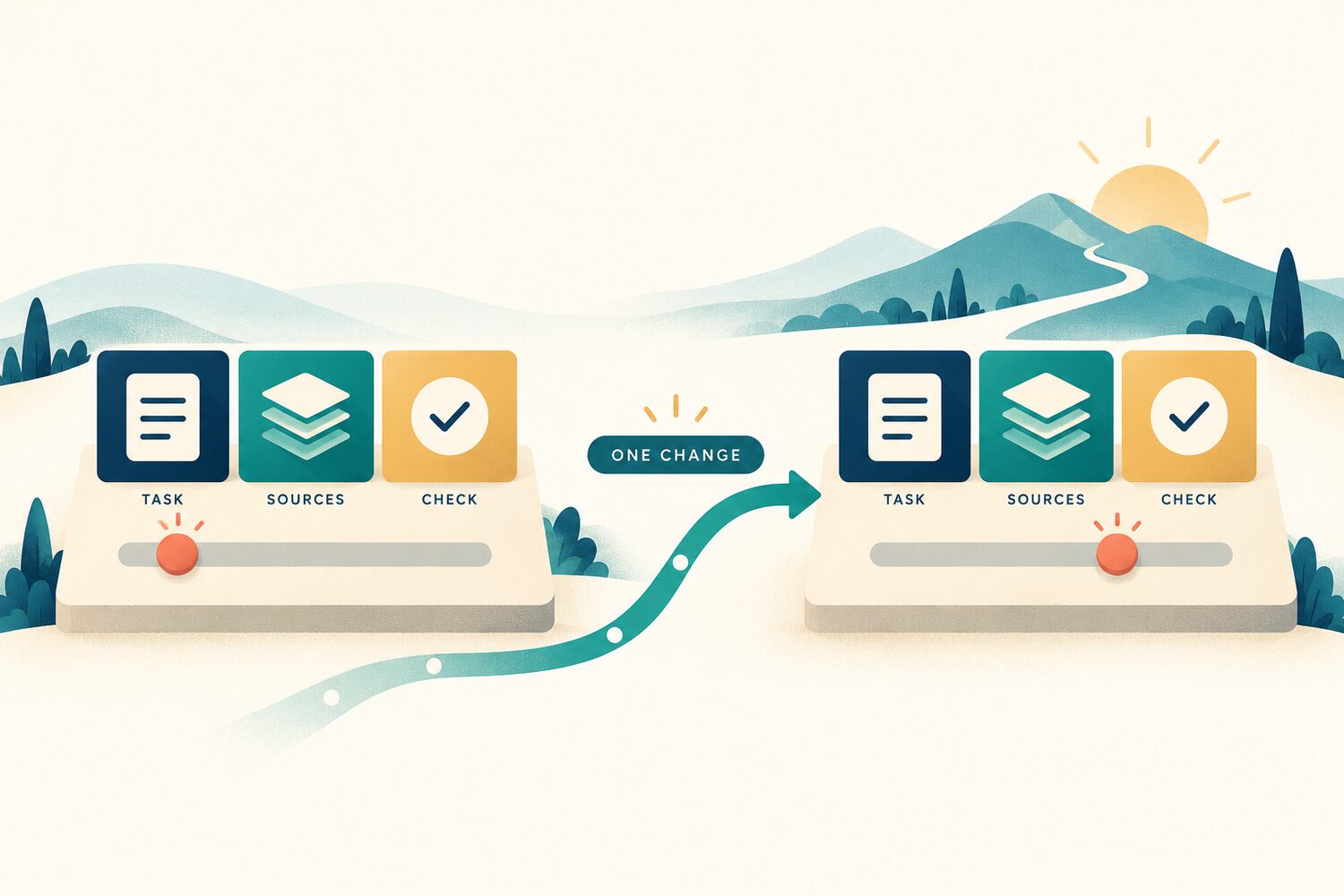
Keep the task, source pack and acceptance check stable. Change one condition so learners and coaches can see which AI skill improved.

AI Training for Employees: Reset Skills After a Role Change
A completed course does not prove readiness for new tasks, data or authority. Use a narrow role-change reset to collect fresh evidence without restarting every course.
Report an AI Failure So Someone Else Can Reproduce It
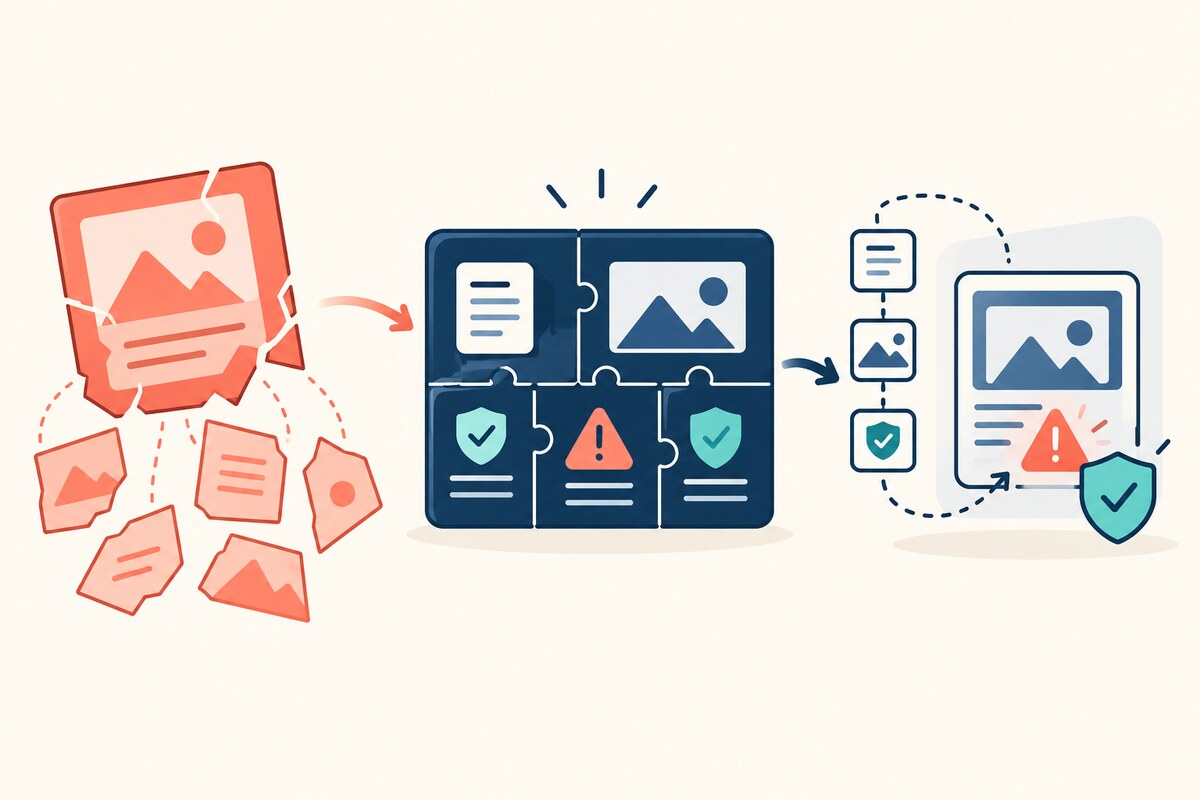
“The AI got it wrong” is not a usable report. Capture five safe fields before changing the session so another person can reproduce, contain and learn from the failure.