Fund Practice, Not Just AI Licences
A five-line AI adoption budget makes protected practice, workflow design, review and refresh visible alongside software access.

An AI adoption budget can pay for every licence and still leave employees unable to use the tool well. Access is only the entry fee. People also need safe examples, protected practice time, feedback from someone who understands the work, and a way to refresh the workflow when the tool or policy changes. If those items have no owner or budget line, they become favours squeezed between ordinary tasks—and the rollout quietly depends on spare time.
Why an AI adoption budget needs a practice line
The gap is operational, not rhetorical. Microsoft’s current organisational adoption module covers strategy, assigned responsibilities, cost drivers and the need to empower business users and subject-matter experts. OECD research on generative AI and SMEs reports that training is still uncommon, even though lack of skills is a frequent barrier and worker outcomes have generally been better where training is provided. These sources do not prescribe a budget formula. They do show why buying access without funding enablement leaves an essential part of adoption unplanned.
Five lines in a practice-ready budget
Access
Licences, approved tools, identity management and the technical support required to reach them.
Practice time
Protected employee time for short exercises using synthetic, public or otherwise approved material.
Workflow design
Expert time to turn real tasks into bounded examples, acceptance criteria and clear stop conditions.
Review and coaching
Manager or subject-matter-expert time to inspect attempts, explain corrections and approve reusable methods.
Refresh and evidence
Regular checks when tools, policies or work change, plus records that show which behaviours employees can demonstrate.
These lines are deliberately separate. A platform may include content and feedback, but the organisation still owns task selection, data boundaries, manager capacity and decisions about what becomes an approved workflow. Separating the lines also makes trade-offs visible. If protected practice time is cut, leaders can see the choice instead of mistaking an unfunded activity for a completed plan.
Worked example: rebalance a fictional €60,000 rollout
Imagine a 100-person operations team with a fictional first-year adoption budget of €60,000. The initial plan assigns €48,000 to software access and €12,000 to launch communications. It funds no guided practice, workflow design or review. A practice-ready version might allocate €24,000 to access and support, €14,000 to protected practice time, €10,000 to workflow design, €8,000 to review and coaching, and €4,000 to refresh and evidence. The figures are an illustration, not a benchmark: actual costs depend on licences, pay, team size, risk and internal capability.
| Licence-led plan | Practice-ready plan | |
|---|---|---|
| Success event | Accounts are activated | A defined work task is completed safely and reviewed |
| Employee time | Assumed to appear | Reserved for short, scheduled attempts |
| Expert input | Available when asked | Named and costed for design and review |
| Evidence | Logins and attendance | Work products, corrections and transfer attempts |
| Change | Handled after complaints | Reviewed when tools, policy or error patterns change |
Reading is a start. Practice makes it stick.
Start learningFund the smallest complete learning loop
A useful starting unit is one workflow, not one course catalogue. Choose a recurring task with a clear owner and an output that a reviewer can inspect. Build a safe practice version. Let employees attempt it, receive feedback, correct the result and try a comparable example. Only then decide whether to expand. This keeps the practice budget tied to real work and avoids spreading resources across attractive but unowned use cases.
Budgeting is not a compliance certificate
The European Commission’s AI-literacy Q&A says approaches should reflect people’s knowledge, experience, training, the systems used and their context. It does not mandate this five-line budget or a specific individual level. Use the model as an operating decision, alongside applicable legal and governance advice.
Approve the budget only when these answers are named
- Which employee group and work task are in scope?
- Which content may be used during practice?
- How much protected practice time is funded?
- Who designs the example and acceptance criteria?
- Who reviews attempts and explains corrections?
- What evidence will support a scale, revise or stop decision?
- When will the workflow and training be refreshed?
Connect spending to the rest of the rollout
Use the enterprise workflow pilot to choose what should scale, the corporate training buyer scorecard to test providers, the skills refresh cycle to plan updates and the measurement ladder to choose evidence. Bokili’s AI training for companies supports short, role-relevant practice; the budget still needs to protect the organisational time around it.
- Take the total already planned for one team’s first AI rollout.
- Mark what currently pays for access, employee practice, workflow design, review and refresh.
- Put a zero beside every unfunded line; do not hide it inside ‘change management’.
- Choose one workflow and estimate the minimum time needed for an attempt, feedback and a second attempt.
- Name the owner of each line and the evidence needed before more licences are added.
The point is not to spend more by default. It is to stop pretending that unbudgeted practice will happen reliably. A smaller rollout with funded practice can produce clearer evidence than a wide launch built around accounts alone. When access, time, workflow design, review and refresh are visible, leaders can decide what to protect, what to reduce and what is not ready to scale.
Sources
- Are SMEs prepared for generative AI? — OECD
- Scale AI in your organization — Microsoft Learn
- AI Literacy — Questions & Answers — European Commission
- Bokili — AI training for companies and teams — Bokili
Reading is a start. Practice makes it stick.
Bokili turns skills like this into ten-minute missions for your whole team, with instant feedback and progress you can see.
Start learningKeep reading

AI Training for Employees: Separate Drafts From Records
Teach a four-state path—Draft, Checked, Approved, Recorded—so polished AI output never becomes organisational fact by accident.
Use Gemini Notebook Mind Maps to Turn Policy Into Questions
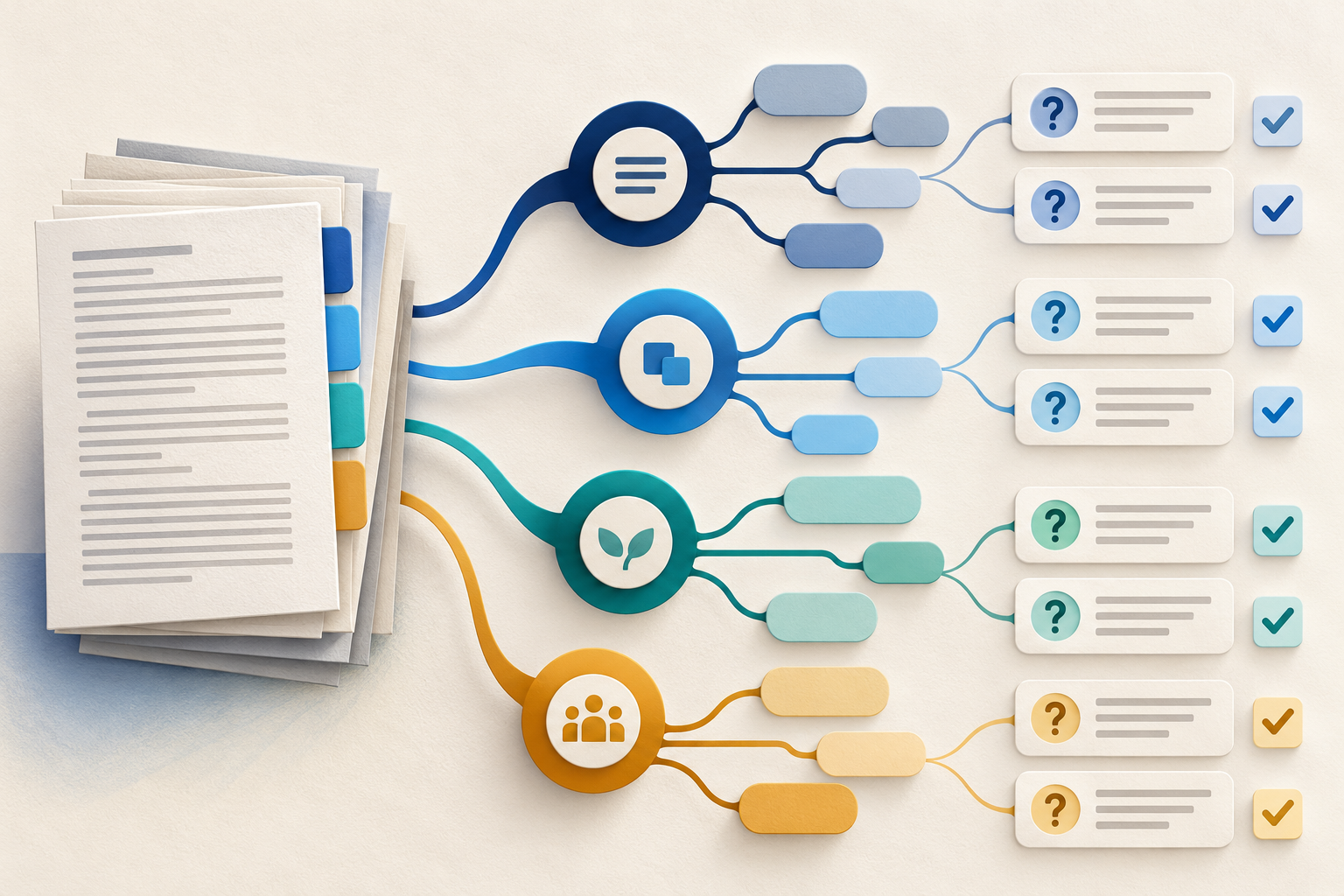
Use a Gemini Notebook mind map as a question index for a long policy—then open the cited source before you trust any answer.
AI Training for HR: Build a Four-Part Policy Answer
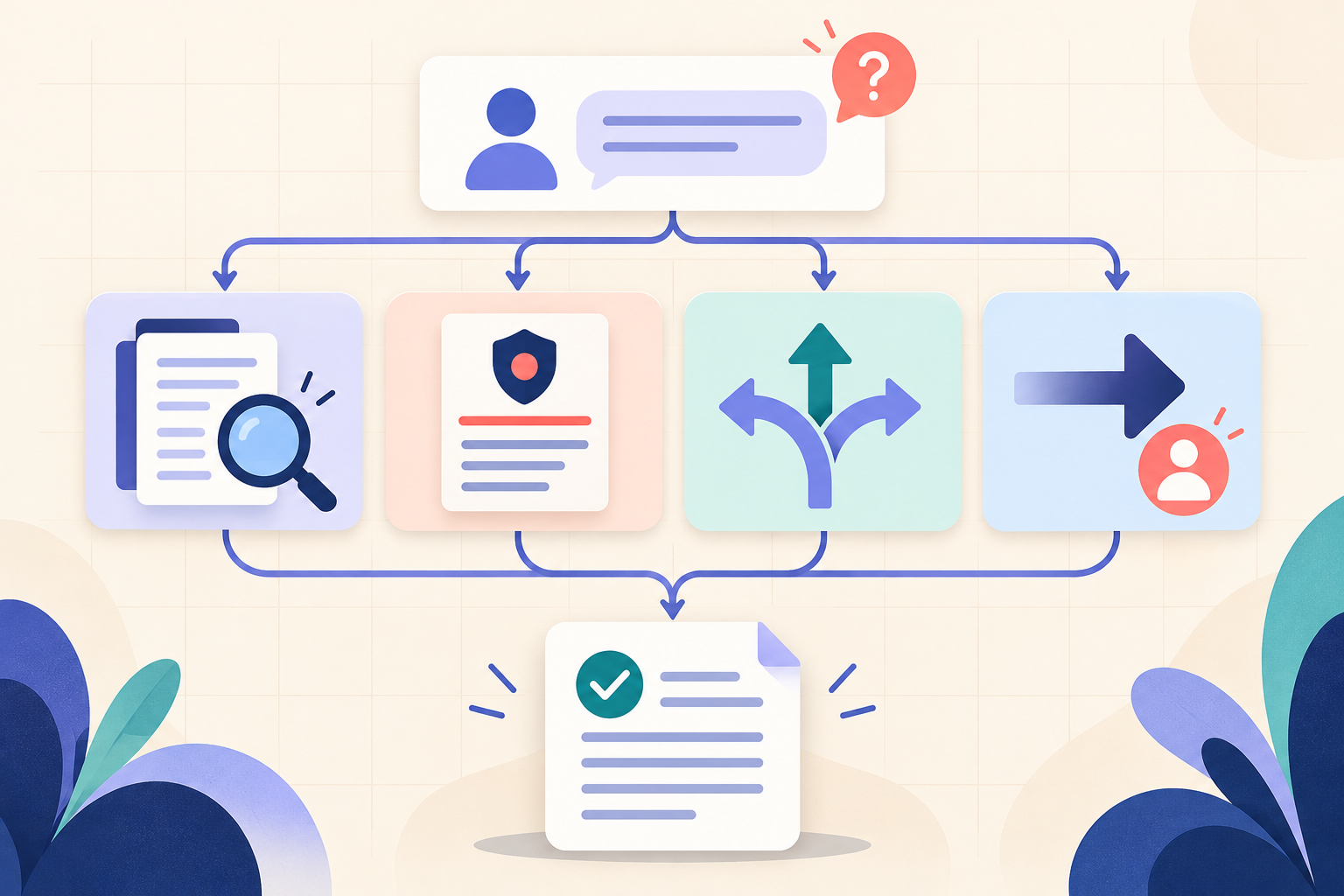
Teach HR teams to separate the source, written rule, human discretion and next step before turning an AI draft into employee guidance.