
Enterprise AI Training: Pilot Three Workflows Before You Scale
Run enterprise AI training as a measured workflow pilot: choose three real tasks, practise safely, collect evidence and scale only what transfers.
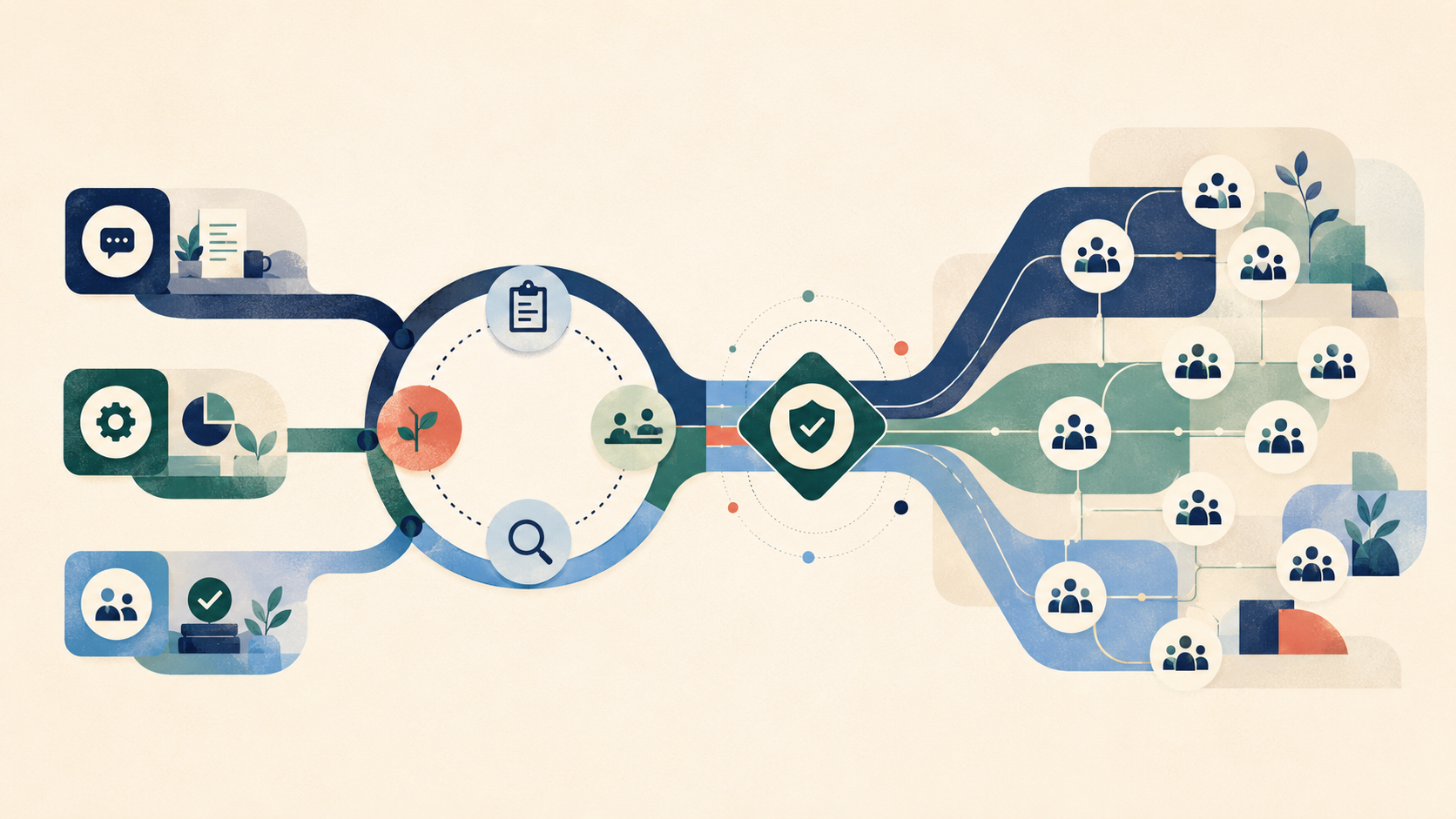
Enterprise AI training should not begin with a catalogue for everyone. Begin with three real workflows for one team. A short pilot can show whether people can frame the work, use approved tools, verify outputs and transfer the skill to a second task. That evidence is more useful than attendance when deciding what to scale.
What an enterprise AI training pilot should prove
The search for enterprise AI training often starts with vendors, courses and platforms. Those choices matter, but they come after the learning problem. Microsoft’s organisational guidance connects AI adoption with strategy, clear responsibilities and empowered business users and subject-matter experts. OECD research on SMEs found generative AI use was concentrated more in simple, one-off tasks than complex recurring work. A pilot should therefore test movement from isolated use to a repeatable workflow.
Five questions for the pilot
Work
Which three recurring tasks matter enough to practise and are safe enough to test?
Baseline
How does the team complete each task now, and what counts as acceptable quality?
Practice
Which small exercises build framing, tool use, verification and judgment?
Evidence
What observable output will prove skill—not merely participation?
Transfer
Can the learner apply the method to a similar task without copying the example?
Choose three workflows, not three tools
For a customer-operations team, the pilot might cover classifying a low-risk enquiry, drafting a response from approved knowledge, and checking that response against policy. The workflows may use one tool or several. The learning target is the behaviour: provide context, protect data, inspect evidence, correct the output and know when to escalate.
A four-week workflow pilot
- 1
Week 1 — Define
Select one team, three tasks and a baseline example for each. Write acceptance criteria and data boundaries.
- 2
Week 2 — Practise
Run short guided exercises with synthetic or approved content. Give feedback on the work product, not prompt style alone.
- 3
Week 3 — Apply
Learners repeat the method on a different but comparable task. Record errors, corrections and escalation decisions.
- 4
Week 4 — Decide
Compare results with the baseline. Scale, revise or stop each workflow separately.
Before
Collect one current work sample, elapsed time, quality criteria and common failure.
During
Observe framing, safe-tool choice, verification and correction.
After
Test transfer on a new example and review whether the workflow remains useful.
Scale gate
Require named ownership, repeatable evidence and a clear fix for unresolved risks.
Reading is a start. Practice makes it stick.
Start learningUse evidence that survives a rollout meeting
Completion tells you who finished. It does not show whether the team can do the work. Keep a small evidence pack for each workflow: the baseline, practice output, reviewer feedback, revised output and transfer attempt. Where the task can affect people, money, access or compliance, use stronger review and follow the organisation’s governance process. NIST’s generative-AI profile is designed to help organisations incorporate trustworthiness into how AI systems are designed, used and evaluated.
| Pilot evidence | Weak substitute | |
|---|---|---|
| Skill | A reviewed work product | A self-reported confidence score alone |
| Safety | Correct handling of a boundary case | Policy acknowledgement alone |
| Transfer | A fresh task completed with the method | Copying the trainer’s example |
| Scale | Named owner and repeatable review | High attendance |
Scale only when all six are true
- The workflow is recurring and valuable.
- The approved tool and data boundary are clear.
- Learners can meet written acceptance criteria.
- A reviewer can trace important claims or calculations.
- The skill transfers to a fresh example.
- One team owns support, updates and escalation.
Connect the pilot to a wider learning path
Bokili provides short practice for real work: https://bokili.com/en. Build the pilot with a role-based skills view (https://bokili.com/en/learn/ai-skills-for-employees-matrix), choose providers with a practical scorecard (https://bokili.com/en/learn/corporate-ai-training-buyer-scorecard), measure beyond completion (https://bokili.com/en/learn/measure-ai-training-beyond-completion), and match depth to risk (https://bokili.com/en/learn/risk-based-ai-literacy-training). These pages answer different parts of one rollout decision rather than repeating the same keyword.
- Name one team and list five recurring tasks.
- Choose three tasks that are valuable, bounded and reviewable.
- Write one acceptance criterion and one safety boundary for each.
- Choose the evidence a reviewer will keep.
- Set a scale gate: continue, revise or stop after the transfer task.
A pilot is not a smaller launch. It is a decision instrument. It should tell you which workflows deserve more training, which need different controls and which should not scale. That is how enterprise AI training becomes practical capability rather than another content library.
Sources
Reading is a start. Practice makes it stick.
Bokili turns skills like this into ten-minute missions for your whole team, with instant feedback and progress you can see.
Start learningKeep reading

AI Training for Employees: Separate Drafts From Records
Teach a four-state path—Draft, Checked, Approved, Recorded—so polished AI output never becomes organisational fact by accident.
Use Gemini Notebook Mind Maps to Turn Policy Into Questions
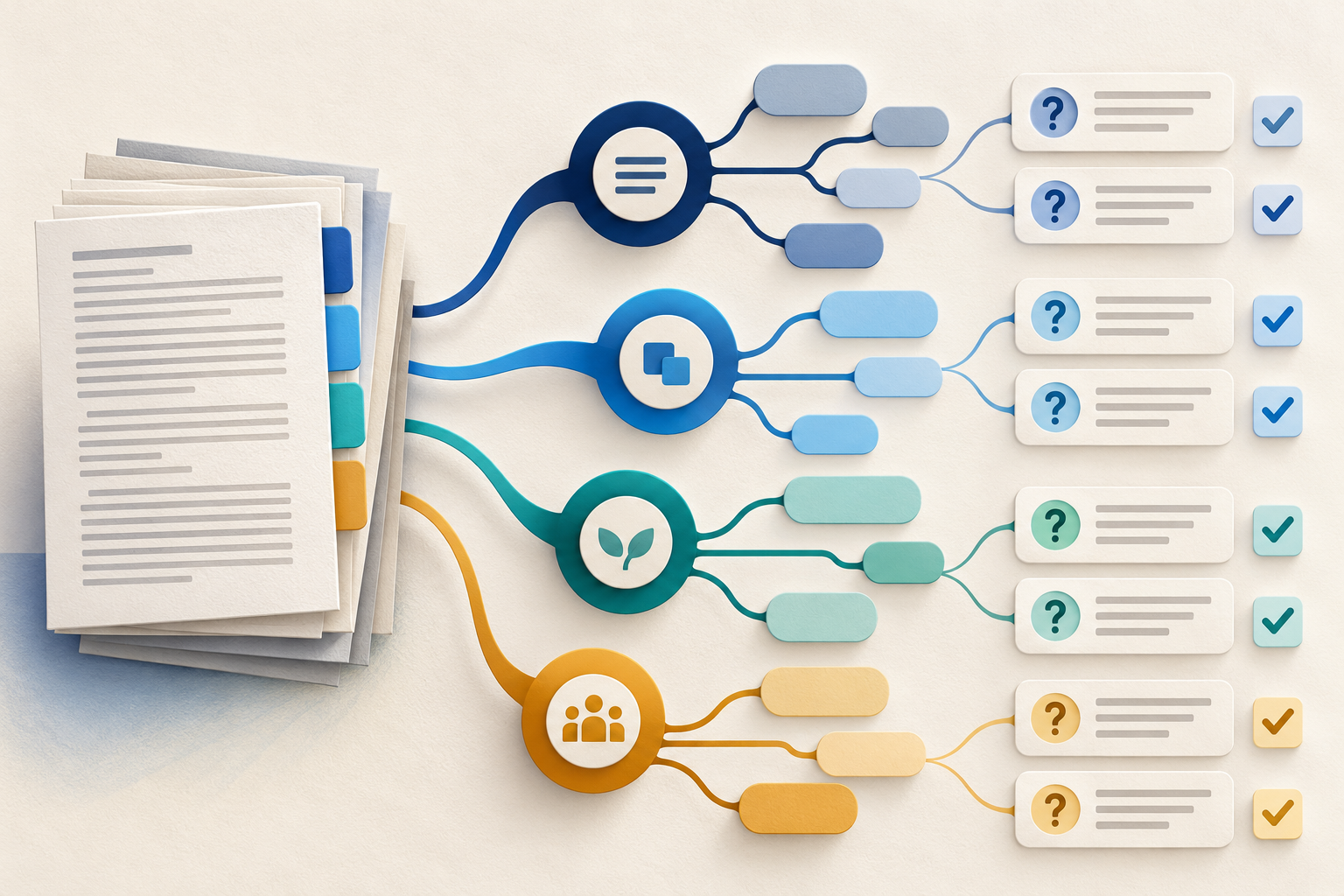
Use a Gemini Notebook mind map as a question index for a long policy—then open the cited source before you trust any answer.
AI Training for HR: Build a Four-Part Policy Answer
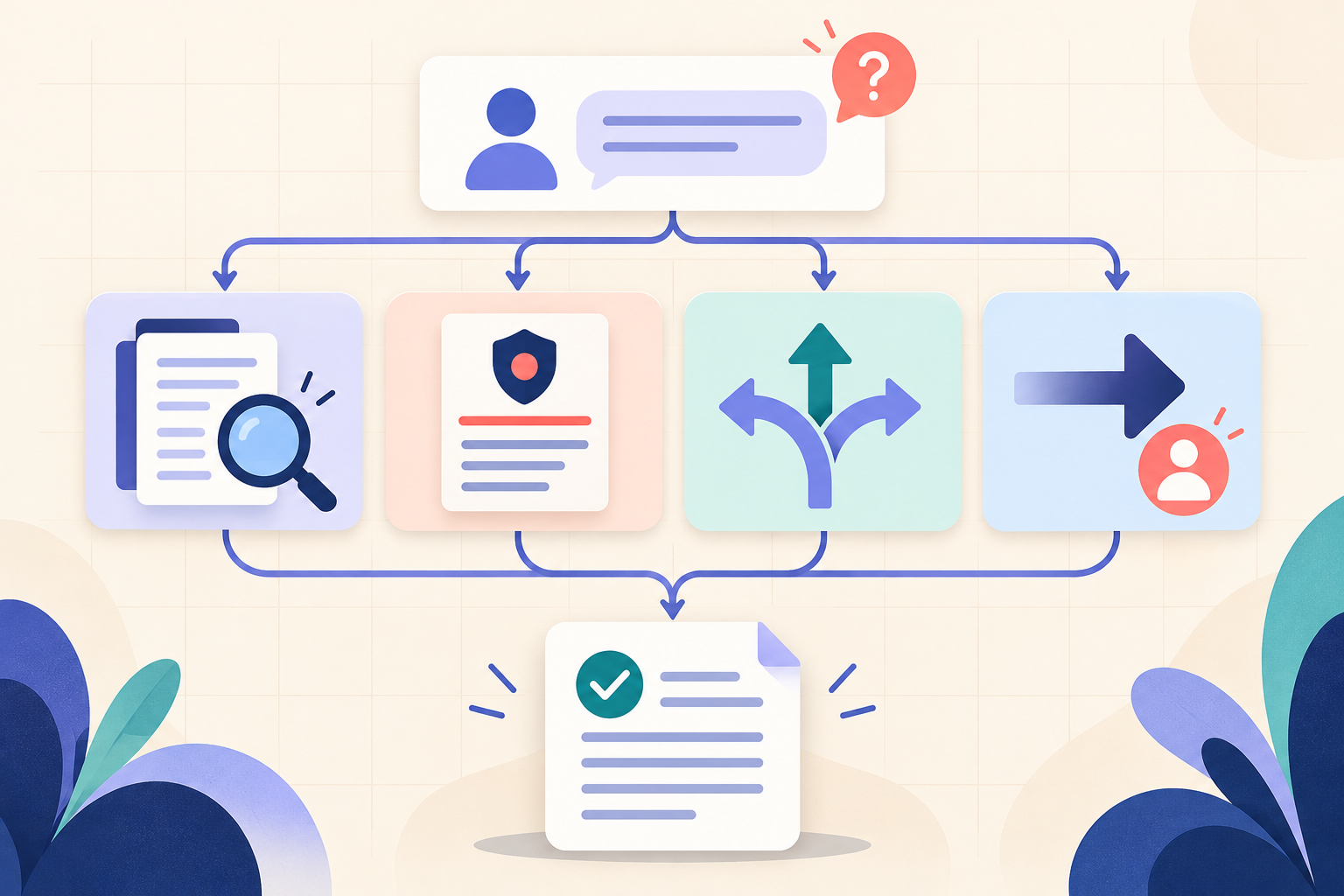
Teach HR teams to separate the source, written rule, human discretion and next step before turning an AI draft into employee guidance.