
Critical Thinking Is Not a Module in AI Training
Make judgement observable by adding one challenge question—and one correction—to every realistic AI practice task.

Critical thinking is often treated as a separate module in AI training: a short lesson about bias, hallucinations or “checking carefully”. Then the practical exercise rewards only the finished draft. That design sends a mixed message. It says judgement matters, but makes production the only visible behaviour.
A stronger programme attaches one challenge question to every realistic AI task. The learner still produces something useful, then has to test one part of it: its evidence, coverage, alternatives or decision authority. Critical thinking becomes an action that a coach can see, score and improve.
Teach judgement inside the task
Current UK guidance on AI upskilling says practical training should link to real tasks and decisions, combine tool use with interpretation and judgement, and include reflection and repeat practice. The AI foundation-skills benchmark also treats checking accuracy and spotting errors as part of responsible use. These are not extra topics to place after a prompt lesson. They belong inside the work.
Four challenge questions for AI-assisted work
Evidence
Which source supports the most important claim, number or recommendation?
Coverage
Which relevant person, case, exception or constraint is missing?
Alternatives
What reasonable change in the facts would change the answer?
Authority
Who may decide, approve, send or act on this output?
Do not ask every question every time. Choose the one that matches the main risk in the task. A source-heavy brief may need evidence. A summary may need coverage. A plan built on assumptions may need alternatives. A recommendation may need authority. One well-chosen challenge creates a small, repeatable habit without turning each exercise into an audit.
A worked example: the polished renewal brief
Imagine a learner uses an approved AI tool to turn account notes into a one-page renewal brief. The draft is clear. It names the customer’s goal, reports strong adoption and recommends a two-year renewal. If the exercise ends there, the learner has shown drafting skill but not judgement.
Add the challenge question: “Which source supports the recommendation?” The learner traces the adoption claim to a dashboard, but finds that the number covers only active users and excludes a team that stopped using the service. The customer notes also contain an unresolved data-export request. The recommendation may still be sound, but the brief now needs a caveat, the missing concern and a named commercial owner.
| Production-only exercise | Production plus challenge | |
|---|---|---|
| Goal | Create a convincing brief | Create a useful brief and test one weak point |
| Evidence | Accepts plausible claims | Traces the decisive claim to a source |
| Coverage | Rewards smooth structure | Surfaces an omitted team and concern |
| Decision | Lets the draft imply the answer | Names the person authorised to decide |
| Feedback | Comments on style | Scores the challenge and the correction |
Reading is a start. Practice makes it stick.
Start learningThe lesson is not that every AI draft is wrong. It is that fluency includes finding where a plausible output could fail the work. NIST’s generative-AI risk profile treats evaluation and risk management as ongoing organisational work. A challenge question gives that principle a small unit of practice.
Make the behaviour observable
- State the challenge question before the learner opens the tool.
- Require a trace, note, alternative or owner—not the phrase “I checked it”.
- Score the quality of the challenge separately from the quality of the draft.
- Show an answer key that explains what the learner could reasonably have found.
- Give a fresh case so the learner repeats the judgement without copying the answer.
- Record the correction made after the challenge, not only the first output.
This also improves programme measurement. Completion tells you that a learner reached the end. A recorded challenge shows whether they can connect an output to evidence, detect a meaningful omission, test an assumption or stop at a decision boundary. Those signals are closer to the behaviour leaders expect at work.
Avoid the critical-thinking trap
A vague instruction such as “review carefully” is hard to teach and impossible to score consistently. A long checklist can fail in the other direction: learners tick every box without deciding what matters. Keep the challenge narrow, tied to the task and proportionate to the consequence.
The question must also fit the learner’s role. A new employee may identify the source and an owner. A specialist may test assumptions and edge cases. A manager may decide whether the remaining uncertainty is acceptable. The underlying habit is shared, but the expected judgement changes with responsibility.
- Choose one routine, low-risk task that employees already perform with AI.
- Write the expected useful output in one sentence.
- Select the main challenge: evidence, coverage, alternatives or authority.
- Create a fictional case with one discoverable weakness linked to that challenge.
- Ask the learner to produce, challenge and correct the output.
- Score the draft, the challenge and the correction as three separate behaviours.
For related practice, use Bokili’s verification guide at https://bokili.com/en/learn/how-to-verify-ai-output-at-work, the omission check at https://bokili.com/en/learn/ai-summary-omission-check and the prompt data-boundary exercise at https://bokili.com/en/learn/prompt-data-boundary. Each can supply a focused challenge for a different kind of task.
The design rule
Every realistic AI task should include one visible act of challenge and one correction based on what the learner finds.
Critical thinking does not become practical because a course defines it. It becomes practical when employees rehearse it at the exact moment an AI output looks ready to use. Put the challenge inside the task, make the response observable and let the learner try again. Then judgement is no longer a module beside AI training. It is part of doing the work.
Practise this in Bokili
Turn what you just read into a ten-minute mission.
- Start learning
Add one challenge question
Produce, challenge and correct one realistic AI-assisted output.
- Start learning
Verify an AI output
Trace important claims, spot gaps and correct the work before use.
Sources
- Employer guide: What works for AI upskilling in the UK — UK Government
- Research evidence, analysis and methodology: What works for AI upskilling in the UK — UK Government
- Artificial Intelligence Risk Management Framework: Generative Artificial Intelligence Profile — NIST
- AI foundation skills for work benchmark — UK Government
Reading is a start. Practice makes it stick.
Bokili turns skills like this into ten-minute missions for your whole team, with instant feedback and progress you can see.
Start learningKeep reading

AI Training for Employees: Pause Before Recording a Meeting
Teach employees a five-part check for purpose, notice, sensitive data, approved tools and downstream use before an AI recorder joins.
AI Training for Employees: Add Two New-Hire Checkpoints
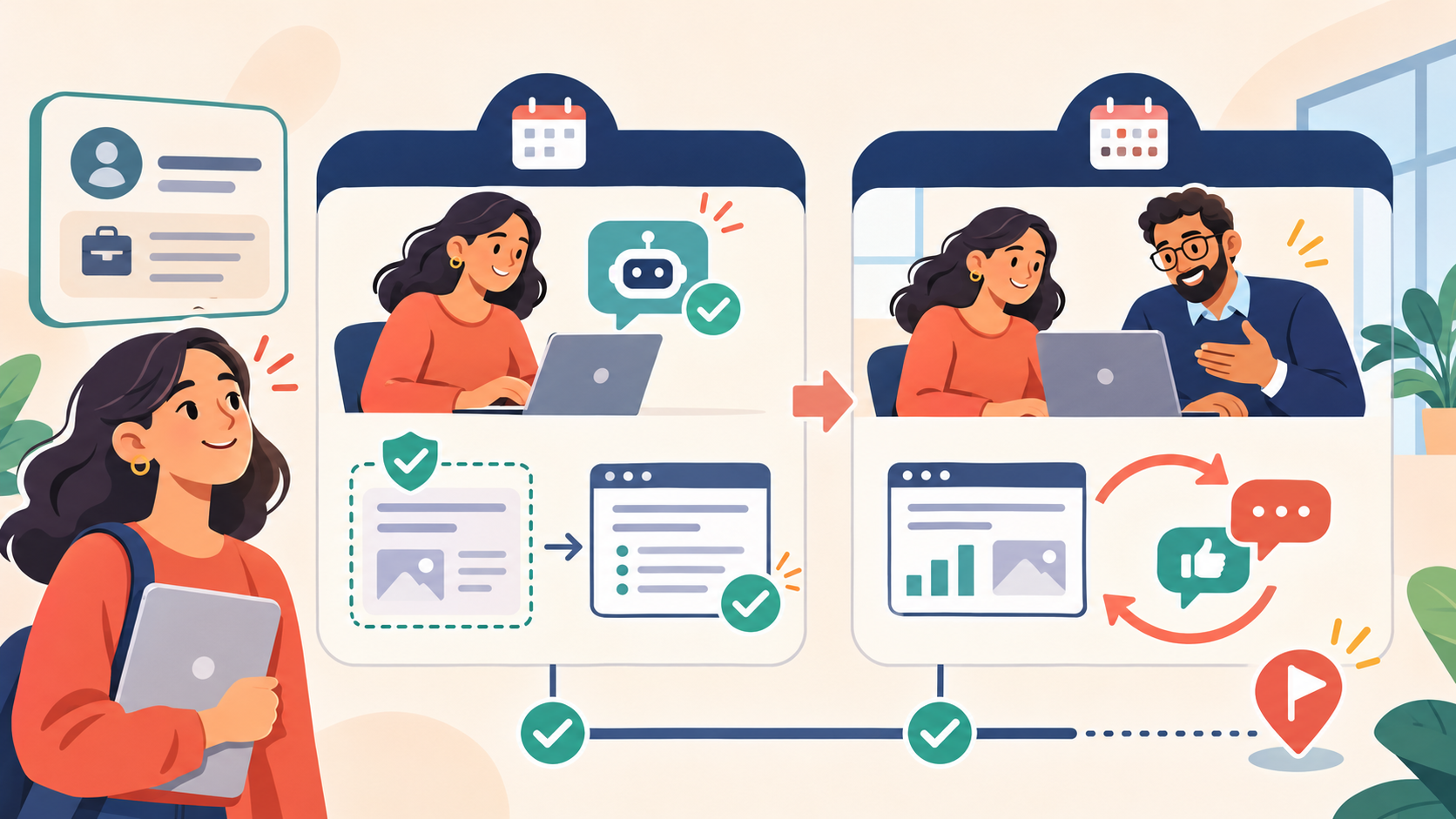
Build AI training into onboarding with a safe first-week practice and a fresh transfer check after the new hire learns the workflow.
Turn Support Tickets Into a Verified Knowledge Article With AI
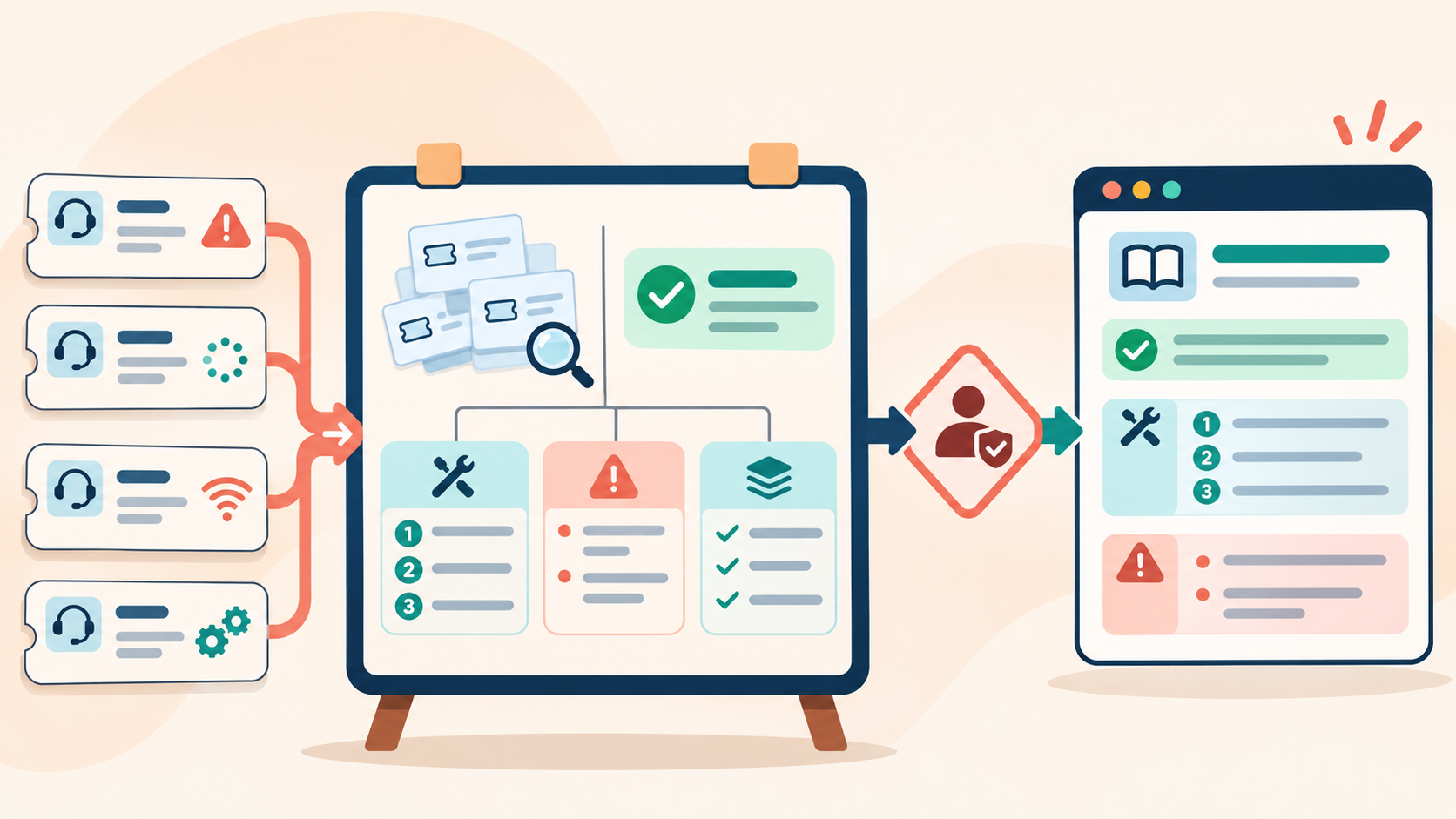
A role playbook for turning several support cases into reusable guidance without making one workaround a universal rule.