AI Training Platform for Companies: Test Personalisation
A controlled three-profile demo reveals whether a corporate learning platform changes practice—or only the pathway label.
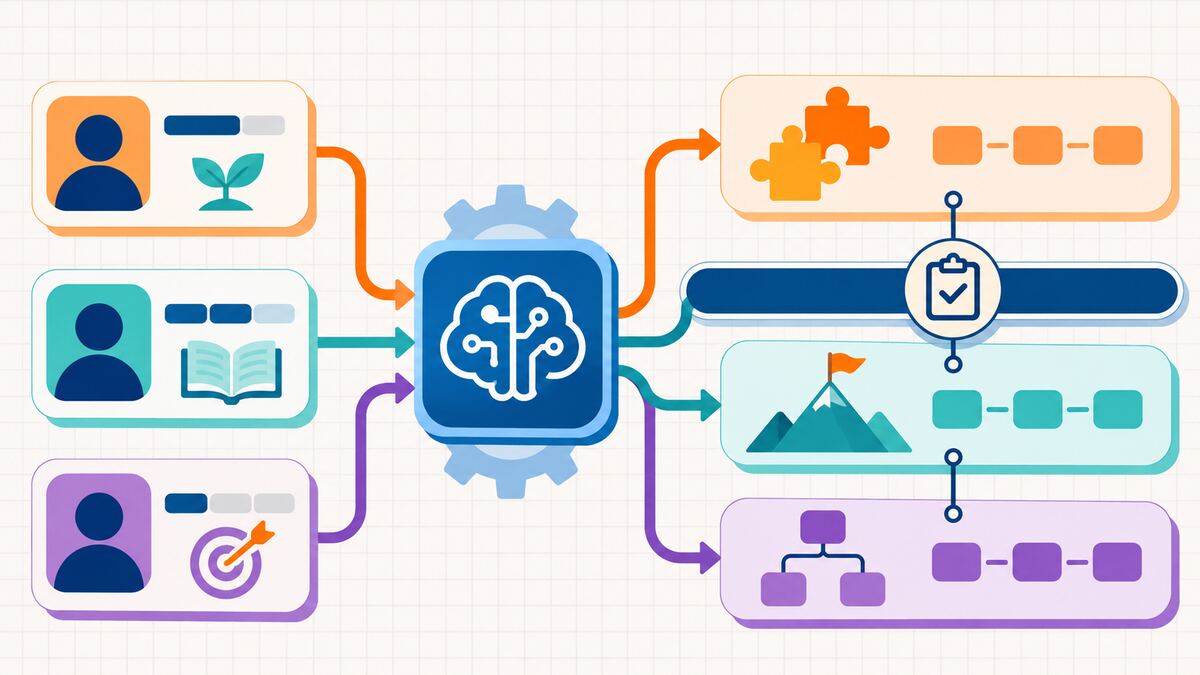
An AI training platform for companies may promise personalised learning, but a renamed pathway is not the same as a changed learning experience. A buyer needs to see whether the platform responds to differences that matter at work: role, starting level, approved tool and previous performance. The cleanest test is a controlled demo. Give the vendor three fictional learner profiles, hold the target skill and evidence standard constant, and record what the platform changes. Useful personalisation should alter the practice context, difficulty, support or next step. It should not simply reshuffle a catalogue or greet the learner by name.
Test the adaptation, not the label
If three different profiles receive the same activity, feedback and next step, the pathway is segmented in name only.
How to test an AI training platform for companies
A fair test needs controlled inputs. Keep the target outcome fixed: each learner must turn approved source material into a useful work artefact, verify it and explain what still requires human judgement. Then vary one profile characteristic at a time. This makes the demo comparable and prevents a polished sales journey from hiding whether the learning logic actually adapts.
The four-layer personalisation test
Profile
Can the platform distinguish role, starting level, preferred or approved tool, access needs and prior evidence without collecting unnecessary personal data?
Practice
Does it change the work context, task difficulty, scaffold or tool-specific instructions while keeping the learning outcome intact?
Feedback
Does feedback point to the learner's actual evidence, show what passed or failed, and make the next revision clear?
Progression
Does the next activity respond to the result, or does every learner move through the same sequence regardless of performance?
Use three fictional profiles, not three real employees
Create deliberately different but non-sensitive profiles. Profile A is a new HR coordinator who uses an approved conversational assistant and needs strong scaffolding. Profile B is an experienced operations manager using an office assistant who needs less prompting but a realistic verification task. Profile C is a marketing specialist who completed the basic skill successfully and now needs a harder exercise with fewer hints. Avoid names, health information, performance records or other personal details. The goal is to test the learning system, not to recreate employee files.
| Cosmetic personalisation | Useful personalisation | |
|---|---|---|
| Pathway | Same catalogue in a different order | Different practice route tied to the same outcome |
| Task | Generic prompt-writing exercise | Role-relevant artefact using an approved tool |
| Support | Identical hints for everyone | More or less scaffolding based on starting level |
| Feedback | Generic praise or a completion mark | Evidence-specific correction and a clear revision step |
| Next step | Fixed module sequence | A next activity justified by the previous result |
| Buyer evidence | A polished learner screen | A traceable explanation of what changed and why |
Run the demo as a controlled experiment
Reading is a start. Practice makes it stick.
Start learningA buyer's demo script
- 1
Set one outcome
Ask all three profiles to produce and verify the same class of work artefact.
- 2
Enter the profiles
Change role, level and approved tool in a documented order. Keep every other input stable.
- 3
Capture the path
Record the first task, available support, feedback, revision request and next activity for each profile.
- 4
Ask why it changed
Require the vendor to explain the rule or evidence behind each difference, including what an administrator can review.
- 5
Test a weak submission
Give one profile an output with a missing source check. Confirm that the response requests a meaningful correction rather than merely allowing progression.
- 6
Reset and repeat
Run the same profile twice. Unexpected variation needs an explanation before it is treated as useful adaptation.
The UK government's 2026 employer guide recommends practical training linked to real tasks and decisions, materials suitable for different levels of digital experience, and a consistent core that allows role-specific adaptation. NIST's AI Risk Management Framework playbook likewise points organisations towards testing procedures, appropriate actor competence and usability evaluation in context. Together, those principles support a simple buyer stance: personalisation is valuable only when it produces a more appropriate practice and remains reviewable by the people responsible for learning quality.
Evidence to request before buying
- A side-by-side record of the three generated paths
- The profile fields that influence adaptation and their data-retention rules
- An explanation of how prior results change support or progression
- A way for an administrator to inspect and override a poor recommendation
- A common rubric that allows fair comparison across personalised tasks
- An accessibility and localisation demonstration using the same controlled profiles
Keep one evidence standard
Personalisation should not create three incompatible definitions of competence. Keep the evidence standard fixed: a relevant artefact, approved source material, explicit checks and a short statement of unresolved judgement. The task context and support can change; the proof of learning should remain comparable. This protects fairness and gives programme owners a useful view across teams.
Bokili's public page for HR and L&D leaders describes personalised paths that adapt to role, level and preferred tools, alongside realistic missions and progress visibility: https://bokili.com/en/for-hr. A buyer can use the test above with any provider. For deeper checks, compare it with Bokili's platform feedback test (https://bokili.com/en/learn/ai-training-platform-feedback-test), localisation test (https://bokili.com/en/learn/ai-training-platform-localisation-test), accessibility rehearsal (https://bokili.com/en/learn/ai-training-platform-companies-accessibility-rehearsal), and existing-practice map (https://bokili.com/en/learn/ai-training-employees-map-existing-practice).
- Write three fictional profiles with different roles, starting levels and approved tools.
- Set one shared learning outcome and evidence rubric.
- Ask the platform to generate or assign the first activity for each profile.
- Compare the task, support, feedback and next step.
- Mark every difference as cosmetic, useful or unexplained.
- Choose one unexplained difference and ask the vendor for the rule and administrator control behind it.
Buy an observable learning system
The question is not whether a platform says it personalises learning. The question is whether a programme owner can observe a sensible change, connect it to a learner need and retain a common standard. Three fictional profiles, one controlled outcome and one weak submission are enough to turn a vague product claim into a practical purchasing test.
Sources
- Employer guide: What works for AI upskilling in the UK — Skills England / GOV.UK
- Measure – AI RMF Playbook — NIST
- AI training for HR & L&D leaders — Bokili
Reading is a start. Practice makes it stick.
Bokili turns skills like this into ten-minute missions for your whole team, with instant feedback and progress you can see.
Start learningKeep reading
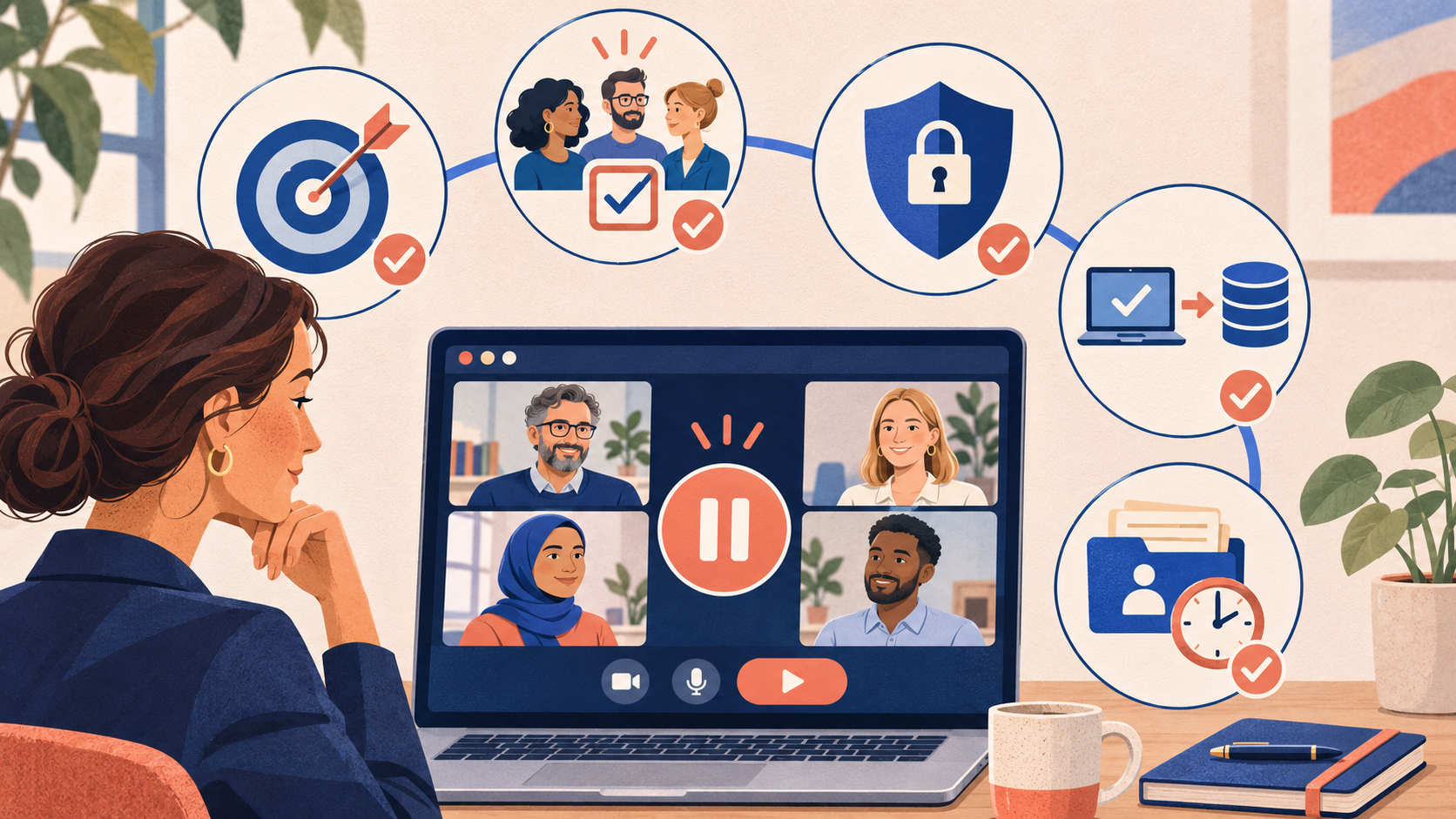
AI Training for Employees: Pause Before Recording a Meeting
Teach employees a five-part check for purpose, notice, sensitive data, approved tools and downstream use before an AI recorder joins.

Critical Thinking Is Not a Module in AI Training
Make judgement observable by adding one challenge question—and one correction—to every realistic AI practice task.
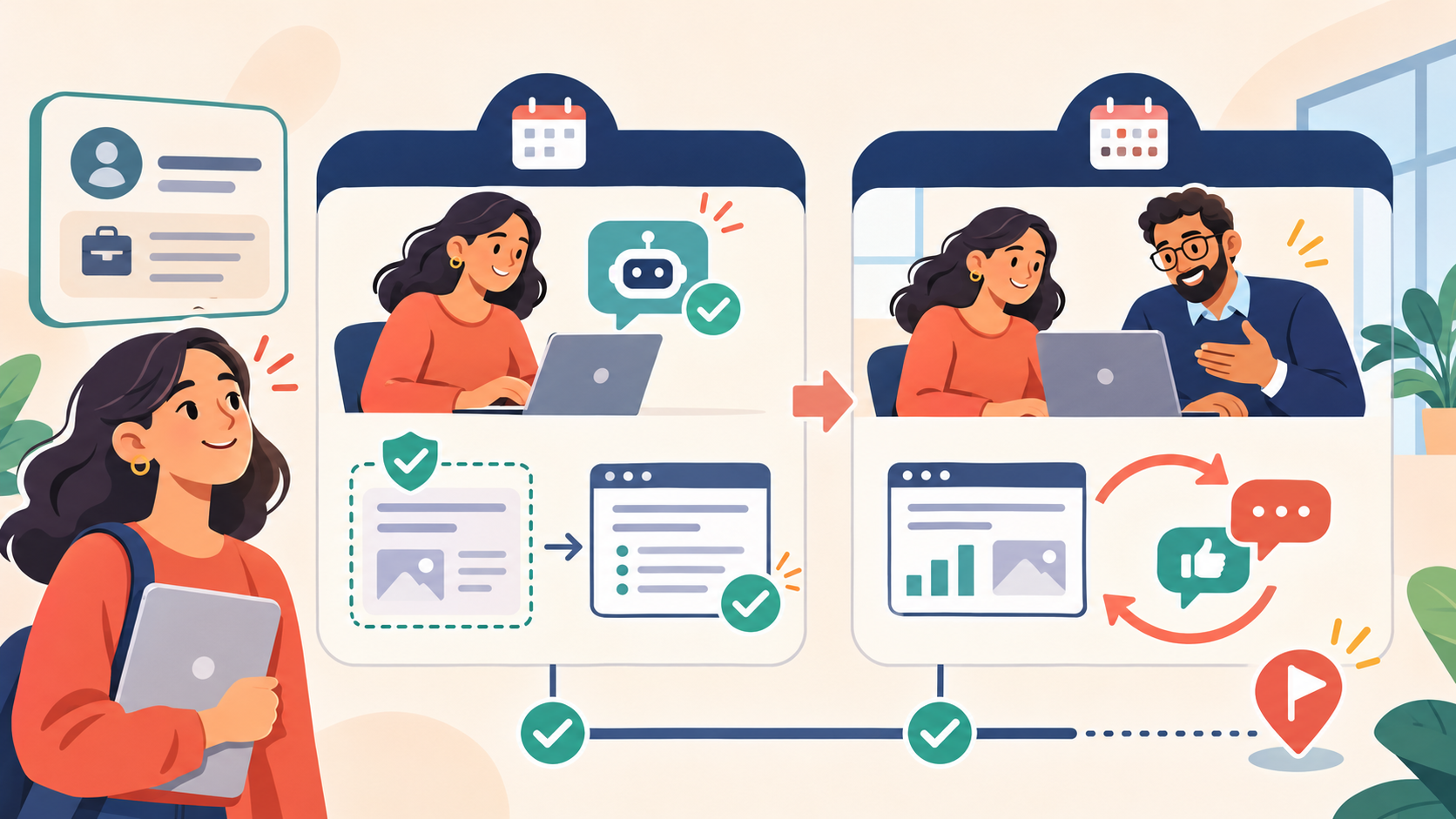
AI Training for Employees: Add Two New-Hire Checkpoints
Build AI training into onboarding with a safe first-week practice and a fresh transfer check after the new hire learns the workflow.