
AI Training Platform for Companies: Test Content Freshness
Use one real change to test whether an AI training platform for companies can update lessons, translations, assessments and learner proof without leaving stale guidance behind.
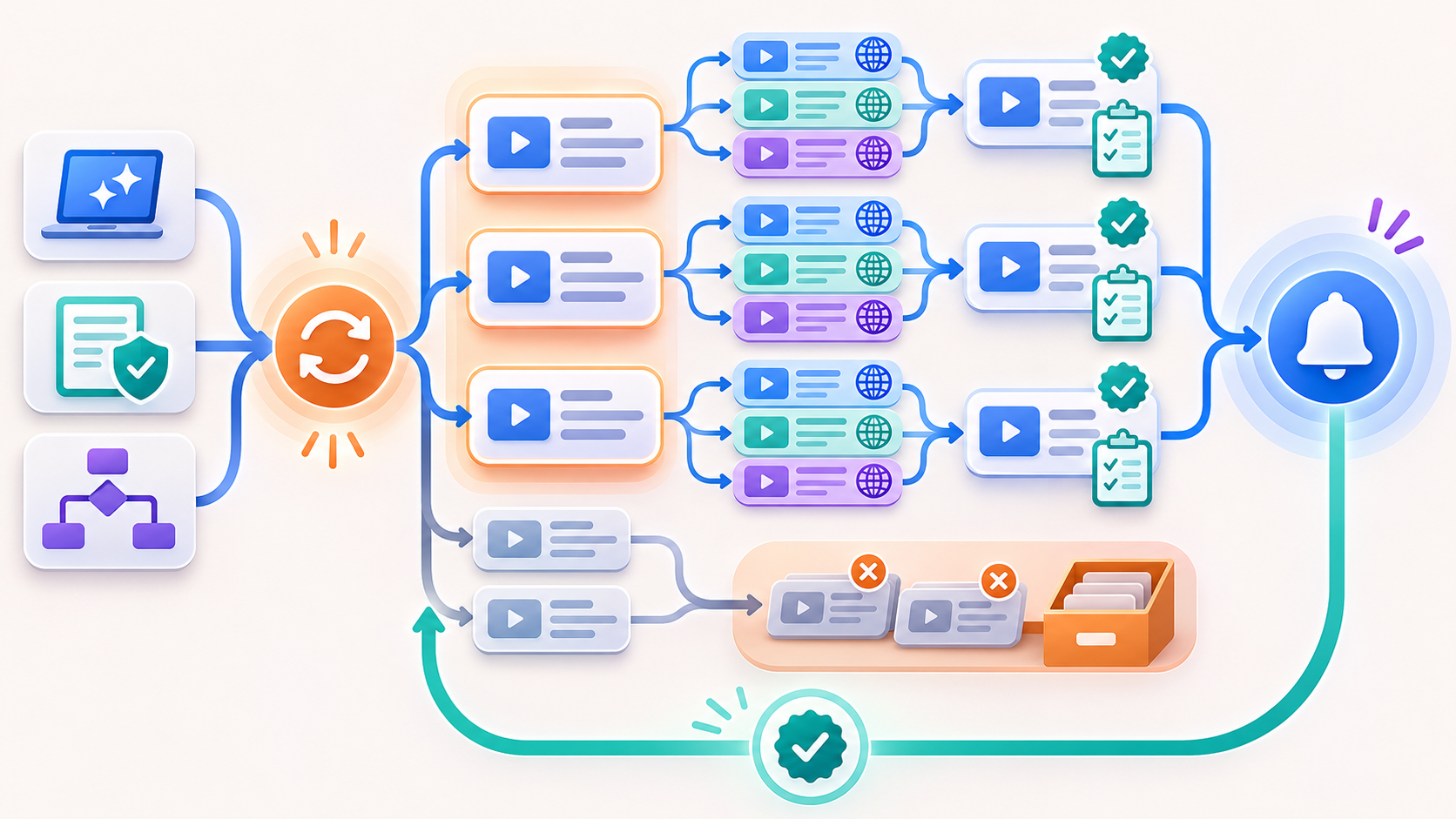
An AI training platform for companies can look current in a sales demo and still age badly after purchase. Tool features move, internal policies change, approved workflows shift and lessons translated for different teams can drift apart. A useful buying test is therefore not “How many courses do you have?” Ask the provider to take one recent change and show its whole content-freshness path: detection, impact analysis, revision, approval, versioning, retirement, learner notice and renewed proof of skill. You are testing an operating process, not a promise.
Test an AI training platform for companies with CHANGE
The CHANGE freshness test
Catch the change
Show where a product update, policy edit or workflow change enters the system, who monitors it and how urgency is set.
Hunt affected learning
Find every lesson, example, assessment, link and locale touched by the change. Search should cover dependencies, not just titles.
Approve the revision
Name the subject owner, policy owner and editor. Show which evidence they review and which changes require a second approval.
Note the version
Give the revised item a date and version, keep a change record and remove or clearly retire stale guidance.
Guide affected learners
Identify who completed or started the old version, explain what changed and route them to the smallest useful refresher.
Examine fresh proof
Update the practice task or assessment so learners demonstrate the new behaviour rather than merely acknowledge a notice.
This test matches current evidence about sustainable AI upskilling. The 2026 Skills England employer guide says training should be easy to update as AI tools and uses change, with plans to review and refresh learning after delivery. UK AI procurement guidance also frames lifespan testing and ongoing management as continuing requirements, not a one-time decision. Those sources do not prescribe a vendor interface. They do justify asking for a visible, repeatable lifecycle.
Worked demo: a policy change across three locales
Use a fictional but realistic brief. A 180-person consultancy changes its approved use rule: employees may still use an AI meeting assistant for internal calls, but client calls now require written consent and a named human note owner. The provider has English, French and German lessons, a manager checklist and a short scenario assessment that all mention meeting notes. Give the change notice to the vendor during the demo. Do not accept a polished replacement slide prepared in advance. Ask the team to show how it discovers the four affected items, assigns owners, updates all locales, retires the old versions, identifies prior learners and changes the assessment.
Run the controlled freshness demo
- 1
Send one bounded change
Use an approved, non-confidential tool or policy change with a clear effective date and owner.
- 2
Start the clock at intake
Observe how the provider records the signal, classifies risk and creates accountable work rather than relying on an inbox memory.
- 3
Inspect the impact map
Ask for every affected lesson, link, assessment and locale. Deliberately include one dependency that is easy to miss.
- 4
Watch approval and localisation
Check that language versions preserve the same rule while using natural local wording, and that an authorised person signs off.
- 5
Find the stale path
Open an old bookmark or incomplete learner session. It should not quietly deliver superseded guidance.
- 6
Follow the learner
Show who receives the update, what they are asked to revisit and how the platform records new proof.
Reading is a start. Practice makes it stick.
Start learning| Weak demonstration | Strong demonstration | |
|---|---|---|
| Detection | “Our team watches releases.” | A named owner, intake record, risk level and response target are visible. |
| Coverage | One lesson is edited. | Related lessons, links, assessments and locales appear in an impact map. |
| History | New text replaces old text. | Version, reason, approver and retirement record remain traceable. |
| Learner action | A generic announcement is sent. | Only affected learners receive a focused refresher and new practice task. |
| Proof | Completion status stays unchanged. | The changed behaviour is demonstrated and recorded again. |
Questions that expose the operating model
Ask the provider to show, not tell
- Which sources are monitored for tool, policy and regulatory changes?
- Who decides whether a change is urgent, material or cosmetic?
- How are dependent lessons, assessments, links and translations found?
- Which changes need product, legal, security or subject-matter approval?
- Can a learner open an old version from a bookmark or saved session?
- How are completed learners selected for a refresher?
- Does the refreshed assessment test the changed behaviour?
- Can an admin export the version, approver, notice and reassessment record?
- What happens when a translation is not ready by the effective date?
Score evidence, not speed alone
A fast edit is not a strong result if dependencies, locales or affected learners are missed. Record completeness, accountability and traceability before comparing turnaround time.
Link the test to the wider buying decision
Start with Bokili’s public company training overview at https://bokili.com/en/for-hr. Then compare this focused freshness test with the broader admin-day exercise at https://bokili.com/en/learn/ai-training-platform-companies-admin-day-test, the learner behaviour refresh cycle at https://bokili.com/en/learn/ai-learning-development-skills-refresh-cycle and the localisation test at https://bokili.com/en/learn/ai-training-platform-localisation-test. Together they cover daily administration, current content, learner transfer and multilingual consistency without collapsing them into one vague score.
- Choose one recent approved change in a tool, policy or workflow.
- List one lesson, one assessment, one link and one locale that it should affect.
- Write the expected owner, approval and effective date.
- Add one prior learner who needs a refresher and one learner who does not.
- Send the same brief to every shortlisted provider and record what each can actually show.
Sources
- Employer guide: What works for AI upskilling in the UK — Skills England and Department for Work and Pensions
- Guidelines for AI procurement — UK Government
- AI training for HR & L&D leaders — Bokili
Reading is a start. Practice makes it stick.
Bokili turns skills like this into ten-minute missions for your whole team, with instant feedback and progress you can see.
Start learningKeep reading
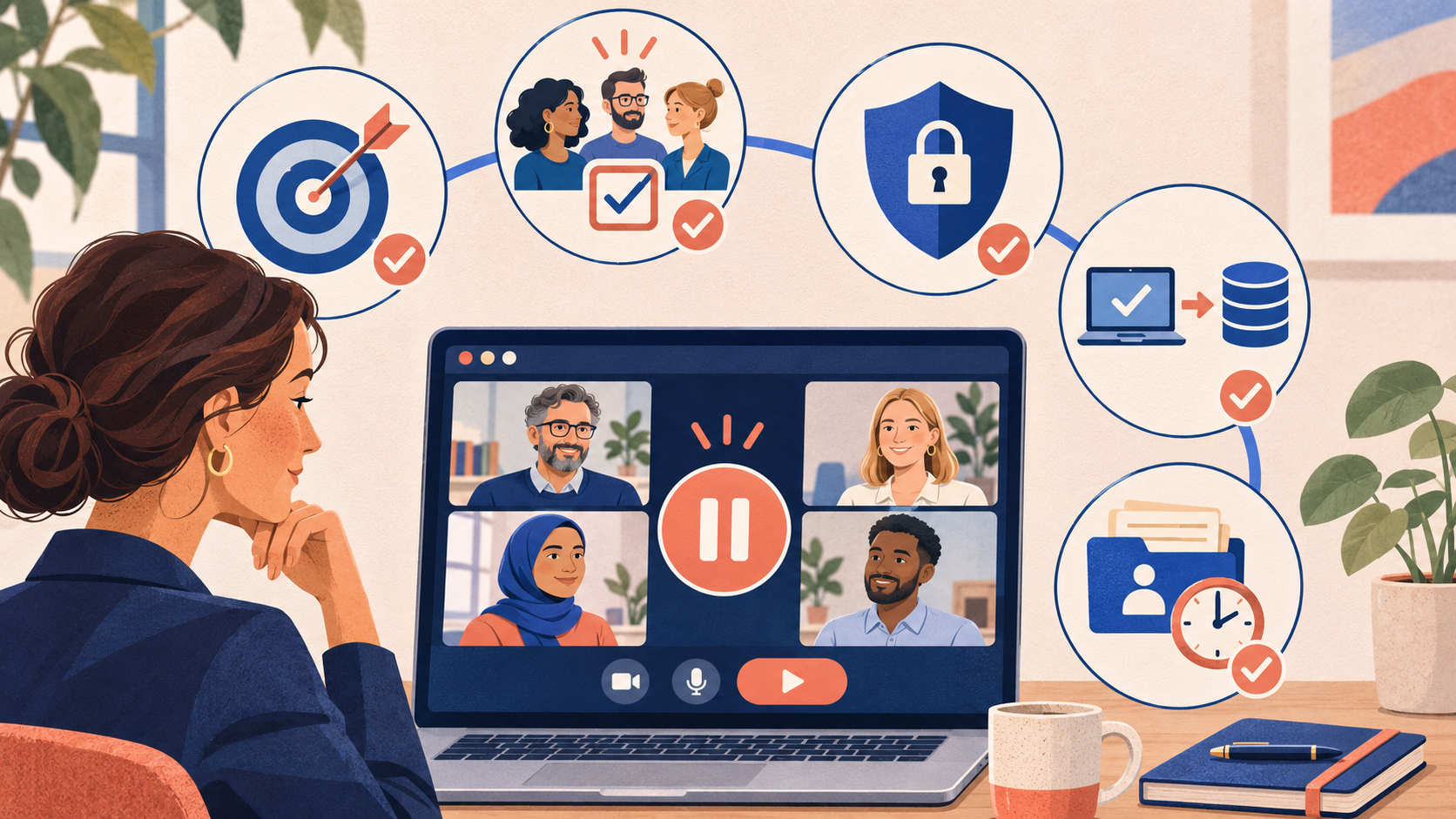
AI Training for Employees: Pause Before Recording a Meeting
Teach employees a five-part check for purpose, notice, sensitive data, approved tools and downstream use before an AI recorder joins.

Critical Thinking Is Not a Module in AI Training
Make judgement observable by adding one challenge question—and one correction—to every realistic AI practice task.
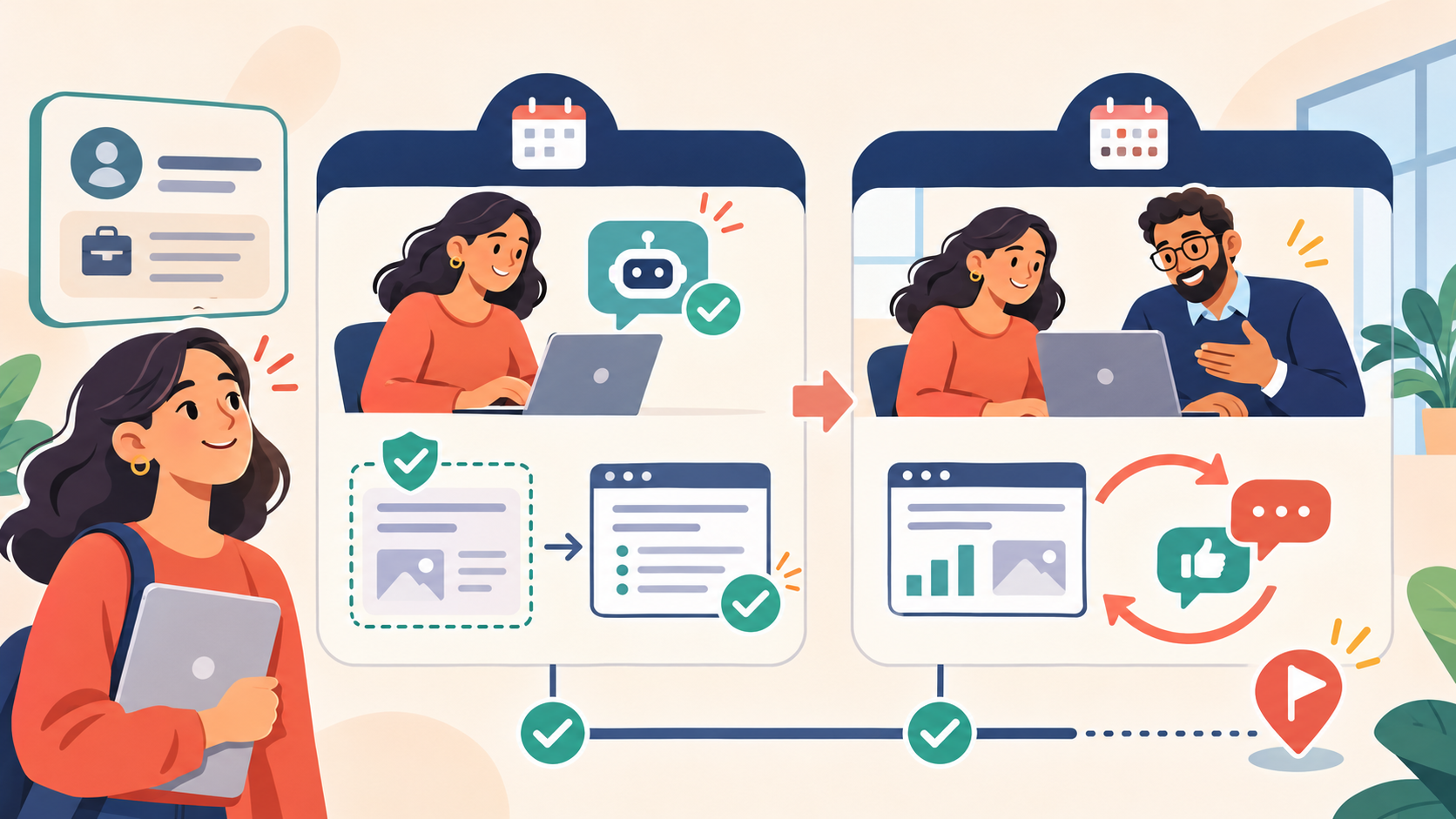
AI Training for Employees: Add Two New-Hire Checkpoints
Build AI training into onboarding with a safe first-week practice and a fresh transfer check after the new hire learns the workflow.