
AI Training for HR: Start With Four Safe Workflows
Design AI training for HR around four useful, low-risk workflows, clear red lines and evidence that people can apply good judgement at work.

AI training for HR should not begin with a tour of every tool. It should begin with work that HR professionals can practise safely, review clearly and use the next day. That means separating low-risk drafting and explanation tasks from employment decisions where errors, bias or weak evidence can materially affect people.
A useful programme teaches four workflows first, each with fictional or approved inputs, a named human reviewer and an explicit red line. The goal is not faster prompting. It is better judgement about what to delegate, what to check and when to stop.
Why AI training for HR needs role-specific boundaries
Article 4 of the EU AI Act requires providers and deployers to take measures, to their best extent, to ensure sufficient AI literacy among staff and others operating AI systems on their behalf, taking account of knowledge, experience, training and the context of use. The European Commission also identifies AI systems used for recruitment as high-risk. In the United States, the EEOC and Department of Justice have warned that AI employment tools can create disability discrimination risks. These are strong reasons to teach context and consequence—not merely features.
Four workflows to teach first
Explain an approved policy
Use a current source pack and fictional employee question. Require section references, uncertainty and escalation for individual advice.
Improve plain-language job copy
Rewrite structure and clarity from an approved role brief. Do not score candidates, infer traits or invent requirements.
Draft onboarding FAQs
Turn approved process documents into draft questions and answers. A process owner verifies every step, owner and link.
Build a learning-plan draft
Use a fictional role and stated goal to suggest practice activities. The learner or manager chooses; AI does not infer performance or potential.
| Safe practice boundary | Red line | |
|---|---|---|
| Policy | Draft an explanation from approved sources | Give individual legal, benefits or employee-relations advice |
| Job copy | Improve clarity and inclusive wording | Rank, screen or profile applicants |
| Onboarding | Draft an FAQ from verified processes | Expose employee records or confidential cases |
| Learning | Suggest practice from an explicit goal | Infer capability, promotion readiness or personality |
| Review | Named human checks before use | Automatic publication or consequential action |
A four-session HR practice plan
Reading is a start. Practice makes it stick.
Start learningSession 1 — Data choices
Practise drop, mask, generalise or route-for-approval decisions on fictional HR inputs. Finish with a one-page data boundary.
Session 2 — Source-grounded drafting
Draft a policy explanation and onboarding FAQ from a small approved pack. Mark every unsupported sentence.
Session 3 — Fairness and human judgement
Rewrite job copy, inspect assumptions and practise refusing a request to rank candidates from weak or sensitive signals.
Session 4 — Transfer to work
Complete one bounded workflow with a reviewer, record corrections and decide whether the workflow is ready, needs redesign or should stop.
Worked exercise: policy explanation without personal data
A 20-minute practice
- 1
Prepare
Provide a two-page fictional leave policy with numbered sections and a fictional question about notice periods.
- 2
Draft
Ask the tool to answer only from the policy, cite section numbers and label anything not covered.
- 3
Plant a trap
Include a tempting but absent exception in the question. The correct behaviour is to say the source does not support it.
- 4
Review
The learner checks each sentence against the policy and records one correction or escalation.
- 5
Transfer
The learner explains what would change before using the method with approved live material.
Evidence that the training worked
- The learner selects an allowed workflow rather than the most impressive one
- They remove or replace unnecessary personal data
- They ask for evidence and check it against the source
- They keep employment decisions with an accountable human
- They can name the red line and escalation route
- They repeat the behaviour in a second, different HR task
Build the programme around existing practice assets
A role-based programme does not need to start from zero. Use Build a Safe AI Practice Sandbox Before Employees Use Live Data for the environment, Build a Prompt Data Boundary Before Work Enters AI for input decisions, and Build an Interview Evidence Scorecard With AI as a carefully bounded hiring exercise. For wider role design, see AI Skills for Employees: A Role-Based Skills Matrix.
Training is not approval
Completing a practice exercise does not authorise a new HR system or use case. Keep tool approval, data protection review, procurement and legal duties in their proper governance routes.
The strongest AI training for HR gives people a small set of useful moves and makes the boundaries memorable. Start with four workflows, practise with safe materials, observe the decisions and transfer one method at a time. Bokili for teams supports that practice model with short, role-specific missions that connect AI skill to real work.
Sources
- Regulation (EU) 2024/1689, Article 4: AI literacy — EUR-Lex
- AI Act enters into force — European Commission
- U.S. EEOC and U.S. Department of Justice Warn against Disability Discrimination — U.S. Equal Employment Opportunity Commission
- Principle (c): Data minimisation — UK Information Commissioner’s Office
- Artificial Intelligence Risk Management Framework: Generative Artificial Intelligence Profile — NIST
Reading is a start. Practice makes it stick.
Bokili turns skills like this into ten-minute missions for your whole team, with instant feedback and progress you can see.
Start learningKeep reading
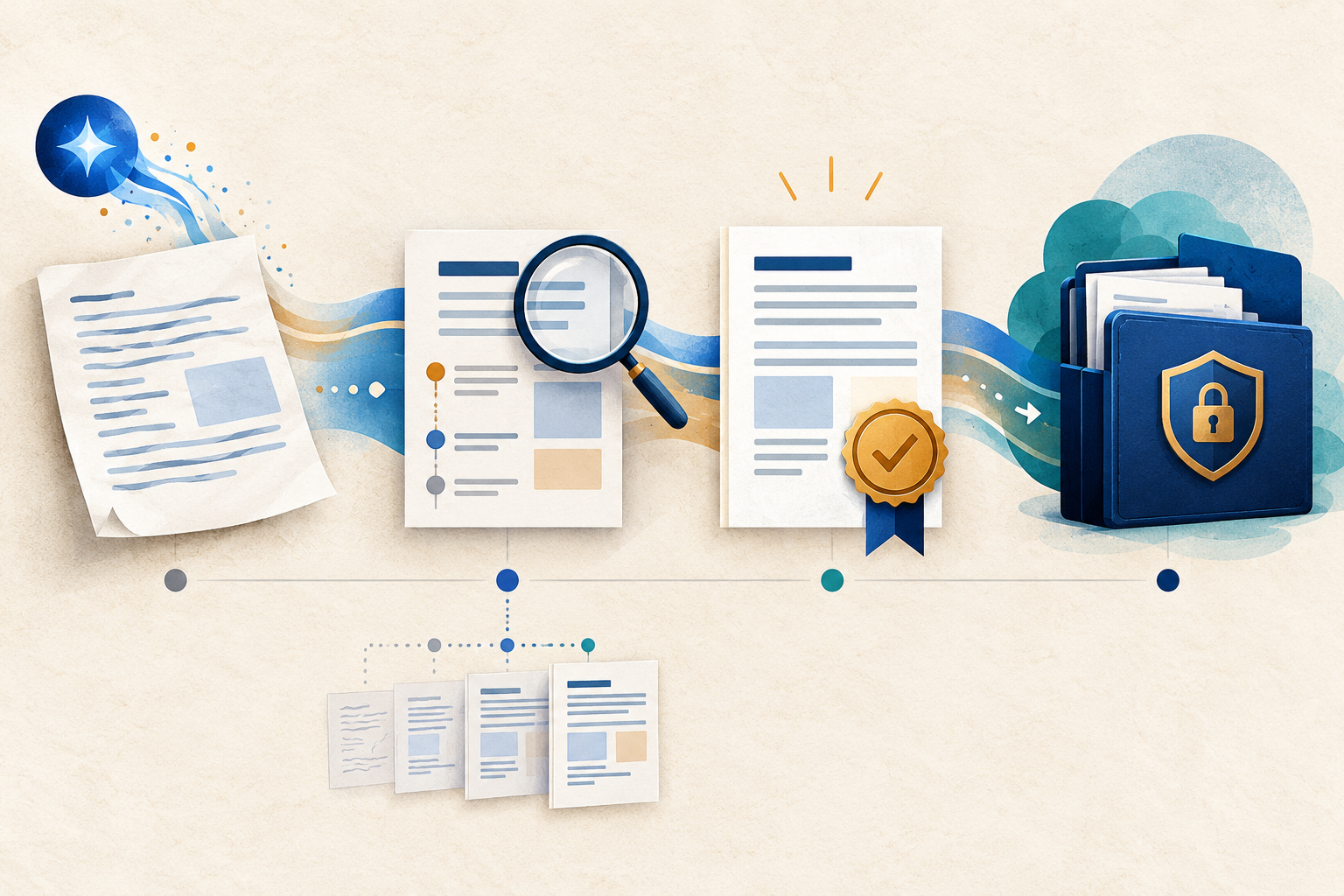
AI Training for Employees: Separate Drafts From Records
Teach a four-state path—Draft, Checked, Approved, Recorded—so polished AI output never becomes organisational fact by accident.
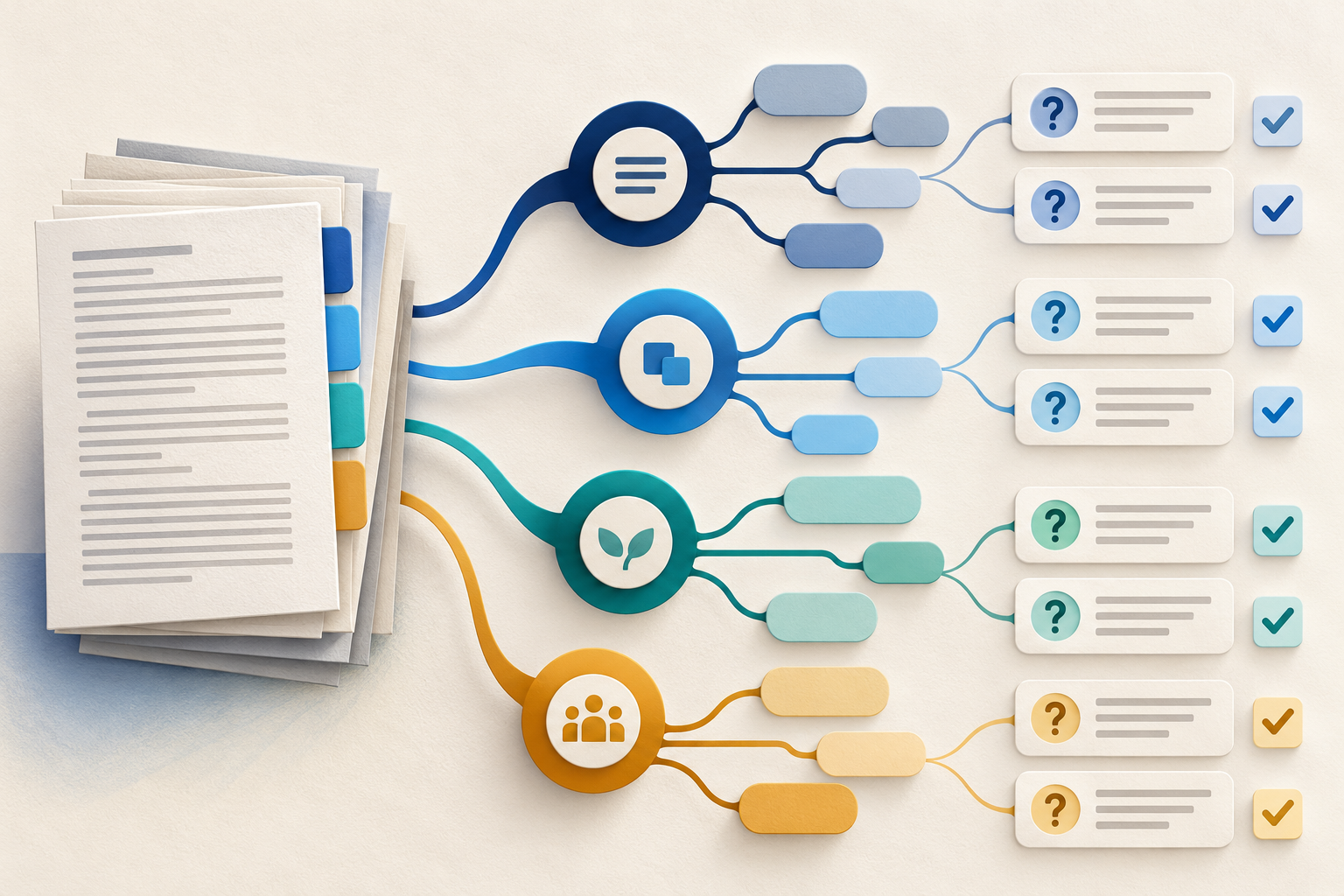
Use Gemini Notebook Mind Maps to Turn Policy Into Questions
Use a Gemini Notebook mind map as a question index for a long policy—then open the cited source before you trust any answer.
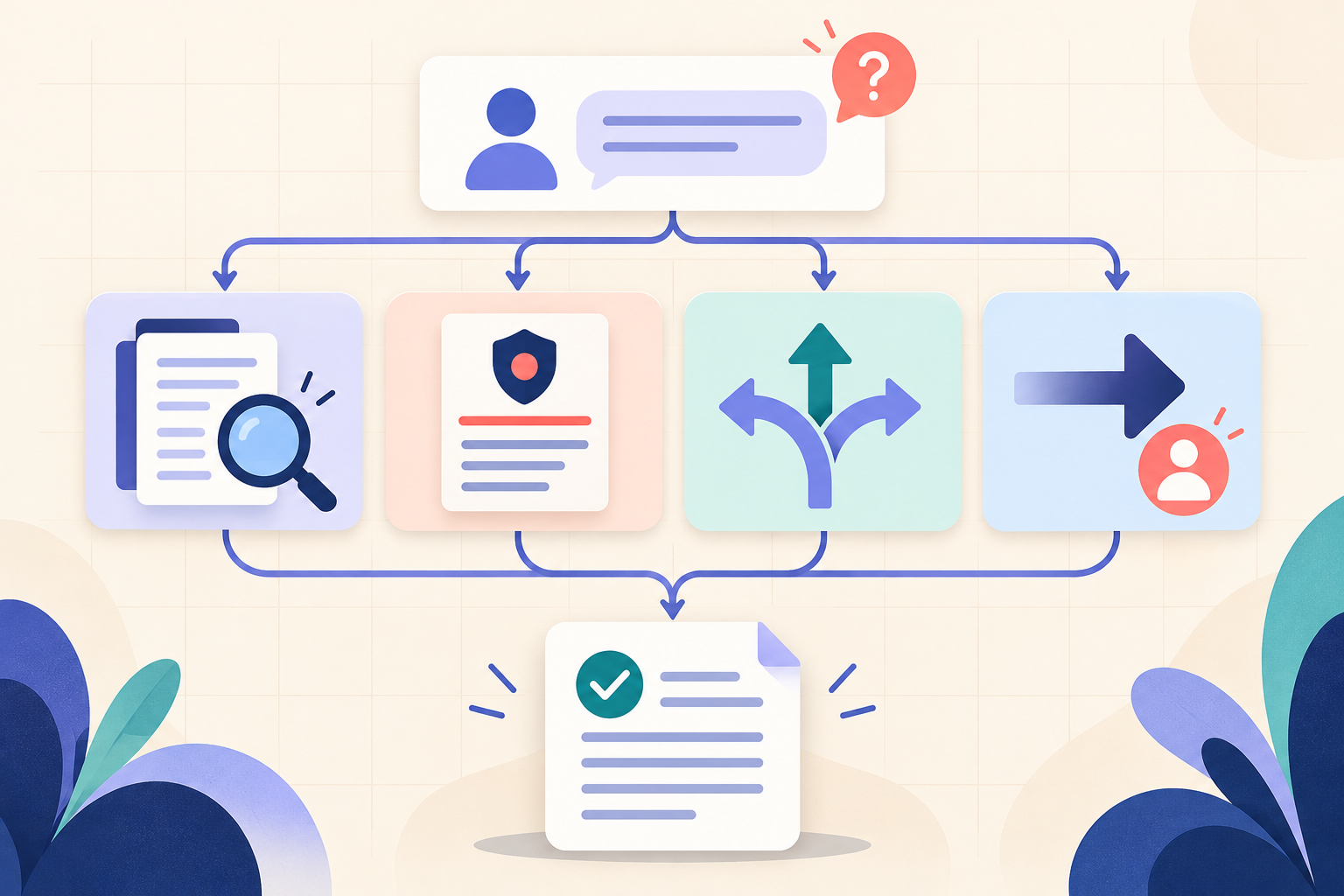
AI Training for HR: Build a Four-Part Policy Answer
Teach HR teams to separate the source, written rule, human discretion and next step before turning an AI draft into employee guidance.