Build an Interview Evidence Scorecard With AI
Use AI to draft consistent interview questions and evidence anchors from a real job analysis—then keep validation and hiring decisions firmly human.
AI can turn a job description into a polished list of interview questions in seconds. That speed is useful—and dangerous. A job description often mixes real requirements, vague ideals and inherited wording. If the source is weak, AI simply makes the weakness look organised.
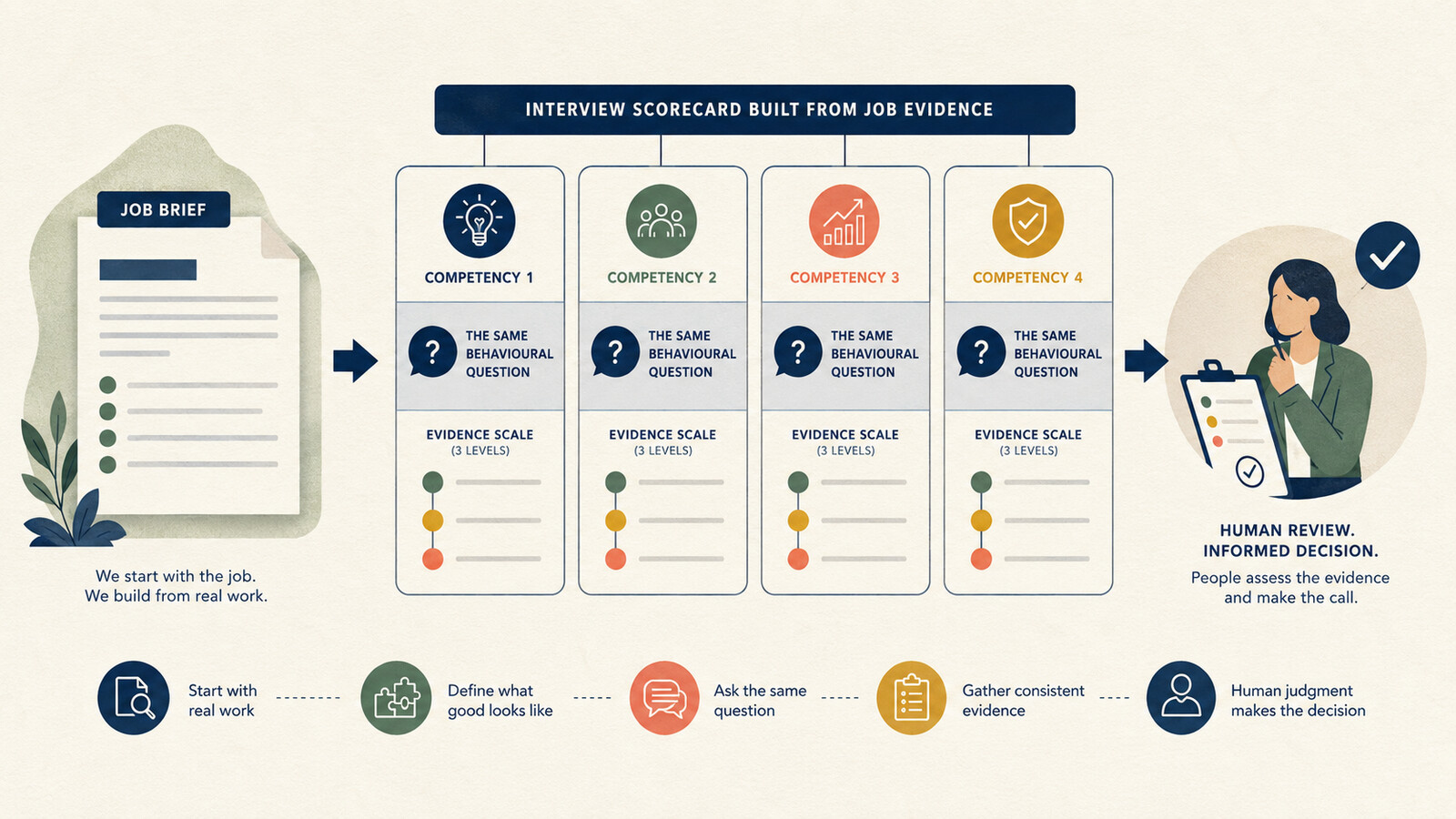
The safer HR workflow is narrower: start from a validated job analysis, use AI to draft a structured scorecard, then have people confirm every competency, question and evidence anchor before interviewing anyone. AI helps with the blank page. It does not select the candidate.
Keep the decision human
Do not ask a general-purpose AI tool to rank candidates, infer traits or make a hiring recommendation. Use it to draft structure from approved job evidence.
Start with the job, not the candidate
The U.S. Office of Personnel Management defines a structured interview as a systematic way to assess job-related competencies using questions about past behaviour or hypothetical situations. Candidates receive the same predetermined questions in the same order, and responses are evaluated against the same scale.
OPM’s guidance says competency selection should begin with job-analysis data, the critical tasks and the capabilities needed on entry, then be confirmed by subject-matter experts. That sequence gives AI a legitimate input. A CV collection or a model’s guess about “ideal personality” does not.
The JOB–QUESTION–EVIDENCE chain
Job evidence
List the critical tasks, outcomes, constraints and entry requirements confirmed by people who know the role.
Question
Draft one behavioural or situational question that gives every candidate a fair chance to show the competency.
Evidence anchors
Describe weak, adequate and strong evidence in observable terms before interviews begin.
Human validation
HR, the hiring manager and relevant specialists approve the wording, accessibility and decision rules.
Worked example: handling a customer trade-off
For a customer success manager, the job analysis may show one critical task: protect a customer relationship while setting a clear boundary when a request conflicts with product policy. “Good communication” is too broad. The scorecard needs observable evidence.
Reading is a start. Practice makes it stick.
Start learning| Anchor | Observable evidence | |
|---|---|---|
| 1 — weak | Mostly asserts or appeases; does not clarify the conflict, policy or next step. | |
| 3 — adequate | Clarifies the request, explains the boundary and offers a workable next step. | |
| 5 — strong | Surfaces the underlying need, states the boundary plainly, offers viable options and confirms ownership and follow-up. |
A behavioural question might be: “Tell us about a time you had to say no to a valuable customer while protecting the relationship. What was the request, what constraint applied, what did you say and what happened next?” The evidence anchors help interviewers listen for the same things. They do not guarantee an unbiased decision; they make the reasoning more explicit and reviewable.
You are helping an HR team draft a structured interview scorecard. Use only the approved job-analysis notes below. Propose four job-related competencies that are required on entry. For each, draft one behavioural question and three observable evidence anchors: weak, adequate and strong. Do not infer personality, culture fit, protected characteristics or candidate suitability. Flag any requirement that is vague or unsupported. Return a draft for human review, not a final assessment tool.

[Paste approved, non-sensitive job-analysis notes]
A table with four competencies, one consistent question per competency, three behaviour-based anchors and a list of unclear source requirements for HR to resolve.
Do not paste candidate records into an unapproved tool. Validate the scorecard with HR, subject-matter experts and appropriate legal or accessibility review.
The validation meeting matters more than the prompt
Review the draft with people
- 1
Confirm job relevance
A subject-matter expert connects each competency to a critical task and removes generic ideals.
- 2
Test the question
Check that candidates from different backgrounds can understand it and show relevant evidence.
- 3
Inspect the anchors
Remove labels about personality. Keep only behaviours and outcomes an interviewer can observe in the answer.
- 4
Plan accommodations
Ensure the process can respond to disability-related needs and does not make the AI-generated format a barrier.
- 5
Calibrate interviewers
Score sample answers independently, compare reasoning and revise anchors that produce inconsistent judgments.
The EEOC maintains guidance on the Americans with Disabilities Act and AI used to assess applicants and employees. The practical lesson reaches beyond one jurisdiction: technology does not remove an employer’s responsibility for the assessment process. Local law and company policy still need qualified review.
Before using the scorecard
- Critical tasks and entry requirements came from a real job analysis.
- Subject-matter experts confirmed the selected competencies.
- Every candidate receives the same core questions.
- Evidence anchors describe observable answers, not personality.
- Accessibility and accommodation routes are clear.
- No general-purpose AI ranks or recommends candidates.
- Interviewers record evidence before discussing an overall view.
- HR retains ownership of the process and decision.
- Choose one critical task from an approved job analysis.
- Write the competency needed to perform it on entry.
- Ask AI for one behavioural question and three evidence anchors.
- Delete every anchor that describes personality or style.
- Ask a role expert what the draft misses.
- Do not use it live until the full process is validated.
Bokili helps HR teams practise safe, concrete AI workflows like this one. The transferable skill is not “generate interview questions”. It is knowing how to constrain the tool, inspect the draft and keep consequential judgement where it belongs.
Sources
- Structured Interviews — U.S. Office of Personnel Management
- How do I select competencies for a structured interview? — U.S. Office of Personnel Management
- Artificial Intelligence and the ADA — U.S. Equal Employment Opportunity Commission
Reading is a start. Practice makes it stick.
Bokili turns skills like this into ten-minute missions for your whole team, with instant feedback and progress you can see.
Start learningKeep reading
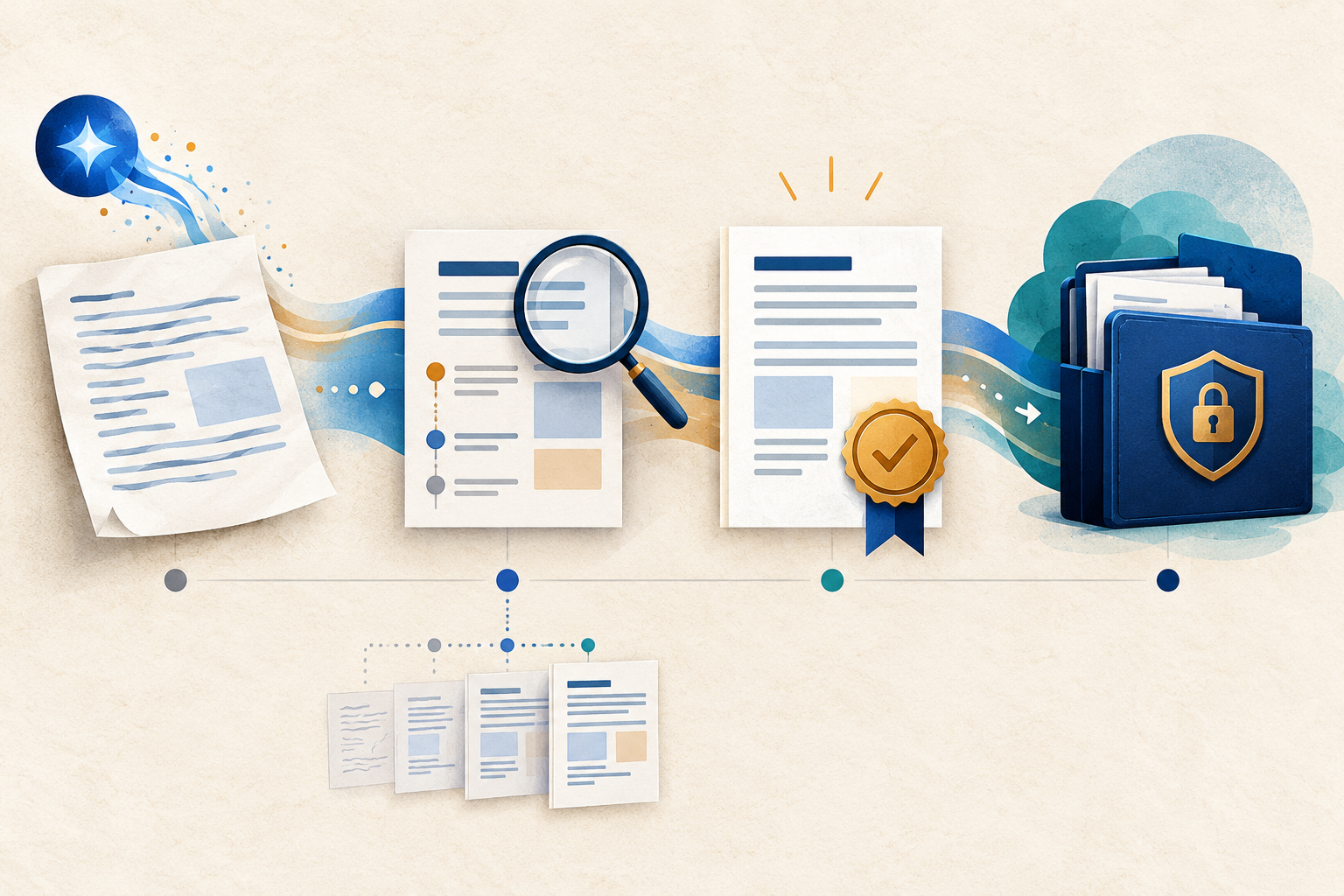
AI Training for Employees: Separate Drafts From Records
Teach a four-state path—Draft, Checked, Approved, Recorded—so polished AI output never becomes organisational fact by accident.
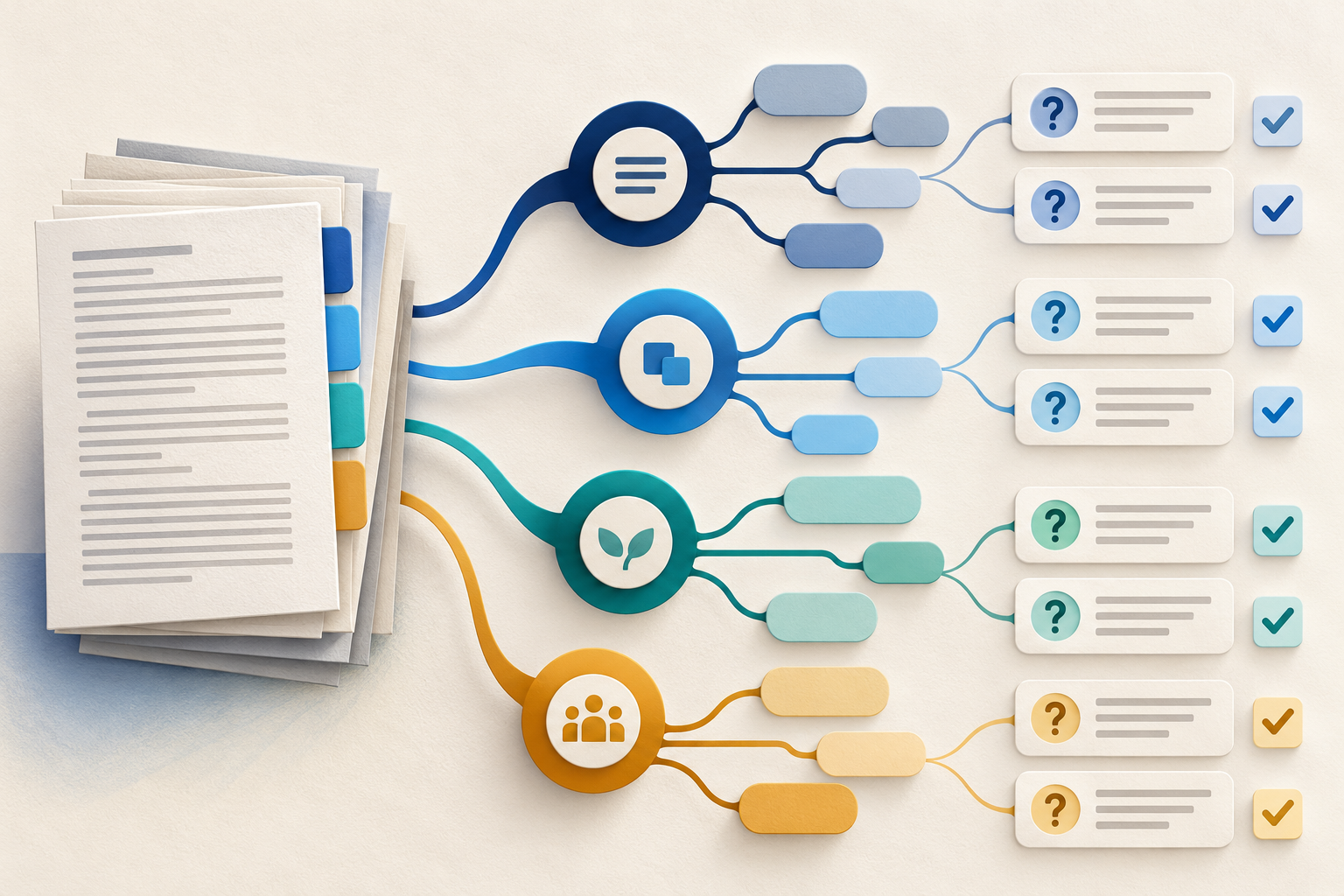
Use Gemini Notebook Mind Maps to Turn Policy Into Questions
Use a Gemini Notebook mind map as a question index for a long policy—then open the cited source before you trust any answer.
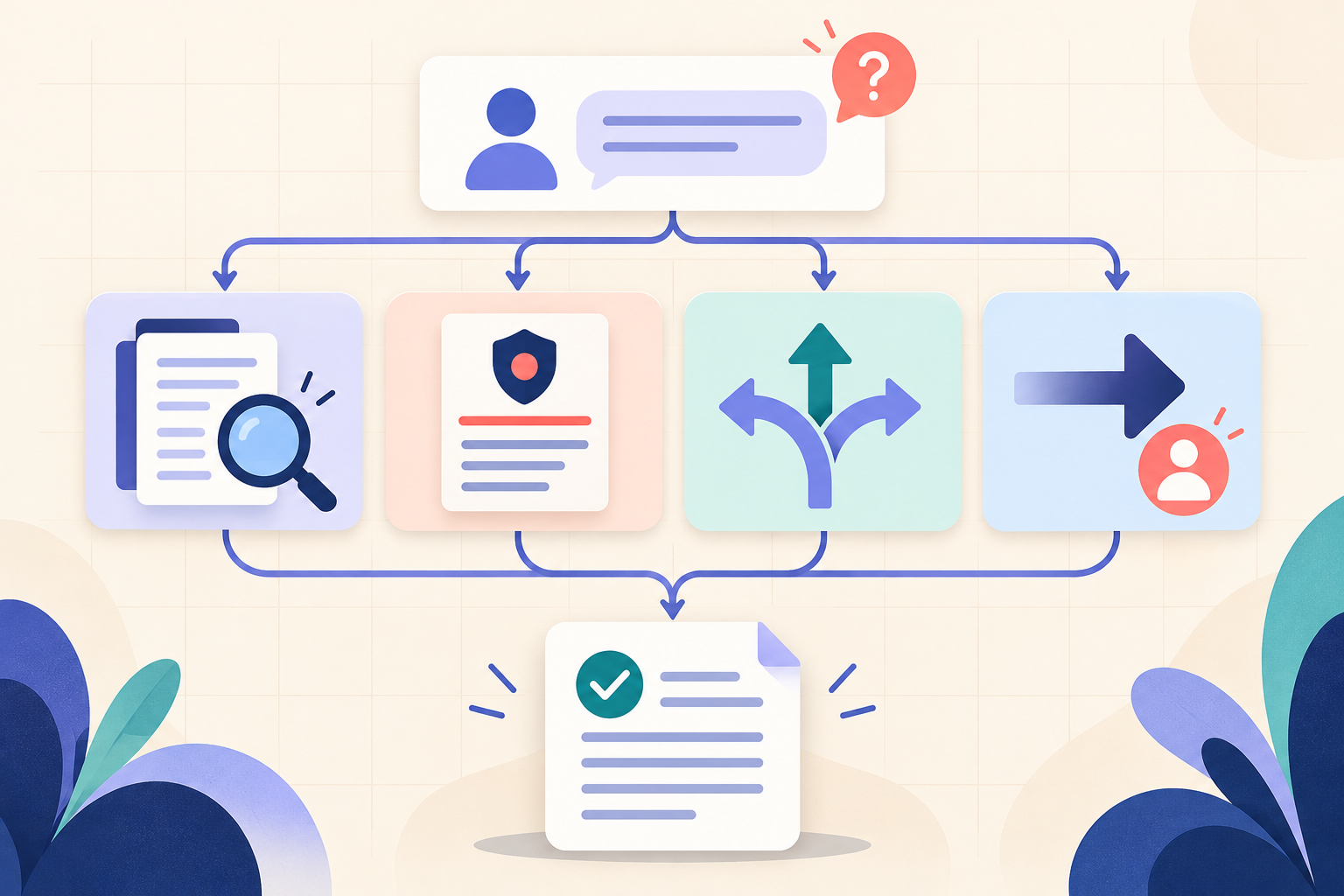
AI Training for HR: Build a Four-Part Policy Answer
Teach HR teams to separate the source, written rule, human discretion and next step before turning an AI draft into employee guidance.