AI Skills for Employees: Turn One Task Into a Fair Goal
Build AI skills for employees with one task, a quality bar, a safety boundary, human review and evidence that supports fair development.

AI skills for employees are hard to develop when the goal is simply “use AI more”. That phrase names neither the work nor the standard. It can reward visible activity while hiding poor inputs, weak checking or tasks that should never have been delegated. A fair development goal starts with one familiar job task and makes success observable without turning people into tool-usage statistics.
This page is for managers, HR partners and employees who need a practical learning objective—not another list of tools. The method links one bounded task to a quality bar, a safety boundary, human review and visible evidence. It works for a short pilot, an individual development plan or a team learning conversation.
Build AI skills for employees around one task
Official guidance points in the same direction. The European Commission says AI-literacy measures should account for people’s technical knowledge, experience, education and training, as well as the context in which AI systems are used. NIST’s human-centred AI Use Taxonomy describes human–AI activity through goals and outcomes rather than a particular technique. Performance-planning guidance from the US Office of Personnel Management recommends expectations that are observable, measurable or demonstrable and co-created with employees.
Together, those ideas suggest a useful rule: define the behaviour in the employee’s context, then choose training and evidence. Do not start with a generic course completion target and hope that work will change.
The TASKS development goal
Task
Name one repeated, low-risk job task the employee already understands. Keep the first scope narrow enough to practise and reverse.
Acceptable quality
Describe what a good result must contain and what errors would make it unusable. Use the same work standard with or without AI.
Safety boundary
State which data, decisions and consequences are outside the exercise. Name the approved tool and the stop condition.
Known reviewer
Choose the person or method that will check the result. The employee should know where human judgement remains essential.
Shown evidence
Specify the small artefact that demonstrates learning: a reviewed draft, source check, revision note and reusable workflow card.
A fair goal is different from an activity target
| Weak activity target | Fair development goal | |
|---|---|---|
| Scope | Use an AI assistant every week | Draft one low-risk customer update from approved notes |
| Quality | Produce content faster | Match every fact to the notes and meet the existing service standard |
| Safety | Follow policy | Exclude personal data and stop if the request affects a customer entitlement |
| Review | Manager checks usage | Named reviewer checks accuracy, tone and missing context |
| Evidence | Login or prompt count | Reviewed output, corrections and a saved method |
The stronger version does not require an employee to use AI when it adds no value. It measures a capability under agreed conditions. That distinction protects fairness: tool access, role relevance and task difficulty can vary across people and teams. A usage count ignores those differences.
Worked example: a customer-support update
Reading is a start. Practice makes it stick.
Start learningMina handles customer-support cases and wants to improve concise written updates. Her manager selects a simulated case with invented details. The task is to turn approved notes into a 120-word update that explains the issue, the action taken and the next step. The assistant may draft; Mina owns the final message.
Mina’s TASKS goal
- Task: draft one simulated customer update from a fixed set of notes.
- Acceptable quality: every date and action matches the notes; tone is clear; no promise is invented.
- Safety boundary: use invented data; stop if the case involves health, legal rights, payment disputes or identity evidence.
- Known reviewer: a support lead checks the first three attempts with the normal quality rubric.
- Shown evidence: keep the final draft, the corrected claims, one useful instruction and the stop condition.
After three attempts, the useful question is not “How often did Mina use AI?” It is “Can Mina produce a checked update, explain the corrections and recognise when the workflow no longer fits?” The answer can lead to coaching, a harder practice task or a decision to keep the work manual.
Write the goal without turning it into surveillance
Fairness and evidence checks
- Co-create the task and confirm that it belongs to the role.
- Provide equal access to the approved tool, instructions and practice time.
- Assess the final work and judgement, not hidden chat volume.
- Collect only the evidence needed for the learning decision.
- Allow an alternative route when accessibility or job context requires it.
- Separate development feedback from disciplinary action unless a clear policy says otherwise.
- Review the goal when the tool, workflow, policy or risk changes.
A development goal should help a person learn. It should not quietly become a proxy for enthusiasm, speed or constant AI use. Keep the evidence small, explain who sees it and delete unnecessary prompt content according to your organisation’s rules.
Connect one goal to a wider learning system
Use the role-based AI skills matrix to choose the behaviour, the guide on measuring AI training beyond completion to design programme evidence, the AI rework ratio to keep correction effort visible and the skills refresh cycle to decide when the goal needs updating. Bokili’s HR and L&D pathway can then supply short, role-relevant practice.
- Choose one repeated task the employee already understands.
- Write the existing quality standard in one sentence.
- Name the approved tool, safe input and stop condition.
- Choose who will review the first attempt and what they will check.
- Name the smallest artefact that can demonstrate learning.
- Read the goal with the employee and revise anything outside their control.
Strong AI skills for employees become visible in bounded work: a suitable task, a quality result, a respected boundary, a human check and evidence that supports the next learning decision. Start with one task. Make the standard clear. Let practice—not activity theatre—show what comes next.
Sources
- AI literacy – questions and answers — European Commission
- AI Use Taxonomy: A Human-Centered Approach — NIST
- Performance Management and Accountability Playbook – Planning — U.S. Office of Personnel Management
- AI training for HR and L&D leaders — Bokili
Reading is a start. Practice makes it stick.
Bokili turns skills like this into ten-minute missions for your whole team, with instant feedback and progress you can see.
Start learningKeep reading
AI Training for Employees: Separate Drafts From Records
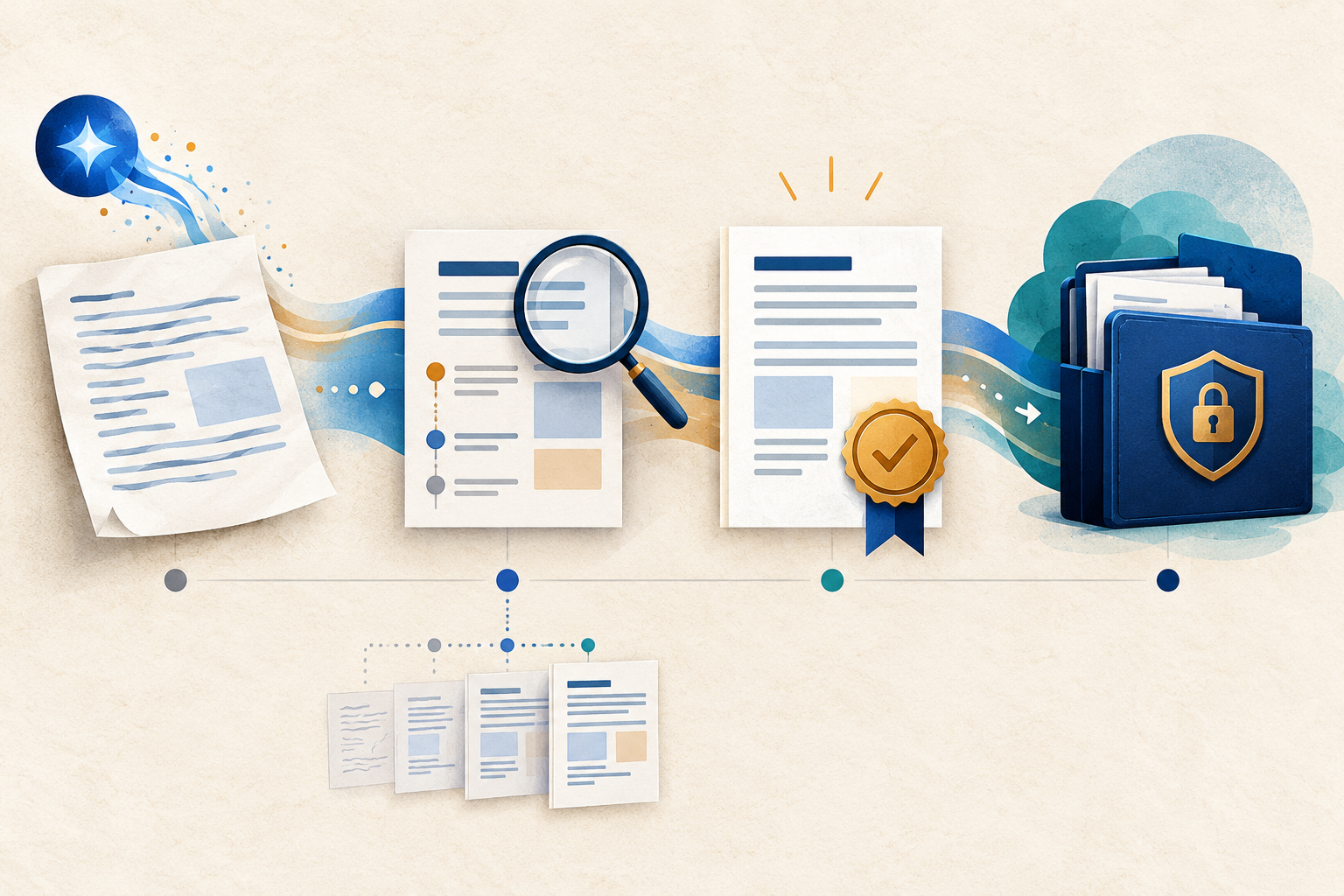
Teach a four-state path—Draft, Checked, Approved, Recorded—so polished AI output never becomes organisational fact by accident.
Use Gemini Notebook Mind Maps to Turn Policy Into Questions
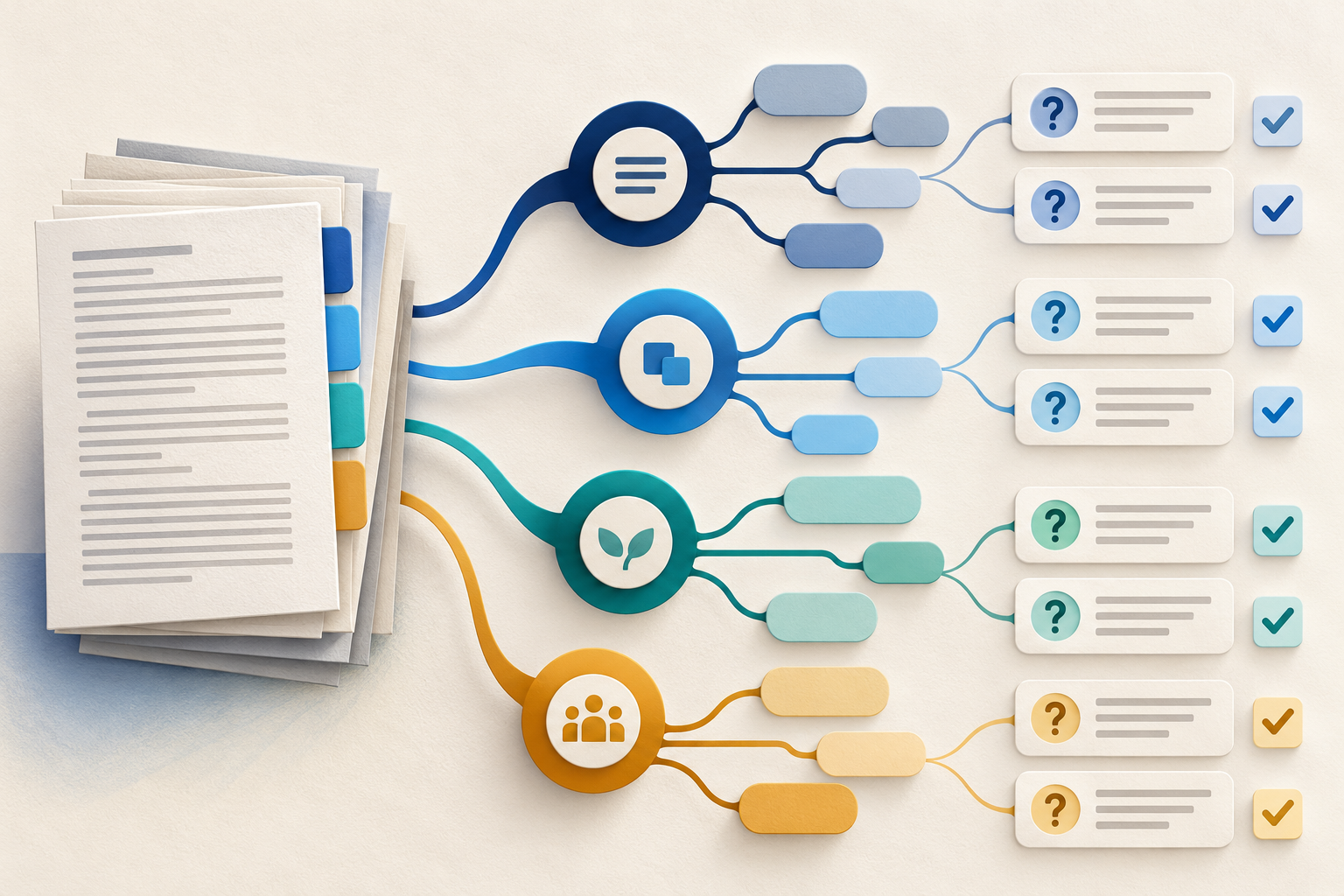
Use a Gemini Notebook mind map as a question index for a long policy—then open the cited source before you trust any answer.
AI Training for HR: Build a Four-Part Policy Answer
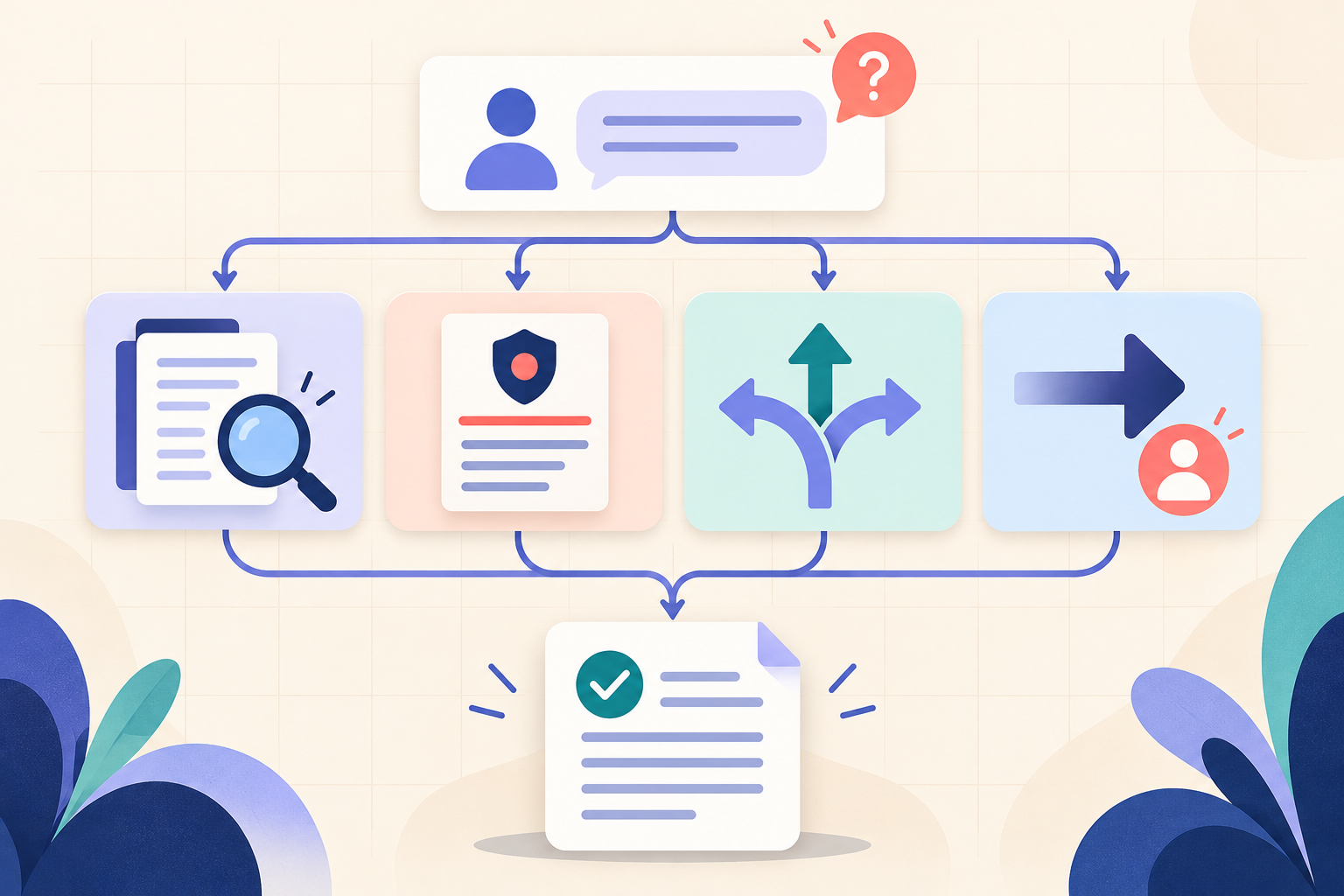
Teach HR teams to separate the source, written rule, human discretion and next step before turning an AI draft into employee guidance.