
The AI Rework Ratio: Measure What Time-Saved Claims Miss
A simple workflow metric reveals whether AI output is accepted, corrected or returned—and whether gross time saved survives human review.

An AI pilot can look efficient while quietly moving work downstream. A draft appears in seconds, but someone then checks every claim, repairs the structure and rewrites the sensitive parts. If the dashboard records only generation time, it treats that hidden correction work as free.
The AI Rework Ratio fixes that blind spot. It measures the share of AI-assisted outputs that cannot be used as produced. The point is not to punish imperfect tools. It is to decide which workflows deserve investment, which need tighter instructions, and which should remain human-led.
Gross time saved is not net value
A 2025 UK Department for Work and Pensions evaluation of Microsoft 365 Copilot found an estimated average saving of 19 minutes per user per day, while also stressing that users applied editorial judgement to ensure accuracy and appropriateness. That combination matters: speed and oversight belong in the same measurement model. NIST’s AI Risk Management Framework likewise treats measurement, monitoring and evaluation as part of managing AI in context—not as a one-off launch test.
The ACCEPT ledger
Accepted
The output moves into the next step with only normal proofreading. Record the task and review minutes.
Corrected
The output is usable after material edits. Record the edit minutes and one reason code, such as missing evidence or wrong tone.
Escalated
A reviewer needs specialist, legal, security or managerial input before the work can continue.
Pulled back
The output is rejected or the task returns to a human-first method because repair would cost more than starting again.
Calculate the ratio at workflow level
Do not combine every AI task into one company-wide number. A meeting summary and a supplier-risk decision have different consequences and review needs. Measure one repeatable workflow for two to four weeks. Use the same definition of a completed output, the same reviewers where practical, and a small set of reason codes.
Reading is a start. Practice makes it stick.
Start learningWorked example: 40 first-draft client emails
- 1
Count outcomes
Twenty-four drafts are accepted, twelve need material correction, two are escalated and two are pulled back.
- 2
Calculate rework
Treat corrected, escalated and pulled-back outputs as rework: 16 divided by 40 gives a 40% rework ratio.
- 3
Add review cost
The team spends 160 minutes reviewing accepted drafts and 300 minutes repairing or resolving the rest. Generation time alone would miss most of this effort.
- 4
Choose the next move
The reason codes show that nine of the twelve corrections concern unsupported promises. The team adds an evidence-only rule and a final claim check, then measures the next 40 drafts.
| Weak pilot metric | Decision-ready metric | |
|---|---|---|
| Speed | Seconds to first draft | Minutes from request to approved output |
| Quality | Reviewer impression | Accepted, corrected, escalated or pulled back |
| Cost | Licence price | Licence, review, repair and escalation time |
| Learning | Prompt tips collected | Reason codes reduced in the next sample |
| Decision | People liked it | Scale, redesign, restrict or stop the workflow |
Use the number to improve work, not rank people
The ratio belongs to the workflow, not the employee. A high result may reveal a poor template, weak source material, unclear policy or an unsuitable task. Ranking individuals by rework would encourage under-reporting and make the measure less trustworthy. Pair the ratio with a short review of error severity: ten harmless tone edits are not equivalent to one fabricated compliance statement.
- Choose one recurring AI-assisted output with a clear human approver.
- Create four outcome columns: accepted, corrected, escalated and pulled back.
- Add review minutes and one reason code for each item.
- Set a sample size before judging the workflow; 20 to 50 outputs is a useful operational starting point, not a universal benchmark.
- Agree the decision you will make after the sample: scale, redesign, restrict or stop.
Do not turn a local measure into a universal benchmark
A rework ratio is meaningful only beside the task, consequence, review standard and sample period. Compare the workflow with its own next iteration, not with an unrelated team.
AI value survives only after review work is counted. Start with one ledger, one workflow and one improvement cycle. Bokili helps teams practise the checking and escalation behaviours behind those numbers, so measurement leads to better work rather than a prettier dashboard.
Sources
- Artificial Intelligence Risk Management Framework: Generative Artificial Intelligence Profile — NIST
- NIST AI RMF Playbook — NIST
- An Evaluation of DWP’s Microsoft 365 Copilot Trial — UK Department for Work and Pensions
- New Guidance for Evaluating the Impact of AI Tools — UK Evaluation Task Force
Reading is a start. Practice makes it stick.
Bokili turns skills like this into ten-minute missions for your whole team, with instant feedback and progress you can see.
Start learningKeep reading

AI Training for Employees: Separate Drafts From Records
Teach a four-state path—Draft, Checked, Approved, Recorded—so polished AI output never becomes organisational fact by accident.
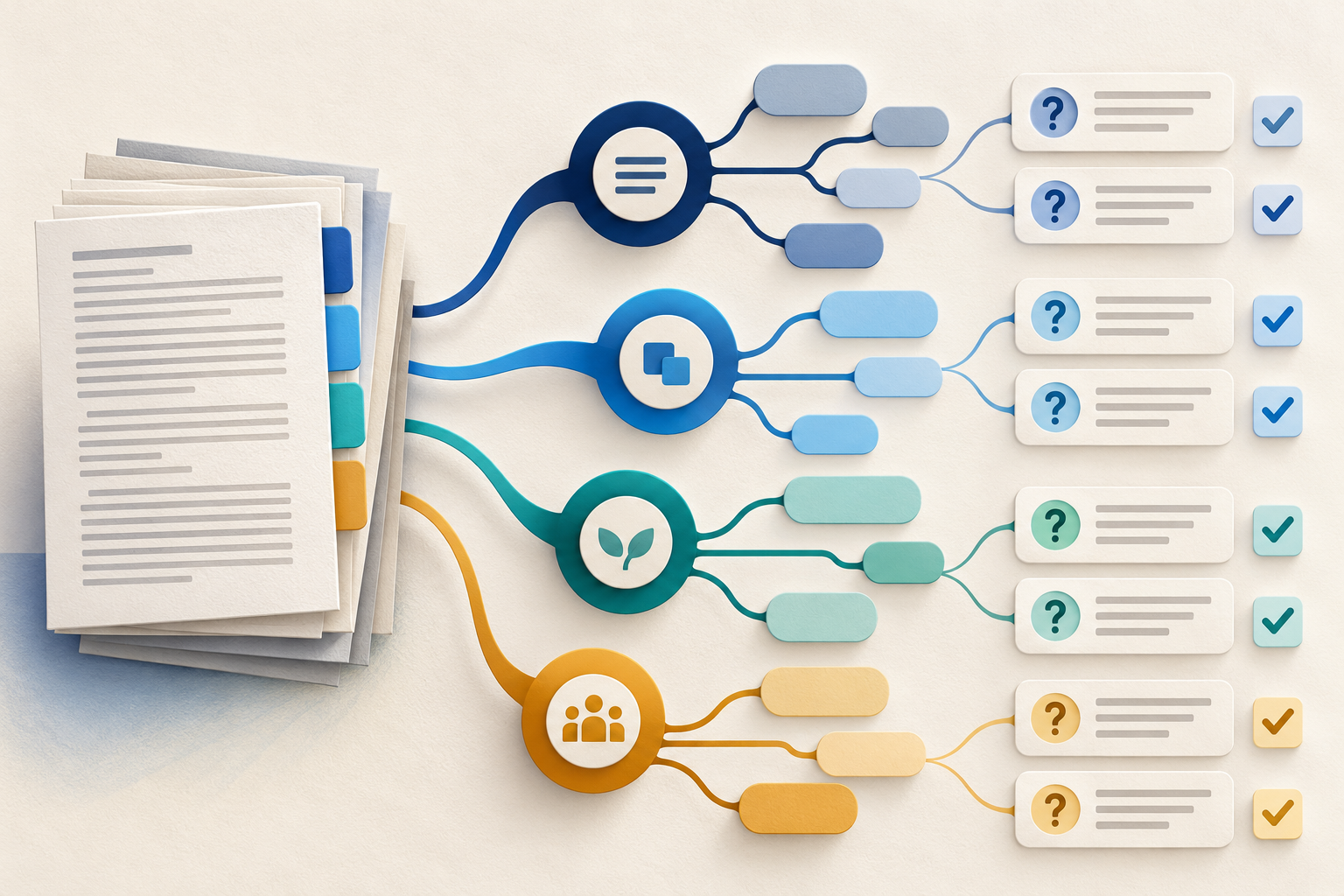
Use Gemini Notebook Mind Maps to Turn Policy Into Questions
Use a Gemini Notebook mind map as a question index for a long policy—then open the cited source before you trust any answer.
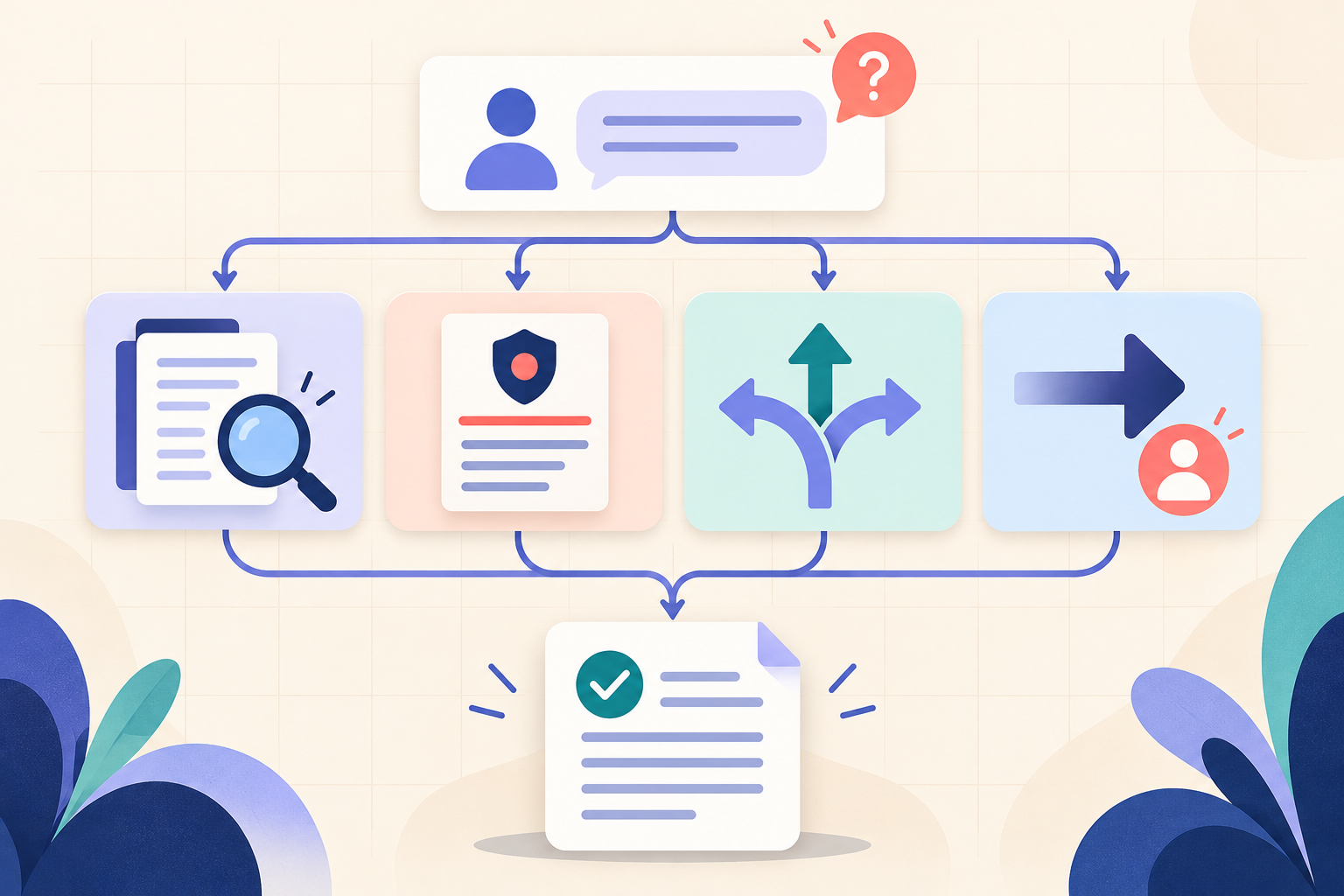
AI Training for HR: Build a Four-Part Policy Answer
Teach HR teams to separate the source, written rule, human discretion and next step before turning an AI draft into employee guidance.