
Use AI to Prepare a Sales Discovery Brief Without Turning Guesses Into Facts
Build an evidence-first sales discovery brief that separates verified account facts, working hypotheses, open questions and follow-up owners.

A sales discovery brief should help a seller enter a conversation with useful context, not a rehearsed conclusion. AI can organise public account information, approved CRM notes and a clear meeting objective quickly. It can also turn a weak signal into a confident claim, merge two sources that do not quite agree or invent a plausible priority. The safest workflow is therefore not “ask for an account summary”. It is to make four different things visible: verified evidence, working hypotheses, open questions and the person who owns each follow-up.
The sales problem is not too little information
Before a discovery call, sellers often have more material than they can use: company pages, annual reports, previous emails, call notes and CRM fields. A fluent AI summary can compress that material, but compression also hides status. A published strategy is evidence. A recent job advert may support a hypothesis. A comment from one contact may need context. A blank CRM field is not permission to guess.
NIST lists confabulation among the risks specific to generative AI and recommends risk management across the way systems are used and evaluated. The UK Government AI Playbook gives a practical parallel: test outputs against existing knowledge, identify the source data and treat the result as an informed guess rather than a fact. For a seller, those principles become a better preparation habit: keep the source boundary visible until a person confirms the meaning.
Build the EHQO discovery brief
EHQO: four lanes before the meeting
Evidence
A statement supported directly by an approved source. Record the source, date and exact scope.
Hypothesis
A plausible interpretation worth testing. State what evidence would confirm or weaken it.
Question
A discovery question that can resolve a material gap. Prefer one precise question to a generic prompt for priorities.
Owner
The person responsible for checking the source, asking the question or updating the record after the call.
The lanes are deliberately asymmetric. Evidence may move into a meeting brief after checking. A hypothesis must remain labelled until the customer confirms it. A question earns its place only when the answer could change the next step. An owner prevents an unresolved item from dissolving into another polished paragraph.
A repeatable AI workflow for sales discovery
From source pack to discovery brief
- 1
1. Set the meeting decision
Name what this conversation must clarify: fit, urgency, stakeholders, process or the next agreed action.
- 2
2. Prepare an approved source pack
Use only information your organisation permits. Remove unnecessary personal data and note the date and origin of each item.
- 3
3. Ask AI to classify, not conclude
Require separate evidence, hypothesis, question and owner fields. Tell the tool not to fill missing facts.
- 4
4. Trace the decisive claims
Open the source behind every statement that could change the conversation. Downgrade unsupported claims to hypotheses or questions.
- 5
5. Rehearse and update
Choose three questions, run the meeting, then record what the customer confirmed, corrected or left open.
Data discipline matters in sales because account material can include personal and commercially sensitive information. The ICO’s AI guidance emphasises appropriate security for personal data and a holistic view of the surrounding workflow. Use the approved system, minimise the input and avoid copying a live CRM export into an unapproved tool. The method still works with a fictional or deliberately limited practice pack.
Reading is a start. Practice makes it stick.
Start learningPrompt for an evidence-first sales discovery brief
Help me prepare for a sales discovery meeting.

Meeting objective: [one decision or uncertainty].
Audience: [roles attending].
Approved source pack: [paste only approved, necessary material with source labels and dates].

Create four sections: EVIDENCE, HYPOTHESES, QUESTIONS and OWNERS.
- Evidence must quote or closely point to a supplied source and include its label and date.
- Hypotheses must be clearly marked and include what would confirm or weaken them.
- Questions must resolve a material gap; do not write generic rapport questions.
- Owners must name who checks or follows up; use [UNASSIGNED] when unknown.
Do not infer priorities, budget, authority or timing from silence. Finish with the three questions most likely to change the next step.
A compact brief in which every useful point has a visible status and every material gap becomes a question rather than a guess.
Use fictional or approved information and follow your organisation’s data, CRM and AI policies.
Worked example: from a weak signal to a useful question
Imagine a seller preparing for a discovery call with a midsize logistics company. The public annual report says the company is consolidating regional operations. A job advert mentions data-quality work. An old CRM note says a contact complained about manual hand-offs six months ago. None of that proves the buyer wants an AI project.
The brief records the consolidation statement as evidence, with the report date. It treats “data quality may be slowing consolidation” as a hypothesis. It turns the old CRM comment into a question: “Which hand-offs create the most rework today, and what evidence do you use to spot it?” The account executive owns that question; an operations specialist owns the check on the public report. The team enters the call prepared, but the customer still defines the problem.
Verify the brief before anyone uses it
- Every evidence claim points to an approved source and date.
- Every interpretation is labelled as a hypothesis, not presented as customer intent.
- No question contains its preferred answer.
- The brief excludes unnecessary personal or confidential data.
- The meeting objective and three priority questions are clear.
- Each unresolved check has an owner.
This workflow complements Bokili’s role-based AI skills matrix, assumption log and definition-of-done guide: https://bokili.com/en/learn/ai-skills-for-employees-matrix, https://bokili.com/en/learn/ai-recommendation-assumption-log and https://bokili.com/en/learn/define-done-before-ai-delegation. Together they turn preparation from a summary task into visible judgement.
- Choose a low-risk fictional account and write one meeting objective.
- Add three short source notes with labels and dates.
- Run the prompt and move every unsupported statement into Hypotheses or Questions.
- Open the source behind the two claims that would most change the call.
- Assign an owner to every remaining gap and select three discovery questions.
Let the customer supply the certainty
AI is useful before a discovery meeting when it helps a seller see what is known, what is only plausible and what still needs to be asked. It becomes harmful when preparation hardens into a fictional account story. Keep the four lanes visible, verify the decisive evidence and carry open questions into the conversation. Bokili’s short role-based missions can help teams practise the same judgement with realistic, safe scenarios and feedback before they use it on live work.
Sources
- Artificial Intelligence Risk Management Framework: Generative Artificial Intelligence Profile — National Institute of Standards and Technology
- Artificial Intelligence Playbook for the UK Government — UK Government
- How should we assess security and data minimisation in AI? — Information Commissioner's Office
Reading is a start. Practice makes it stick.
Bokili turns skills like this into ten-minute missions for your whole team, with instant feedback and progress you can see.
Start learningKeep reading
AI Training for Employees: Practise the Sharing Decision
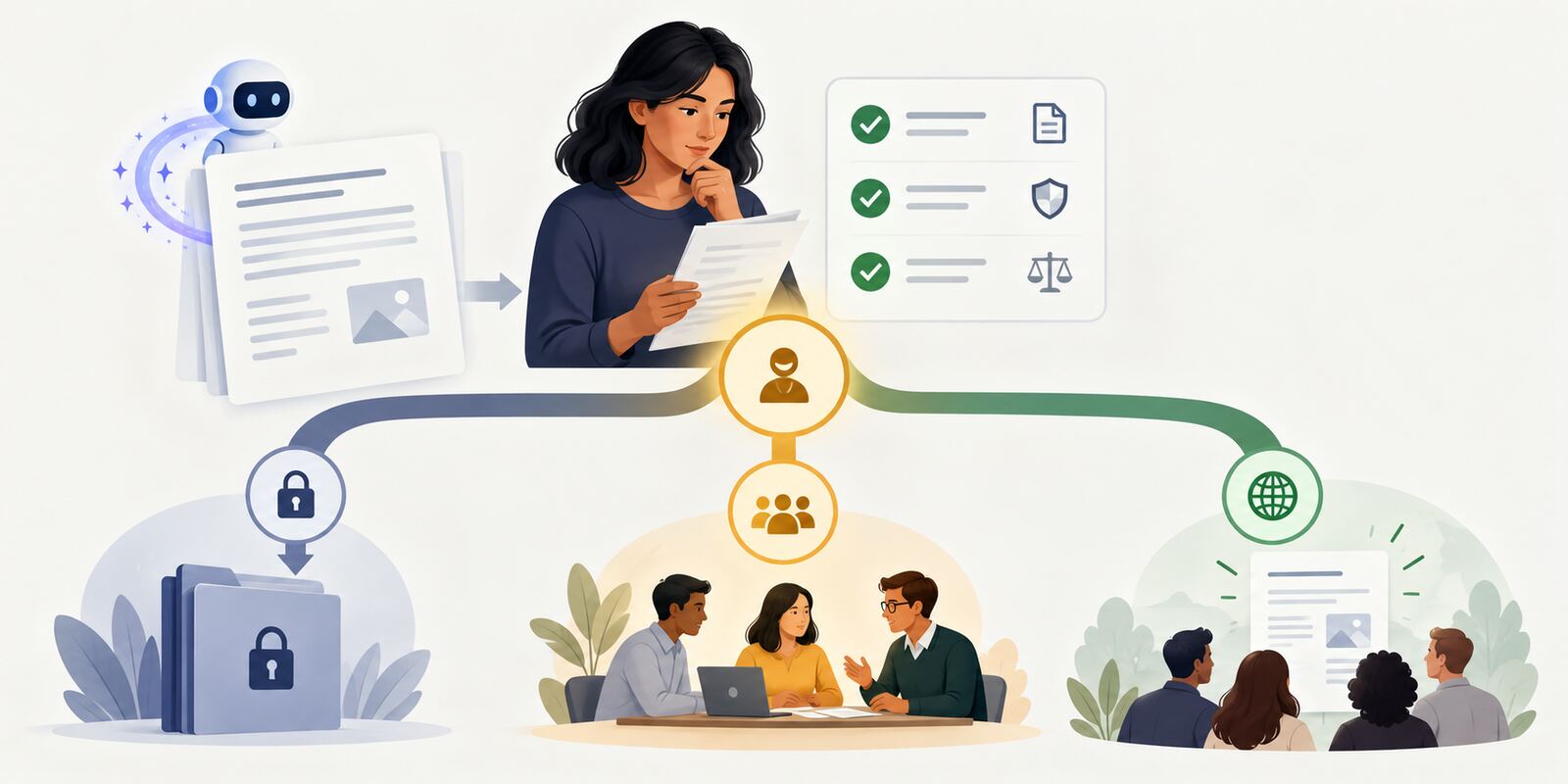
Add a release gate to AI training for employees so a checked output stays private, goes to review or reaches the right audience with approval.
AI Upskilling for Teams: Use a Teach-Back Test
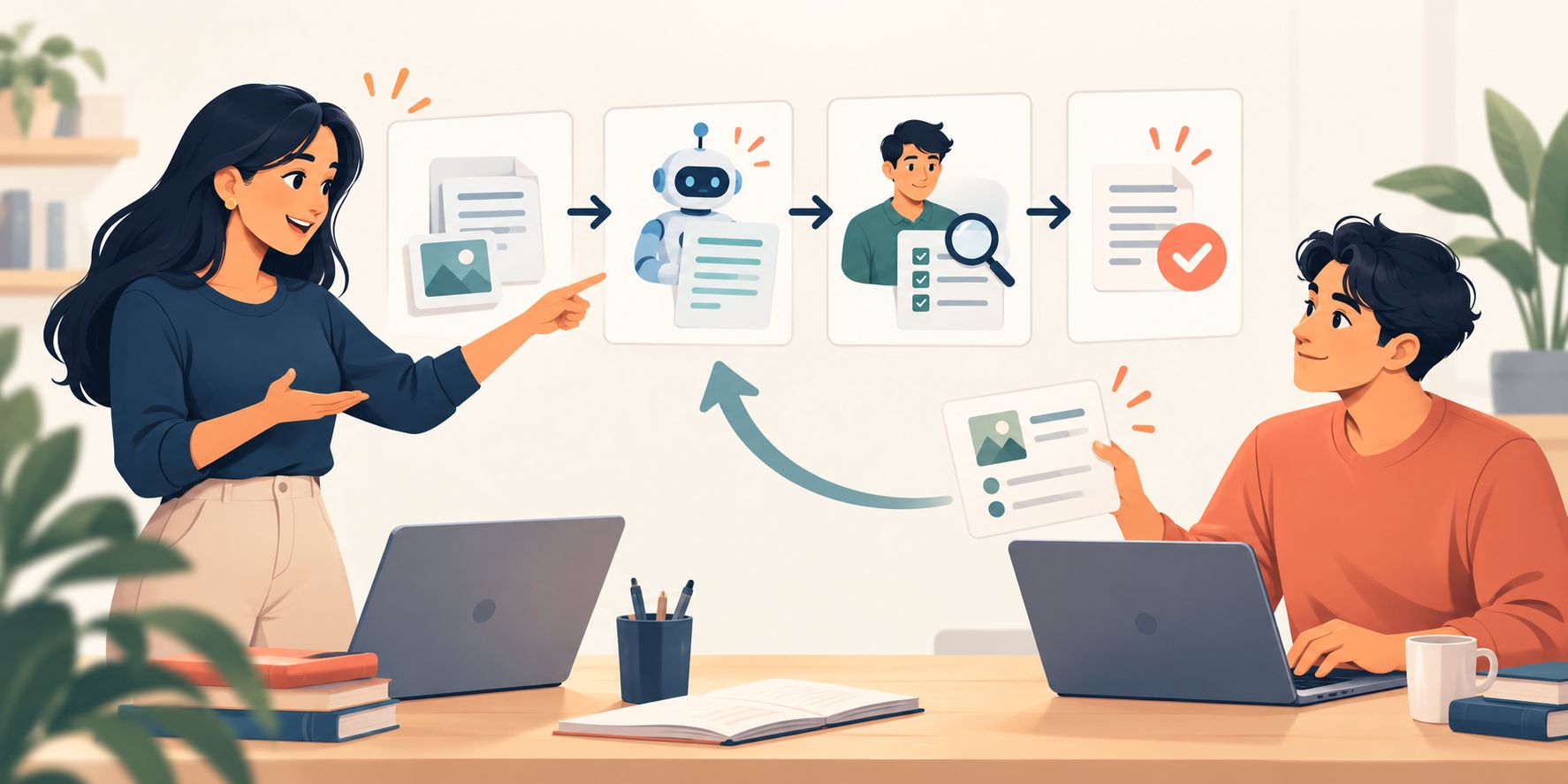
Turn one completed AI lesson into shared working knowledge: explain the method in plain language, then let a colleague apply it to a fresh case.
After AI Automation, Audit the Cases That Passed
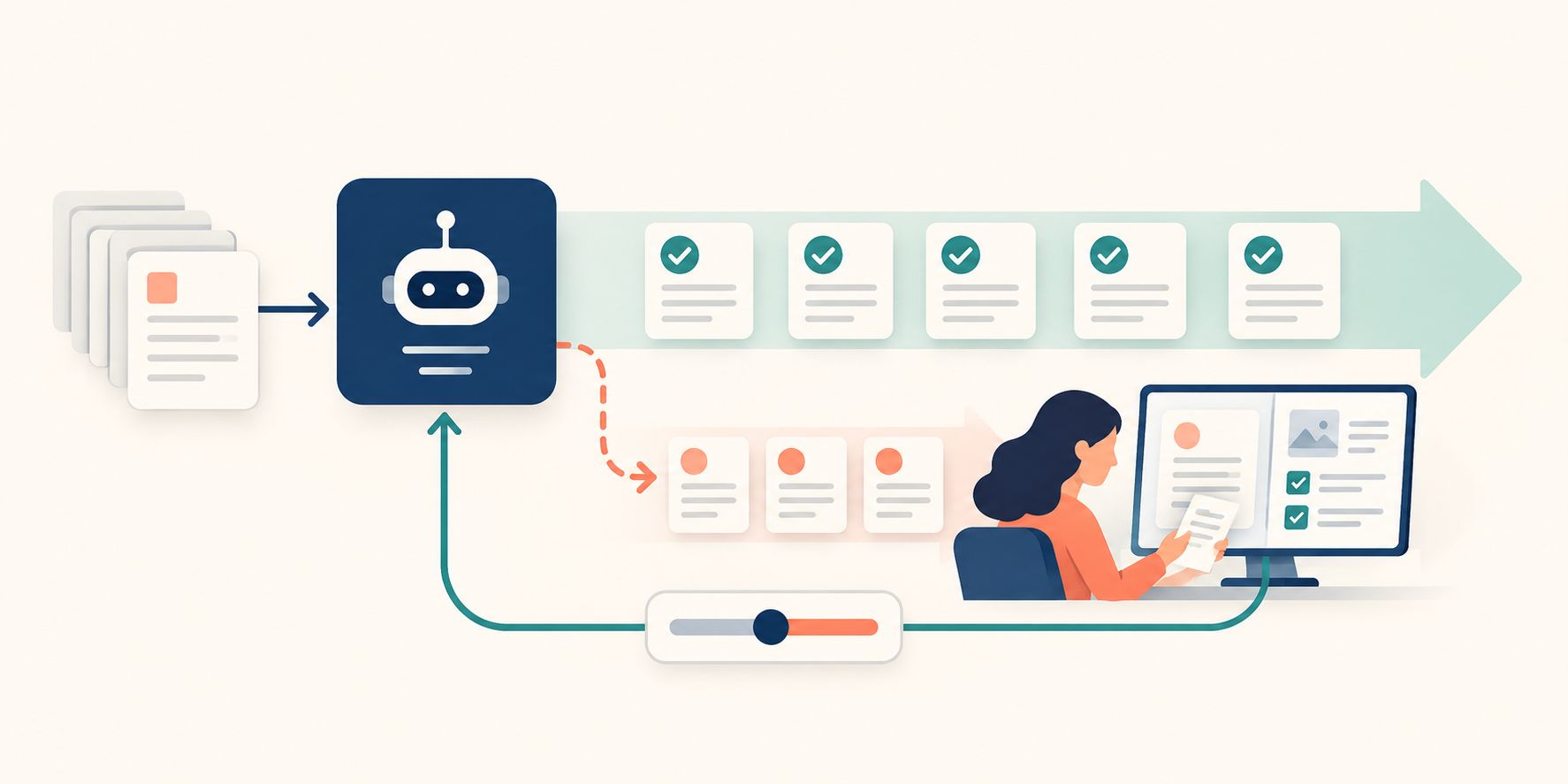
Exceptions show visible failures. A small, risk-based sample of accepted cases can reveal silent ones and feed better thresholds, controls and training.