AI Learning and Development: Turn Requests Into Practice Briefs
AI learning and development works better when a vague tool-training request becomes a brief with a work outcome, role, boundaries, evidence and follow-up.

AI learning and development requests often arrive as tool names: “run a Copilot workshop”, “teach the team ChatGPT” or “give everyone an AI course”. Those requests sound specific, but they omit the work that should improve, the people who will perform it and the evidence that would show useful skill.
Before choosing content or a provider, turn the request into a practice brief. Define the business outcome, the role, the safe inputs, the evidence and the follow-up. The brief does not make the programme larger. It makes the learning job visible.
AI learning and development should begin with the work gap
The US Office of Personnel Management describes a training needs assessment as the gap between required and current performance. Its guidance starts with desired outcomes and critical behaviours, then asks whether training is the right solution and how the behaviour will be monitored. That sequence matters for AI because a tool request can hide a process, policy, access or management problem.
NIST’s human-centred AI Use Taxonomy gives organisations a consistent way to describe what people are doing with AI, while the European Commission’s current AI-literacy guidance says learning measures should reflect people’s knowledge, experience and the context and purpose of the systems used. Together, those principles point away from generic feature tours and towards role-specific practice.
Tool request
- “Train sales on Copilot”
- Audience is a department
- Success means attendance
- Follow-up is unspecified
Practice brief
- Improve one weekly account-planning task
- Audience is the role performing and reviewing it
- Success is an observable work sample
- Follow-up is the next real use plus feedback
Use the BRIEF intake method
BRIEF: five fields before content is chosen
B — Business outcome
Name the work result that should improve: a faster first draft, clearer evidence, fewer avoidable omissions or a safer decision hand-off.
R — Role and moment
Specify who performs the task, who reviews it and when the skill appears in the real workflow.
I — Inputs and boundaries
List approved inputs, prohibited data, available tools and any source or policy that must govern the task.
E — Evidence of skill
Define an observable sample, decision, refusal, correction or escalation that would show the learner can act—not merely recall.
F — Follow-up practice
Place the next attempt in the calendar, name the feedback source and decide what result should trigger more support.
BRIEF is an intake tool, not a complete curriculum. It is designed to stop premature decisions about course length, modules or delivery. Once the five fields are clear, L&D can decide whether the answer is a short practice session, manager guidance, a policy clarification, workflow redesign or a combination.
Worked example: from “Copilot training” to a work sample
Reading is a start. Practice makes it stick.
Start learningA sales director asks for a two-hour Copilot workshop for 60 people. The proposed reason is simple: licences have been assigned but use is uneven. That is an adoption signal, not yet a learning need. An L&D partner runs a 20-minute intake with one sales manager and one representative user.
The business outcome becomes: prepare a useful Monday account plan in less setup time without inventing customer facts. The role is an account manager; the reviewer is the team lead. Inputs are an approved fictional CRM extract, last week’s actions and the internal account-plan template. The boundaries prohibit real customer data in the practice environment and require every material statement to point back to an input.
The evidence is a fresh account plan that separates facts, assumptions and open questions, then assigns owners to the next actions. The follow-up is a second attempt during the next team meeting using a different fictional account. A manager gives feedback against four observable checks. The organisation can now choose a focused practice session rather than filling two hours with unrelated features.
Turn a request into a decision
- 1
1. Repeat the request without the tool name
Ask what work should change if the learning succeeds.
- 2
2. Observe one current attempt
Use a safe example to find the real gap: framing, inputs, verification, judgement, hand-off or something outside training.
- 3
3. Complete BRIEF
Write one sentence for each field. Reject broad audiences and vague outcomes.
- 4
4. Choose the smallest intervention
Select practice, guidance, manager support, access changes or process repair according to the cause.
- 5
5. Book the second attempt
Do not end at delivery. Place a fresh work sample and feedback moment into the workflow.
Check whether training is actually the answer
A good intake can reveal that people already have the skill but lack approved access, current source material, time, a reviewer or permission to change the process. It can also show that the requested tool is unsuitable for the task. In those cases, commissioning more content would treat the symptom. Record the non-learning constraint and assign it to the right owner.
Related Bokili guides support the next step: build risk-based AI literacy training, train the workflow constraint rather than the largest team, build shared and role-specific upskilling paths, and refresh AI skills when the work changes.
- Take the latest AI training request in your queue.
- Remove the product name and write the work outcome in one sentence.
- Name the performer, reviewer and real workflow moment.
- List one approved input and one firm boundary.
- Define one fresh sample that would prove the skill.
- Schedule the next attempt and name who will give feedback.
The best AI learning brief is small enough to test and clear enough to decline. Use BRIEF before buying content, setting a course length or promising a rollout. It gives L&D a defensible route from demand to practice—and gives learners a visible reason for the time they spend.
Bokili turns clear work behaviours into short, role-specific practice. Start with the brief, then use focused missions and repeat attempts to help people build practical AI skills for real work.
Sources
- Training Needs Assessment and Evaluation Guidance — US Office of Personnel Management
- AI Use Taxonomy: A Human-Centered Approach — NIST
- AI Literacy — Questions & Answers — European Commission
Reading is a start. Practice makes it stick.
Bokili turns skills like this into ten-minute missions for your whole team, with instant feedback and progress you can see.
Start learningKeep reading

AI Skills for Employees: Separate Forecasts From Scenarios
AI skills for employees should include one number-label habit: distinguish a forecast, scenario, target and unsupported guess before anyone acts.

Use ChatGPT Scheduled Tasks for a Weekly Skill Rehearsal
Turn a recurring ChatGPT reminder into a ten-minute practice loop with safe material, fixed criteria and one visible correction.
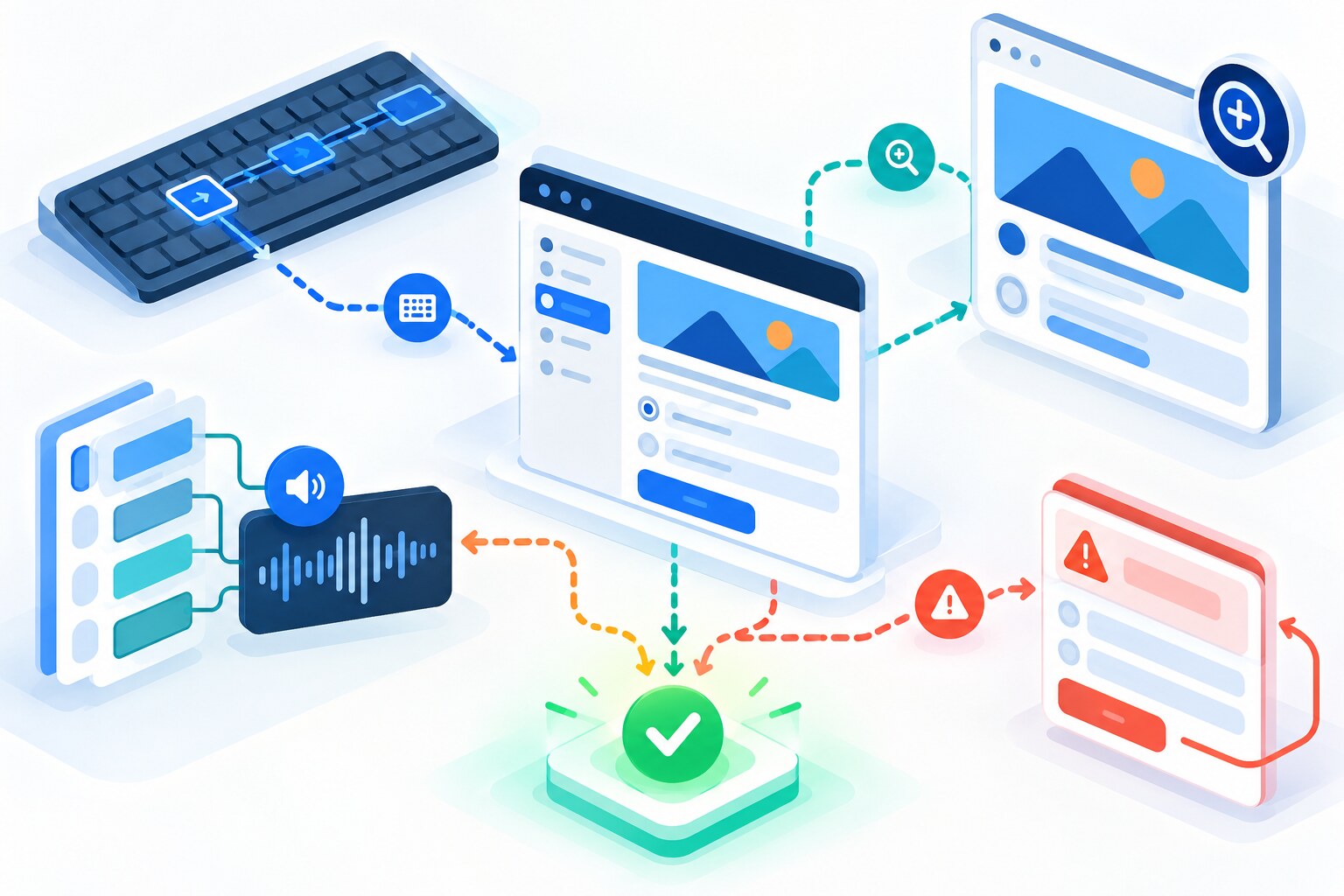
AI Training Platform for Companies: Run an Accessibility Rehearsal
Before choosing an AI training platform for companies, test one complete learning journey with keyboard, zoom, screen reader and error recovery.