

AI Upskilling for Teams: Build a Shared Spine and Role Paths
Design AI upskilling for teams with one shared operating standard and role-specific practice that reflects real tasks, risks and review.
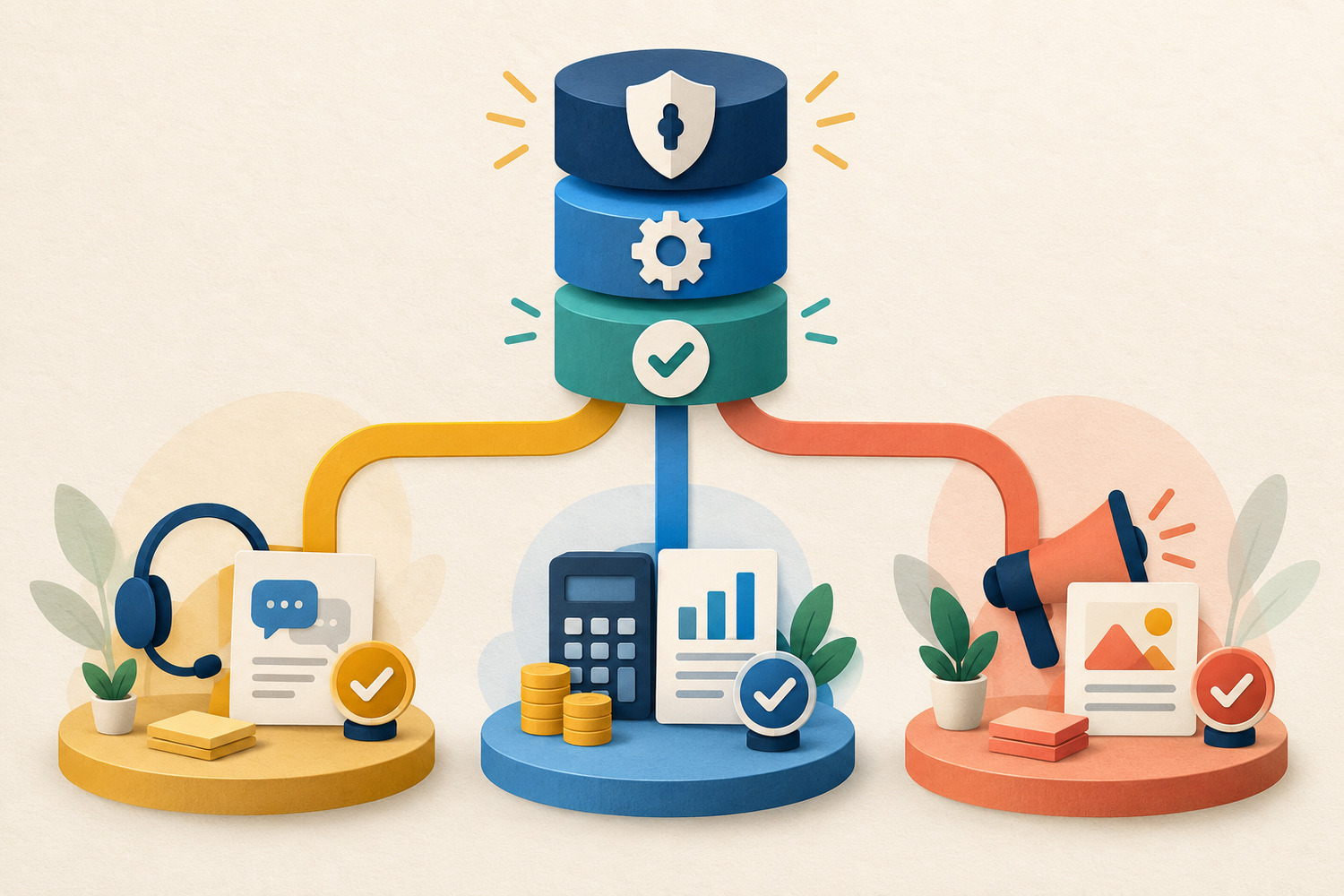
AI upskilling for teams often fails at one of two extremes. A single company-wide course gives everyone the same language but little practice in their real work. Fully local programmes feel relevant but fragment safety rules, review standards and evidence. A stronger design uses one shared learning spine with role paths. Everyone learns the same operating boundaries and core work method; each group then practises the tasks, sources, checks and escalation routes that belong to its role.
This structure follows how training needs are actually diagnosed. US Office of Personnel Management guidance separates organisational, occupational and individual needs. The European Commission’s AI-literacy guidance likewise says organisations should consider people’s knowledge and experience, the systems involved and the context of use. Neither source prescribes this exact curriculum model; together they support the underlying design choice: keep shared requirements consistent while adapting practice to the work.
Why AI upskilling for teams needs a shared spine
The spine-and-paths model
Layer 1 — Shared boundaries
Cover approved tools, prohibited inputs, privacy, security, disclosure, human authority and the stop or escalation route. These rules should not change by department without a documented reason.
Layer 2 — Common work method
Practise a reusable cycle: frame the task, choose safe sources, instruct the tool, inspect the result, verify material claims and record the human decision.
Layer 3 — Role paths
Replace generic examples with representative tasks, artefacts and failure modes from each role. Reviewers judge observable work, not confidence or prompt style.
Divide ownership before you divide content
L&D should own the architecture, shared language, access requirements and evidence rules. Security, privacy, legal and tool owners should approve the boundaries that sit in the shared spine. Managers and subject-matter experts should choose representative tasks and explain what a correct output, a necessary correction and a stop decision look like. Learners should receive enough protected time to practise and retry. No single owner needs to invent the whole programme.
Build the curriculum in six passes
- 1
Name the business outcomes
Write the few work results the programme should improve, such as faster first drafts with verified facts or better issue classification. Avoid a goal such as ‘use AI more’.
- 2
Map shared obligations
Collect the boundaries and checks that apply across approved uses. Resolve contradictions before turning them into lessons.
- 3
Group roles by task pattern
Cluster people who perform similar AI-assisted work, even when their job titles differ. A finance analyst and operations analyst may share an evidence-checking path.
- 4
Choose one work sample per path
Use fictional or approved material and include one realistic uncertainty. The learner should produce something a qualified reviewer can inspect.
- 5
Define the common rubric
Keep a small set of shared criteria—safe input, source fidelity, verification, human decision—and add one or two role-specific checks.
- 6
Set the refresh trigger
Update a path when its tool, policy, workflow or recurring error changes. Do not repeat the entire spine for every local update.
Worked example: three teams, one standard
Imagine a company upskilling customer service, finance and marketing. All three groups complete the shared spine using the same rules for approved data, source labelling, verification and escalation. Their paths then separate. Customer service classifies a fictional complaint and drafts a response without inventing account facts. Finance turns approved monthly figures into commentary and checks every number. Marketing drafts a campaign claim from an approved evidence pack and refuses unsupported wording.
Reading is a start. Practice makes it stick.
Start learning| Shared spine | Role path | |
|---|---|---|
| Inputs | Approved-tool and data boundaries | The exact sources used in the role’s workflow |
| Method | Frame, source, instruct, inspect, verify, decide | Role-specific sequence and review point |
| Failure | Unsafe input, unsupported claim, missing human decision | Wrong complaint category, mismatched figure or unsubstantiated campaign claim |
| Evidence | Common rubric and recorded outcome | Reviewed work sample plus role-specific check |
The standard does not become weaker when the task changes. Each learner must still protect inputs, work from evidence, verify material claims and make or escalate the human decision. What changes is the artefact and the qualified reviewer. This keeps reporting comparable without pretending that every role needs identical depth.
Avoid four common architecture mistakes
Curriculum design check
- Do not put every product feature in the shared spine; keep it focused on durable boundaries and methods.
- Do not create a separate course for every title; group roles by tasks and decisions.
- Do not let local teams rewrite company-wide safety rules without governance review.
- Do not treat completion as capability; require a reviewed work sample or correct stop decision.
- Do not solve access, policy or workflow problems by assigning more training.
- Do not freeze the paths; name the owner and trigger for each update.
Connect the paths to practice and refresh
The UK Government AI Playbook distinguishes the needs of beginners, non-technical users, technical professionals and leaders, and stresses that teams need the skills and expertise appropriate to their work. That is a useful reminder that the path should follow responsibility, not seniority. After launch, reinforce each path with Bokili’s weekly manager practice loop, update changed behaviour through the AI skills refresh cycle, use risk-based AI literacy training for higher-consequence contexts, and localise the operating context for multilingual teams.
- List six topics from your current AI programme on separate notes.
- Mark each as a shared boundary, common work method or role-specific practice.
- Move product tips that change often out of the shared spine.
- Choose one role path and replace its generic example with a real task pattern.
- Write one observable work sample and name its qualified reviewer.
- Record the next event that should trigger a path update.
What a scalable design looks like
A scalable programme does not mean the same course delivered to more people. It means one coherent standard that can support different work without losing control. Bokili’s short, role-aware practice can sit on top of that architecture: the shared spine defines the non-negotiables, role paths supply relevant missions, and reviewed attempts show where the next practice or system fix is needed. The result is AI upskilling for teams that stays consistent at the centre and useful at the edge.
Sources
- Planning & Evaluating — Training Needs Assessment — U.S. Office of Personnel Management
- AI Literacy — Questions & Answers — European Commission
- Artificial Intelligence Playbook for the UK Government — UK Government
- Bokili for HR and L&D — Bokili
Reading is a start. Practice makes it stick.
Bokili turns skills like this into ten-minute missions for your whole team, with instant feedback and progress you can see.
Start learningKeep reading

ChatGPT Training for Employees: Treat Imported Text as Data
Teach employees to keep a stable task when an email, document or webpage contains instructions that the AI should analyse—not follow.
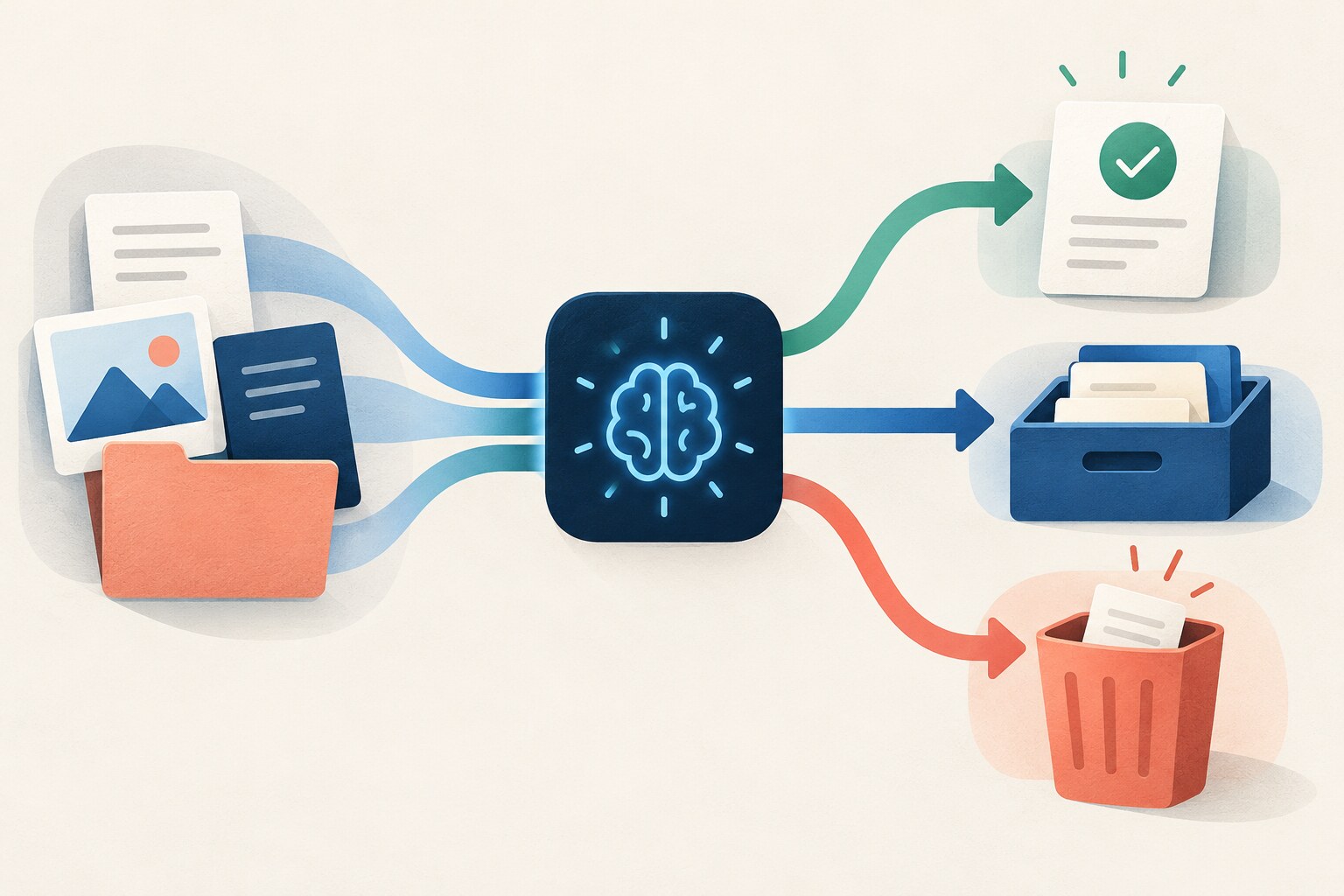
Finish the AI Task: Decide What to Keep, Record or Delete
Responsible AI practice includes a close-out decision for every prompt, source, draft and output—not just a check of the final answer.

AI Training for HR: Separate Interview Evidence From Inference
Teach HR teams to preserve exact interview evidence, remove unsupported inference and keep human scoring tied to the job.