
AI Turns More Employees Into Editors. Editing Is Not One Skill
As AI drafts more workplace content, “human review” becomes four distinct jobs: checking truth, task fit, risk and ownership.
The role shift
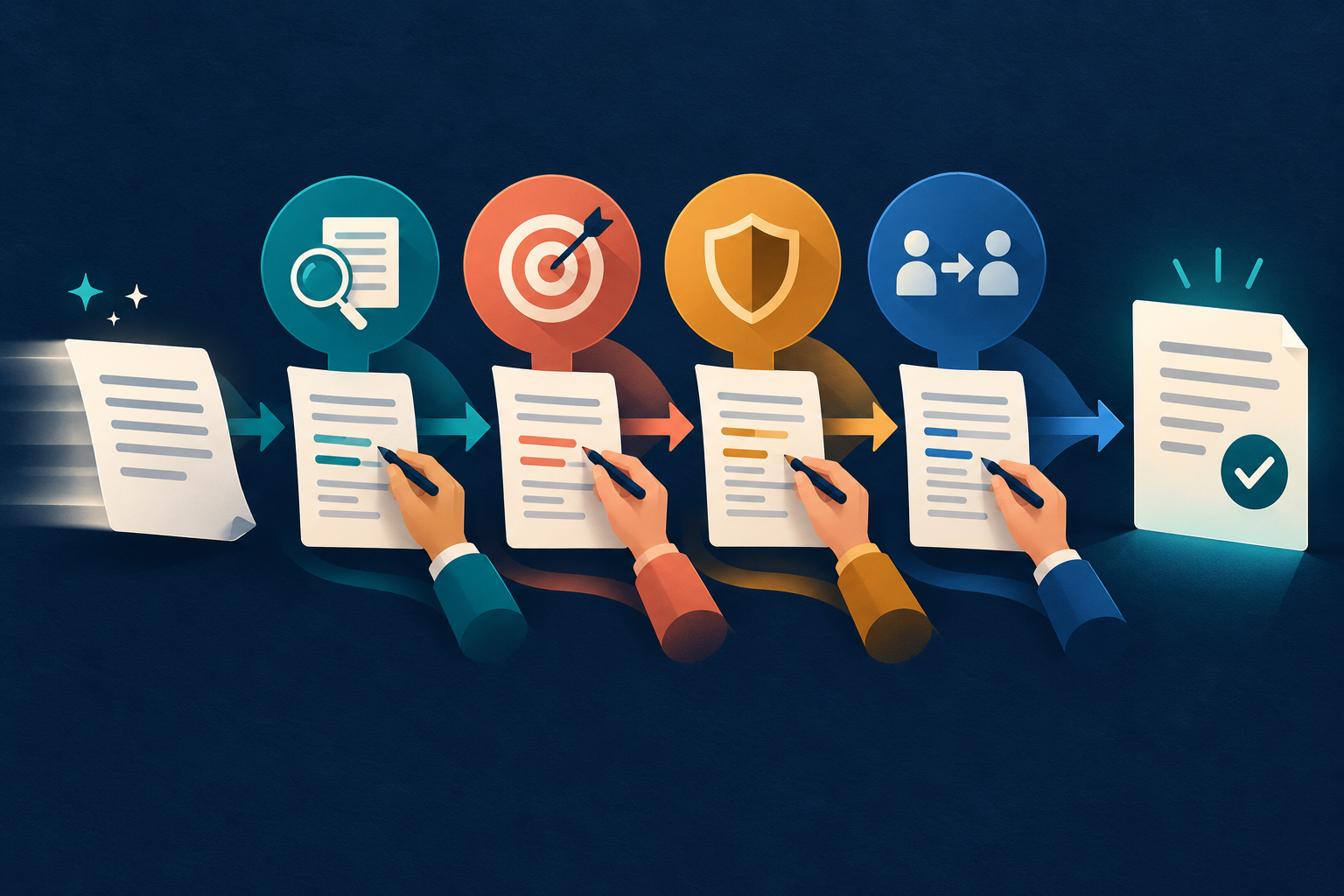
When AI produces the first draft, the human job does not disappear. It moves from creating every sentence to making several different judgements about the draft.
A person who asks AI for a supplier brief, customer update or policy note may receive fluent text in seconds. That speed hides a change in the work. The employee is no longer only the writer. They are also the editor who must decide whether the output is true, useful, safe and ready for someone else to act on.
Calling all of that “human review” makes the control sound simpler than it is. Proofreading catches awkward wording and obvious mistakes. It does not prove that a claim is supported, that the draft answers the real request, that sensitive material is handled correctly or that a named person accepts the final decision.
One draft needs four review passes
The NIST AI Use Taxonomy describes human–AI work in terms of activities, goals and outcomes. That is a useful reminder: the right check depends on what the person is trying to achieve, not merely on which tool produced the text. NIST’s measurement guidance also calls for defined limits, capable reviewers and course correction. In practice, that means giving reviewers separate questions instead of one vague instruction to “check the output”.
The four-pass edit card
1. Truth
Which claims can be traced to a reliable source? Mark facts, calculations and quotations that need evidence. Remove or label anything that remains uncertain.
2. Task fit
Does the draft answer the actual request, for the intended reader, in the required format? A correct answer can still be the wrong deliverable.
3. Risk
Could the draft expose confidential data, create an unfair judgement, give unsafe advice or cause harm if copied into action? Apply the organisation’s rules and escalation route.
4. Ownership
Who has authority to approve, change or stop the work? Record the final decision and the person accountable for it.
Why one generic check fails
| Generic review | Four-pass review | |
|---|---|---|
| Question | Does this look right? | What evidence, task, risk and decision checks have passed? |
| Evidence | Often implicit | Claims are traced or labelled as uncertain |
| Responsibility | The reviewer is assumed to own everything | Approval and escalation are named |
| Learning | Errors look random | The failed pass shows which skill needs practice |
The four passes can be done by one person for low-risk work, but they remain four different judgements. For higher-risk work, different people may own different passes. A subject expert may check the evidence, a manager may check whether the brief answers the decision, and a privacy or legal colleague may handle a boundary case.
Worked example: a customer-renewal brief
Reading is a start. Practice makes it stick.
Start learningImagine an account manager asks AI to turn meeting notes into a renewal brief. The draft says the customer “plans to expand to three markets”, recommends a larger package and names an employee who raised a security concern.
Run the four passes
- 1
Truth
The notes say expansion was discussed, not approved. Change the claim to “is considering expansion” and link it to the relevant note.
- 2
Task fit
The manager needs a decision brief, not a meeting summary. Add the decision required, two options and the missing evidence.
- 3
Risk
Remove the employee’s name because it is not needed for the decision. Keep the security concern as a general issue and route it to the correct owner.
- 4
Ownership
The account lead approves the commercial recommendation. The security owner must answer the unresolved control question before any commitment is made.
The final document is shorter than the AI draft, but it is more useful. It distinguishes evidence from inference, turns background into a decision and makes the unresolved risk visible. None of those improvements is merely a wording edit.
A ten-minute exercise for your next AI draft
- Choose one low-risk AI draft that has not yet been sent or published.
- Read it once for truth. Underline every factual claim and mark its source or uncertainty.
- Read it again for task fit. Write the reader’s decision or action in one sentence and remove material that does not help.
- Read it for risk. Flag sensitive data, high-impact advice and anything that needs specialist review.
- Finish with ownership. Add the approver, the unresolved question and the next safe action.
Teach editing as a set of skills
Training should let employees practise each pass separately before combining them. Someone who spots unsupported claims may still miss a privacy risk. Someone who follows policy may still accept a draft that does not answer the question. A single completion score cannot reveal those differences.
What a good review record contains
- The work outcome and intended reader
- The sources used for important claims
- The changes made after each review pass
- Any unresolved risk and its escalation route
- The named approver and final decision
The wider organisational task is to make those judgements repeatable. The AI acceptance-test guide explains why evaluation criteria should not be written by the same system that creates the output. The review-budget guide helps teams plan the human capacity that these checks require. Bokili’s learning features support short, applied practice that can turn a review rule into a work habit.
AI makes drafting cheap. It does not make judgement cheap. Organisations that treat every employee as “the human in the loop” without teaching the component skills are assigning responsibility without giving people a usable method. Name the four passes, practise them with real work and make the final owner visible.
Sources
Reading is a start. Practice makes it stick.
Bokili turns skills like this into ten-minute missions for your whole team, with instant feedback and progress you can see.
Start learningKeep reading
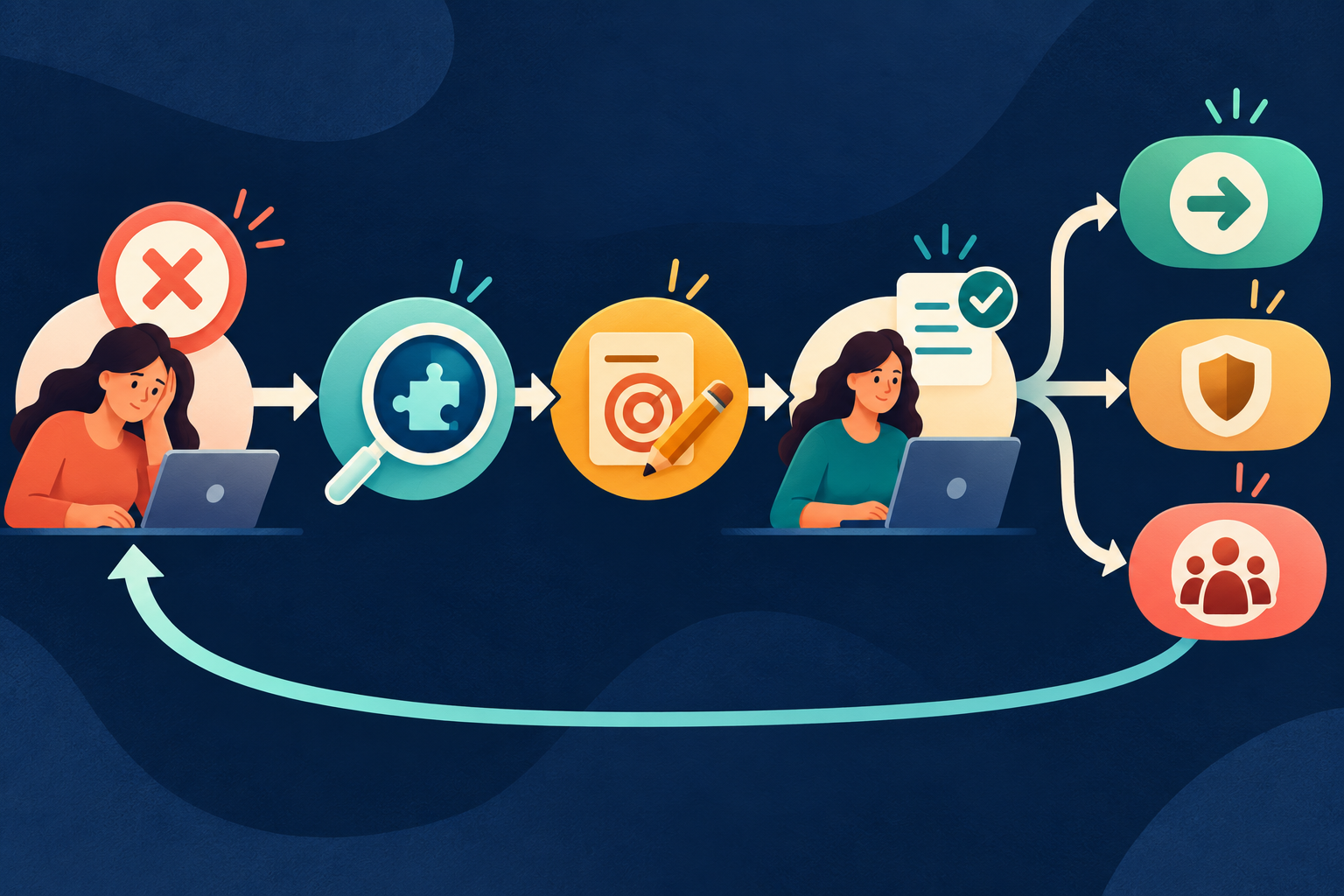
Corporate AI Training: Build a Remediation Path
When an employee fails a workplace practice check, use a targeted recovery path instead of repeating the whole course.
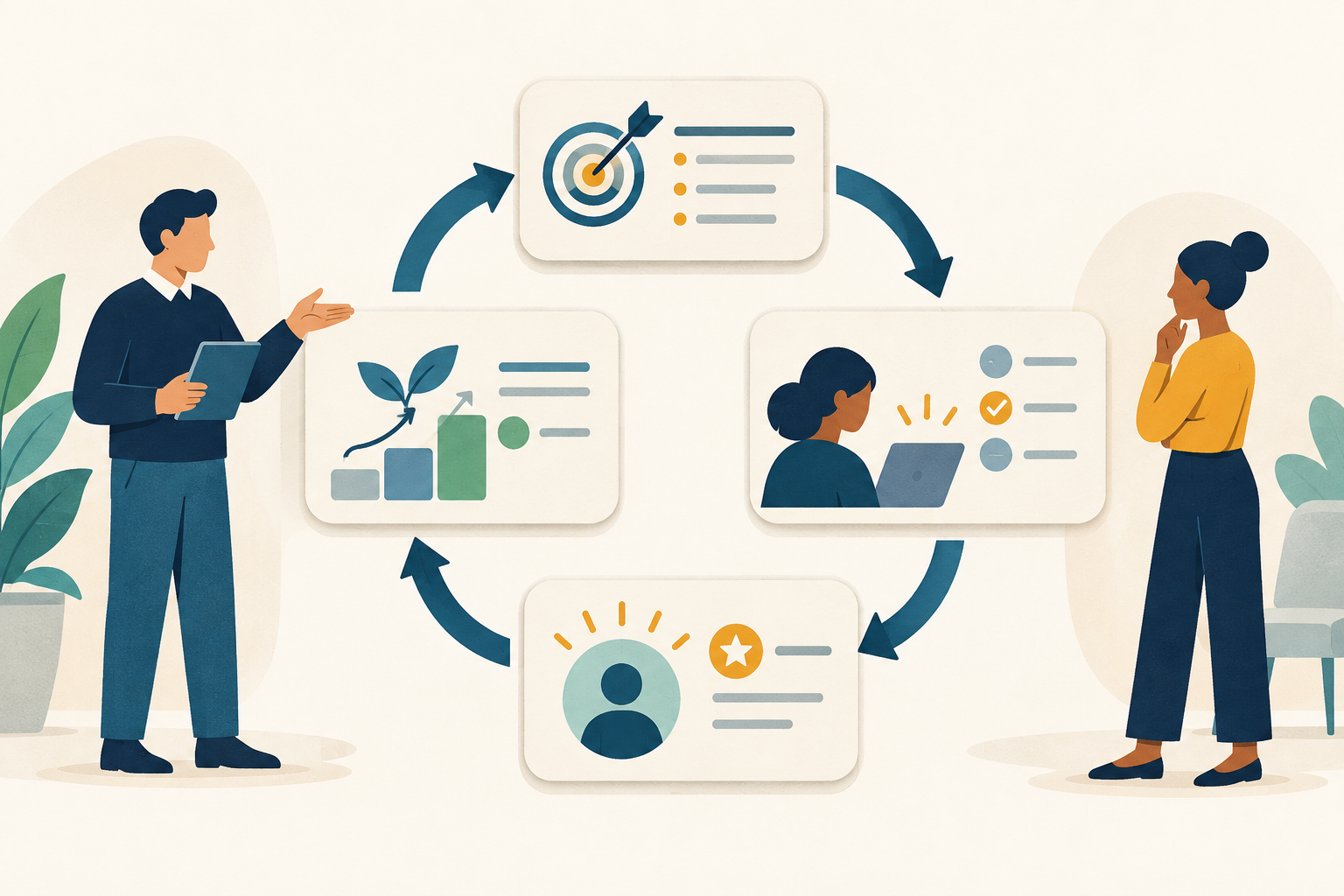
Enterprise AI Training: Give Managers a Practice Loop
Turn enterprise AI training into observable work with a four-part loop that managers can run around one bounded task.
Turn a Budget Variance Table Into Evidence-Tagged Commentary With AI
Use AI to structure budget commentary without letting a plausible guess become a financial explanation.