Compare Supplier Proposals With an AI Evidence Ledger
AI can normalise three proposals in seconds. A procurement decision still needs every score, gap and trade-off tied to the source material.

Supplier proposals are written to be persuasive, not directly comparable. One supplier describes an outcome, another lists features, and a third hides an exception in an appendix. AI can impose a common structure quickly—but it can also make unequal evidence look equally complete.
The right output is not a magic ranking. It is an evidence ledger: a structured view of each claim, its source, its fit with an agreed criterion, and what remains unproven. Human evaluators then score the evidence according to the procurement process.
Keep AI away from the decision right
Use AI to extract, normalise and challenge evidence. Keep weighting, scoring judgments, conflicts and final selection with authorised evaluators.
Use the CLAIM Ledger
CLAIM Ledger
Criterion
The pre-agreed requirement or evaluation question.
Location
The exact page, section or appendix supporting the supplier statement.
Assertion
The supplier’s claim rewritten neutrally without strengthening it.
Indicator
The evidence offered: metric, reference, certification, method or commitment.
Missing information
A gap, ambiguity, dependency or condition that needs clarification.
Current UK procurement guidance emphasises transparency about AI use and recognises that suppliers may use AI when developing bids. It also advises commercial teams to understand associated risks. Separately, government AI procurement guidance calls for transparency about the tools, data and algorithms involved and for data governance from the start. The practical implication is simple: preserve provenance and do not reward polished language as if it were evidence.
Set the rules before uploading proposals
Pre-analysis controls
- Confirm that the selected AI tool is approved for commercially sensitive bids.
- Use the final issued criteria and weights; do not let AI invent new ones.
- Remove evaluator notes and information one supplier should not expose to another.
- Keep each proposal’s filename, version and appendix structure intact.
- Define what counts as evidence and how missing information is represented.
- Record who will verify extraction and who has authority to score.
Run the comparison in four passes
From proposals to a verified ledger
- 1
Extract separately
Create one CLAIM Ledger per supplier. This reduces cross-contamination and makes omissions visible.
- 2
Verify citations
Open every cited page for material claims. Correct any quotation, number or location that does not match the source.
- 3
Compare by criterion
Merge only the verified ledger rows into a side-by-side view. Preserve blanks and conditions.
- 4
Challenge, then score
Ask AI to surface inconsistencies and clarification questions. Human evaluators apply the approved scoring method.
Worked example: implementation capacity
Reading is a start. Practice makes it stick.
Start learning| Supplier claim | Ledger treatment | |
|---|---|---|
| Supplier A | “Global delivery at scale” | Evidence: team chart for 12 named roles. Gap: allocation to this contract is not stated. |
| Supplier B | “Go-live in 12 weeks” | Evidence: milestone plan. Condition: client data must be ready before week one. |
| Supplier C | “Dedicated senior team” | Evidence: biographies provided. Gap: no contractual commitment to named staff. |
A generic summary might describe all three as strong. The ledger keeps the differences visible: capacity, timetable and seniority are different claims supported by different kinds of evidence and conditions.
A prompt for extraction, not selection
Use only Supplier A’s proposal and the evaluation criteria provided. For each criterion, extract: a neutral supplier assertion; exact page and section; quoted or numeric evidence; stated conditions or dependencies; and missing information. Preserve blanks. Do not compare suppliers, assign scores, infer compliance or recommend a winner. If a claim has no located evidence, label it unsupported.
Criterion: implementation capacity. Assertion: supplier proposes a 12-person delivery structure. Location: section 4.2, page 31. Evidence: role table. Missing information: percentage allocation and named back-ups.
Run this separately for every supplier before creating a cross-supplier comparison.
Where AI comparison goes wrong
Unsafe shortcut
- Upload every proposal together.
- Ask for the best supplier.
- Accept a clean comparison table.
- Use AI-generated scores in the decision.
Evidence-led workflow
- Extract each proposal separately.
- Verify material citations.
- Compare only against issued criteria.
- Let authorised evaluators score and decide.
Final evaluator checks
Before scoring
- Every material claim has a verified location.
- Missing evidence remains blank or explicitly unsupported.
- Conditions and exclusions are visible beside benefits.
- The same criterion interpretation is applied to every supplier.
- AI wording has not strengthened a supplier commitment.
- Clarifications follow the authorised procurement process.
- Choose two public product pages or non-sensitive sample proposals.
- Define three comparison criteria before opening the AI tool.
- Extract a separate CLAIM Ledger for each source.
- Verify one material citation per criterion.
- Compare the ledgers and list gaps without choosing a winner.
The practical takeaway
AI can make proposal evidence easier to navigate; it should not make procurement judgment invisible. The CLAIM Ledger preserves the chain from criterion to source to gap, giving evaluators a faster starting point without pretending the decision has been automated. Bokili missions help teams practise that separation between extraction, verification and judgment on small cases before applying it to live work.
Sources
- PPN 017: Improving transparency of AI use in procurement — UK Cabinet Office
- Guidelines for AI procurement — UK Government Office for AI
Reading is a start. Practice makes it stick.
Bokili turns skills like this into ten-minute missions for your whole team, with instant feedback and progress you can see.
Start learningKeep reading

AI Training for Employees: Separate Drafts From Records
Teach a four-state path—Draft, Checked, Approved, Recorded—so polished AI output never becomes organisational fact by accident.
Use Gemini Notebook Mind Maps to Turn Policy Into Questions
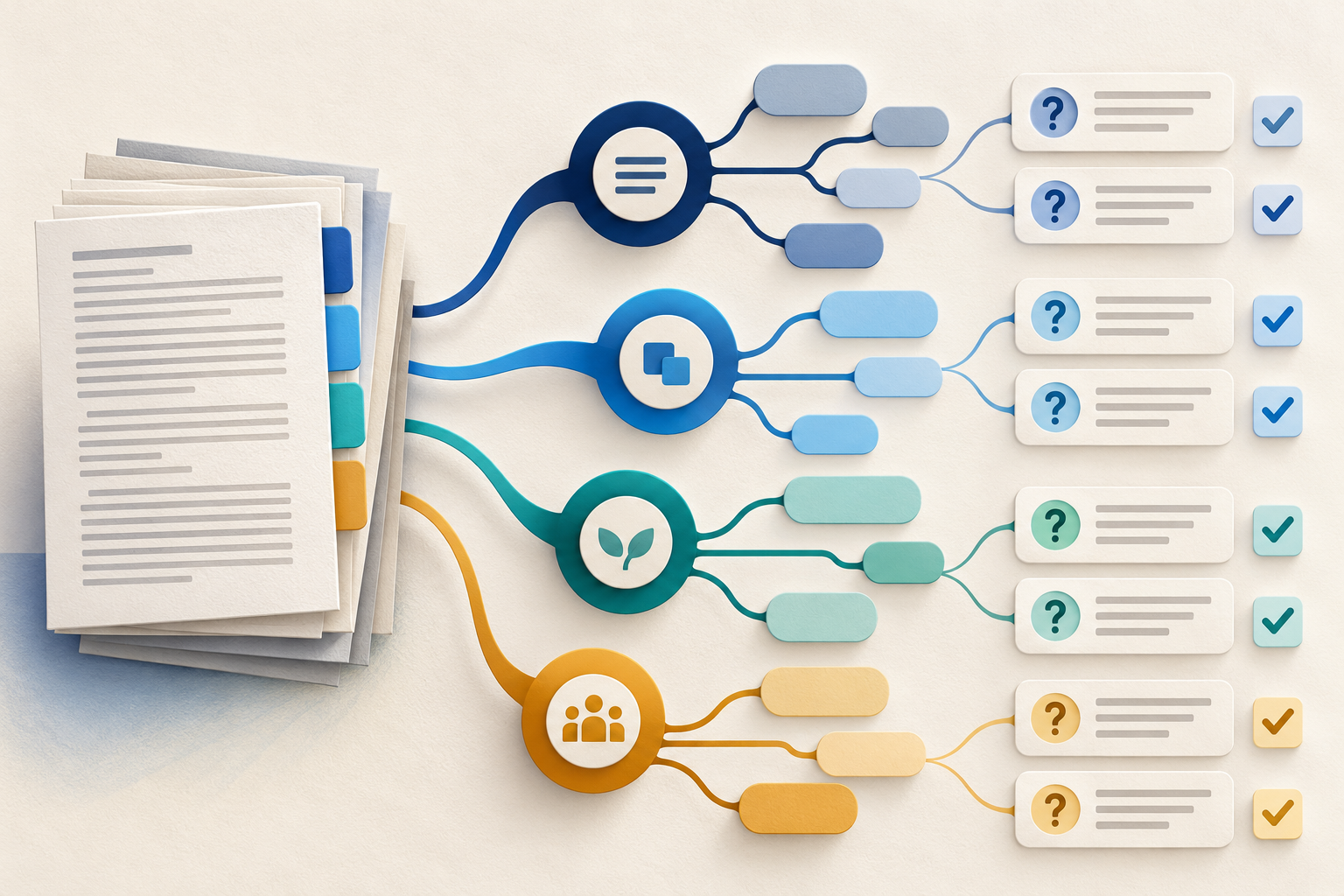
Use a Gemini Notebook mind map as a question index for a long policy—then open the cited source before you trust any answer.
AI Training for HR: Build a Four-Part Policy Answer
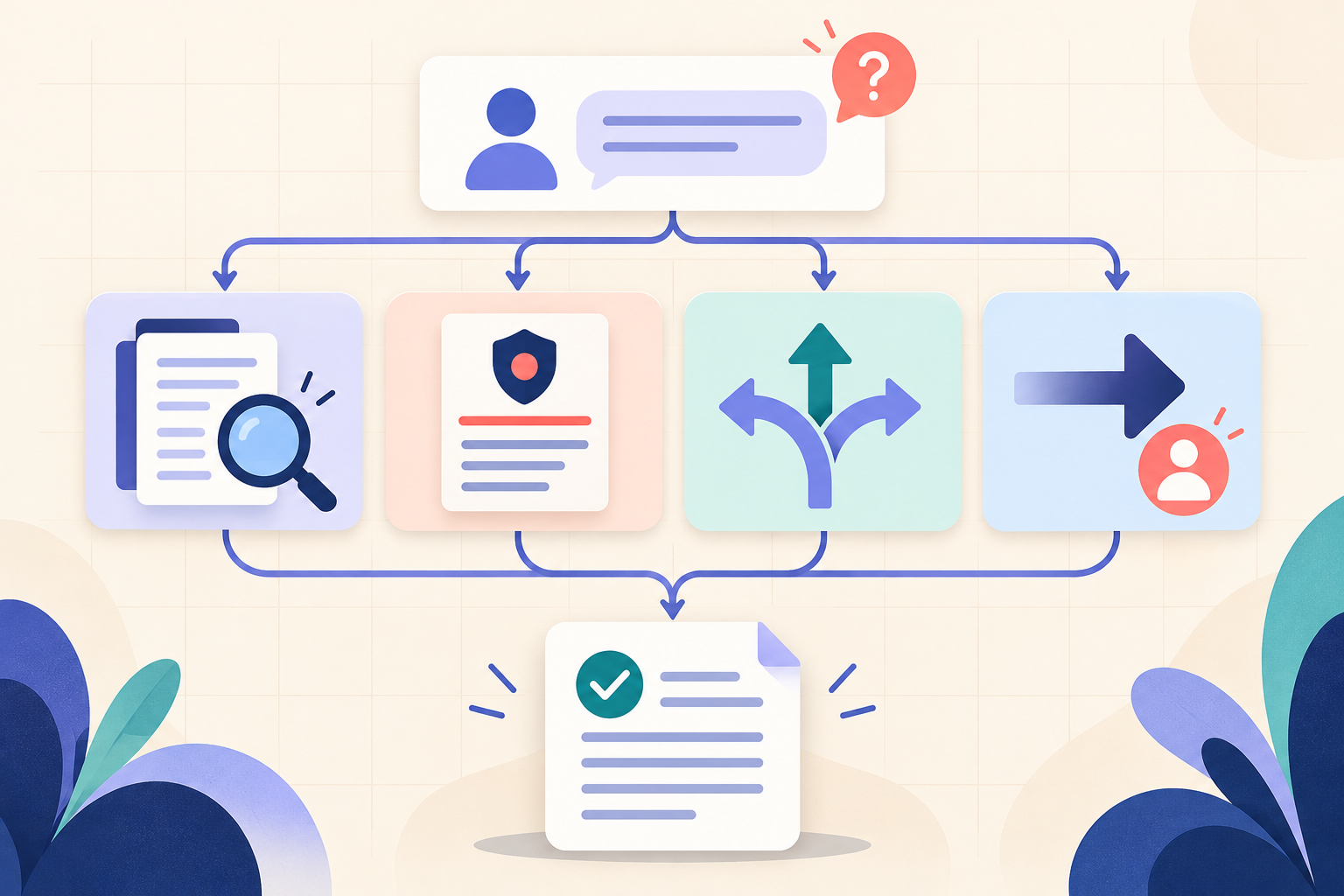
Teach HR teams to separate the source, written rule, human discretion and next step before turning an AI draft into employee guidance.