
The AI Workflow Is Only as Strong as Its Hand-off
AI-assisted work fails when evidence, review status and ownership vanish between people. Use a four-line hand-off note to keep judgment attached.

AI-assisted work often looks strongest at the moment it is generated. The draft is fluent, the table is tidy and the summary sounds complete. Then it moves to a colleague, manager or system—and the context that made it reviewable disappears. The recipient sees the output, but not the evidence, assumptions, review state or decision that still belongs to a person.
That is why the hand-off, not the prompt, is often the real unit of AI adoption. A team can improve prompts for months and still create fragile work if every transfer strips away what the next person needs to judge it.
The test
A good AI workflow does not merely pass on an answer. It passes on enough context for the next person to decide what the answer is worth.
What changes when AI work crosses a boundary
Human review is easy to promise and hard to operate. Microsoft Research’s Guidelines for Human-AI Interaction recommend helping people understand what an AI system can do, showing relevant context and supporting efficient correction when it is wrong. NIST’s AI Risk Management Framework treats risk management as continuous across the AI lifecycle, while its generative-AI profile calls for clear roles, communication and content-provenance information.
Those principles become practical when a work item changes hands. The next person should not have to reconstruct how the output was produced or guess whether it is ready. The hand-off needs four small pieces of context.
The four-line AI hand-off note
Evidence
Name the approved sources, records or inputs behind the output. Link to them where policy allows.
Status
Label the work clearly: generated, checked, corrected or approved. Do not let a polished draft imply approval.
Decision owner
Name the role that must accept, reject or change the work. Human oversight needs an owner.
Stop condition
State what missing fact, conflict or risk means the recipient must pause rather than continue.
Worked example: an AI-assisted supplier brief
Imagine an analyst uses an approved AI tool to turn three supplier proposals into a briefing for an operations manager. The summary is useful, but the model has treated an implementation date as confirmed even though it appears only in a sales appendix. If the analyst sends the summary alone, the manager may mistake a draft synthesis for verified fact.
| Output-only hand-off | Reviewable hand-off | |
|---|---|---|
| Evidence | A clean one-page brief | Brief plus links to the three proposals and the cited appendix |
| Status | No label; looks finished | Draft checked for prices; dates still unverified |
| Ownership | Manager receives it | Operations manager owns the shortlist decision |
| Stop | No visible limit | Pause if delivery dates conflict or lack a contractual source |
Reading is a start. Practice makes it stick.
Start learningThe second version is not longer for the sake of process. It makes the manager’s judgment faster. The manager can see what is safe to use, what remains open and where to look. If the brief moves again—to procurement or legal—the same note prevents the chain from resetting to guesswork.
Put the note where the transfer happens
A hand-off note should travel with the work item, not live in a separate policy folder. Add four fields to the place your team already uses: the document footer, task card, approval form, ticket or record. Keep each field short. The goal is not to document every prompt; it is to preserve the information that changes the next decision.
Before AI-assisted work leaves your desk
- Can the recipient trace every material claim to an approved source?
- Is the item labelled as generated, checked, corrected or approved?
- Does one named role own the next decision?
- Is there an observable reason to pause or escalate?
- Would the hand-off still make sense if the chat history vanished?
Do not confuse traceability with bureaucracy
The four lines should expand with consequence, not with enthusiasm for documentation. A low-risk rewrite may need a source file, a “checked” label and an editor. A recommendation affecting employment, finance, safety, rights or legal commitments needs stronger evidence, formal approval and a clear escalation route. NIST’s profile similarly connects the robustness of oversight and evaluation to identified risk.
There is also a limit to what the note proves. It does not certify that the model is accurate. It does not make prohibited data safe to process. It does not replace domain review. It simply keeps the conditions for judgment attached to the work instead of leaving them behind in a private chat.
Practise the hand-off, not only the prompt
- Choose one low-risk AI-assisted output your team already shares.
- Write the approved evidence behind it in one line.
- Label its true review status.
- Name the role that owns the next decision.
- Add one observable condition that means stop.
- Give the output and note to a colleague; ask what they can decide without extra explanation.
If the colleague still needs to ask where a claim came from, whether the work is approved or who is accountable, revise the note. That gap is the lesson. Bokili helps teams practise small, role-specific behaviours like verification, boundaries and escalation until they survive real work, including the moment one person hands the task to another.
Related Bokili guides can strengthen the same workflow: define done before delegation, give the process a stop rule and keep an evidence ledger for important comparisons. The shared principle is simple: an AI output is not ready because it looks finished. It is ready when the next person can judge it.
Sources
- Guidelines for Human-AI Interaction — Microsoft Research
- AI RMF Core — NIST AI Resource Center
- Artificial Intelligence Risk Management Framework: Generative Artificial Intelligence Profile — NIST
Reading is a start. Practice makes it stick.
Bokili turns skills like this into ten-minute missions for your whole team, with instant feedback and progress you can see.
Start learningKeep reading
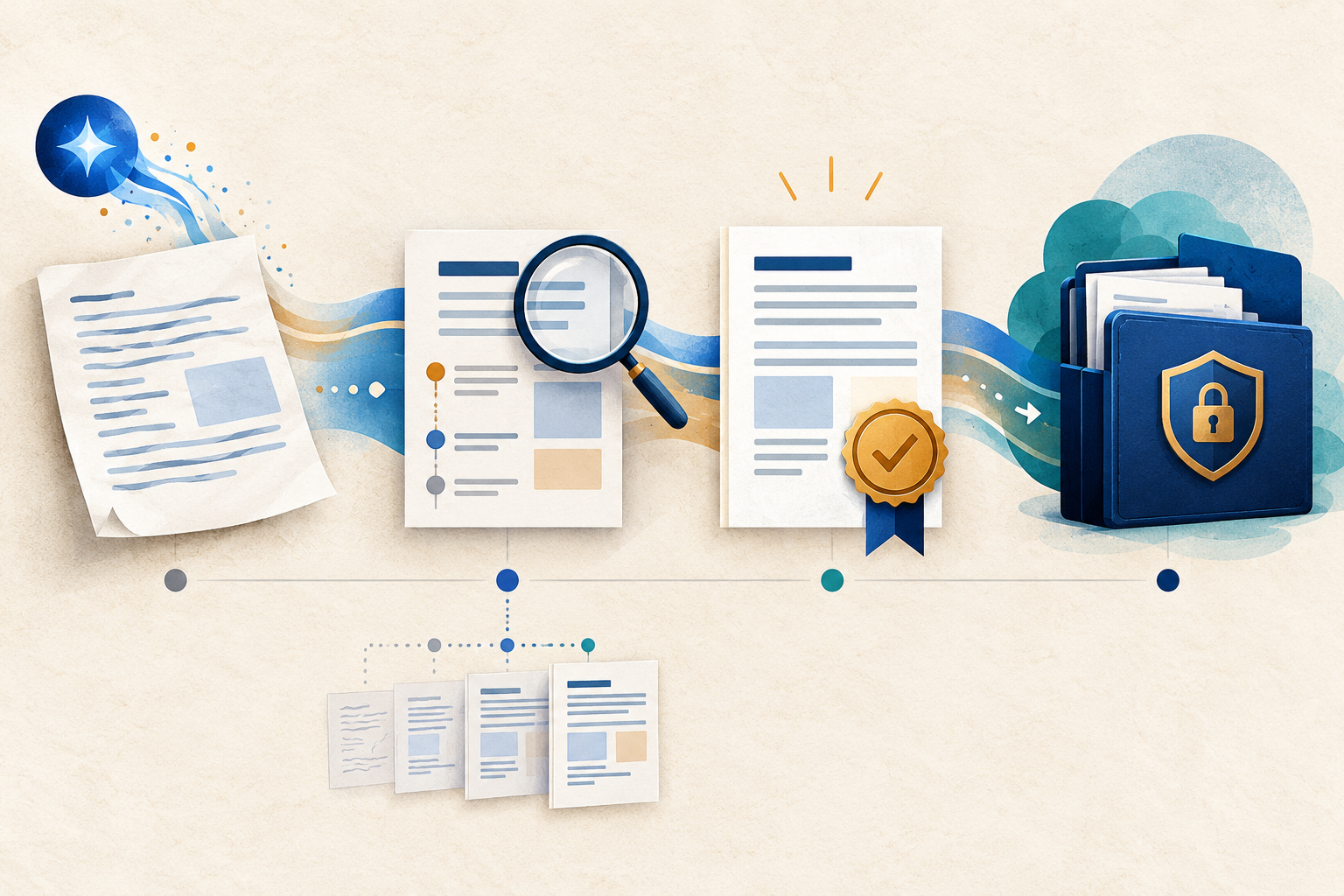
AI Training for Employees: Separate Drafts From Records
Teach a four-state path—Draft, Checked, Approved, Recorded—so polished AI output never becomes organisational fact by accident.
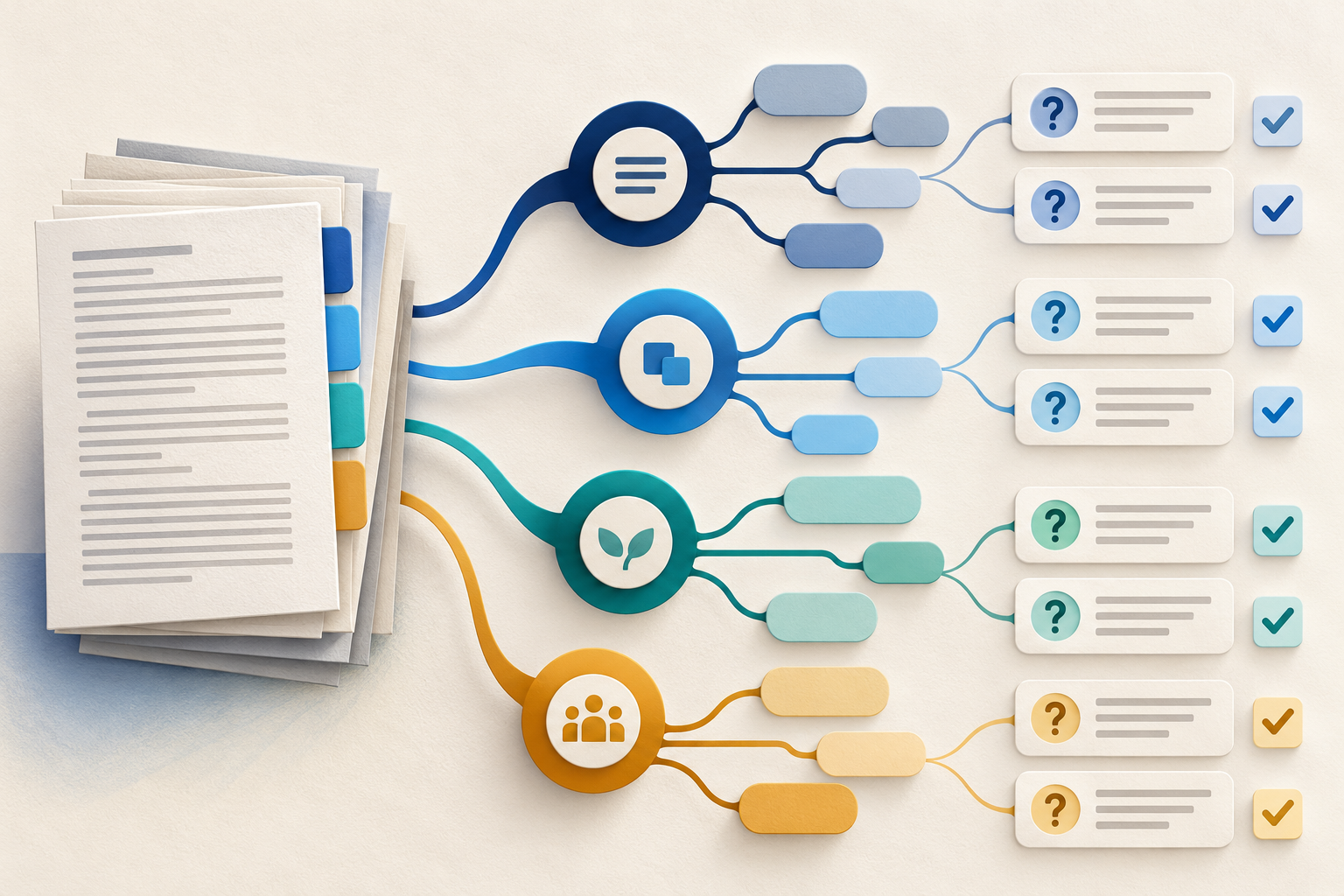
Use Gemini Notebook Mind Maps to Turn Policy Into Questions
Use a Gemini Notebook mind map as a question index for a long policy—then open the cited source before you trust any answer.
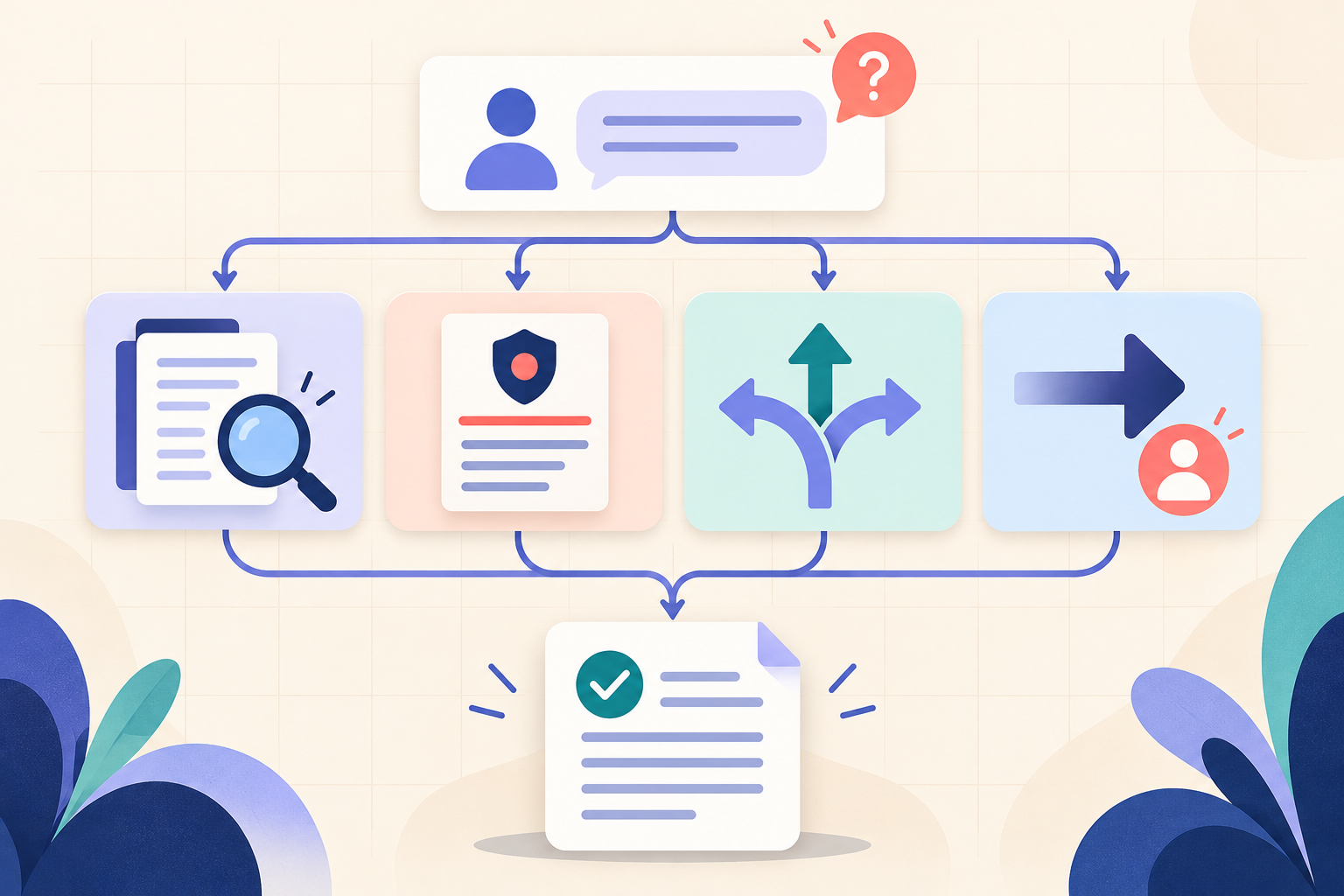
AI Training for HR: Build a Four-Part Policy Answer
Teach HR teams to separate the source, written rule, human discretion and next step before turning an AI draft into employee guidance.