
AI Licences Don’t Create AI Fluency
Giving every employee an AI account solves access. It does not teach them what to delegate, how to judge the output, or how to improve through practice.

A company buys hundreds of AI licences. The rollout is announced, the accounts are activated, and the adoption dashboard begins to move. It feels like progress. But a month later, most employees are still using AI for the same two things: rewriting emails and summarising documents. A smaller group is quietly redesigning entire workflows. Another group has tried the tool once, received an average answer, and decided it is overhyped.
The difference is rarely access. It is fluency. A licence is a procurement event; fluency is a learned capability. It develops when people repeatedly practise choosing the right task, providing the right context, shaping the output, checking it and integrating it into real work.
That figure comes from an OECD survey published in 2025. The gap matters because the OECD’s 2026 synthesis also found that workers who received AI training were more likely to report better job performance and working conditions. Access may start adoption. Practice is what makes it productive.
Access is binary. Fluency is a progression.
Someone either has an account or does not. Fluency is different: it grows unevenly, task by task. An employee can be excellent at using AI to explore ideas and poor at checking factual claims. A marketer may build a strong research workflow but struggle to turn outputs into a usable brief. A finance professional may know exactly where AI helps, yet avoid it because the company’s data rules are unclear.
| AI access | AI fluency | |
|---|---|---|
| Success signal | An account is activated | Work improves repeatedly |
| User behaviour | Opens AI when the use case is obvious | Recognises where AI can help and where it cannot |
| Input | Writes a quick request | Frames the task with context, constraints and a useful output format |
| Quality control | Accepts a plausible answer | Checks claims and calibrates verification to the risk |
| Durability | Depends on one interface or prompt | Transfers the underlying method across tasks and tools |
| Measurement | Seats and active users | Demonstrated capability and better work |
This is why usage is a useful product metric but an incomplete learning metric. A person can generate many messages without becoming more capable. Another can use AI only a few times a week and create substantial value because the workflow is well chosen and carefully verified.
The five moves of an AI-fluent employee
The fluency loop
1. Choose
Identify a task where AI can create leverage, and recognise when human expertise or a different tool is the better choice.
2. Frame
Explain the goal, audience, context, constraints and desired output clearly enough for useful work to begin.
3. Shape
Break complex work into stages, provide examples, ask for alternatives and steer the output instead of treating the first response as final.
4. Judge
Evaluate relevance, reasoning, factual accuracy, tone and risk. Know what must be checked and how.
5. Transfer
Turn a successful interaction into a repeatable workflow, then adapt the method to another task, role or AI tool.
The real adoption bottleneck
Most employees do not need more reasons to be impressed by AI. They need enough guided practice to recognise a useful moment, act on it and trust their own judgment.
Why the one-off workshop fades
A launch workshop is useful for creating a common starting point. It can explain company policy, demonstrate possibilities and reduce anxiety. But it usually compresses too many ideas into one moment, far from the next real task. The interface looks simple, so people overestimate how much they have learned. Then the tool changes, the examples no longer match their role, and the knowledge decays before it becomes a habit.
Reading is a start. Practice makes it stick.
Start learningAI training works better when it behaves less like an annual course and more like deliberate practice: short, focused, frequent and connected to work. The unit of learning should not be “understand generative AI.” It should be something observable: improve a weak prompt using context, verify three claims in an answer, compare two ways to analyse a document, or turn a recurring task into a reusable workflow.
A practical model for companies
From licences to capability
- 1
Establish a real baseline
Give employees a small set of work-like tasks and observe what they can do. Do not rely only on confidence surveys.
- 2
Build common foundations
Teach task framing, iteration, verification, privacy and judgment before pushing everyone toward advanced features.
- 3
Move into role and tool practice
A salesperson, buyer and financial analyst need different workflows. ChatGPT, Claude, Gemini and other tools also reward different operational knowledge.
- 4
Create repetition
Use short missions over time, with one focused behaviour per session and regular opportunities to apply it.
- 5
Measure progression
Track demonstrated skill, transfer to new tasks and quality of judgment—not only attendance, completions or message volume.
This model also avoids a false choice between generic and specialised training. People need transferable foundations, then practice tied to their role and the tools they actually use. The sequence matters: specific workflows become more valuable when they sit on top of sound judgment.
What to measure instead of licences
Signals of real AI fluency
- Can employees identify tasks that are suitable for AI?
- Can they give the tool enough context without exposing restricted information?
- Can they improve a weak first answer through deliberate iteration?
- Can they verify important claims using appropriate sources or methods?
- Can they explain when not to rely on the output?
- Can they turn a successful interaction into a repeatable workflow?
- Can they transfer the method to a new task or a different tool?
- Does their demonstrated capability improve over time?
The objective is not to create a perfect score for every employee. It is to make capability visible. Leaders should be able to see where the organisation is strong, where risk is concentrated and which learning experiences change behaviour.
The first 30 days after rollout
Week 1
Set a baseline with a few representative tasks and make the company’s AI rules easy to find.
Week 2
Practise the common foundations: framing, iteration, verification and safe use.
Week 3
Introduce role-specific and tool-specific workflows that solve recognisable work problems.
Week 4
Retest with unfamiliar tasks, identify gaps and recommend the next practice missions.
Try the licence-to-fluency test
- Choose one realistic task that several colleagues perform, such as turning meeting notes into an action plan.
- Ask three people with access to the same AI tool to complete it independently.
- Compare how they framed the task, iterated on the first answer and checked the result.
- Score the final outputs for usefulness, accuracy and readiness for real work.
- Identify the one behaviour that would most improve the next attempt. That behaviour is a training need.
If the outputs vary widely, the problem is not the licence. It is the distance between access and capability—and that distance can be trained.
Bokili is built around a simple idea: AI fluency grows through short, focused missions that adapt to a person’s level, role and tools. Companies should absolutely give people access to AI. They should just stop mistaking the key for the staircase.
Sources
Reading is a start. Practice makes it stick.
Bokili turns skills like this into ten-minute missions for your whole team, with instant feedback and progress you can see.
Start learningKeep reading
AI Training for Employees: Separate Drafts From Records
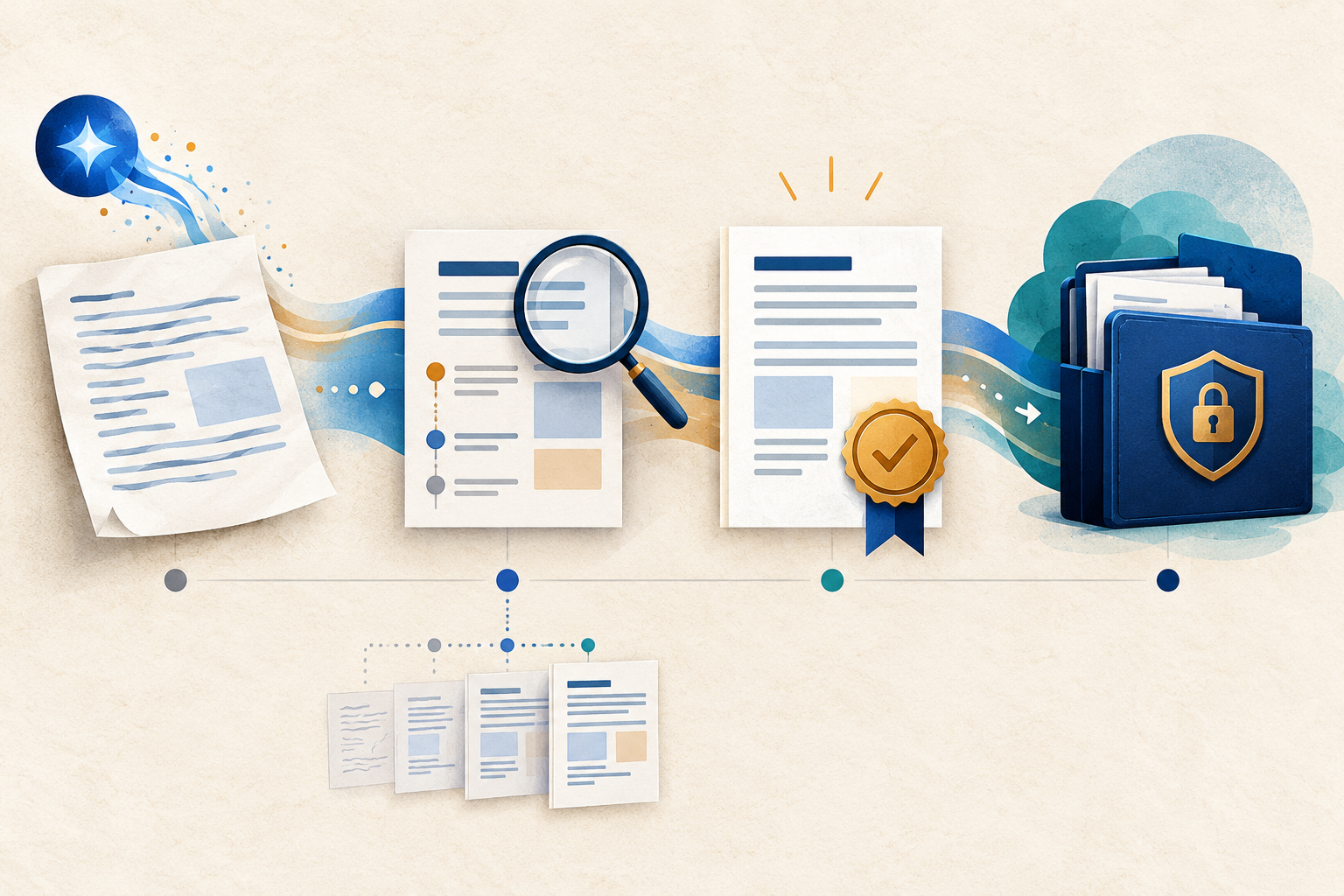
Teach a four-state path—Draft, Checked, Approved, Recorded—so polished AI output never becomes organisational fact by accident.
Use Gemini Notebook Mind Maps to Turn Policy Into Questions
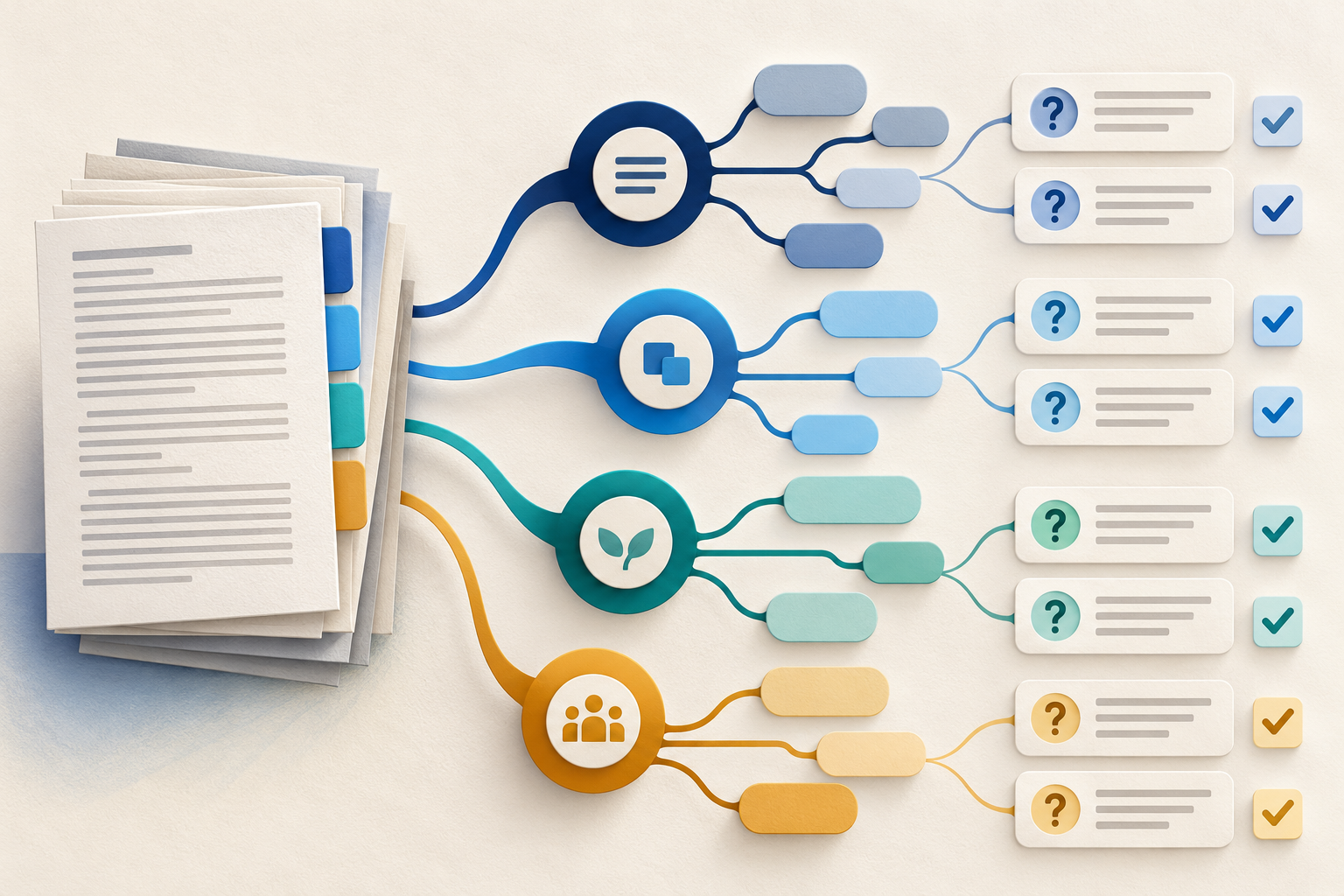
Use a Gemini Notebook mind map as a question index for a long policy—then open the cited source before you trust any answer.
AI Training for HR: Build a Four-Part Policy Answer
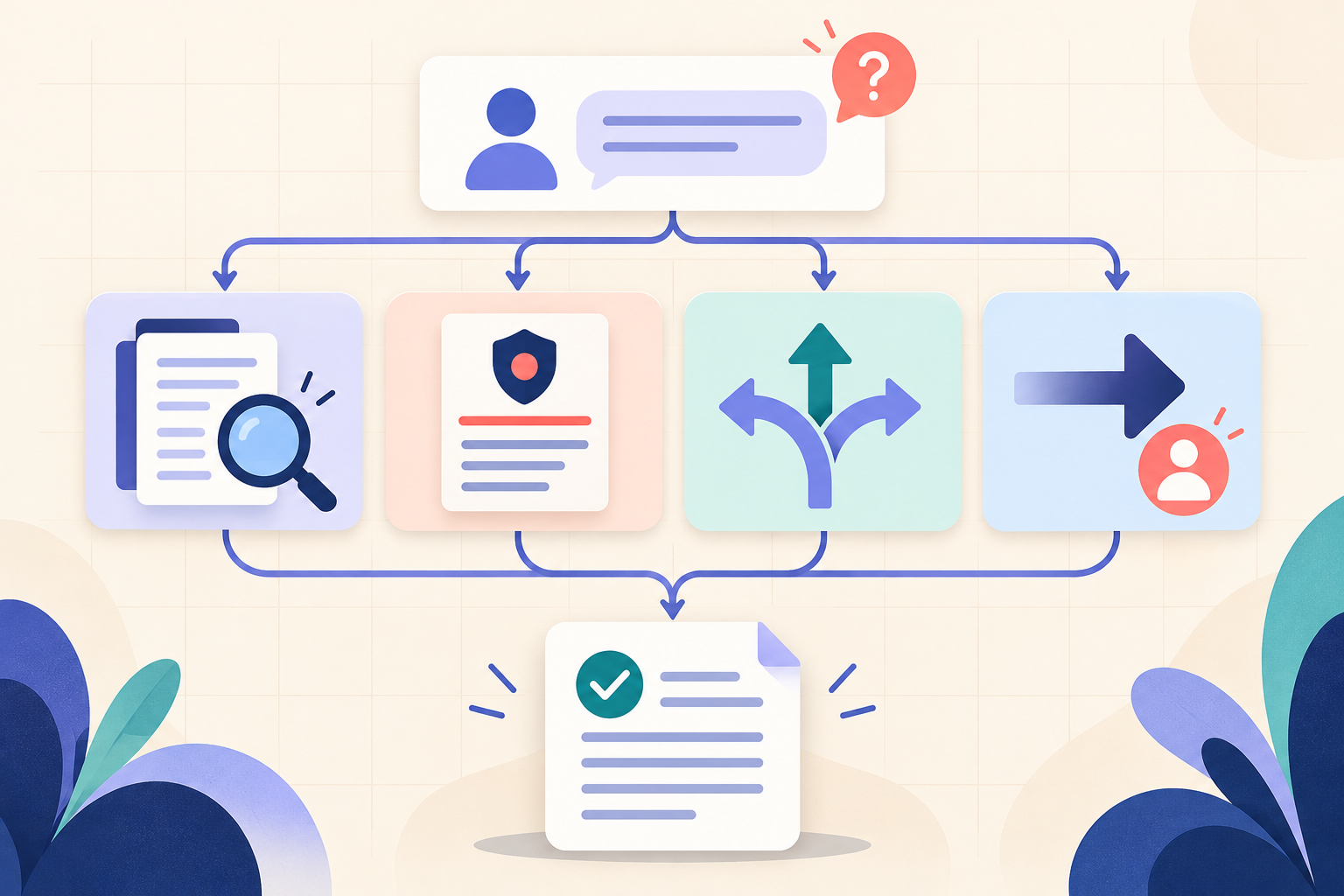
Teach HR teams to separate the source, written rule, human discretion and next step before turning an AI draft into employee guidance.