AI Course for Beginners: Build One Safe Work Sample
Choose one low-consequence task, protect the inputs, define a quality bar and build a verified first AI work sample.
An AI course for beginners can explain models, prompts and common risks. But the first sign of useful skill is smaller and more concrete: one safe work sample that a learner can explain, check and improve.
The wrong first task is a blank request to “try AI” on live work. It invites sensitive inputs, vague goals and an answer with no reference point. The right first task is low-consequence, reversible and supported by source material. The learner can see what went in, what changed and how the result was verified.
A better beginner milestone
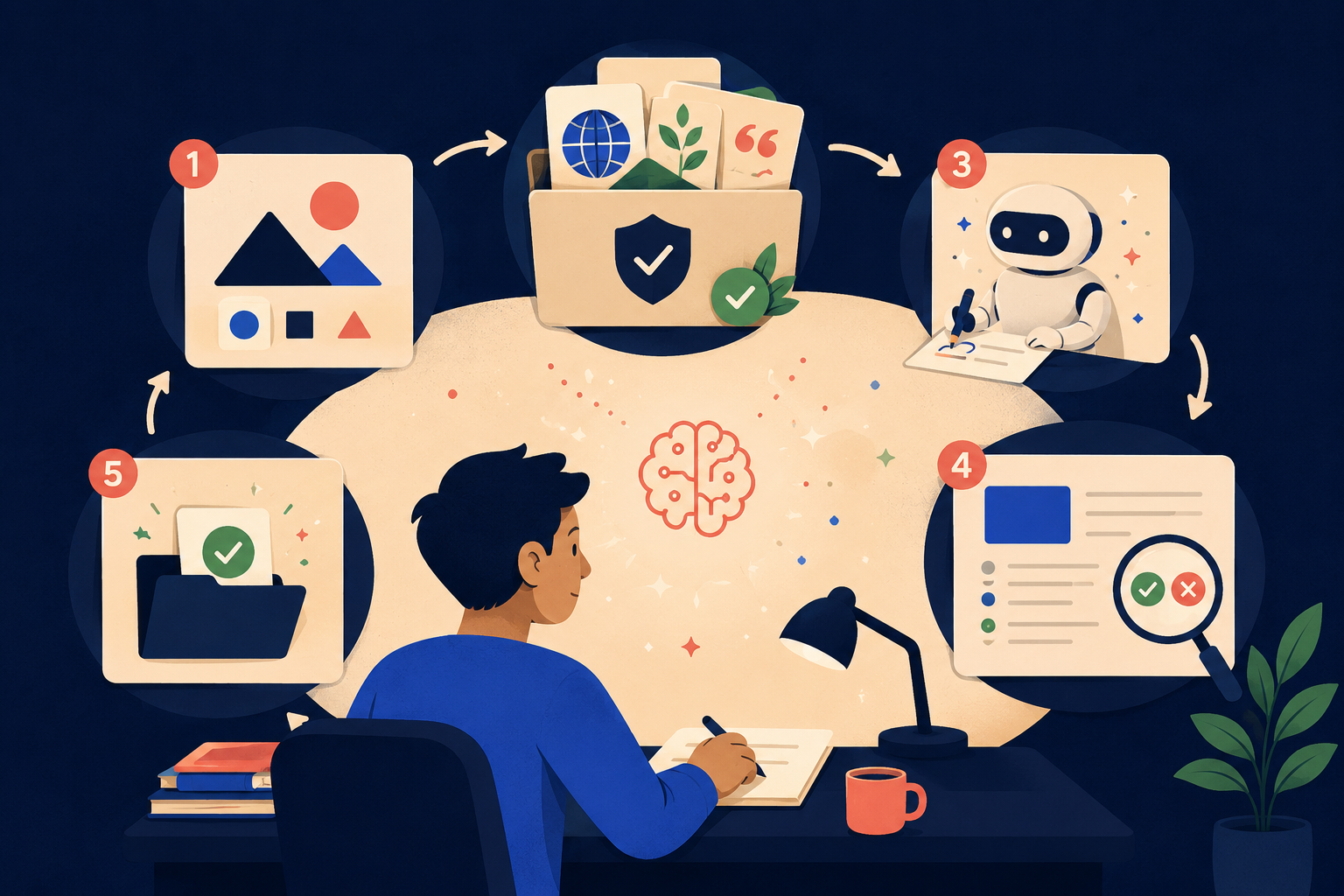
Do not aim for ten clever prompts. Aim for one complete, safe loop: choose, brief, draft, check and save.
What an AI course for beginners should produce
Beginner learning often starts appropriately with basic concepts and prompting. Microsoft’s current beginner module, for example, covers generative AI, work uses, effective prompts and refinement. Those foundations matter. Yet workplace skill also requires the learner to apply them to a bounded task and judge the result.
The European Commission’s AI-literacy guidance says organisations should consider people’s existing knowledge and experience, the context and purpose of use, and the risks of the systems involved. That points away from a universal first exercise. A safe first sample should match the learner’s real context while avoiding real consequences.
| Course-only evidence | Verified work sample | |
|---|---|---|
| Task | A generic quiz or prompt | A bounded, realistic work activity |
| Inputs | Often supplied without a decision | Chosen for safety and relevance |
| Output | Accepted when it looks plausible | Compared with a source and quality bar |
| Reflection | What the learner remembers | What changed, failed and needs another attempt |
| Transfer | Use AI more often | Repeat one approved behaviour at work |
Choose the first task with the SAFE filter
Four conditions for a beginner work sample
S — Small and reversible
Choose an output that can be discarded without harm: a draft checklist, a reformatted note or a summary for practice. Avoid decisions about people, safety, money or legal commitments.
A — Approved inputs
Use public, synthetic or explicitly approved material. Remove personal, customer, confidential and security-sensitive information before the exercise begins.
F — Fixed quality bar
Define what ‘good’ means before opening the tool: required sections, maximum length, audience, source fidelity and anything the AI must not invent.
E — Evidence available
Keep the original source beside the result. A beginner needs a way to verify claims, names, dates, numbers and omissions without asking the AI to grade itself.
NIST’s Generative AI Profile notes that generative systems can produce varied outputs and that some uses warrant additional review, tracking and documentation. The SAFE filter scales that principle down to a first lesson. The beginner does not need a heavy control system; they need a task where review is possible and the consequence of failure is limited.
Worked example: turn a public notice into an action checklist
Use a public event notice as the source. It lists a date, venue, registration deadline, accessibility contact and three items attendees must bring. The task is to draft a personal preparation checklist. No private data or live decision is involved, and every detail can be checked against the notice.
Reading is a start. Practice makes it stick.
Start learningBuild the first sample in five moves
- 1
1. Choose and protect the source
Use the public notice only. Do not add names, travel details or calendar data. Save a copy so the learner can compare the result line by line.
- 2
2. Write the brief
Ask for a checklist grouped into ‘before the deadline’, ‘day before’ and ‘on the day’. Require every date and requirement to come from the source. Tell the tool to mark missing information instead of guessing.
- 3
3. Generate one draft
Use the company-approved AI tool. Keep the first output; the aim is to review a real attempt, not to hide every mistake through repeated prompting.
- 4
4. Check against the source
Verify the date, venue, deadline, contact and required items. Mark anything unsupported, missing or placed in the wrong stage.
- 5
5. Improve and save the evidence
Revise only the affected parts. Save the brief, first draft, check marks and final version as one work sample with a short reflection.
Use a simple sample card
Record these six things
- The task and why it was low-consequence
- The source and why it was safe to use
- The brief and quality bar
- The first AI draft
- The checks performed and errors found
- The improved result and one lesson for next time
A sample card makes learning visible without pretending that one exercise proves broad expertise. It shows whether the learner can select a task, protect inputs, give a clear brief and verify an output. The next exercise can increase difficulty by changing one element, not all of them.
Avoid four tempting first projects
- A real employee evaluation, recruitment decision or performance message
- A live customer complaint containing personal or account information
- A financial, legal, medical or safety recommendation
- A large document with no clear question or independent way to check the answer
These may become appropriate only within approved workflows and with the right oversight. They are poor beginner exercises because a mistake can matter and the learner may not recognise it.
Connect the sample to a practical learning path
- Follow the broader 30-day beginner path: https://bokili.com/en/learn/learn-ai-at-work-beginner-path
- Set the input boundary before prompting: https://bokili.com/en/learn/prompt-data-boundary
- Verify an AI answer before using it: https://bokili.com/en/learn/how-to-verify-ai-output-at-work
- Practise recovery after a convincing mistake: https://bokili.com/en/learn/ai-recovery-skill-wrong-answer
- Choose one public or synthetic source and a reversible output.
- Apply the four SAFE conditions; change the task if any condition fails.
- Write a brief with audience, format, source rule and quality bar.
- Generate one draft with an approved AI tool.
- Check every material detail against the source.
- Save the sample card and name the one behaviour to repeat.
Start small enough to see the skill
A beginner does not need to master every AI concept before doing useful practice. They need a first task where success and failure are visible. One safe, verified sample provides that proof and gives the next lesson somewhere solid to begin.
Bokili turns this approach into short, personalised workplace missions with immediate feedback. Instead of completing a course and wondering what to do next, learners practise one observable behaviour at a time: https://bokili.com/en.
Sources
- AI Literacy — Questions & Answers — European Commission
- Use AI for Everyday Tasks — Microsoft Learn
- Artificial Intelligence Risk Management Framework: Generative Artificial Intelligence Profile — NIST
- Bokili — Practical AI skills for real work — Bokili
Reading is a start. Practice makes it stick.
Bokili turns skills like this into ten-minute missions for your whole team, with instant feedback and progress you can see.
Start learningKeep reading
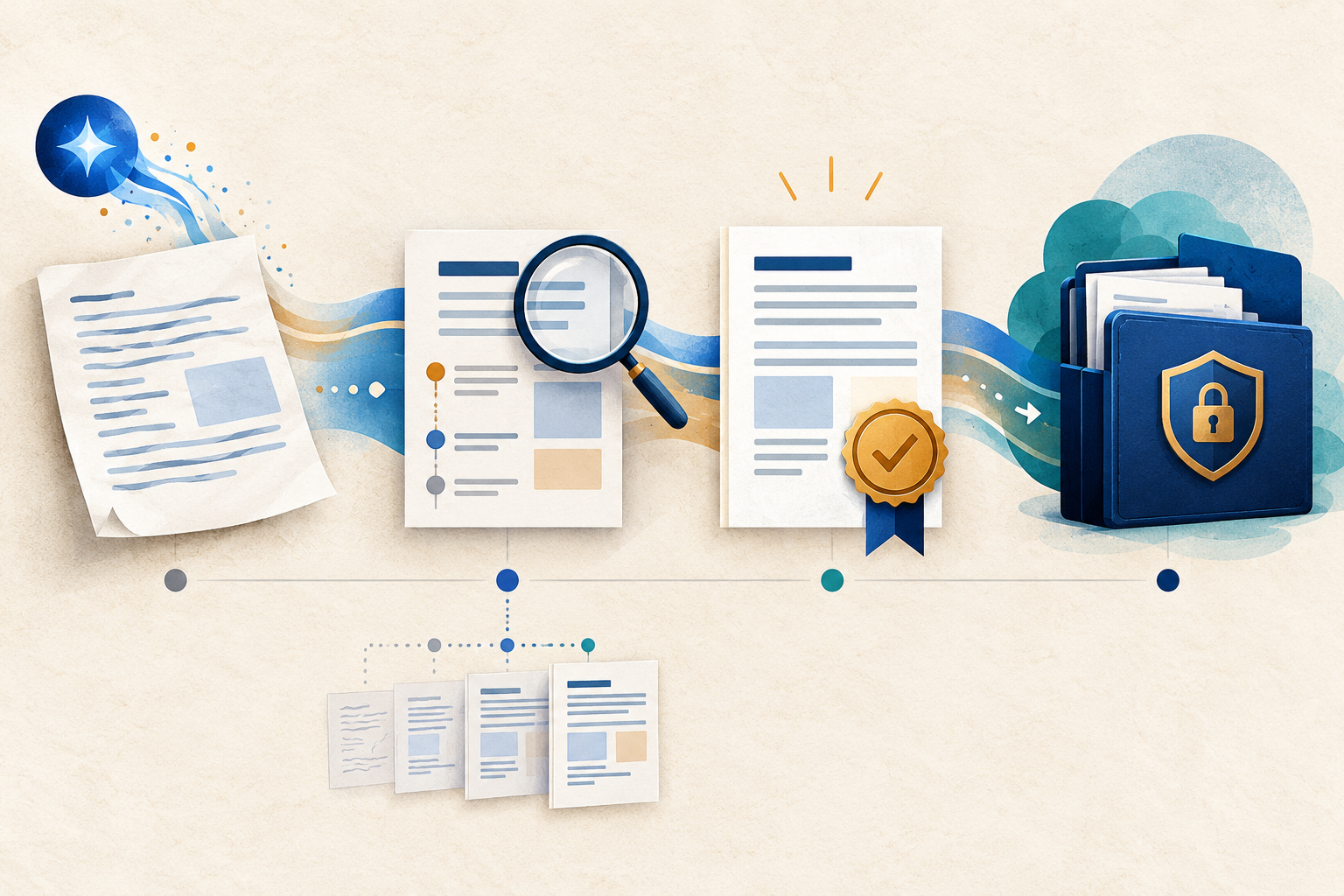
AI Training for Employees: Separate Drafts From Records
Teach a four-state path—Draft, Checked, Approved, Recorded—so polished AI output never becomes organisational fact by accident.
Use Gemini Notebook Mind Maps to Turn Policy Into Questions
Use a Gemini Notebook mind map as a question index for a long policy—then open the cited source before you trust any answer.
AI Training for HR: Build a Four-Part Policy Answer
Teach HR teams to separate the source, written rule, human discretion and next step before turning an AI draft into employee guidance.