
Corporate AI Training After an Incident: Rehearse the Failed Decision
Corporate AI training after an incident should rehearse the human decision that failed, test a fresh case and update the workflow—not stop at a reminder.

Corporate AI training often reacts to an incident with a policy reminder: do not paste sensitive data, check the answer, use the approved tool. That message may be necessary, but it rarely changes the decision that failed. People need to recognise the same moment in a new case, choose a safer action and know what to do when the rule is unclear.
After an AI mistake or near miss, build one short practice case around the human decision that could have changed the outcome. Keep containment, investigation and accountability in their proper processes. Training is not a substitute for any of them. Its job is narrower: help the relevant people make the next decision better.
Do not turn a real incident into gossip
Remove names, personal data, client details and confidential facts that learners do not need. If a safe case cannot preserve the decision point, use a fictional case with the same control.
Why corporate AI training should start with the failed decision
NIST’s AI Risk Management Framework Playbook recommends capturing past failed designs and negative outcomes so teams can avoid known failure modes. It also calls for documented risk responses, feedback mechanisms, monitoring and clear responsibility. The Generative AI Profile adds practices for incident disclosure, feedback and response across the AI lifecycle.
The European Commission’s current AI-literacy guidance says learning should reflect the people involved, the system, its risks and the context of use. It warns that asking staff merely to read instructions may be ineffective. The UK Government AI Playbook similarly stresses context, human oversight, testing and lifecycle management. Together, the practical message is clear: a broad awareness course cannot replace practice at the exact point where work went wrong.
The DECIDE practice loop
Describe facts
Write a neutral sequence of what happened, what was known at the time and what impact followed. Separate evidence from assumptions.
Extract one decision
Find the moment where a person could have checked, limited, routed, paused or rejected the AI-assisted work.
Clean the case
Remove unnecessary identifiers and confidential detail. Preserve the signal, constraint and realistic time pressure.
Invite a choice
Give learners two or three plausible actions. Ask them to choose, explain the control and name the owner if they are unsure.
Demonstrate transfer
Use a fresh case with different surface details. Observe the decision, not recall of the original incident.
Embed the control
Update the workflow, template, access rule or review step. Record the owner and the condition for checking it again.
Worked example: the customer file that reached the wrong tool
A sales analyst uploads a customer export to an unapproved public AI service to summarise churn reasons. The immediate work is operational: restrict access, follow the organisation’s incident process, assess exposure and inform the right owners. The learning team should not wait for a quarterly course, but it should also avoid publishing the real file or blaming the analyst in training.
Reading is a start. Practice makes it stick.
Start learningThe practice case becomes: “You have 15 minutes to summarise 80 customer comments. The approved internal tool is unavailable. The export contains names, account values and free-text notes. What do you do?” The important decision is not which prompt to write. It is whether the data may enter that tool and which route to use when the approved route is blocked.
| Weak response | Decision-focused practice | |
|---|---|---|
| Content | A replay of everything that went wrong | One sanitised decision point |
| Learner task | Read the policy and confirm | Choose an action in a realistic case |
| Feedback | The correct rule is revealed | The control, consequence and escalation owner are explained |
| Evidence | Attendance or completion | A safer choice on a fresh case |
| Follow-through | Send another reminder | Change the workflow and recheck it |
Pair the lesson with a real control
If the same unsafe action remains the fastest way to finish the work, training alone will fade. The owner may need to restore an approved tool, add a data check before upload, narrow permissions, improve a template or make escalation easier. Record the decision and test the revised route. Bokili’s guides to a prompt data boundary, risk-based AI literacy, reviewer tracks and workflow change logs offer practical companion methods: https://bokili.com/en/learn/prompt-data-boundary, https://bokili.com/en/learn/risk-based-ai-literacy-training, https://bokili.com/en/learn/enterprise-ai-training-reviewer-track and https://bokili.com/en/learn/ai-workflow-change-log.
Incident-to-practice gate
- The operational incident process is active or complete; training does not replace it.
- The facts, impact and unresolved questions are clearly separated.
- The practice targets one observable human decision.
- The case contains no unnecessary personal or confidential information.
- The safe option is possible with current tools, permissions and time.
- Feedback names the control and the person or route for escalation.
- A fresh case tests transfer rather than memory.
- An owner updates the workflow and records the review date.
- Write the incident in three factual sentences without names.
- Circle the earliest human decision that could have reduced the risk.
- Create two plausible options and one clearly safer route.
- Add the policy, control or owner that supports that route.
- Change the surface details to make a fresh transfer case.
- Assign one workflow change and one date to check whether it worked.
Measure a changed choice, not a completed lesson
A learner can remember that one colleague used the wrong tool and still repeat the mistake when time pressure, file type or client context changes. Transfer appears when the person spots the underlying boundary in a different case. Ask for a decision, a short reason and an escalation route. That is stronger evidence than a quiz asking which sentence appeared in the policy.
For HR and learning teams, the design rule is practical: keep the case small, the decision visible and the follow-through owned. Bokili can support this with short role-based missions that connect responsible AI practice to real work: https://bokili.com/en/for-hr. The lesson earns its place when the next person can act safely before another incident occurs.
Sources
- AI RMF Playbook — Manage — National Institute of Standards and Technology
- Artificial Intelligence Risk Management Framework: Generative Artificial Intelligence Profile — National Institute of Standards and Technology
- AI Literacy — Questions & Answers — European Commission
- Artificial Intelligence Playbook for the UK Government — UK Government
Reading is a start. Practice makes it stick.
Bokili turns skills like this into ten-minute missions for your whole team, with instant feedback and progress you can see.
Start learningKeep reading
Learn to Use AI: Write Your Expected Answer First
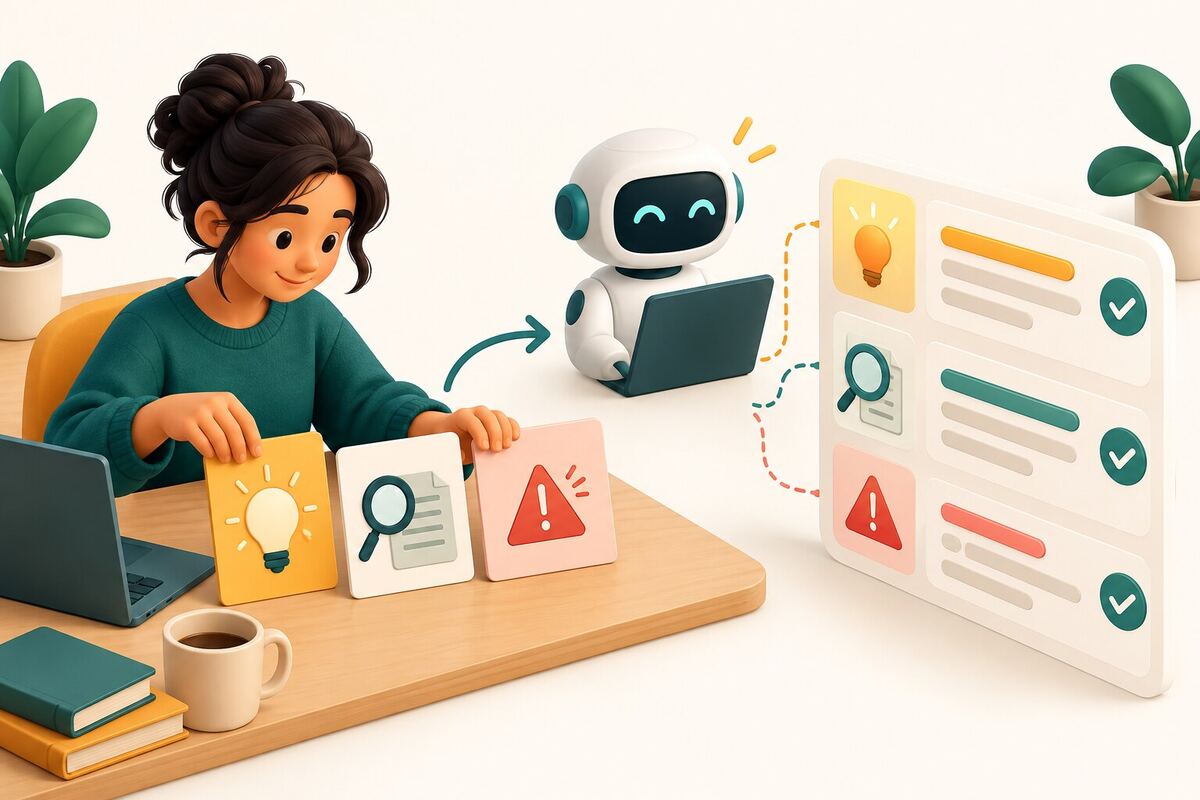
Learn to use AI with PREP: predict the answer, name the evidence and red flag, then compare the output before you trust it.
An AI Roadmap Without a Stop-Doing List Is Just More Work
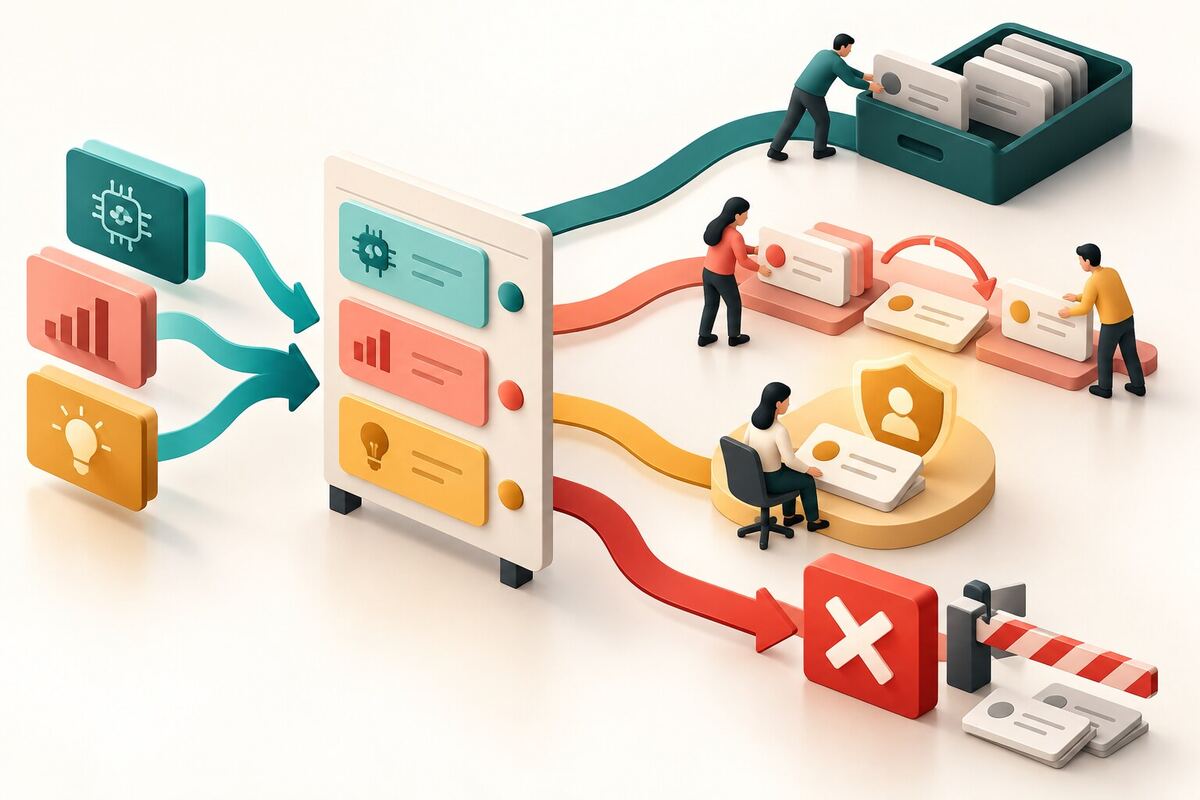
Pair every AI investment with a decision to retire, redesign, protect or stop work, so the roadmap changes the operating model instead of adding tasks.

AI Skills for Employees: Separate Forecasts From Scenarios
AI skills for employees should include one number-label habit: distinguish a forecast, scenario, target and unsupported guess before anyone acts.