
AI Training for HR: Rehearse the Candidate Explanation
Train recruiters to explain where AI supported a hiring workflow, which criteria mattered, who decided and how a candidate can request human review.

AI training for HR should prepare recruiters to explain more than a tool. When AI supports sourcing, screening or ranking, a candidate may reasonably ask: What did the system do? Which job criteria mattered? Who made the decision? How can I request a human review? A useful training exercise makes those answers concrete before a live application is affected.
Primary intent
Informational guidance for HR and L&D teams that need a practical way to train recruiters on transparent, human-owned AI-assisted hiring decisions.
Why AI training for HR needs an explanation rehearsal
The UK government’s responsible-AI recruitment guide says AI use should be clearly signposted to applicants and connected to feedback, contestability and human review. The Information Commissioner’s Office reported in March 2026 that hiring organisations need greater transparency, consistent human involvement and clear recourse when automated decision-making is used.
The ICO’s practical explanation guidance says an AI-assisted hiring explanation should identify responsibility and rationale, with fairness, impact and data explanations considered for the context. The European Commission’s AI Act Service Desk also treats many recruitment and selection systems as high-risk because rankings or fit categories can materially influence who advances. The exact legal duties depend on jurisdiction and system design, so this article is a training method, not legal advice.
The CLEAR candidate explanation
C — Context
State where AI was used, its intended purpose and the stage of recruitment it supported.
L — Linked criteria
Name the approved, job-related criteria and the evidence considered. Do not replace them with a model score.
E — Employee decision
Identify the person or panel that made the decision and what independent judgement they applied.
A — AI limits
Describe material limits, missing information and safeguards in plain language. Do not claim the model is neutral or infallible.
R — Review route
Tell the candidate how to ask a question, request a human review or flag an error, and who owns that route.
Do not ask recruiters to explain the model from memory
A recruiter cannot produce a reliable explanation if the organisation has not documented the system’s purpose, data fields, criteria, human-review step and challenge route. Training should begin with an approved explanation pack owned by HR, privacy, legal and procurement colleagues as appropriate. The exercise then tests whether staff can use that pack accurately in a real conversation.
Build the rehearsal in five moves
- 1
1. Choose one decision point
Use a specific stage such as invitation to interview. Name whether AI organises evidence, recommends a score or filters records.
- 2
2. Prepare a fictional candidate file
Include job-related evidence, one missing field and an AI output that sounds more certain than the evidence.
- 3
3. Require a human record first
Before drafting the explanation, the recruiter records the criteria, evidence, decision owner, disagreement with the tool and final reason.
- 4
4. Deliver the CLEAR explanation
Use short sentences and common words. Separate what the system did from what the recruiter or panel decided.
- 5
5. Practise the challenge
A colleague asks for correction or review. The recruiter must route the request without defending the system or inventing a rationale.
Worked example: the score said no, the panel said review
Reading is a start. Practice makes it stick.
Start learningA fictional screening tool gives an applicant a low fit score because a qualification field is blank. The application includes equivalent experience in a portfolio attachment, but the tool did not use that document. A trained recruiter should not say, “the algorithm found you unsuitable.” The correct record is narrower: the system flagged missing evidence against one approved criterion; a recruiter reviewed the application; the panel decided the portfolio evidence required a fresh assessment.
| Weak explanation | CLEAR explanation | |
|---|---|---|
| AI role | Our system assessed your application | An AI-supported tool organised application fields and flagged one criterion as missing |
| Criteria | Your profile was not a fit | The role requires evidence of X; the field was blank, but your portfolio may contain relevant evidence |
| Decision | The algorithm rejected you | A named recruiter reviewed the flag and the panel paused the decision for human reassessment |
| Review | The score cannot be changed | You can ask us to correct the record or request human review through the stated route |
The stronger explanation does not promise a different outcome. It shows the evidence boundary, corrects an omission and makes human responsibility visible.
Use a candidate question, not a compliance quiz
Draft a plain-language candidate explanation using only the approved record below. Use five short parts: Context of AI use; Linked job criteria and evidence; Employee or panel decision; AI limits and safeguards; Review route. Do not infer why the model produced a score, claim neutrality, disclose another candidate’s data or invent a legal conclusion. Mark missing information as [OWNER INPUT NEEDED].
A candidate-facing draft that a trained HR reviewer can check against the decision record.
The organisation must supply the approved facts, decision owner and review route. A generated explanation is never a substitute for a real human review.
Candidate-explanation release gate
- The description of AI use matches the actual system and recruitment stage.
- Every criterion is job-related and linked to recorded evidence.
- A named person or panel owns the decision.
- The explanation distinguishes a tool output from the final human judgement.
- Important limits, missing data and corrections are visible.
- The candidate receives a working question, correction or human-review route.
- No sensitive information about other applicants is disclosed.
- HR has checked local legal, equality and data-protection requirements.
Run a ten-minute explanation drill
- Choose a fictional recruitment stage and write the AI tool’s exact role in one sentence.
- List two approved job criteria and the evidence a recruiter should inspect.
- Add one missing field or misleading score.
- Record the human decision and one reason the reviewer did or did not follow the AI output.
- Give the CLEAR explanation to a colleague playing the candidate.
- Ask the colleague to challenge one fact, then practise the correction and review route.
Fit the exercise into a wider HR learning path
Pair this drill with Bokili’s job-description audit (https://bokili.com/en/learn/ai-training-hr-job-description-audit), ranking-stability test (https://bokili.com/en/learn/ai-ranking-stability-test) and role-based skills matrix (https://bokili.com/en/learn/ai-skills-for-employees-matrix). For a broader programme, Bokili’s HR and L&D path is available at https://bokili.com/en/for-hr.
The search goal is not a script that makes AI hiring sound safe. It is a repeatable practice that helps HR staff state what happened, cite the criteria, own the decision and offer a real route to review. That is the explanation a candidate can use—and the behaviour an organisation can observe.
Practise this in Bokili
Turn what you just read into a ten-minute mission.
- Start learning
Practise a CLEAR candidate explanation
Explain the AI role, evidence, human decision, limits and review route using a fictional case.
Sources
- Responsible AI in Recruitment — UK Government
- Automated decisions can streamline the hiring process – with the right safeguards in place — Information Commissioner's Office
- Explaining AI in practice: select priority explanations — Information Commissioner's Office
- Employment: AI Act use cases — European Commission AI Act Service Desk
Reading is a start. Practice makes it stick.
Bokili turns skills like this into ten-minute missions for your whole team, with instant feedback and progress you can see.
Start learningKeep reading

AI Training for HR: Keep Health Inference Out of Absence Summaries
Train HR teams to produce a minimal operational absence summary without exposing health details, inventing causes or letting AI make a people decision.
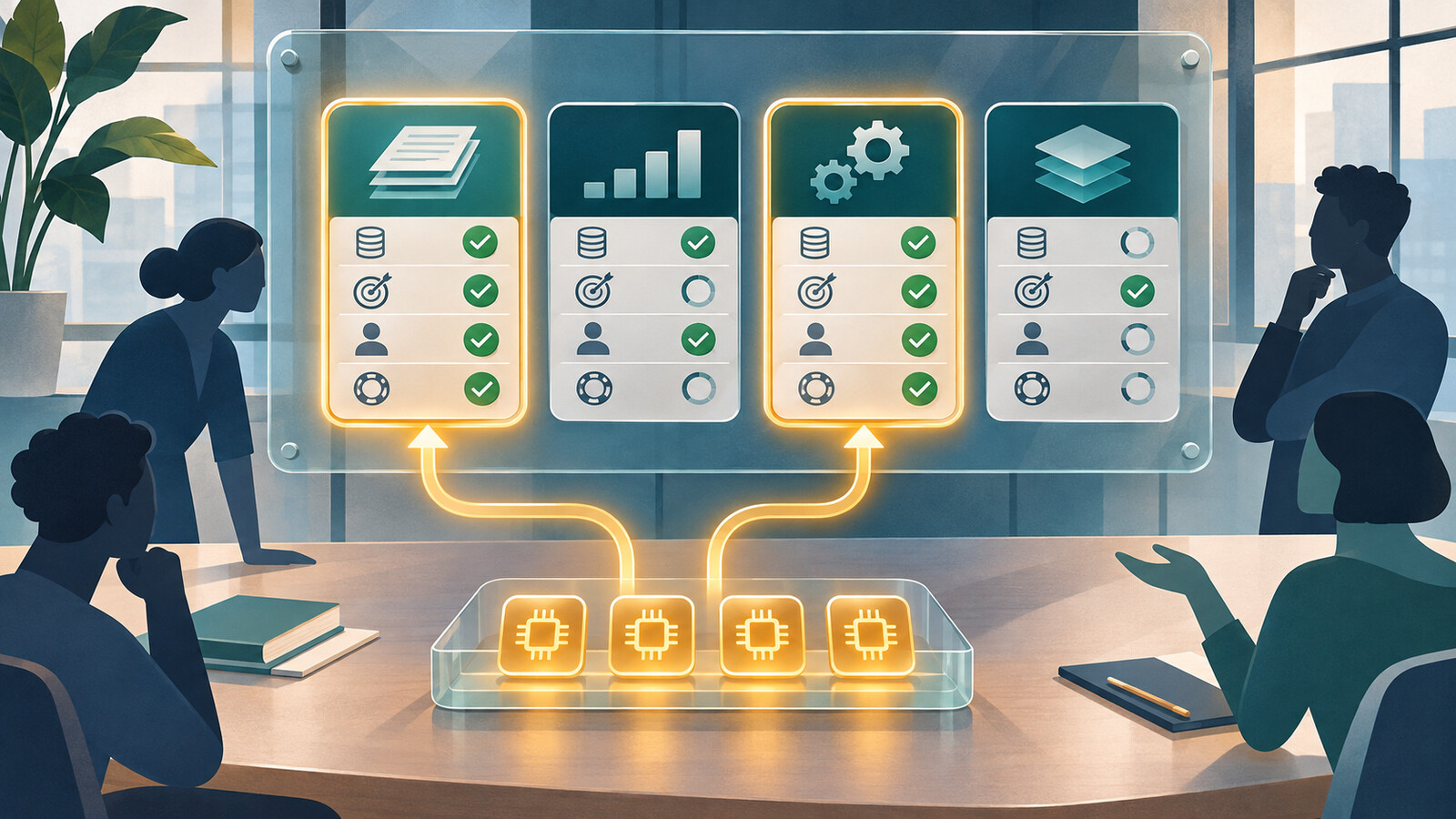
Allocate AI Licences to Task-Ready Work, Not Waiting Lists
Use four readiness gates to allocate scarce AI access to work with an approved input, clear outcome, review owner and support route.
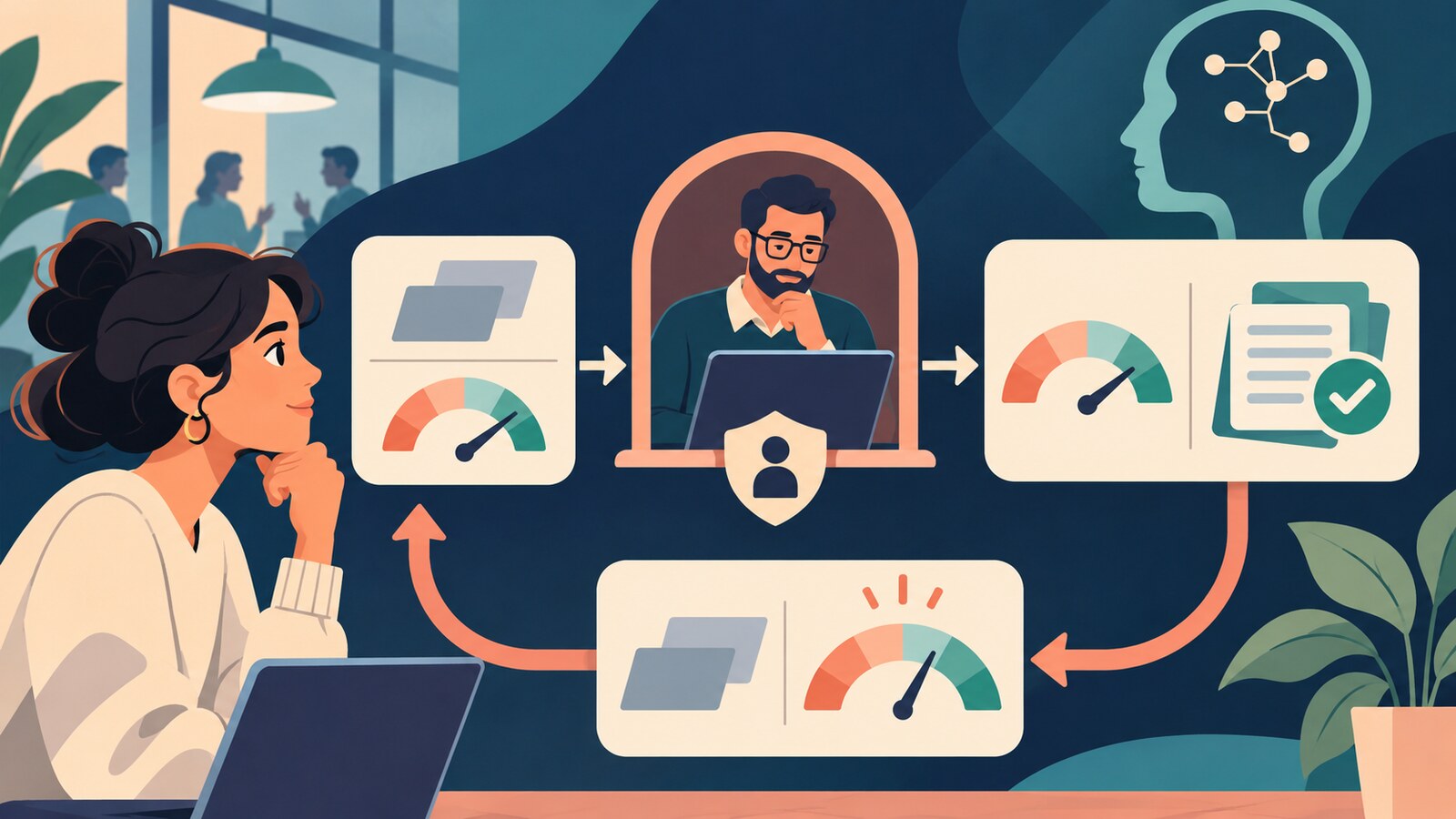
AI Skills for Employees: Calibrate Confidence Before Checking
Train employees to record confidence before AI advice, verify the decisive claim and learn from the gap between prediction and evidence.