

An AI Roadmap Without a Stop-Doing List Is Just More Work
Pair every AI investment with a decision to retire, redesign, protect or stop work, so the roadmap changes the operating model instead of adding tasks.
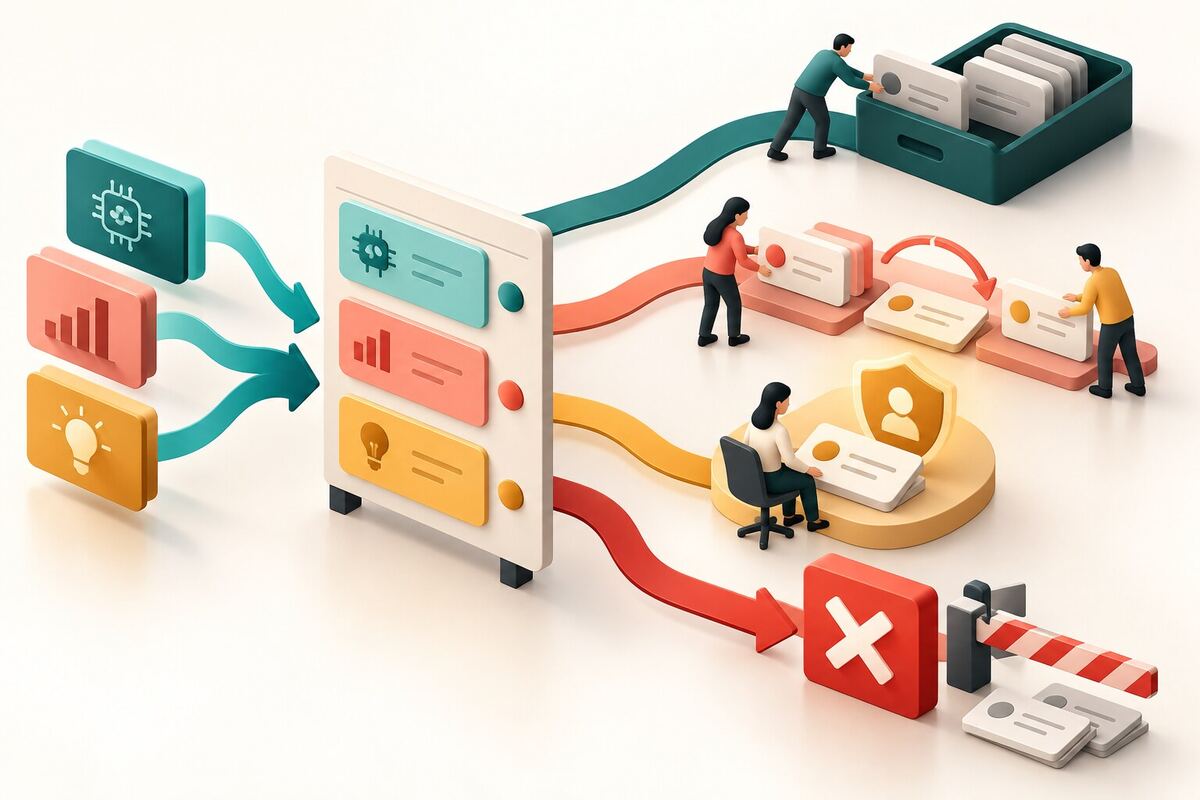
Most AI roadmaps are good at adding work. They list pilots, tools, training, governance reviews and launch dates. What they rarely say is which old task will disappear, which handoff will change, which human judgement must stay, or which use case should stop. That omission turns an AI programme into a second operating system laid on top of the first.
A useful roadmap therefore needs a stop-doing list. For every AI investment, make one explicit work decision: retire, redesign, protect or stop. This is not a cost-cutting shortcut. It is a way to make the operating model visible before enthusiasm hardens into permanent extra work.
Why adoption can increase the workload
A new AI tool changes more than the step where someone types a prompt. It can create new review queues, exception handling, access requests, policy checks and training needs. The UK Government’s People Factor guide describes AI implementation as both a technical transformation and a social transition. It also stresses that tools must be embedded in workflows and team processes, not simply made available.
That matters because a busy roadmap can hide duplicate work. A team may keep the old template, add an AI draft, add a human review and add a log for assurance. Nothing is removed. The output arrives faster, but total work may grow. Before claiming progress, trace the full workflow from request to decision.
| Addition-only roadmap | Work-decision roadmap | |
|---|---|---|
| Success question | Did people adopt the tool? | What changed in the work? |
| Old process | Usually remains in place | Retired or redesigned deliberately |
| Human role | Added as a generic reviewer | Protected where judgement changes the outcome |
| Failure response | More guidance or prompts | Stop, narrow or redesign the use case |
Add four decisions to every AI roadmap
The Retire–Redesign–Protect–Stop card
Retire
Name the manual step, duplicate record or approval that can end after the new method meets an agreed evidence threshold.
Redesign
Show the handoff that must change. Assign an owner, update the standard process and remove the old route.
Protect
Name the human judgement, relationship or control that remains essential. Give that person enough time, context and authority to act.
Stop
Write the condition that pauses or ends the use case: weak evidence, excessive exceptions, unacceptable risk or no meaningful benefit.
The four choices are intentionally different. Retire removes redundant work. Redesign changes how work moves. Protect preserves a valuable control. Stop prevents an unsuitable use case from consuming more attention. A single initiative may need all four at different points.
A worked example: monthly management reporting
Imagine a finance team pilots AI to draft the narrative for a monthly management report. The roadmap includes tool access, a prompt library, training and a three-month evaluation. That sounds complete, but it says nothing about the current process.
Reading is a start. Practice makes it stick.
Start learningTurn the pilot into an operating decision
- 1
Map the current work
An analyst copies approved figures into a template, drafts commentary, checks unusual movements, sends the file to a manager and stores the final version.
- 2
Retire one step
If three consecutive cycles meet the agreed accuracy and review-time thresholds, retire manual first-draft commentary for standard sections.
- 3
Redesign the handoff
Feed only approved figures into the drafting step, then route exceptions and material movements directly to the analyst instead of reviewing every sentence equally.
- 4
Protect judgement
Keep the analyst responsible for explaining causes, uncertainty and decisions. The model may draft language; it does not own the interpretation.
- 5
Write the stop rule
Pause the workflow if the source figures cannot be traced, review time rises, or the exception rate stays above the agreed limit.
This example separates the tool from the change. The AI draft is only one component. The real design work is deciding what ends, what moves, what remains human and what evidence would make the team stop.
Use evidence before you remove work
A stop-doing list should not become an order to remove controls before the replacement works. NIST’s AI Risk Management Framework playbook recommends clear roles, responsibilities and ongoing review across the AI lifecycle. The UK Government AI Playbook likewise emphasises understanding risks, assuring systems and monitoring their use. In practice, retirement should follow evidence, not precede it.
Evidence to record before retiring a step
- The task and decision boundary are clear.
- Inputs can be traced to approved sources.
- Output quality has been tested on normal and difficult cases.
- The person reviewing the result has time and authority to intervene.
- Exceptions have an owner and a route outside the AI workflow.
- The old process has a named retirement date or a documented reason to remain.
If these conditions fail, the right decision may be redesign or stop rather than retire. That is useful information. A roadmap becomes stronger when it can reject an attractive tool that does not improve the system.
Make the stop-doing list part of governance
Review the work-decision card at the same forum that approves funding, risk treatment and scale. Do not leave it as a local team note. Ask the initiative owner to show the baseline workflow, the proposed change, the evidence threshold and the owner of each exception.
This also connects the roadmap to related decisions. Before scaling, define exit rules for the pilot. When time is saved, decide what that capacity becomes. If the pilot exposes a weak handoff, treat it as a workflow problem to fix, not as a prompt problem.
- Choose one live AI initiative.
- Write the current task from request to decision in five lines.
- Name one step to retire, one handoff to redesign and one human judgement to protect.
- Write one measurable stop condition.
- Assign an owner and review date to each decision.
The test
If the roadmap cannot show what work changes, it is probably a technology list, not an operating plan.
Sources
- The People Factor: A human-centred approach to scaling AI tools — UK Government
- Artificial Intelligence Playbook for the UK Government — UK Government
- Govern — AI RMF Playbook — NIST
Reading is a start. Practice makes it stick.
Bokili turns skills like this into ten-minute missions for your whole team, with instant feedback and progress you can see.
Start learningKeep reading
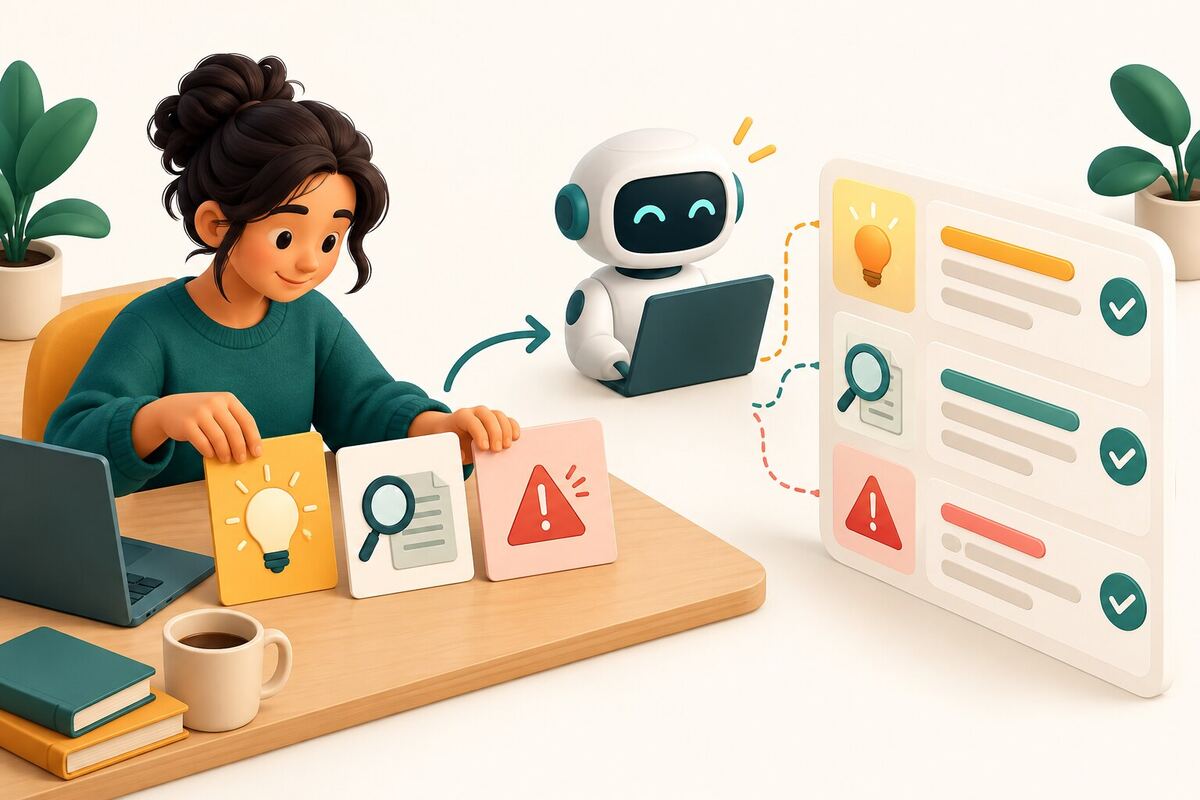
Learn to Use AI: Write Your Expected Answer First
Learn to use AI with PREP: predict the answer, name the evidence and red flag, then compare the output before you trust it.
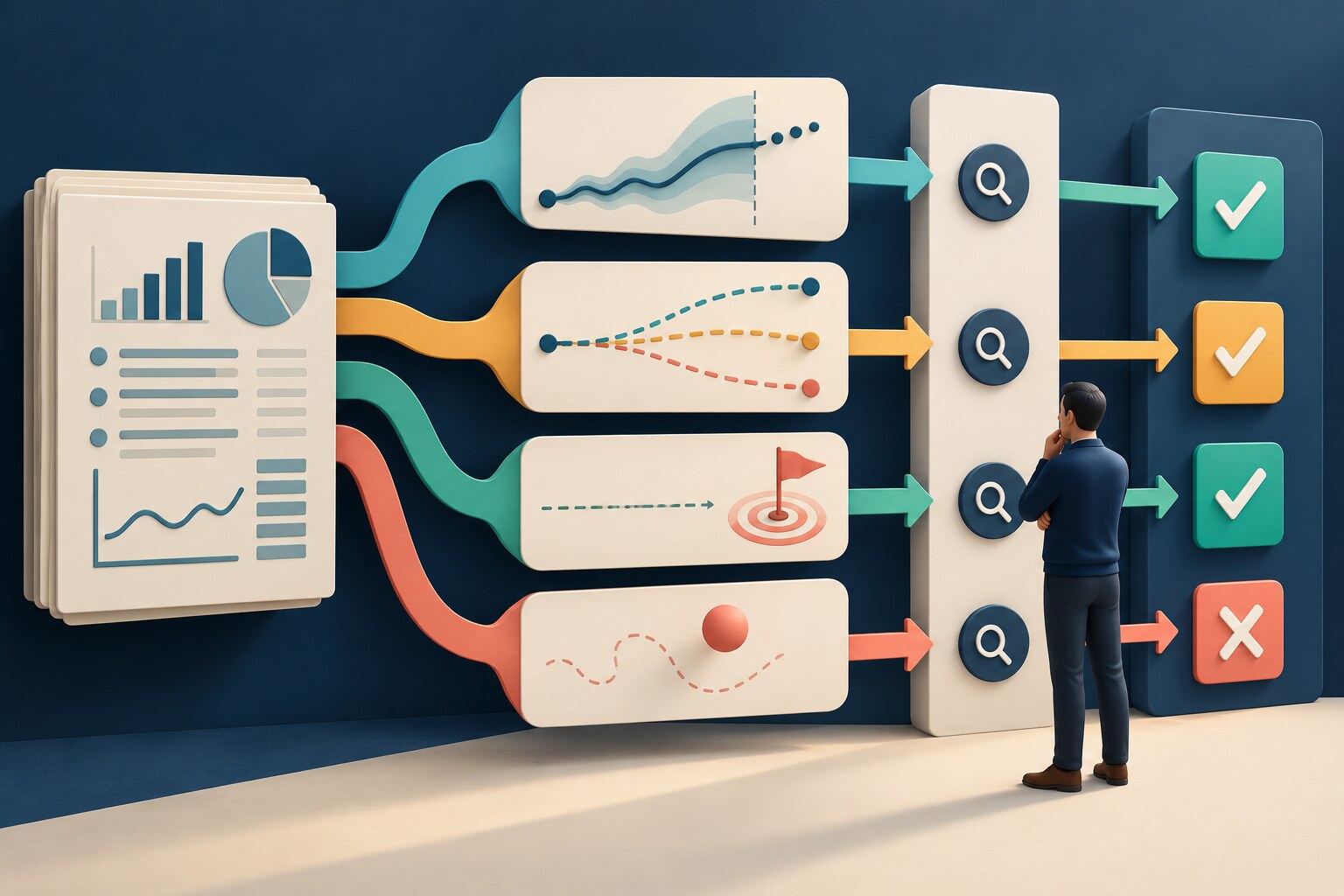
AI Skills for Employees: Separate Forecasts From Scenarios
AI skills for employees should include one number-label habit: distinguish a forecast, scenario, target and unsupported guess before anyone acts.

Use ChatGPT Scheduled Tasks for a Weekly Skill Rehearsal
Turn a recurring ChatGPT reminder into a ten-minute practice loop with safe material, fixed criteria and one visible correction.